Loading subject page…

- Organic Chemistry
- Aromatic Compounds
- Five-Membered Heterocyclic Aromatic Compounds: Overview
Micro-course: Aromatic Compounds
89,601 views
Learn key concepts and earn your certificate.


Five-Membered Heterocyclic Aromatic Compounds: Overview

00:00
01:13
Video Summary: Five Membered Heterocyclic Aromatic Compounds Explained
Did you know that the caffeine in your morning coffee contains five membered heterocyclic aromatic rings? Five membered heterocyclic aromatic compounds form the backbone of countless pharmaceuticals and natural molecules essential to life. These fascinating structures-including pyrrole, furan, thiophene, and imidazole-contain heteroatoms like nitrogen, oxygen, or sulfur within their aromatic rings. Understanding Five Membered Heterocyclic Aromatic Compounds Explained reveals how these molecules achieve stability through unique electron arrangements and sp2 hybridization patterns. Watch the full video on JoVE Coach to master this concept with expert-led visuals and step-by-step explanations.
- Understand the fundamental structure and properties of Five Membered Heterocyclic Aromatic Compounds Explained, including pyrrole, furan, thiophene, and imidazole
- Identify how heteroatoms (nitrogen, oxygen, sulfur) contribute electrons to achieve the aromatic sextet rule in five-membered rings
- Analyze the sp2 hybridization patterns of both carbon atoms and heteroatoms in these aromatic systems
- Compare electron donation mechanisms between different heteroatoms and their impact on aromaticity
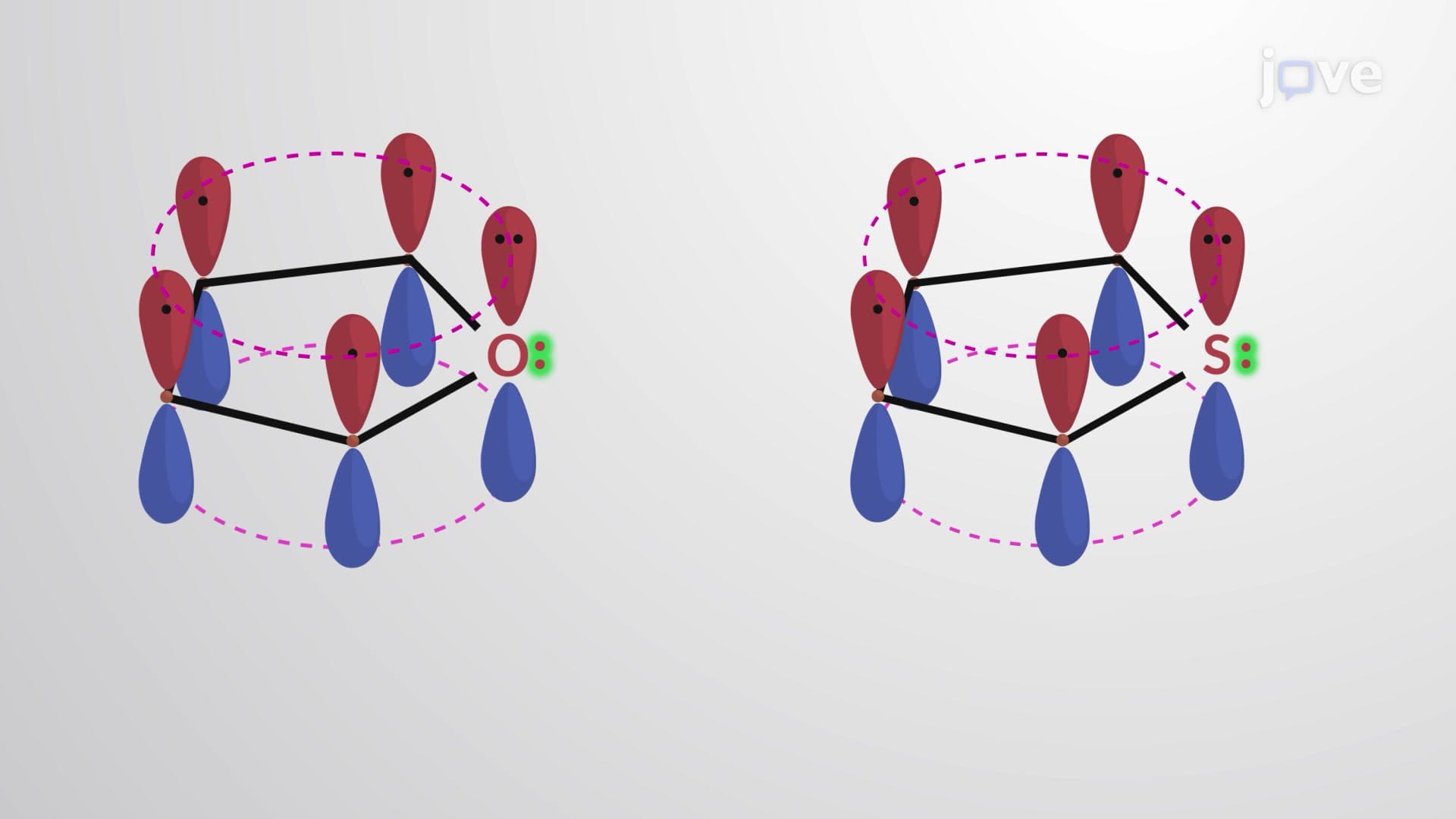
- Evaluate how lone pair electrons participate in or remain outside the π-electron system
- Apply Hückel's rule to determine aromaticity in five-membered heterocyclic compounds
- Recognize the planar geometry essential for effective orbital overlap in these aromatic systems
- Explore the biological and pharmaceutical significance of heterocyclic aromatic compounds in drug design
Understanding Five Membered Heterocyclic Aromatic Compounds
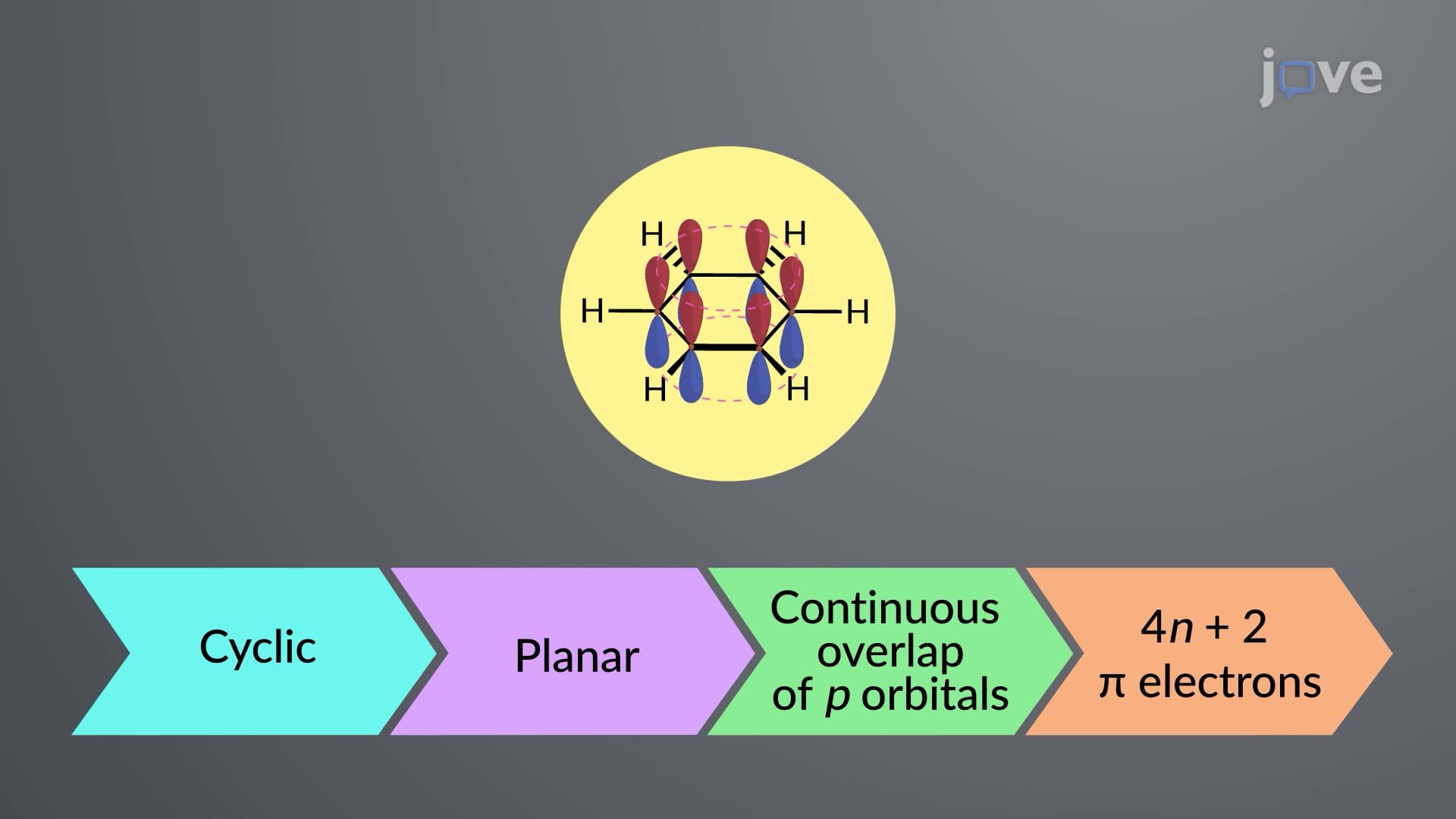
Five membered heterocyclic aromatic compounds represent a crucial class of organic molecules where one or more carbon atoms in a five-membered ring are replaced by heteroatoms such as nitrogen, oxygen, or sulfur. These compounds follow Hückel's rule with exactly six π-electrons (4n+2 where n=1), making them aromatic despite having only five atoms in the ring structure.
The key to understanding these compounds lies in recognizing how each heteroatom contributes to the aromatic π-system. Unlike benzene, where each carbon contributes one electron, five-membered heterocycles achieve their six-electron count through a combination of carbon electrons and heteroatom lone pairs.
Pyrrole: The Nitrogen-Containing Prototype
Pyrrole serves as the classic example of nitrogen-containing five-membered aromatics. In pyrrole, the nitrogen atom is sp2 hybridized and contributes its lone pair of electrons to the π-system. This creates a continuous loop of overlapping p-orbitals containing six electrons total-four from the carbon atoms and two from nitrogen's lone pair.
This electron donation makes pyrrole significantly less basic than typical amines. The nitrogen's lone pair is delocalized into the aromatic system rather than available for protonation, explaining why pyrrole appears in biological systems like hemoglobin and chlorophyll without disrupting cellular pH.
Furan and Thiophene: Oxygen and Sulfur Variants
Furan (oxygen) and thiophene (sulfur) demonstrate how different heteroatoms affect aromatic stability. Both oxygen and sulfur possess two lone pairs of electrons, but only one pair participates in the aromatic π-system. The participating lone pair occupies a p-orbital and contributes two electrons to achieve the aromatic sextet, while the second lone pair remains in an sp2 hybrid orbital.
Thiophene exhibits greater aromatic stability than furan due to sulfur's larger atomic size and more diffuse p-orbitals, which create better overlap with the carbon p-orbitals. This stability difference explains why thiophene derivatives often appear in pharmaceuticals and materials science applications.
Imidazole: The Dual-Nitrogen System
Imidazole contains two nitrogen atoms, each playing distinct roles in the aromatic system. One nitrogen (similar to pyrrole) contributes its lone pair to the π-system, while the other nitrogen retains its lone pair in an sp2 hybrid orbital, making it available for hydrogen bonding and protonation.
This dual functionality makes imidazole particularly important in biochemistry-it appears in the amino acid histidine and serves crucial roles in enzyme catalysis. The basicity of the non-contributing nitrogen allows imidazole to act as both proton donor and acceptor, essential for maintaining proper pH in biological systems.
Students preparing for AP Chemistry, MCAT, or college organic chemistry courses should focus on drawing resonance structures and identifying which electrons participate in aromaticity versus those remaining as lone pairs. Understanding these electron arrangements proves essential for predicting reactivity patterns and biological functions.
Frequently Asked Questions
Five membered heterocyclic aromatic compounds are aromatic rings containing five atoms where one or more carbon atoms are replaced by heteroatoms like nitrogen, oxygen, or sulfur. Unlike benzene's six-carbon ring with six π-electrons, these compounds achieve aromaticity through four carbon electrons plus two electrons from heteroatom lone pairs, creating the same stable six-electron aromatic system in a smaller ring.
The MCAT frequently tests these compounds through structure identification, aromaticity determination, and biological function questions. Expect to identify which lone pairs participate in aromaticity, explain basicity differences between pyrrole and typical amines, and recognize these structures in amino acids like histidine or biological molecules like heme.
These compounds connect to AP Chemistry topics including hybridization, molecular geometry, and resonance structures. Students should understand sp2 hybridization patterns, apply VSEPR theory to predict planar geometry, and draw resonance structures showing electron delocalization. These concepts frequently appear in AP Chemistry free response questions about organic molecules.
College organic chemistry courses emphasize these compounds because they're fundamental building blocks in pharmaceuticals, natural products, and biological systems. Understanding their electron arrangements, reactivity patterns, and synthesis methods provides essential knowledge for pre-med students and chemistry majors pursuing careers in drug discovery or biochemical research.
These compounds appear throughout daily life in caffeine (imidazole rings), vitamin B12 (pyrrole-derived structures), and numerous pharmaceuticals manufactured by companies like Pfizer and Merck. They're also present in food flavoring compounds, agricultural chemicals, and the chlorophyll that makes plants green, demonstrating their widespread importance in both natural and synthetic applications.
No advanced math is required-just basic electron counting and understanding of chemical bonding principles. If you can count to six (for Hückel's rule) and understand how atoms share electrons in bonds, you can master these concepts. The key is visualizing three-dimensional molecular shapes and tracking electron movement through resonance structures.
Focus on drawing structures repeatedly and identifying electron contributions from each atom. Create comparison charts showing how pyrrole, furan, thiophene, and imidazole differ in their heteroatoms and lone pair arrangements. Practice problems involving aromaticity determination and biological function identification will prepare you for both multiple choice and free response exam questions.
Build upon this foundation by exploring six-membered heterocycles like pyridine and pyrimidine, then advance to fused ring systems like indole and purine found in DNA bases. Understanding electrophilic aromatic substitution reactions specific to heterocycles will prepare you for advanced organic chemistry and pharmaceutical chemistry courses.
Related Micro-courses