Loading subject page…

- Organic Chemistry
- Aromatic Compounds
- NMR Spectroscopy of Aromatic Compounds
Micro-course: Aromatic Compounds
89,601 views
Learn key concepts and earn your certificate.


NMR Spectroscopy of Aromatic Compounds

00:00
01:14
Video Summary: Nmr Spectroscopy of Aromatic Compounds Explained
Ever wondered why benzene rings in aspirin or caffeine create such distinctive patterns in laboratory analysis? NMR spectroscopy aromatic compounds reveal unique chemical fingerprints that help pharmaceutical companies at Johnson & Johnson identify molecular structures with precision. Aromatic hydrogens appear at characteristic 6.5-8 ppm ranges due to ring current effects, while aromatic carbons cluster between 110-150 ppm. Watch the full video on JoVE Coach to master this concept with expert-led visuals and step-by-step explanations.
- Understand how NMR Spectroscopy of Aromatic Compounds Explained principles enable structural identification through characteristic chemical shift patterns
- Identify aromatic hydrogens by their distinctive downfield absorption range of 6.5-8 ppm in 1H NMR spectra
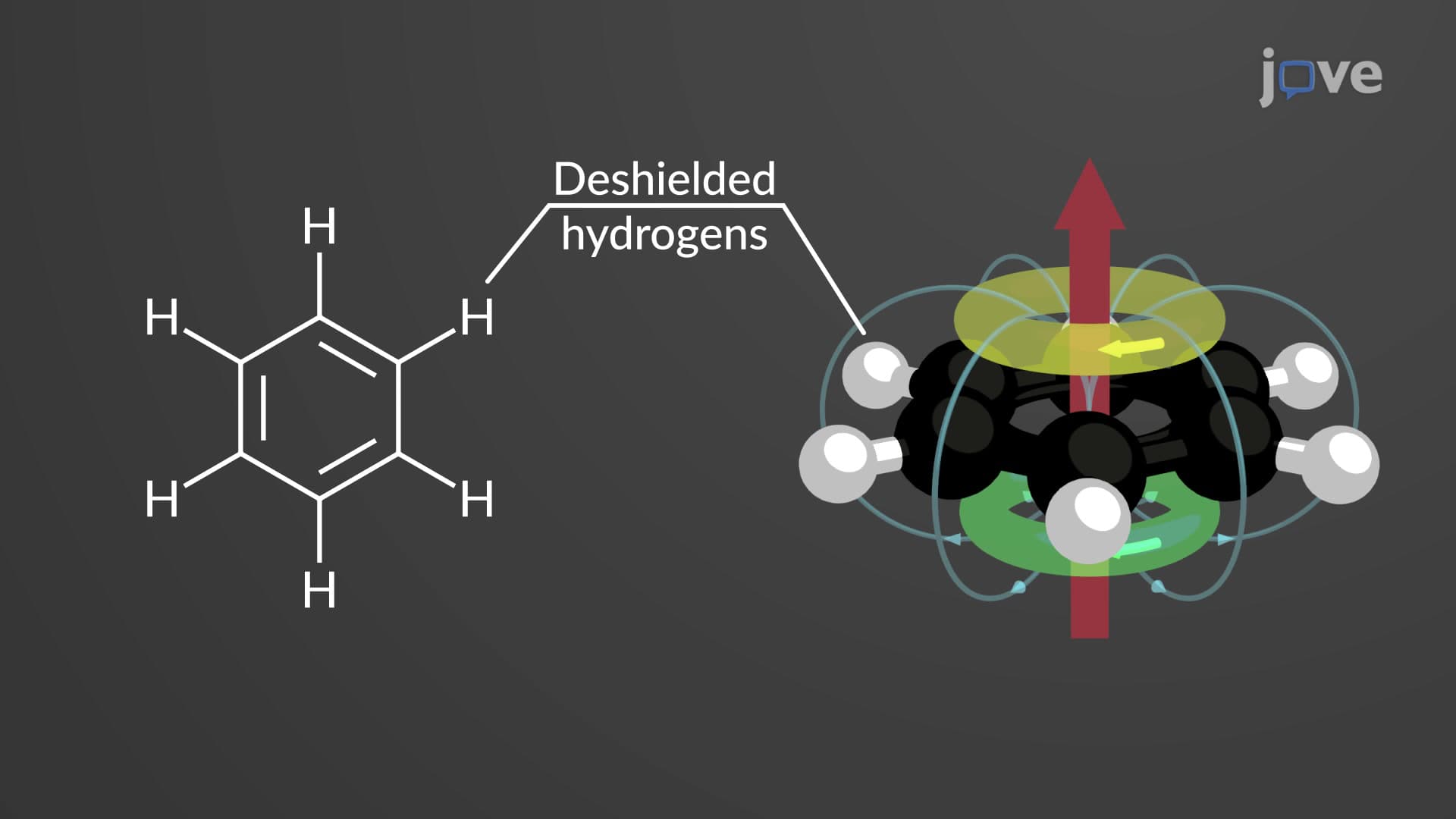
- Analyze the ring current effect that causes aromatic protons to be highly deshielded compared to aliphatic hydrogens
- Compare chemical shift differences between aromatic carbons (110-150 ppm) and saturated carbons in 13C NMR
- Evaluate how ring size affects chemical shifts, using [18]annulene as an example of inside vs. outside hydrogen positioning
- Apply NMR data interpretation skills to distinguish aromatic compounds from other organic molecules
- Recognize the relationship between molecular structure and spectroscopic behavior in aromatic systems
- Explore advanced concepts like shielding and deshielding effects in large aromatic ring systems
Understanding NMR Spectroscopy of Aromatic Compounds
NMR spectroscopy serves as one of the most powerful analytical tools for identifying aromatic compounds in organic chemistry. When aromatic molecules are placed in a strong magnetic field, their unique electronic structure creates distinctive spectral signatures that differentiate them from aliphatic compounds. This technique has revolutionized pharmaceutical research, forensic analysis, and quality control in industries ranging from Pfizer's drug development laboratories to environmental testing facilities across the United States.
The Ring Current Effect and Chemical Shifts
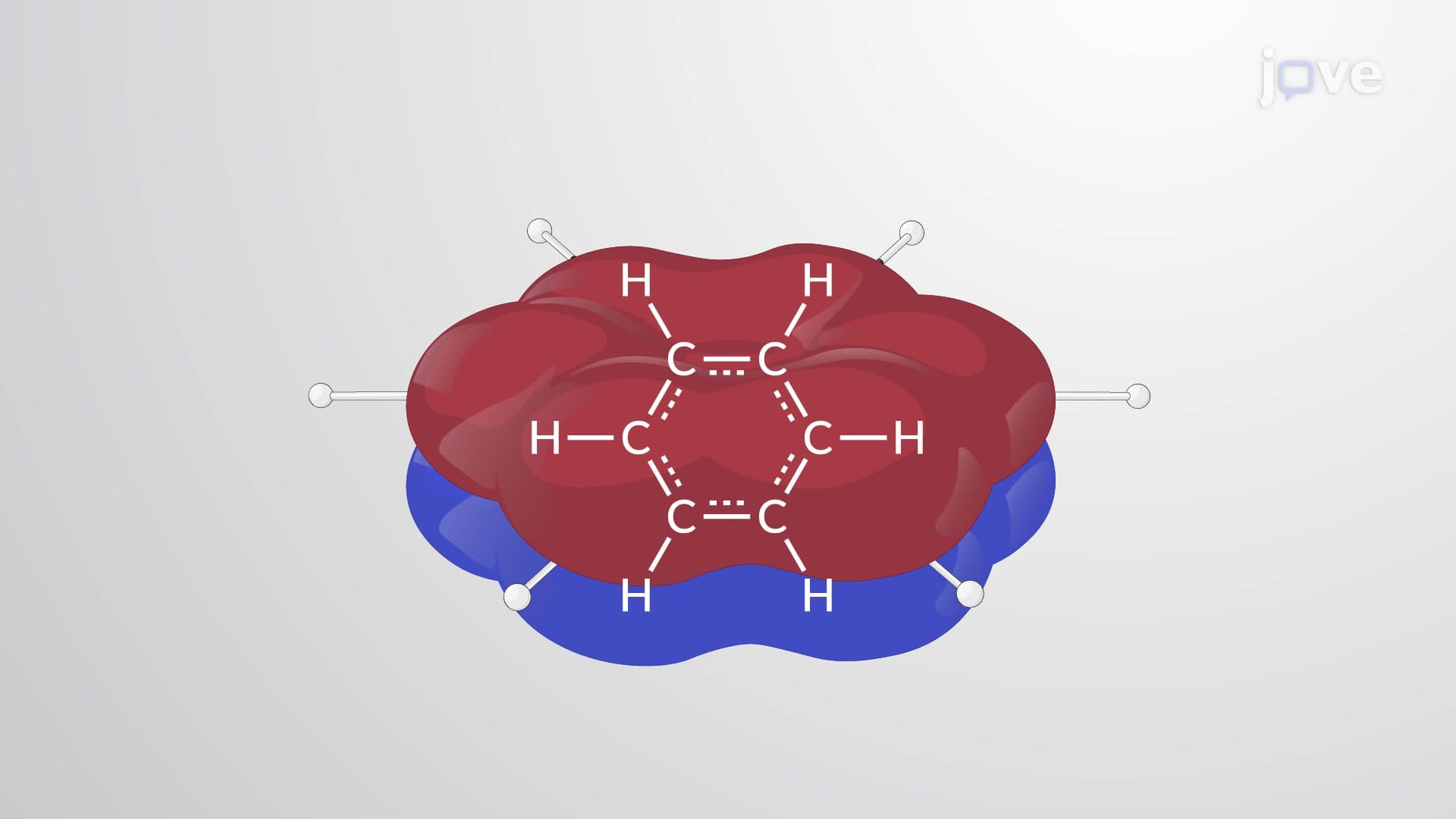
The hallmark of aromatic NMR spectroscopy lies in understanding the ring current effect. When aromatic rings are exposed to external magnetic fields, electrons circulate around the ring system, generating their own magnetic field that opposes the applied field. This circulation creates a deshielding zone outside the ring plane and a shielding zone inside the ring cavity.
For typical aromatic compounds like benzene, toluene, or the aromatic rings found in pharmaceuticals, hydrogen atoms attached to the ring absorb between 6.5-8 ppm in 1H NMR spectra. Benzene itself shows a sharp singlet at 7.3 ppm, while substituted aromatics display more complex splitting patterns. Students preparing for AP Chemistry or organic chemistry midterms should memorize this characteristic range, as it frequently appears in structural identification problems.
Carbon-13 NMR of Aromatic Systems
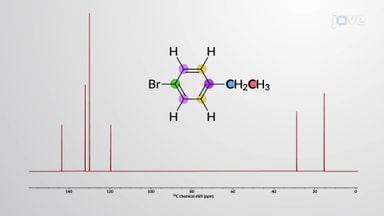
Aromatic carbons exhibit equally distinctive behavior in 13C NMR spectroscopy, typically appearing between 110-150 ppm. This downfield shift results from the same electronic effects causing proton deshielding. Benzene carbons absorb at 128 ppm, providing a reference point for more complex aromatic systems. Pre-med students studying for the MCAT often encounter questions requiring interpretation of both 1H and 13C data to identify unknown aromatic compounds in biological systems.
Advanced Applications and Unusual Cases
Large aromatic rings like [18]annulene demonstrate fascinating exceptions to typical patterns. This 18-carbon ring system contains twelve hydrogens on the ring's exterior (appearing around 9-10 ppm) and six hydrogens trapped inside the ring cavity (appearing at approximately -3 ppm). These inside protons experience such strong shielding that they absorb upfield of typical alkyl hydrogens, illustrating the powerful influence of aromatic ring currents on chemical shifts.
Frequently Asked Questions
NMR spectroscopy of aromatic compounds is an analytical technique that identifies aromatic molecules by detecting their unique magnetic properties. It's crucial because aromatic compounds show characteristic chemical shifts that distinguish them from other organic molecules. This method is essential in pharmaceutical development, forensic analysis, and academic research across American universities and industries.
The MCAT frequently tests aromatic NMR interpretation through passage-based questions and discrete items. Students must identify aromatic protons (6.5-8 ppm range) and carbons (110-150 ppm range) to solve structural determination problems. Practice interpreting spectra showing benzene derivatives and substituted aromatics commonly found in biological systems.
Aromatic compounds exhibit unique downfield chemical shifts due to ring current effects. While typical alkyl protons appear around 1-3 ppm, aromatic protons absorb at 6.5-8 ppm. This dramatic difference makes aromatic identification straightforward and reliable in structural analysis.
Major pharmaceutical companies like Merck and Bristol Myers Squibb use aromatic NMR spectroscopy for drug development and quality control. Chemists analyze aromatic drug compounds, verify synthetic intermediates, and ensure product purity. This technique helps identify impurities and confirm molecular structures in FDA-regulated manufacturing processes.
Basic organic chemistry knowledge suffices for introductory aromatic NMR concepts. Students should understand aromatic stability, benzene structure, and basic NMR principles. High school AP Chemistry or first-year college organic chemistry provides adequate background for fundamental aromatic NMR interpretation.
Focus on memorizing key chemical shift ranges: aromatic protons (6.5-8 ppm) and aromatic carbons (110-150 ppm). Practice identifying aromatic signals in mixed spectra and work through structural determination problems. Create flashcards with common aromatic compounds and their characteristic NMR patterns.
Substituents on aromatic rings create more complex splitting patterns and shift aromatic protons within the 6.5-8 ppm range. Electron-withdrawing groups (like nitro groups) cause additional downfield shifting, while electron-donating groups (like methoxy) provide slight upfield shifts. Understanding these effects helps predict and interpret real-world aromatic NMR spectra.
Advanced topics include 2D NMR techniques for complex aromatic systems, NOE experiments for spatial relationships, and variable temperature NMR for dynamic aromatic processes. These concepts appear in graduate-level courses and research settings, building upon fundamental aromatic NMR principles learned in undergraduate organic chemistry.
Related Micro-courses