Loading video…


 15 Concepts
 116.4K views

Video Summary: Preparation and Reactions of Thiols Explained
Ever wonder why garlic and onions have such distinctive smells? The answer lies in thiols, sulfur-containing compounds that create these pungent aromas through their unique chemical properties. Preparation and reactions of thiols involve synthesizing these SH-containing molecules from alkyl halides and understanding their oxidation behavior to form disulfides. In the pharmaceutical industry, companies like Pfizer use thiol chemistry to develop cysteine-based drugs and protein modifications. Watch the full video on JoVE Coach to master this concept with expert-led visuals and step-by-step explanations.
Thiols represent a crucial class of organosulfur compounds characterized by their sulfhydryl (-SH) functional group. These molecules play essential roles in biological systems and industrial applications, making their synthesis and reactivity patterns fundamental knowledge for organic chemistry students.
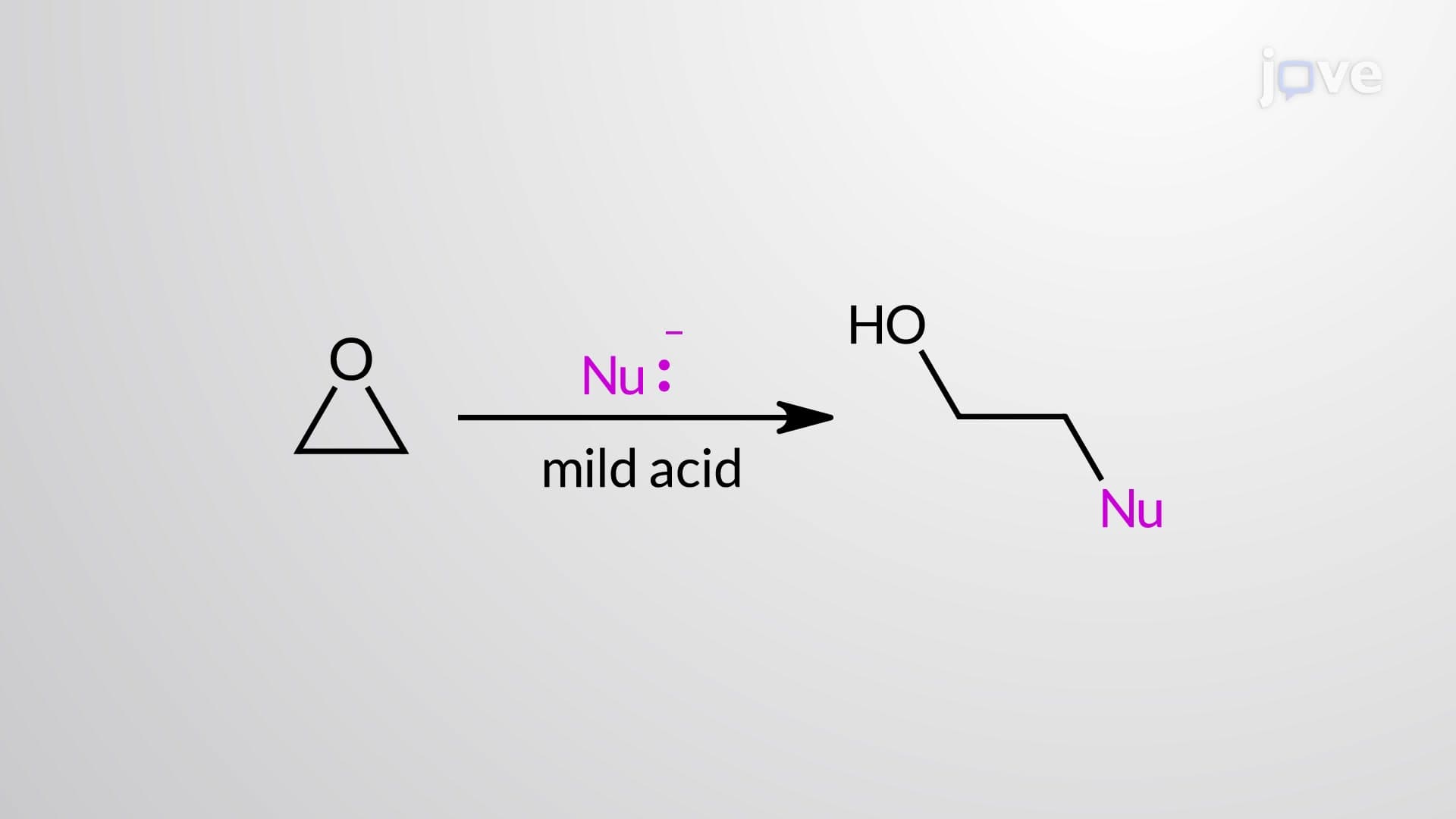
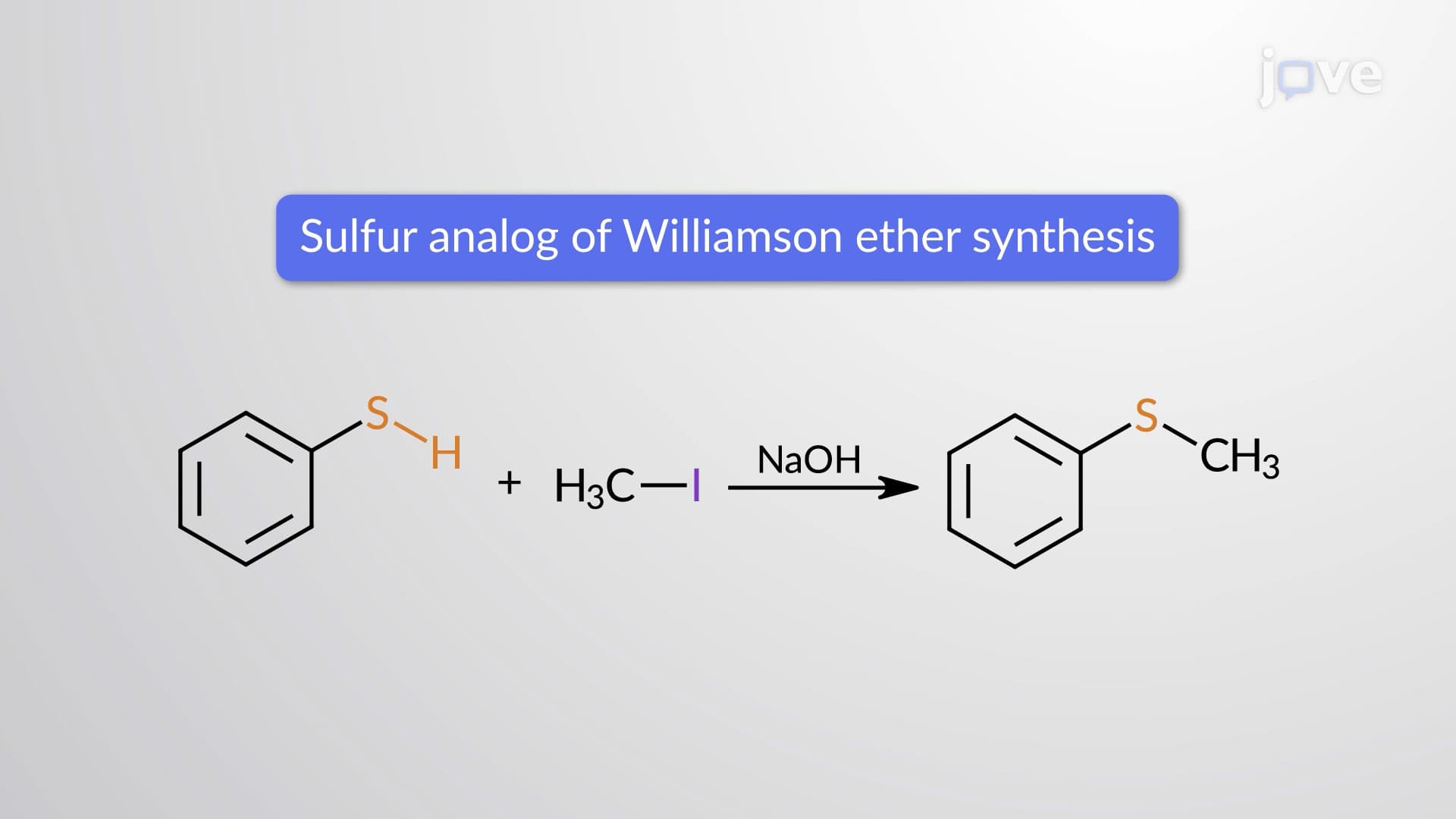
The primary method for preparation reactions thiols involves nucleophilic substitution reactions starting from alkyl halides. The direct approach uses sodium hydrosulfide (NaHS) as the nucleophile in an SN2 mechanism. However, this method suffers from a significant limitation: the newly formed thiol can act as a nucleophile itself, attacking unreacted alkyl halide to produce unwanted sulfide byproducts.
The thiourea method elegantly solves this problem. Thiourea first displaces the halide to form an alkyl isothiourea salt intermediate, which then undergoes base-catalyzed hydrolysis to yield the desired thiol. This two-step process prevents overalkylation and provides cleaner product formation, a concept frequently tested on the MCAT and AP Chemistry exams.
What is preparation and reactions of thiols becomes particularly interesting when examining oxidation pathways. The sulfur atom's multiple oxidation states enable diverse product formation depending on reaction conditions. Mild oxidizing agents like molecular bromine or iodine in basic solution convert thiols to disulfides through a fascinating mechanism involving thiolate ion formation and subsequent SN2 reactions.
Strong oxidizing agents such as hydrogen peroxide or potassium permanganate drive the oxidation further, producing sulfinic acids and ultimately sulfonic acids. This oxidation hierarchy appears regularly in organic chemistry coursework at universities like UCLA and MIT, where students must predict products based on reagent strength.
The reversible nature of thiol-disulfide chemistry underpins protein folding and stability in living systems. Pharmaceutical companies leverage this chemistry in drug development, for example, cysteine residues in insulin form crucial disulfide bonds that maintain the hormone's active structure. Understanding these concepts prepares students for advanced biochemistry courses and professional programs in medicine and pharmacy.
Related Micro-courses