Loading video…


 15 Concepts
 116.4K views

Video Summary: Ethers From Alkenes Alcohol Addition Explained
Did you know that the anti-inflammatory drug MTBE (methyl tert-butyl ether), once used as a gasoline additive across the United States, is synthesized using ethers from alkenes alcohol addition? This powerful organic chemistry technique allows chemists to create ether compounds by combining alkenes with alcohols under specific conditions. The process involves two main methods: acid-catalyzed addition and alkoxymercuration-demercuration, both following predictable reaction patterns that students encounter in AP Chemistry and college organic chemistry courses. Watch the full video on JoVE Coach to master this concept with expert-led visuals and step-by-step explanations.
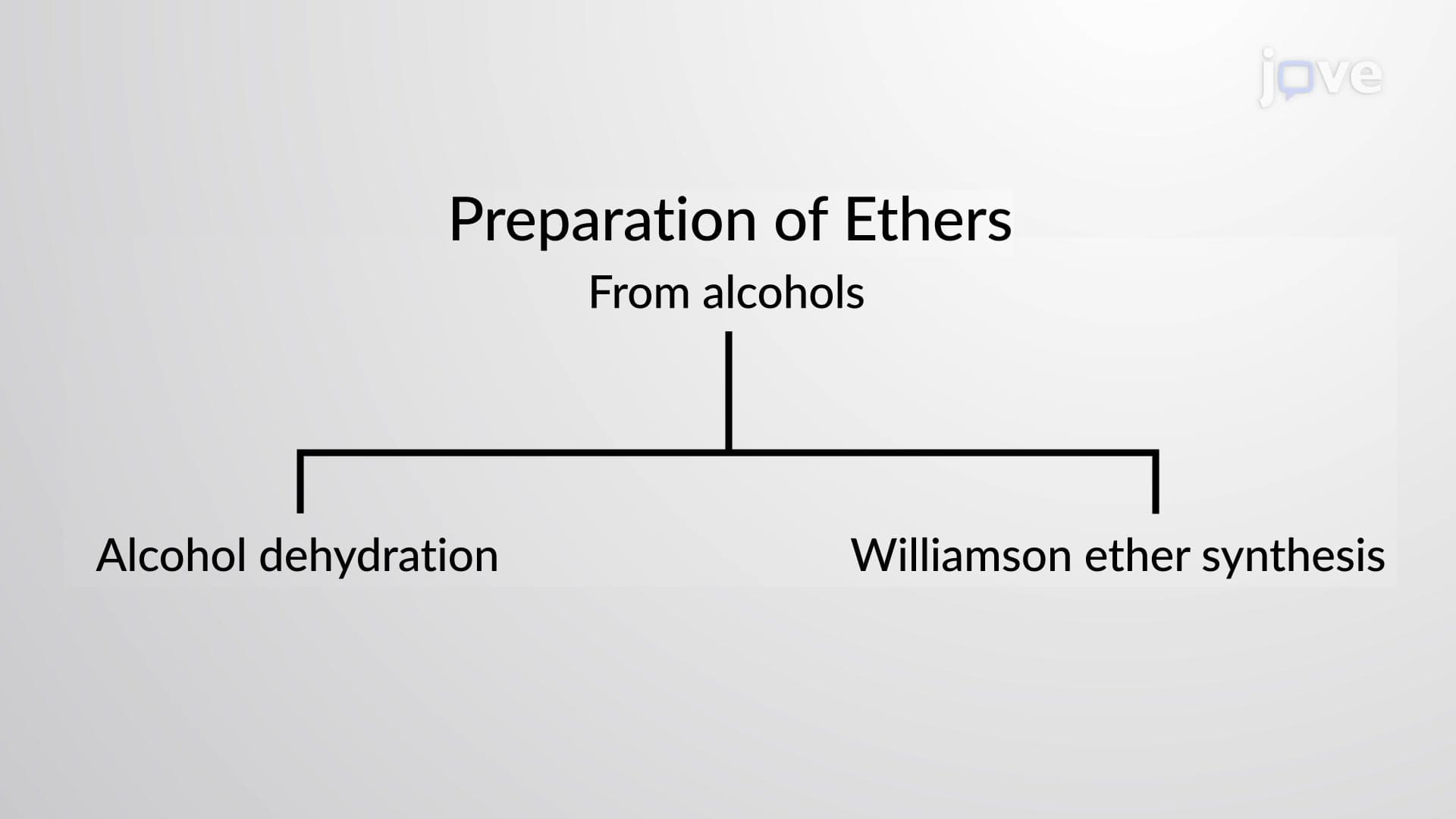
The synthesis of ethers from alkenes represents a cornerstone reaction in organic chemistry, providing chemists with versatile tools for creating these important functional groups. Unlike traditional methods such as the Williamson ether synthesis, alkene-based approaches offer unique advantages in controlling regioselectivity and accessing specific ether structures that would be difficult to prepare through other routes.
The acid-catalyzed method begins when a strong acid catalyst protonates the alkene's pi bond, creating a carbocation intermediate at the more substituted carbon atom. This follows Markovnikov's rule, where the hydrogen adds to the carbon with more hydrogen atoms already present. The alcohol then acts as a nucleophile, attacking the positively charged carbocation center. Finally, deprotonation by another alcohol molecule regenerates the acid catalyst and produces the final ether product.
This mechanism explains why 2-methylpropene readily converts to 2-methoxy-2-methylpropane when treated with methanol and acid. The tertiary carbocation intermediate is particularly stable, making this reaction favorable for highly substituted alkenes. Students preparing for the MCAT or AP Chemistry exams should note that carbocation stability (tertiary > secondary > primary) directly influences reaction rates and product distributions.
The alkoxymercuration-demercuration method offers greater control and avoids carbocation rearrangements that can complicate acid-catalyzed reactions. Mercury(II) acetate coordinates with the alkene to form a three-membered mercurinium ion, which the alcohol then opens through backside attack. This anti-addition mechanism ensures predictable stereochemistry, making it valuable for pharmaceutical synthesis where molecular geometry matters.
The subsequent reduction with sodium borohydride replaces mercury with hydrogen, completing the transformation. This two-step process appears frequently in undergraduate organic chemistry courses and serves as an excellent example of how organometallic chemistry enables precise synthetic control.
US pharmaceutical companies routinely employ these ether synthesis methods in drug manufacturing. For example, several anesthetic ethers used in American hospitals are produced through alkene alcohol addition reactions. Additionally, these reactions demonstrate key principles tested on standardized exams, including nucleophile-electrophile interactions, stereochemical outcomes, and reaction mechanism analysis-topics that appear regularly on college organic chemistry midterms and the MCAT's Chemical and Physical Foundations section.
Related Micro-courses