Loading subject page…


116,400 views

Video Summary: What are Physical Properties of Ethers
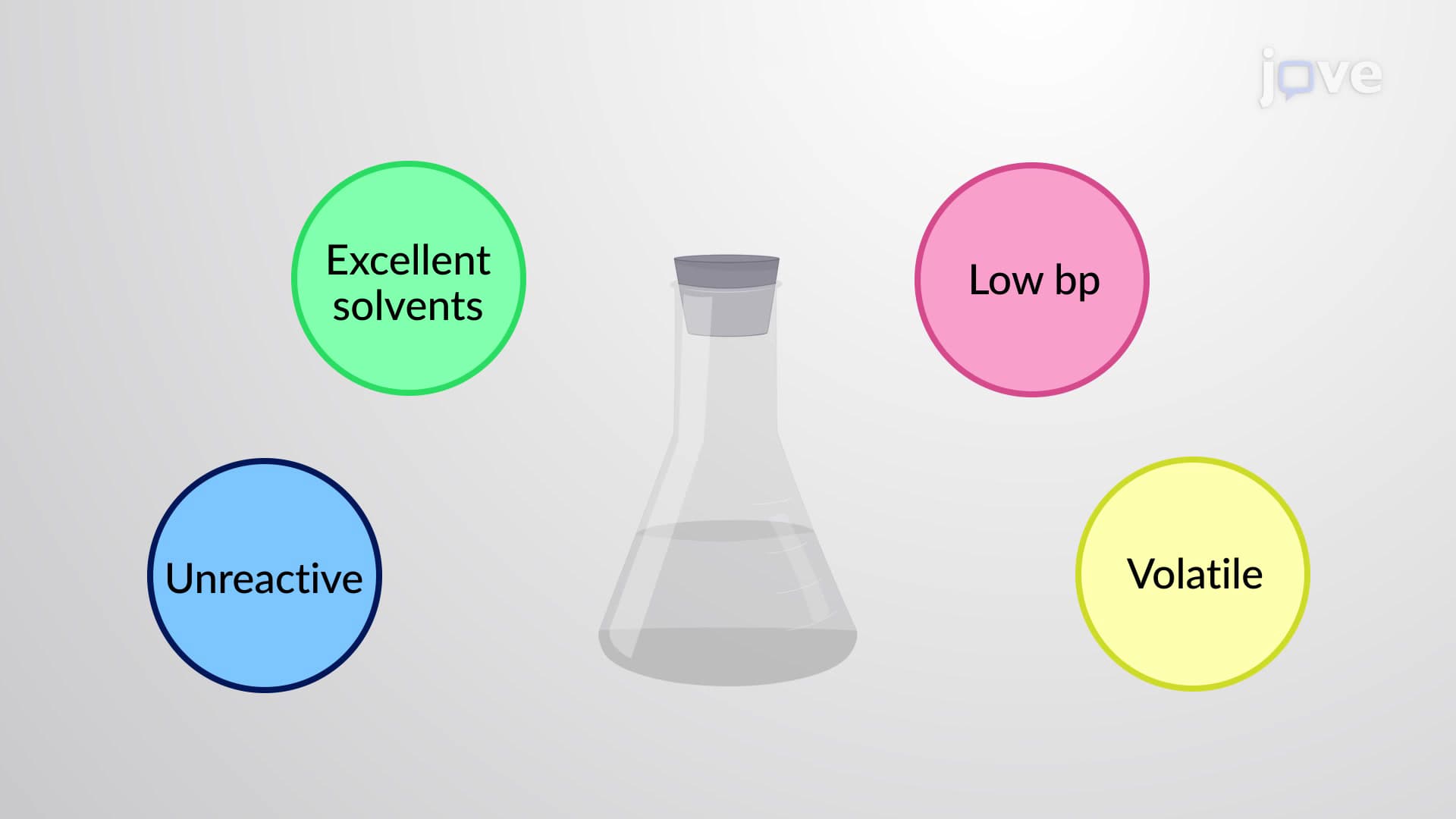
Ever wonder why your nail polish remover evaporates so quickly while water takes forever to dry? The physical properties of ethers explain this fascinating phenomenon through their unique molecular structure and intermolecular forces. Unlike alcohols, ethers cannot form hydrogen bonds with themselves, resulting in dramatically lower boiling points-making them perfect solvents in US pharmaceutical manufacturing and laboratory research. Watch the full video on JoVE Coach to master this concept with expert-led visuals and step-by-step explanations.
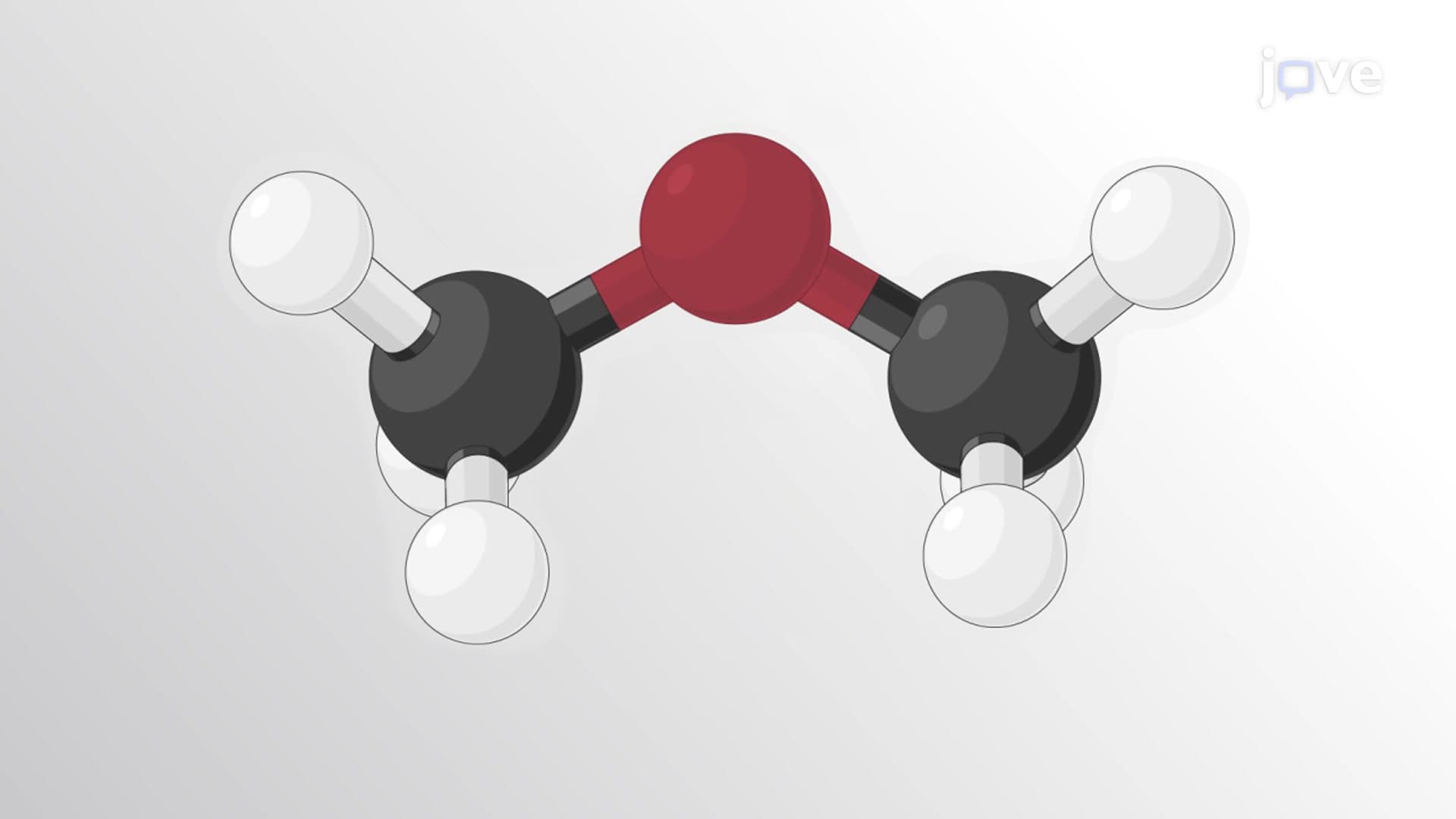
The physical properties of ethers stem from their unique molecular architecture featuring an oxygen atom bonded to two carbon-containing groups. This R-O-R' structure creates a bent molecular geometry with distinct characteristics that set ethers apart from other organic compounds. Most ethers appear as colorless liquids with characteristically pleasant, sweet odors-except for the simplest ethers like dimethyl ether and ethyl methyl ether, which exist as gases at standard room temperature conditions.
Despite containing a polar C-O bond due to oxygen's higher electronegativity, ethers exhibit moderate polarity. The bent molecular geometry prevents complete cancellation of bond dipoles, resulting in a net dipole moment. This polarity enables weak dipole-dipole interactions between ether molecules, though these forces are significantly weaker than the hydrogen bonds found in comparable alcohols. Students preparing for AP Chemistry exams should note that this distinction frequently appears in questions comparing intermolecular forces across different organic compound classes.
The physical properties of ethers include notably low boiling points compared to isomeric alcohols-a crucial concept tested on the MCAT and college organic chemistry midterms. For instance, while ethanol boils at 78.4°C, its isomer dimethyl ether boils at -24.8°C. This dramatic difference occurs because ethers cannot act as hydrogen bond donors, lacking the O-H functionality essential for strong intermolecular associations. However, ether boiling points exceed those of comparable hydrocarbons due to their dipole moments. As molecular weight increases through longer alkyl chains, London dispersion forces become more significant, gradually raising boiling points-explaining why diethyl ether (34.6°C) boils higher than dimethyl ether.
Ether solubility in water demonstrates the compound's ability to serve as hydrogen bond acceptors through oxygen's lone electron pairs. Small ethers like diethyl ether show appreciable water solubility (6.9 g/100 mL), making them valuable in pharmaceutical extractions used by US drug manufacturers. However, solubility decreases dramatically as carbon chain length increases-dibutyl ether shows minimal water solubility due to its dominant hydrophobic character. This trend appears frequently in organic chemistry problem sets and explains why pharmaceutical chemists carefully select ether structures for specific extraction procedures.
Related Micro-courses