Loading subject page…


116,400 views

Video Summary: What Is Sharpless Epoxidation
Did you know that pharmaceutical companies like Pfizer use sharpless epoxidation to create life-saving medications with precise molecular structures? This groundbreaking technique transforms simple alcohols into complex chiral epoxides with remarkable selectivity, achieving up to 97% purity of a single enantiomer. Unlike traditional methods that produce unwanted mixtures, What is Sharpless Epoxidation reveals how chemists control molecular handedness using specialized catalysts. Watch the full video on JoVE Coach to master this concept with expert-led visuals and step-by-step explanations.
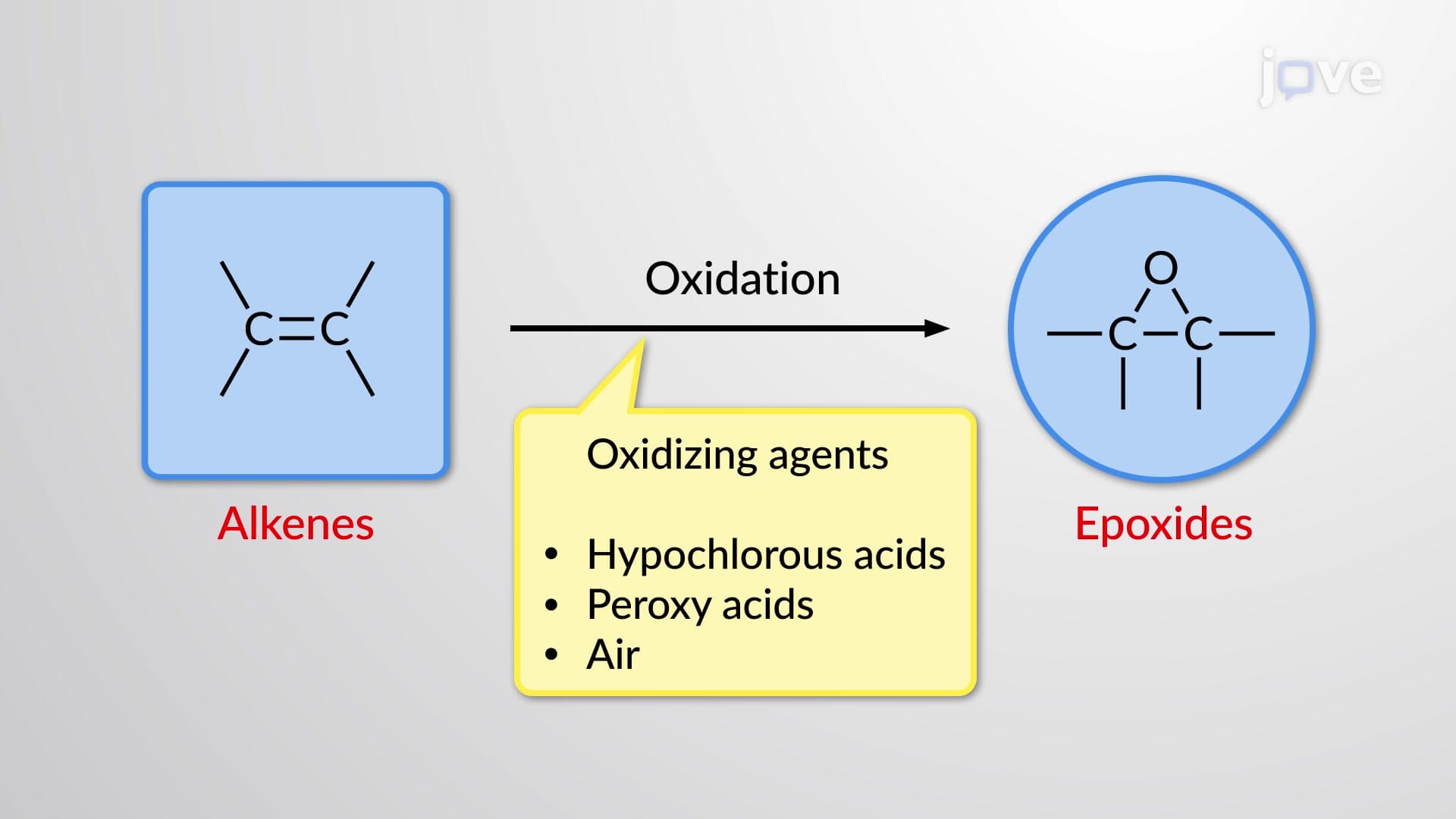
Sharpless epoxidation represents a revolutionary advancement in organic chemistry, addressing a critical limitation of traditional epoxidation methods. While conventional approaches using peroxy acids or halohydrin cyclization produce racemic mixtures (50:50 combinations of both enantiomers), Sharpless epoxidation achieves remarkable enantioselectivity, often exceeding 95% enantiomeric excess.
This Nobel Prize-winning technique specifically targets allylic alcohols-compounds containing both a carbon-carbon double bond and an adjacent alcohol group. The method's precision makes it invaluable for synthesizing pharmaceuticals, where molecular handedness determines therapeutic efficacy versus potential toxicity.
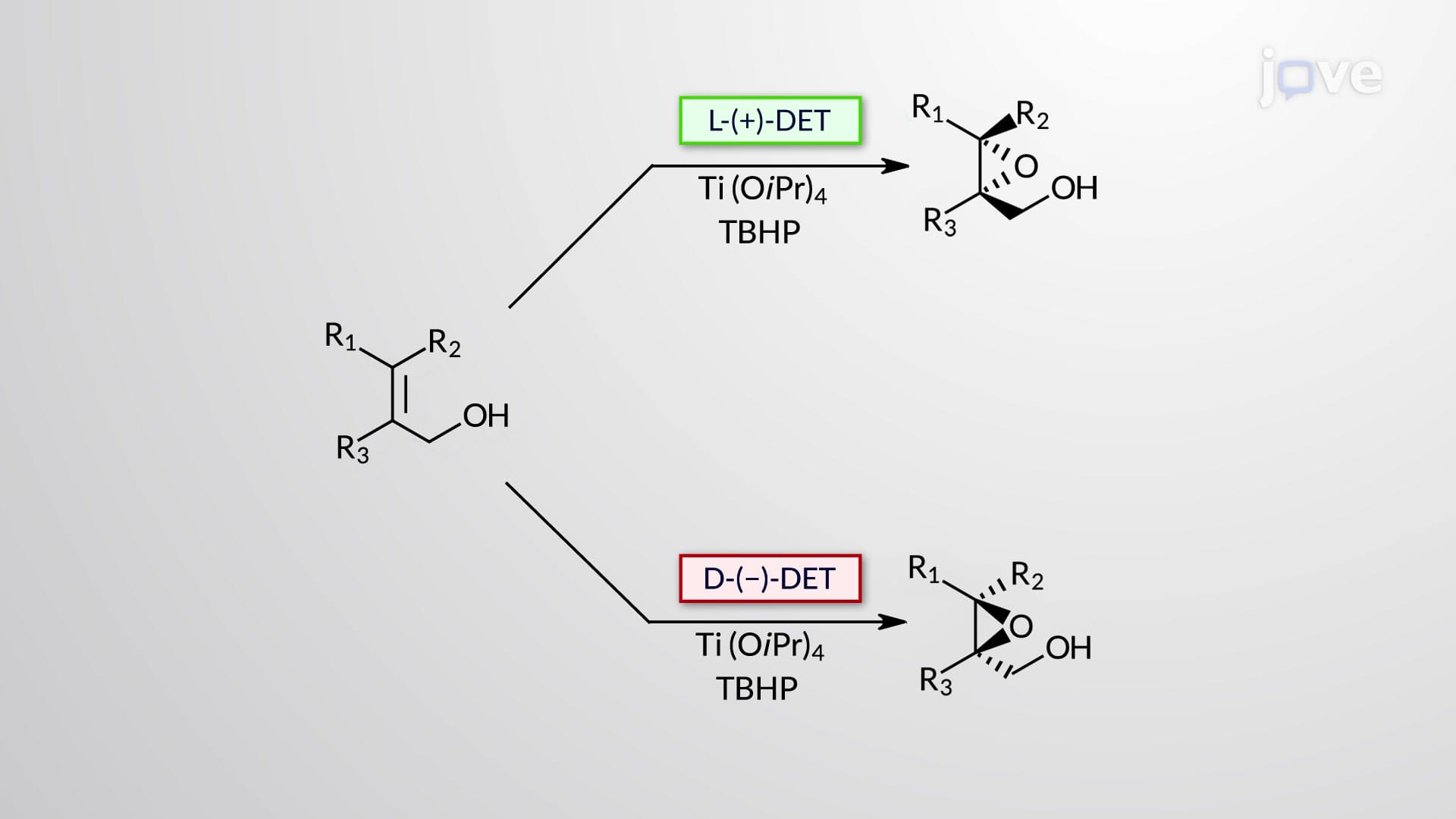
The Sharpless system employs three essential components working in concert. Tert-butyl hydroperoxide (TBHP) serves as the oxidizing agent, delivering oxygen atoms to form the epoxide ring. Titanium tetraisopropoxide acts as the metal center, coordinating with other reagents to create the active catalyst. Most critically, diethyl tartrate (DET) provides chirality-its specific stereoisomer determines which enantiomer predominates in the final product.
The catalytic cycle involves rapid ligand exchange, where titanium coordinates simultaneously with DET, TBHP, and the allylic alcohol substrate. This coordination effectively "clamps" the reactants in a fixed stereochemical arrangement, ensuring consistent delivery of oxygen to the same face of the alkene across multiple reaction cycles.
Predicting Sharpless epoxidation outcomes follows a reliable mnemonic system. Chemists orient the alkene substrate so the hydroxymethyl group (-CH2OH) appears in the lower-right position. In this orientation, L-(+)-DET complexes deliver oxygen to the bottom face, while D-(-)-DET complexes attack the top face. This predictability allows synthetic chemists to design multi-step syntheses with confidence.
For students preparing for AP Chemistry or college organic chemistry exams, mastering this orientation rule proves essential. MCAT questions frequently test stereochemical prediction, making Sharpless epoxidation a high-yield topic for pre-med students.
American pharmaceutical companies extensively utilize Sharpless epoxidation for manufacturing chiral drugs. The technique enables synthesis of single-enantiomer medications, avoiding the complications associated with racemic drug mixtures. This selectivity reduces side effects and improves therapeutic outcomes, making Sharpless epoxidation indispensable in modern medicinal chemistry.
Related Micro-courses