Loading subject page…

- Organic Chemistry
- Radical Chemistry
- Vicinal Diols via Reductive Coupling of Aldehydes or Ketones: Pinacol Coupling Overview
Micro-course: Radical Chemistry
85,200 views
Learn key concepts and earn your certificate.









Vicinal Diols via Reductive Coupling of Aldehydes or Ketones: Pinacol Coupling Overview

00:00
01:27
Video Summary: Vicinal Diols via Reductive Coupling Explained
Ever wondered how pharmaceutical companies create the complex alcohol structures found in life-saving medications? Vicinal diols reductive coupling transforms simple ketones and aldehydes into powerful vicinal diol building blocks through an elegant electron-transfer mechanism. This reaction, particularly the pinacol coupling variant, plays a crucial role in synthesizing compounds used in everything from diabetes medications produced by major US pharmaceutical companies like Pfizer to specialty chemicals. Vicinal Diols Via Reductive Coupling Explained reveals how metal-mediated electron transfers create these essential molecular frameworks. Watch the full video on JoVE Coach to master this concept with expert-led visuals and step-by-step explanations.
- Understand the fundamental mechanism of Vicinal Diols Via Reductive Coupling Explained, including how single electron transfer initiates radical formation from carbonyl compounds
- Identify the key differences between reaction outcomes in protic versus aprotic solvents and predict product formation accordingly
- Analyze the role of metals like sodium and magnesium as electron sources and their coordination effects on ketyl radical intermediates
- Compare the fate of ketyl radicals in different solvent systems, distinguishing between protonation pathways and dimerization reactions
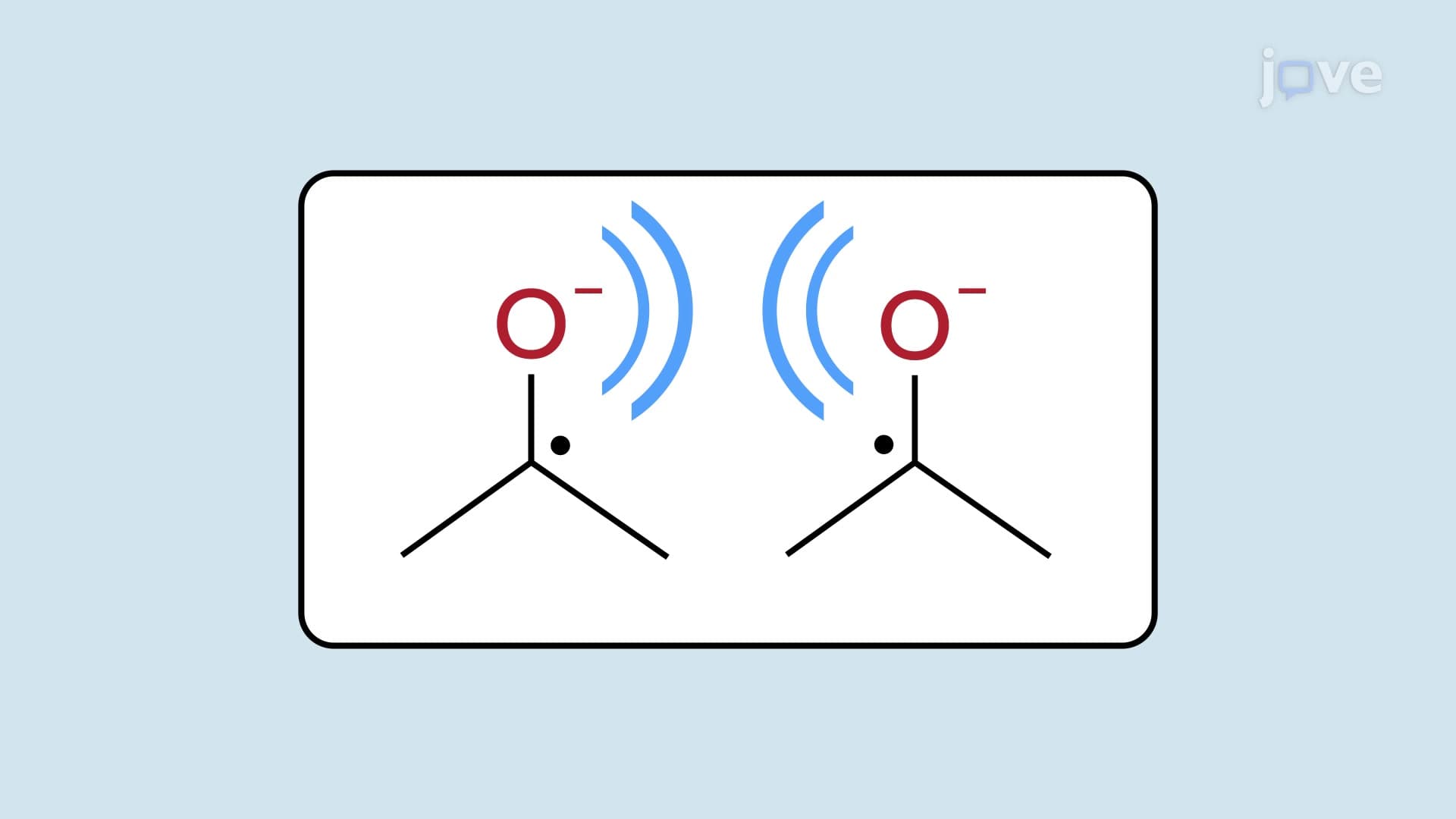
- Evaluate how electrostatic repulsion is overcome through metal coordination in pinacol coupling reactions
- Apply mechanistic knowledge to predict vicinal diol products from various aldehyde and ketone starting materials
- Recognize the synthetic utility of reductive coupling in pharmaceutical and industrial chemical synthesis
- Explore structure-activity relationships between different metal reducing agents and their effectiveness in vicinal diol formation
Understanding Vicinal Diols Via Reductive Coupling Mechanisms
Vicinal diols via reductive coupling represents a powerful synthetic strategy that transforms simple carbonyl compounds into complex diol structures through metal-mediated electron transfer processes. This reaction class, exemplified by the famous pinacol coupling, demonstrates elegant radical chemistry principles that students encounter in advanced organic chemistry courses and standardized exams like the MCAT.
Electron Transfer Initiation and Ketyl Formation
The reaction begins when metals like sodium or magnesium donate a single electron to the π* orbital of a carbonyl compound. This electron transfer creates a ketyl radical anion-a highly reactive intermediate that can be represented with either the radical on carbon or oxygen, with the negative charge distributed across the molecule. This resonance stabilization explains why ketyls are relatively stable intermediates despite their radical nature.
Understanding this electron transfer mechanism proves essential for AP Chemistry students tackling electrochemistry concepts and college undergraduates studying advanced organic synthesis. The process mirrors biological electron transport chains, making it relevant for pre-med students preparing for biochemistry sections of standardized tests.
Solvent Effects: Protic vs. Aprotic Environments
The reaction's outcome dramatically depends on solvent choice-a concept frequently tested in college organic chemistry exams. In protic solvents like ethanol, available protons immediately quench the ketyl radical through protonation, followed by a second electron transfer yielding simple alcohols. This pathway represents a standard carbonyl reduction mechanism.
However, aprotic solvents like benzene create entirely different conditions. Without available protons, ketyl radicals accumulate and undergo dimerization, forming the characteristic vicinal diol products. This solvent-dependent selectivity exemplifies how reaction conditions control synthetic outcomes-a principle emphasized in pharmaceutical chemistry programs at US universities like MIT and Stanford.
Metal Coordination and Dimerization Dynamics
A fascinating aspect of this chemistry involves overcoming electrostatic repulsion between negatively charged ketyls. Metals like magnesium form covalent metal-oxygen bonds with ketyl intermediates, effectively neutralizing charges and enabling rapid dimerization. This coordination chemistry principle appears frequently in inorganic chemistry courses and demonstrates how main-group metals participate in organic transformations.
The resulting vicinal diols find extensive applications in pharmaceutical synthesis, particularly in creating complex natural product analogs used by US biotech companies. Students studying chemical biology will encounter these structural motifs in drug design contexts, making this reaction mechanism practically relevant for career preparation.
Frequently Asked Questions
Vicinal diols via reductive coupling is a radical dimerization reaction where metals transfer electrons to carbonyl compounds, creating ketyl radicals that couple together to form vicinal diols. The process requires aprotic solvents to prevent protonation of intermediates. This mechanism is fundamental to synthetic organic chemistry and appears frequently in MCAT organic chemistry sections.
MCAT questions often test the mechanism, solvent effects, and product prediction aspects of this reaction. AP Chemistry may include it in electrochemistry contexts, focusing on electron transfer processes and oxidation state changes. College midterms typically emphasize mechanistic details and synthetic applications in pharmaceutical chemistry contexts.
Unlike typical reductions that produce alcohols, pinacol coupling requires aprotic solvents to allow ketyl dimerization rather than protonation. The reaction creates carbon-carbon bonds between two carbonyl compounds, forming vicinal diols instead of simple alcohols. This distinction is crucial for synthetic strategy questions in advanced organic chemistry courses.
Major US pharmaceutical companies like Johnson & Johnson and Merck use vicinal diol intermediates in synthesizing complex drug molecules, particularly those targeting diabetes and cardiovascular diseases. These structural motifs appear in many FDA-approved medications, making this chemistry directly relevant to pharmaceutical career paths.
While the complete mechanism requires advanced organic chemistry knowledge, high school students can grasp the basic electron transfer concepts and product formation patterns. The reaction builds on familiar electrochemistry principles from general chemistry, making it accessible with proper foundation building.
Focus on drawing complete mechanisms with electron flow arrows, practice predicting products based on solvent conditions, and memorize key metal reducing agents. Create comparison charts for protic vs. aprotic outcomes, and work through pharmaceutical synthesis examples to understand practical applications.
Explore other radical coupling reactions like McMurry coupling for alkene formation, study transition metal-catalyzed cross-coupling reactions, and investigate modern pharmaceutical synthesis strategies. These topics build naturally on the electron transfer and radical chemistry principles from reductive coupling mechanisms.
Related Micro-courses
20 Concepts
15 Concepts

12 Concepts