Loading…
Loading video…

46,055 views
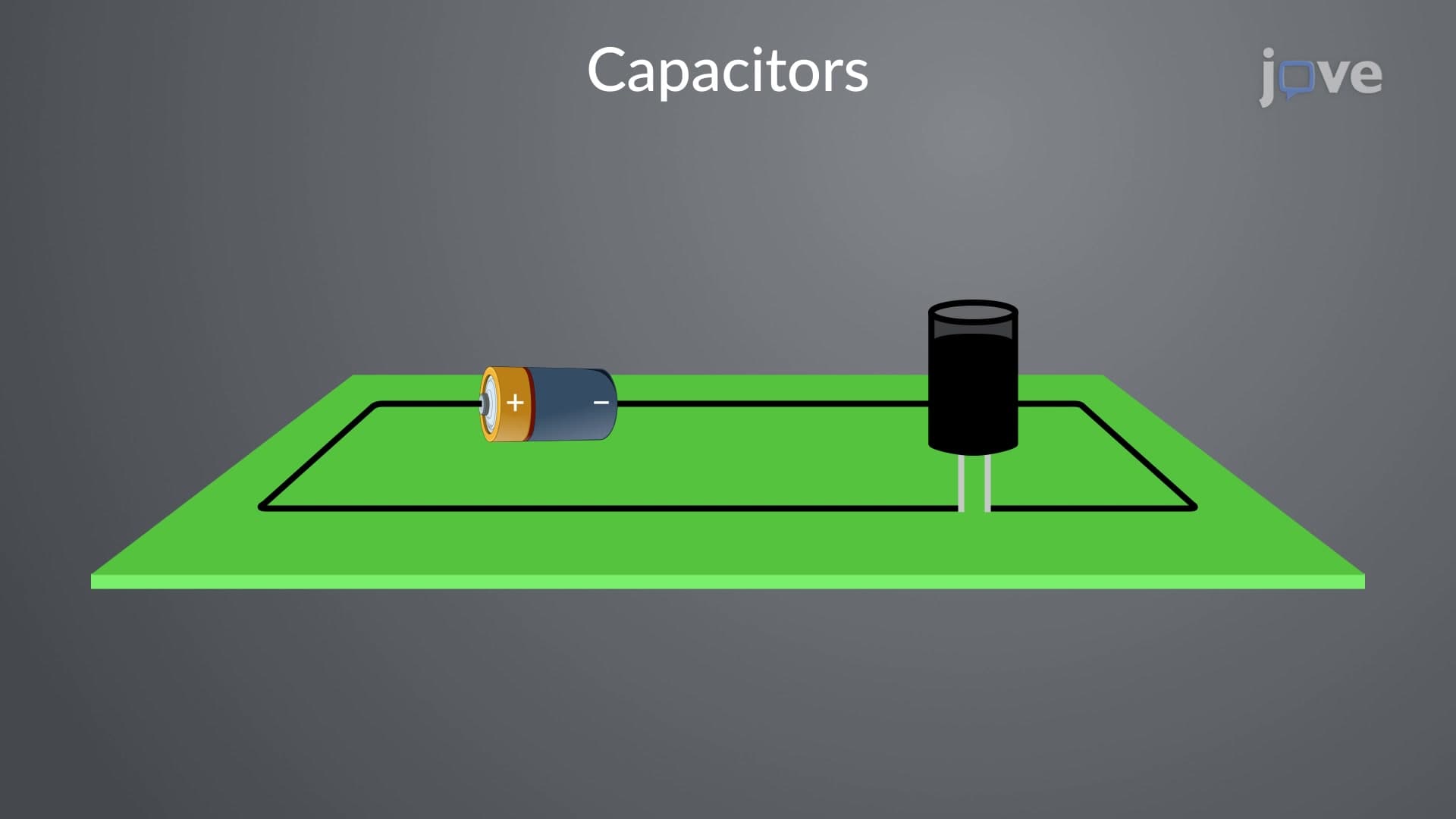
Ever wonder how your car's engine fires up instantly when you turn the key? Capacitor energy calculations: problem-solving strategies reveal the physics behind capacitor-discharge ignition systems in millions of American vehicles, where capacitors store and rapidly release electrical energy to spark plugs. These temporary energy storage devices follow predictable mathematical relationships between charge, voltage, capacitance, and stored energy. Understanding these calculations helps solve real engineering problems, from automotive ignition systems to camera flashes in smartphones. Watch the full video on JoVE Coach to master this concept with expert-led visuals and step-by-step explanations.
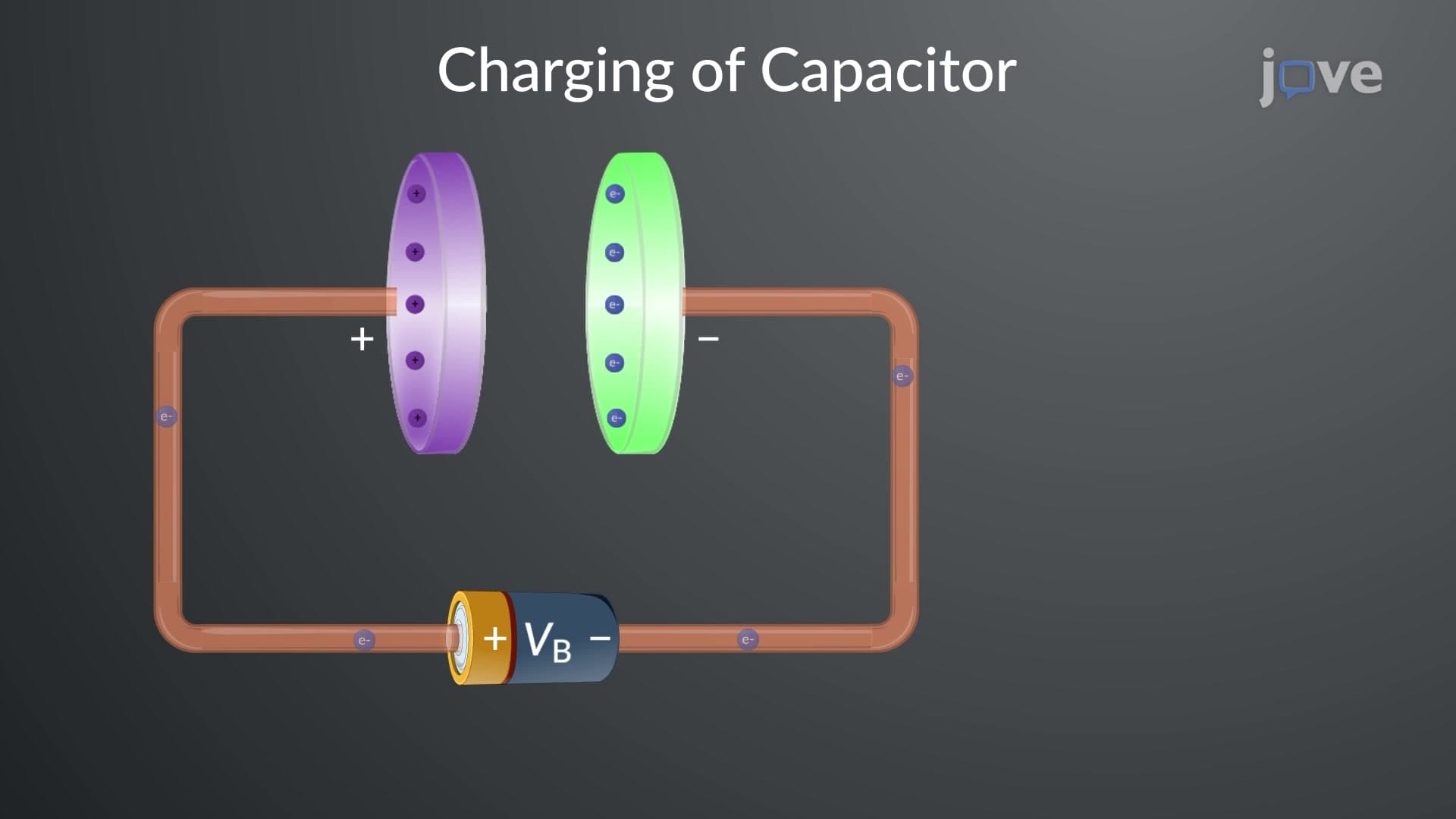
Capacitor energy calculations: problem-solving strategies form the foundation for understanding how electrical devices store and release energy efficiently. Capacitors function as temporary electrical storage units, accumulating charge on their plates and creating an electric field that stores potential energy. This stored energy can be released rapidly when needed, making capacitors essential components in countless American-made electronics from Tesla vehicles to Apple smartphones.
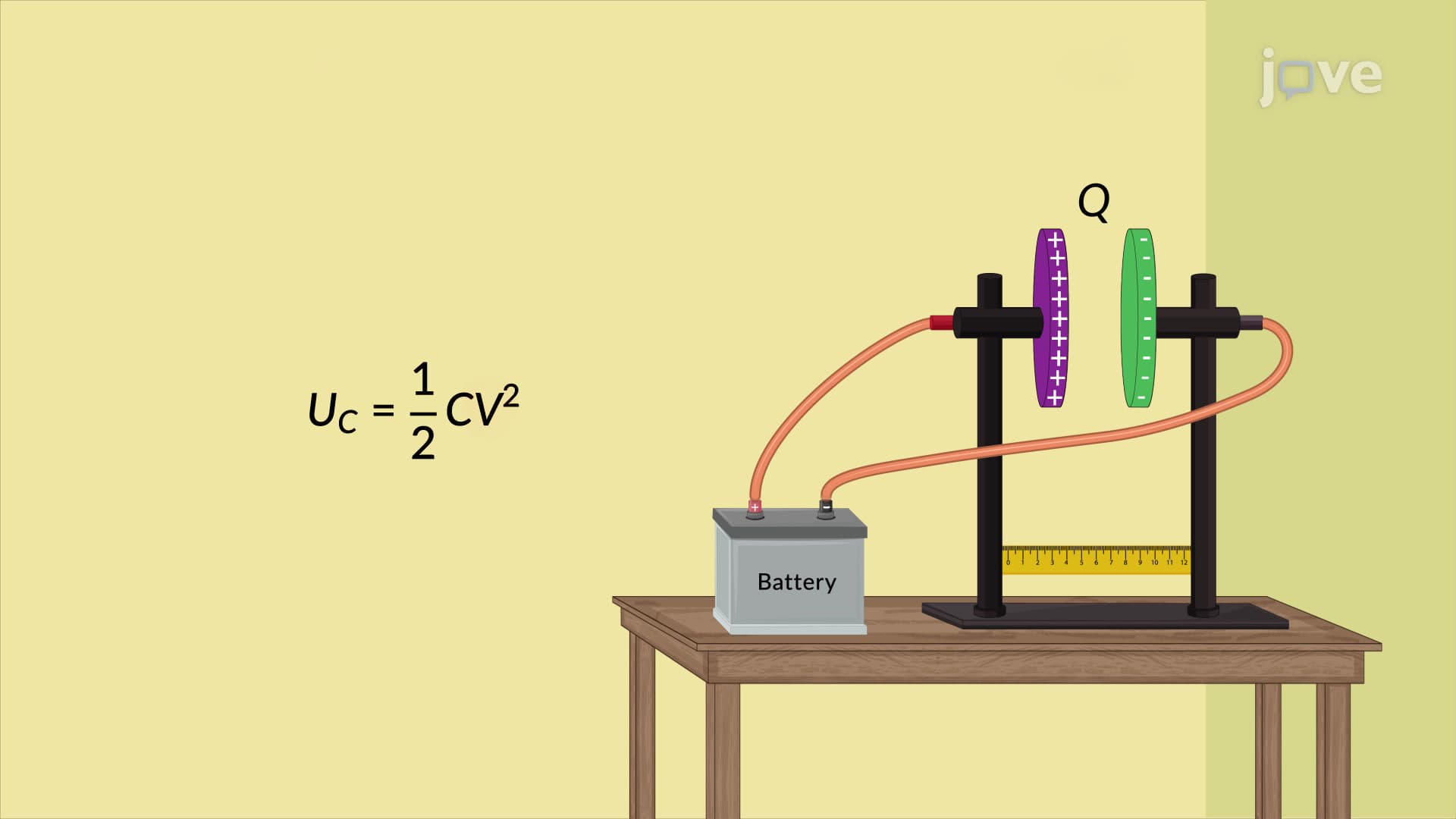
The fundamental equation for capacitor energy storage is U = (1/2)CV², where U represents stored energy in joules, C is capacitance in farads, and V is voltage. This formula connects directly to other important relationships: Q = CV (charge equals capacitance times voltage) and U = Q²/(2C). These interconnected equations allow students to solve problems regardless of which variables are initially known.
For example, in the automotive ignition system described, knowing charge (375 microCoulombs) and capacitance (1.5 microFarads) allows calculation of voltage: V = Q/C = 250 volts. Subsequently, energy storage becomes U = (1/2)(1.5 × 10⁻⁶)(250)² = 0.047 joules. This energy release creates the spark that ignites fuel in millions of American cars daily.
Capacitor energy calculations appear frequently in AP Physics exams, college circuits courses, and MCAT preparation. Students encounter these problems in various formats: sometimes voltage and capacitance are given, other times charge and energy must be determined. The key strategy involves identifying known quantities, selecting the appropriate equation, and systematically solving for unknowns.
Consider camera flash units in smartphones manufactured by companies like Google or Samsung in their US facilities. These systems typically use capacitors storing 1-5 joules of energy, charged to several hundred volts. When photographers press the shutter button, capacitors discharge this energy through xenon flash tubes in milliseconds, demonstrating the practical importance of understanding energy storage calculations.
Mastering capacitor energy calculations: problem-solving strategies requires recognizing that energy storage is always positive (capacitors store energy regardless of charge polarity) and understanding that doubling voltage quadruples stored energy due to the V² relationship. This principle explains why high-voltage capacitors in medical defibrillators used in American hospitals can store dangerous amounts of energy even at relatively small capacitance values.
Frequently Asked Questions
Capacitor energy calculations: problem-solving strategies are systematic approaches to determining how much electrical energy capacitors store and release. These calculations are crucial for designing electronic devices, from smartphone cameras to automotive ignition systems, and frequently appear on AP Physics and MCAT exams.
AP Physics exams typically present capacitor energy problems involving circuit analysis, energy conservation, and multi-step calculations. Students might analyze parallel plate capacitors, calculate energy changes when dielectrics are inserted, or determine power delivery in RC circuits. These problems often combine multiple physics concepts including electric fields and potential difference.
The MCAT requires knowledge of three key formulas: U = (1/2)CV², U = (1/2)QV, and U = Q²/(2C). Students should also understand Q = CV and be able to manipulate these equations to solve for any variable. Practice problems involving medical devices like defibrillators help connect concepts to healthcare applications.
Major US tech companies like Intel, Apple, and Tesla rely on capacitor energy calculations for product design. Examples include power management in computer processors, camera flash systems in smartphones, and regenerative braking energy storage in electric vehicles. These applications demonstrate the practical importance of mastering energy storage calculations.
No, basic capacitor energy calculations use algebra and do not require calculus knowledge. High school students can master these concepts using fundamental mathematical operations. However, advanced topics like time-dependent charging and discharging do involve exponential functions that appear in college-level physics courses.
Focus on understanding the three main energy formulas and practice identifying which formula applies based on given information. Create a systematic approach: list known variables, identify the target unknown, select the appropriate equation, and solve step-by-step. Regular practice with varied problem types builds confidence for standardized tests.
Capacitor energy storage connects directly to electric potential, electric fields, and energy conservation principles. Understanding these calculations provides foundation knowledge for advanced topics including AC circuits, electromagnetic waves, and quantum physics concepts that appear in upper-level college courses and graduate school preparation.
Electrical engineers, biomedical engineers, and automotive engineers working for American companies frequently apply capacitor energy calculations. Career paths include designing medical equipment at companies like Medtronic, developing electric vehicle systems at Ford or GM, or creating consumer electronics at major technology firms throughout Silicon Valley.
Related Micro-courses


Related Subjects
 Math Fundamentals 11 micro-courses›
 Statistics 17 micro-courses›