Loading…
Loading video…

52,444 views
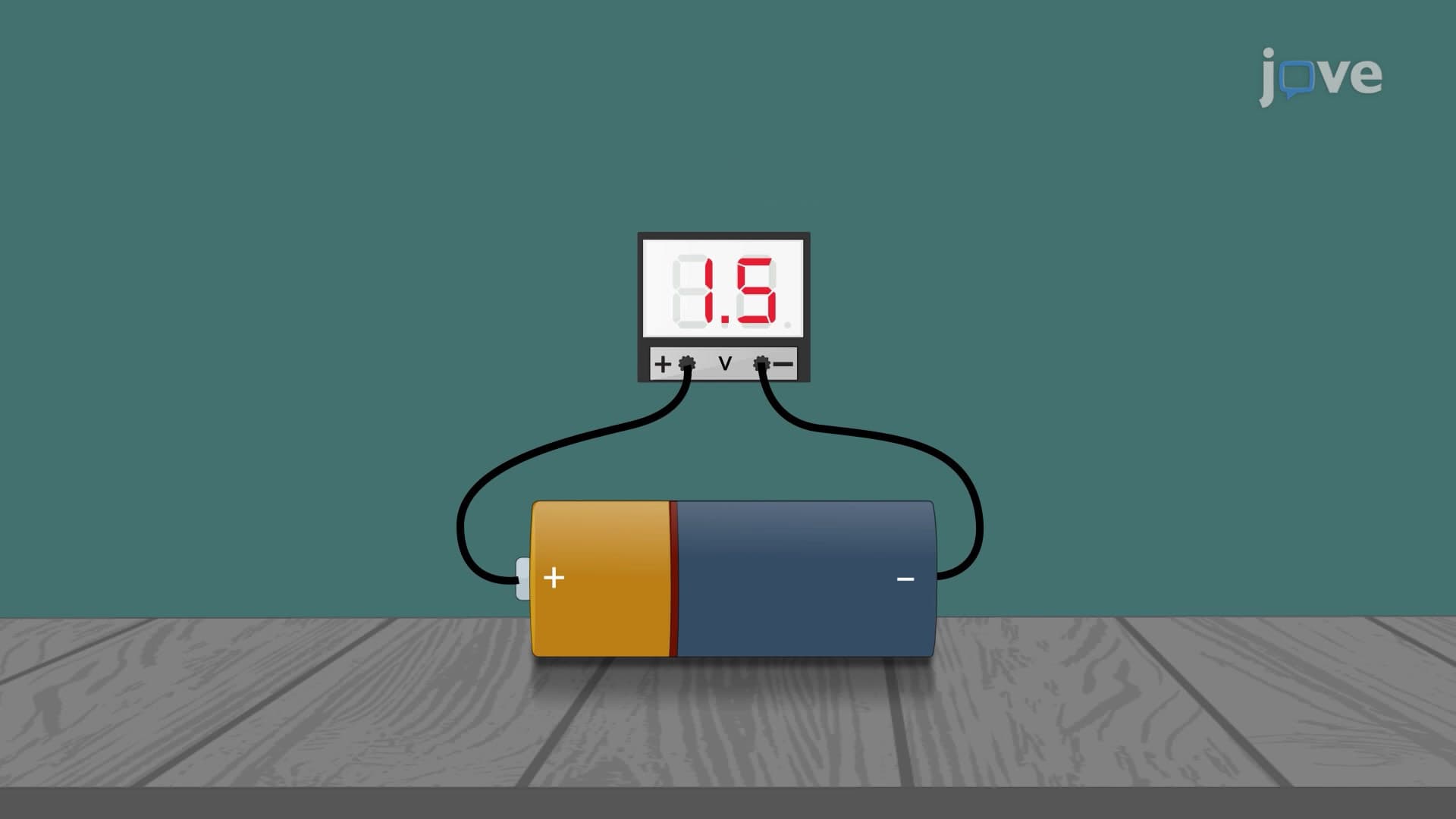
When your smartphone battery shows 3.7 volts but actually delivers less power as it drains, you're witnessing electromotive force in action. Electromotive force represents the maximum voltage a battery can theoretically provide, distinct from the actual voltage you measure across its terminals. Named by Alessandro Volta, this concept explains why a standard AA battery rated at 1.5 volts might only deliver 1.3 volts when powering your TV remote. Watch the full video on JoVE Coach to master this concept with expert-led visuals and step-by-step explanations.
Electromotive force (EMF) represents one of the most fundamental yet misunderstood concepts in electrical physics. Despite its name suggesting a mechanical force, EMF actually describes the potential difference that drives electrical current through a circuit. Think of it as the "electrical pressure" that pushes electrons from the negative terminal to the positive terminal of a power source.
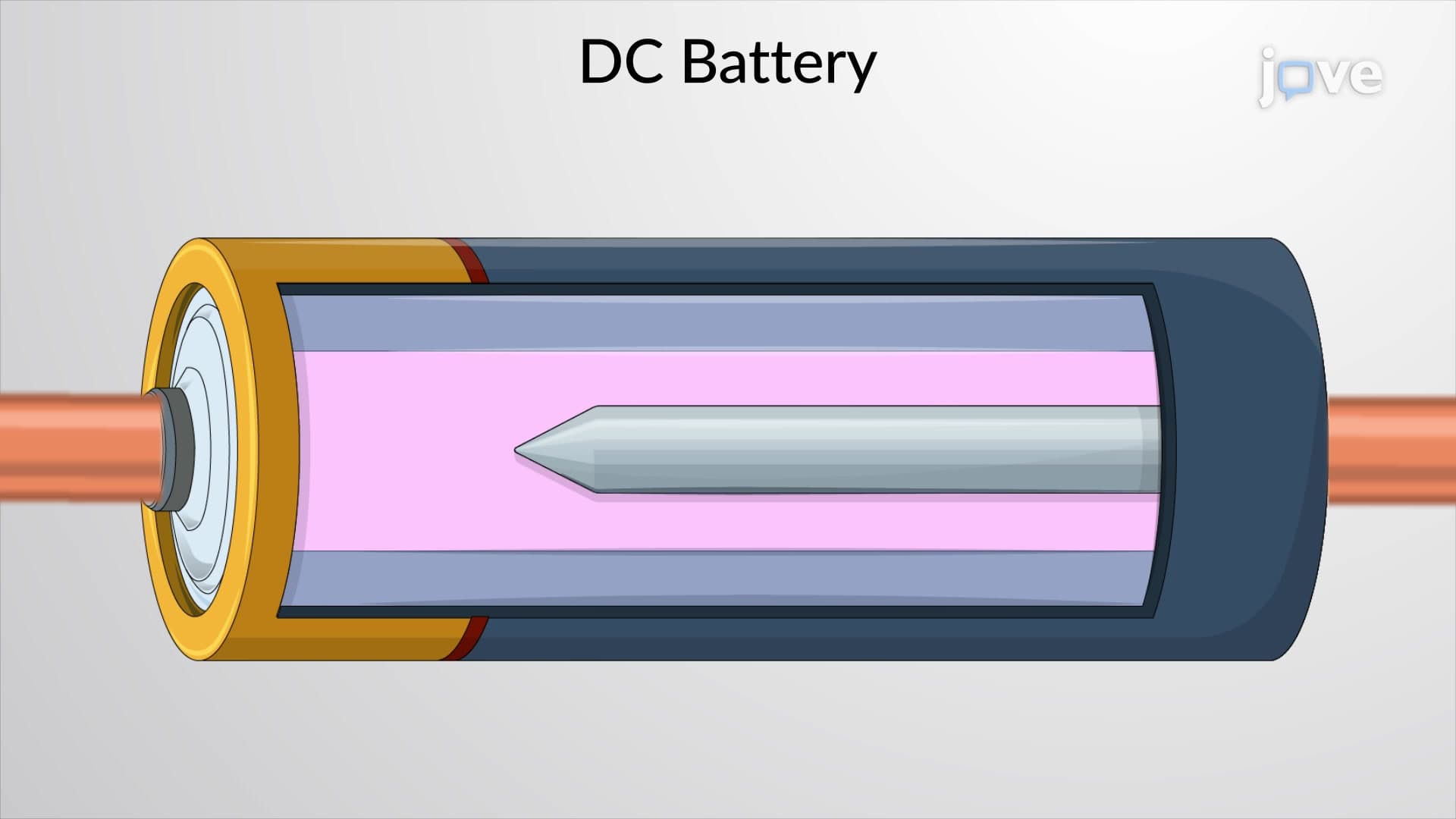
The electromotive force definition centers on work and energy transfer. EMF quantifies the amount of work done per unit charge to move electrons across the terminals of a power source. Measured in volts, EMF represents the maximum voltage a battery or generator can theoretically deliver under ideal conditions—specifically, in an open circuit where no current flows.
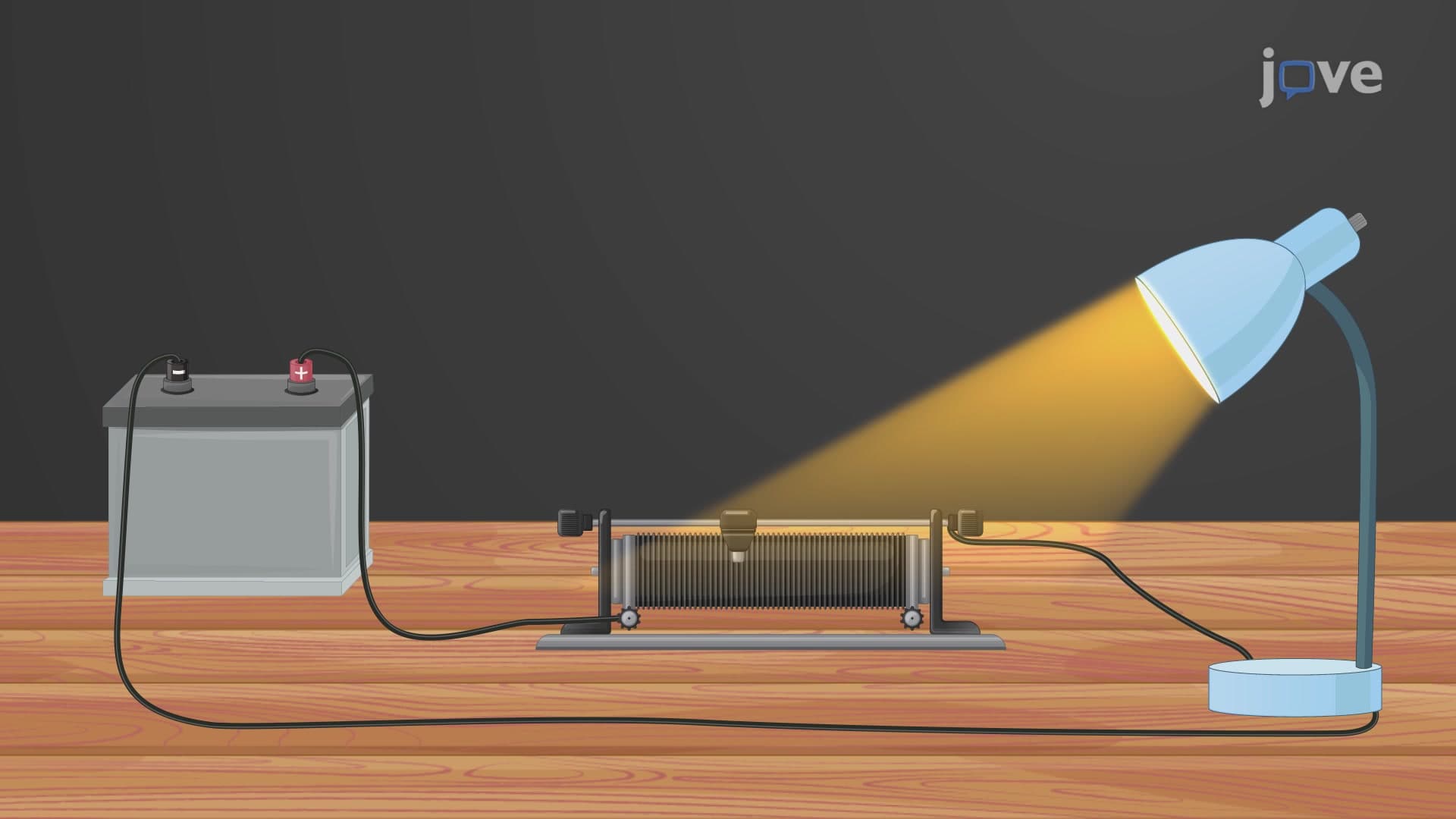
When students encounter what is electromotive force in detail, they often struggle with the distinction between EMF and terminal voltage. Consider a typical car battery rated at 12 volts EMF. When you measure across its terminals with a multimeter while the engine is off (open circuit), you might read close to 12 volts. However, when starting the engine (closed circuit), that voltage drops significantly due to the battery's internal resistance.
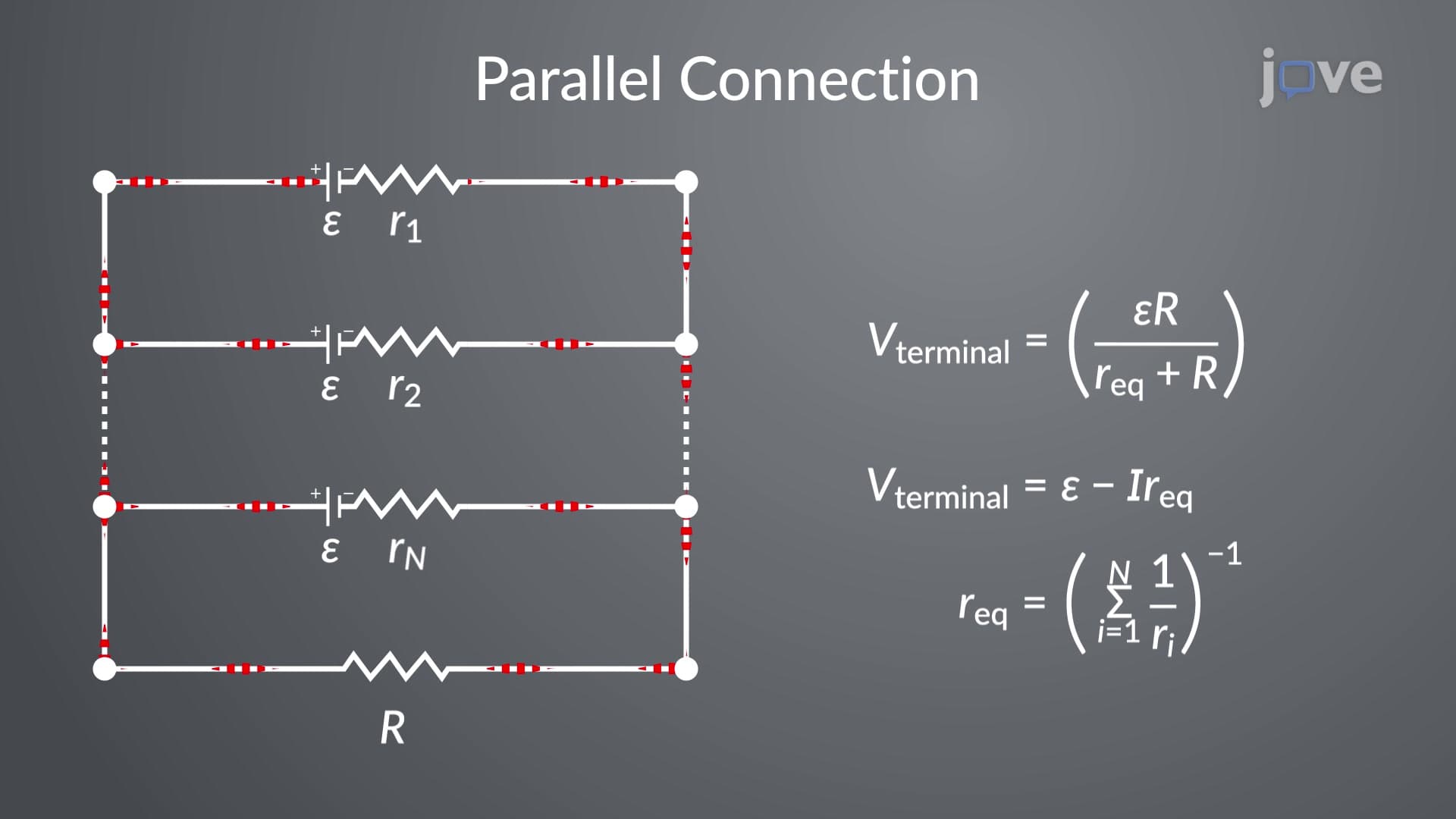
Every real battery contains internal resistance that creates a voltage drop when current flows. This explains why your laptop battery might show 11.1 volts when fully charged but deliver less voltage under heavy computational loads. The terminal voltage equation becomes: Terminal Voltage = EMF - (Current × Internal Resistance).
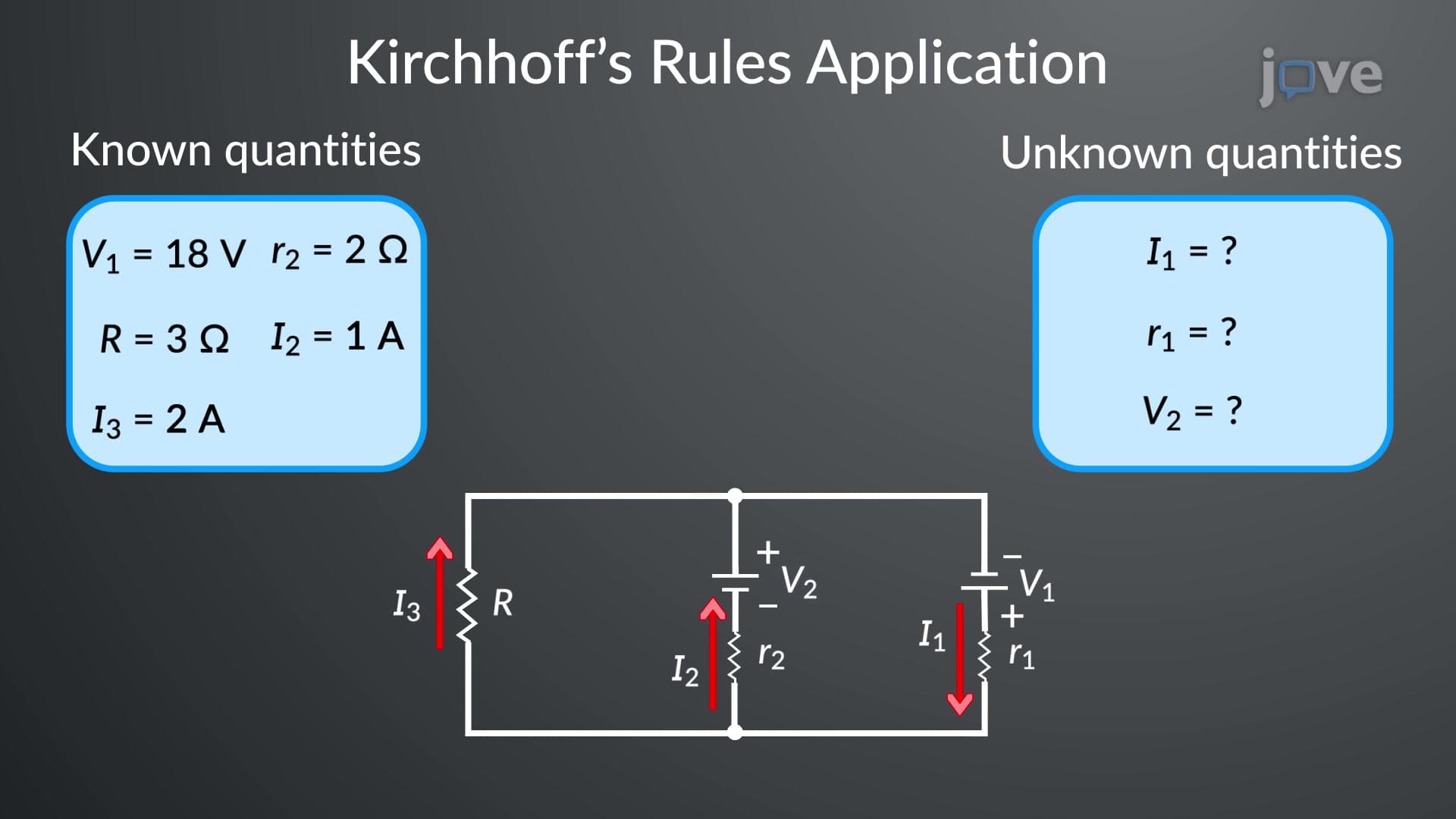
In AP Physics courses, students frequently encounter problems involving EMF calculations. For instance, if a battery has an EMF of 9 volts and internal resistance of 0.5 ohms, and supplies 2 amperes to a circuit, the terminal voltage equals 9V - (2A × 0.5Ω) = 8 volts.
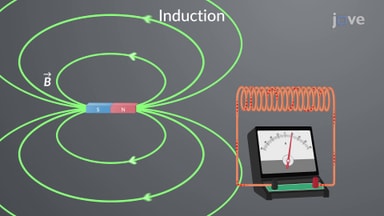
Understanding electromotive force basics proves crucial for success in standardized tests like the AP Physics exam and SAT Subject Test in Physics. Problems often require students to distinguish between ideal voltage sources (pure EMF) and real-world batteries with internal resistance. College-level physics courses expand this foundation to include electromagnetic induction, where changing magnetic fields generate EMF in conductors—the principle behind electric generators and transformers powering American homes and industries.
Frequently Asked Questions
Electromotive force (EMF) is the maximum voltage a power source can deliver in an open circuit, while regular voltage refers to the actual potential difference measured across terminals. EMF represents the theoretical limit, whereas measured voltage accounts for internal resistance losses. Think of EMF as a battery's "rated capacity" versus its actual performance under load.
AP Physics 1 and 2 exams frequently test EMF through circuit analysis problems involving batteries with internal resistance. Students must calculate terminal voltage, current flow, and power dissipation. Common question types include determining battery efficiency and analyzing voltage drops in series circuits. Practice problems typically involve car batteries, household electronics, or laboratory power supplies.
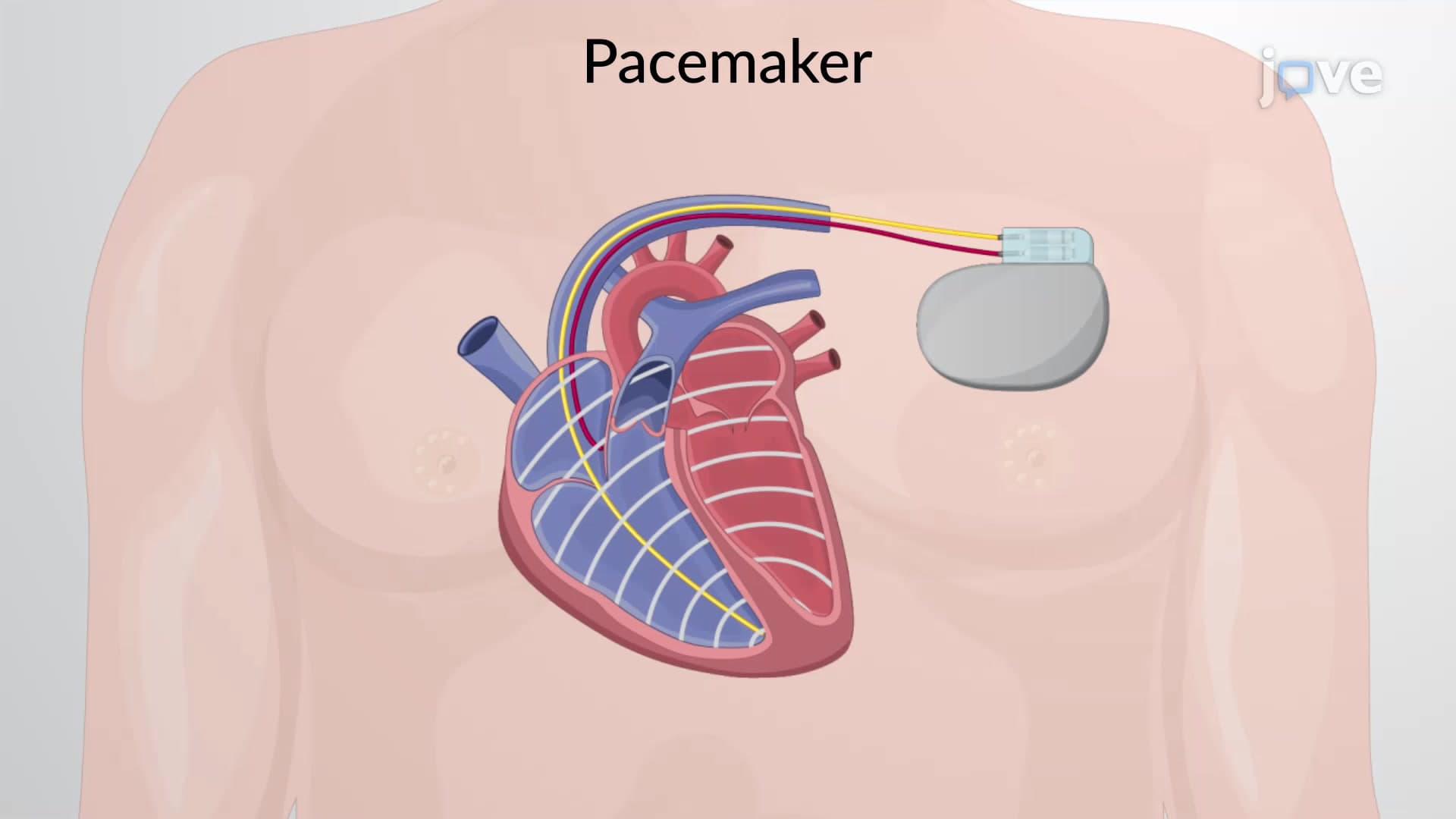
The MCAT Physics section includes EMF concepts within electrochemistry and circuit analysis. Medical devices like EKG machines, defibrillators, and pacemakers rely on controlled EMF sources. Understanding how batteries deliver voltage under varying loads helps explain biomedical equipment functionality. This knowledge connects to broader physiology topics involving electrical signals in the nervous system.
Your iPhone's battery management system monitors EMF to display accurate charge percentages and prevent damage from over-discharge. Electric vehicles like Tesla cars use EMF principles in their regenerative braking systems, where motors act as generators. Solar panels on American homes convert sunlight into EMF, feeding power back into the electrical grid through inverter systems.
Not at all—EMF concepts build naturally on basic voltage and current knowledge from introductory physics. Start with simple battery circuits before tackling internal resistance calculations. Most high school physics courses introduce EMF through hands-on experiments with multimeters and various battery types. The mathematical requirements involve only basic algebra and Ohm's law applications.
Create comparison charts showing EMF versus terminal voltage in different scenarios. Practice circuit problems with varying internal resistance values and load conditions. Use online circuit simulators to visualize voltage drops in real-time. Focus on unit analysis and dimensional checking—EMF always measures in volts, regardless of the circuit complexity.
EMF foundations lead to electromagnetic induction, AC generator theory, and transformer design in advanced physics courses. Engineering students explore EMF in motor control systems and battery technology development. Pre-med students encounter EMF applications in biomedical instrumentation and cardiac electrophysiology. These connections make EMF knowledge valuable across multiple STEM disciplines.
Automotive engineers design hybrid vehicle systems using EMF calculations for battery optimization and motor control. Aerospace companies like Boeing rely on EMF principles for aircraft electrical systems and emergency power sources. Renewable energy engineers calculate EMF output for wind turbines and solar installations across American power grids.
Related Micro-courses

Related Subjects
 Math Fundamentals 11 micro-courses›
 Statistics 17 micro-courses›