Loading…
Loading video…

54,321 views
Did you know that the energy stored in a simple capacitor inside your smartphone follows the same physics principles as massive power grids across the United States? Energy associated with electric fields represents the fundamental concept of how electrical potential energy is stored and distributed throughout space. From Tesla's Supercharger stations to medical defibrillators in hospitals, understanding what is energy associated helps explain how electrical systems store and release power efficiently. Watch the full video on JoVE Coach to master this concept with expert-led visuals and step-by-step explanations.
Energy associated fundamentally describes how electrical potential energy is stored within systems of electric charges. This concept bridges the gap between individual point charges and complex continuous charge distributions found in real-world applications. When engineers design capacitors for electric vehicles or calculate power losses in transmission lines, they rely on these energy principles.
The foundation begins with continuous charge distributions, where charge is spread throughout a volume rather than concentrated at specific points. Unlike discrete charges, continuous distributions require integration techniques to calculate total energy. This approach proves essential for analyzing everything from the insulation in high-voltage power lines to the dielectric materials in smartphone batteries.
The energy calculation starts with the relationship between volume charge density (ρ) and electric potential (V). The total energy equals the integral of ρV over the entire volume, but this approach becomes computationally complex for irregular charge distributions.
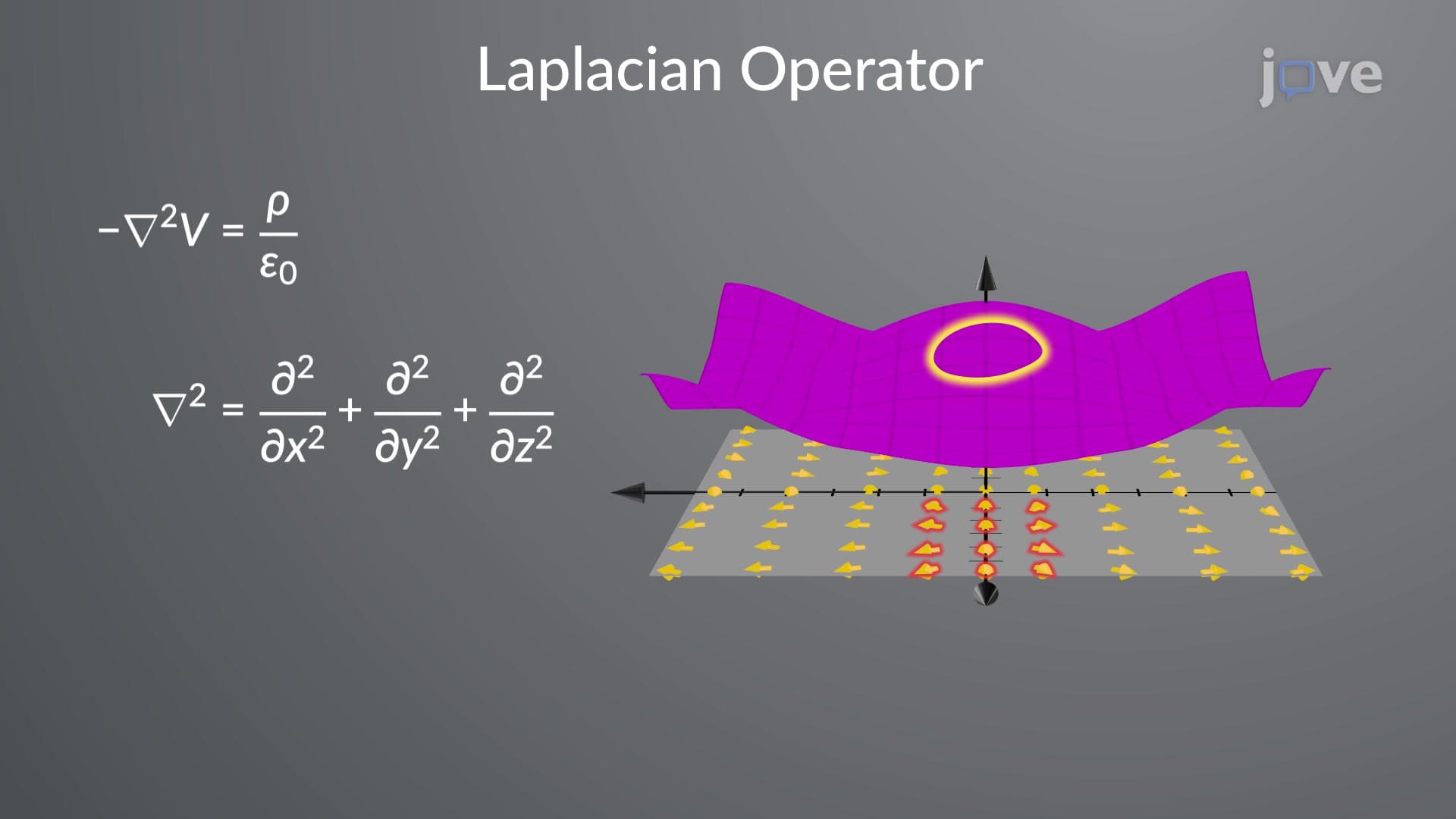
Applying Gauss's law transforms this charge-based calculation into a field-based approach. Using the mathematical identity ∇·E = ρ/ε₀, where E represents the electric field and ε₀ is the permittivity of free space, the energy expression becomes dependent on field quantities rather than charge distributions. This transformation proves particularly valuable when analyzing capacitor designs, where field patterns are often more easily determined than charge distributions.
The divergence theorem enables converting volume integrals into surface integrals, revealing crucial insights about energy distribution. As the integration volume expands, the surface integral contribution decreases as 1/r², while the volume integral increases to maintain energy conservation. This mathematical behavior explains why energy calculations for infinite systems remain finite and well-defined.
For practical applications like designing lightning protection systems or analyzing electromagnetic interference, this principle ensures that energy calculations converge to meaningful values regardless of the system's theoretical boundaries.
Modern applications span from medical devices to renewable energy systems. MRI machines in hospitals like Mayo Clinic rely on precise energy calculations for superconducting magnets. Tesla's battery management systems use these principles to optimize energy storage and prevent thermal runaway. Power companies like Pacific Gas & Electric apply similar calculations when designing transmission line insulation and predicting electrical stress in equipment.
Students preparing for AP Physics C exams or college-level electromagnetism courses encounter these concepts in capacitor energy problems, field energy density calculations, and electromagnetic theory applications. The MCAT physics section frequently tests understanding of energy storage in biological systems, where similar principles govern nerve impulse transmission and cellular membrane potentials.
Frequently Asked Questions
Energy associated refers to the electrical potential energy stored in systems with electric charges and fields. It quantifies how much work was required to assemble a charge configuration or how much energy can be extracted from it. This concept applies to everything from tiny capacitors in electronics to large-scale power storage systems.
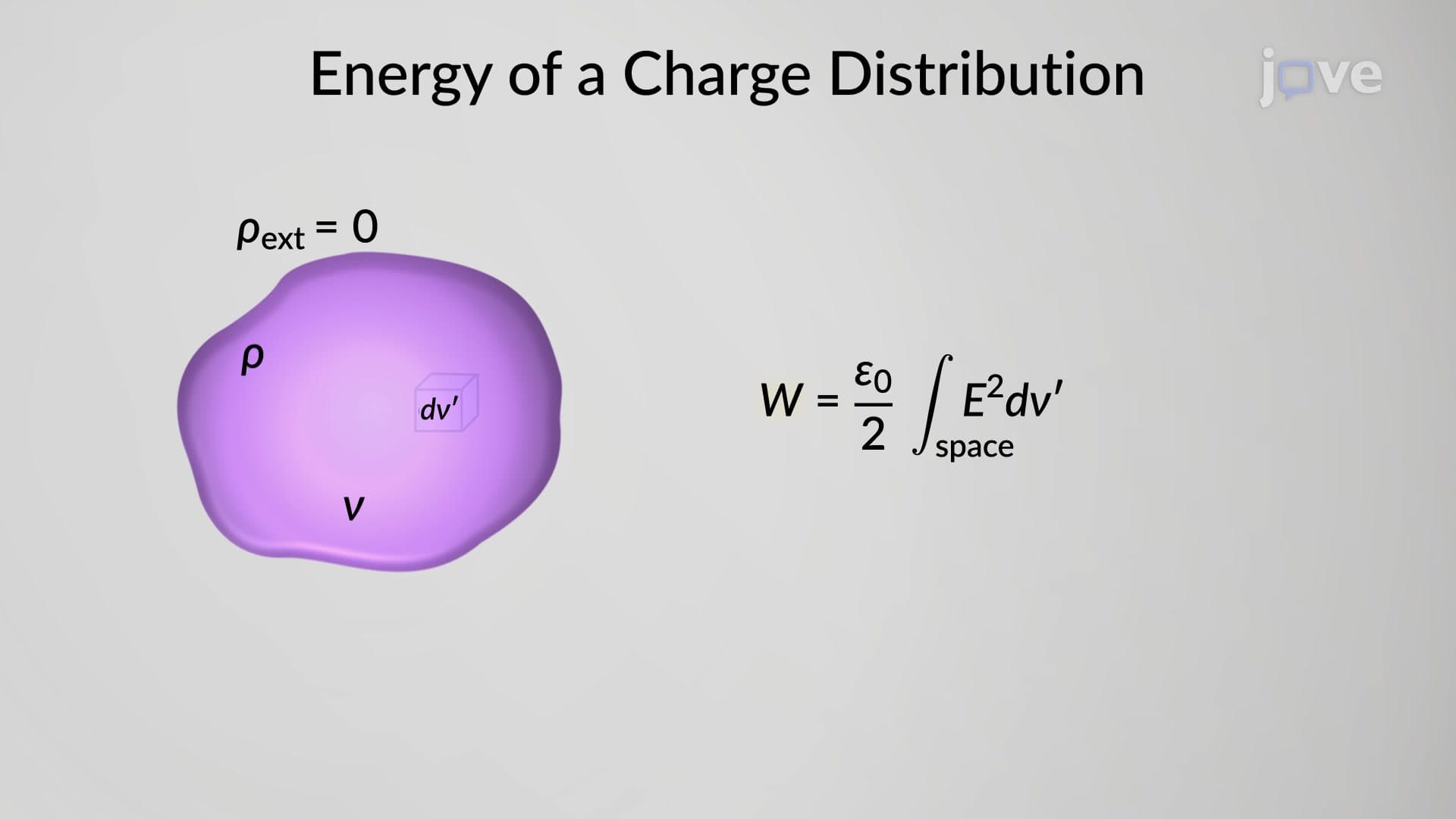
Energy associated represents the integral of energy density throughout space, calculated using electric field magnitude and permittivity. Mathematically, it equals (ε₀/2) times the integral of E² over all space, derived from charge-potential relationships through Gauss's law. Advanced applications include electromagnetic field theory, antenna design, and quantum field energy calculations.
AP Physics C frequently tests energy associated through capacitor problems, asking students to calculate stored energy using U = (1/2)CV² or U = (1/2)ε₀E²(volume). Students must apply integration techniques for non-uniform fields and relate energy to electric field configurations. Practice problems often involve parallel-plate capacitors, spherical conductors, and coaxial cables.
The MCAT physics section applies energy associated principles to biological systems, particularly nerve conduction and membrane potentials. Understanding energy storage in cellular membranes, action potential propagation, and bioelectric phenomena requires these electrostatic energy concepts. Medical devices like defibrillators and pacemakers also rely on controlled energy release from capacitors.
Utility companies like ConEd and Duke Energy apply these principles when designing high-voltage transmission systems and calculating electrical stress in equipment. Engineers determine insulation requirements, predict corona discharge, and optimize capacitor bank installations. Energy associated calculations help prevent equipment failures and ensure grid stability during peak demand periods.
Energy associated builds naturally on familiar concepts like gravitational potential energy and basic electrostatics. Students who understand F = kq₁q₂/r² and potential energy U = mgh can grasp these electrical energy concepts with proper guidance. The mathematical tools (integration) may be new, but the underlying physics principles follow logical patterns from mechanical energy conservation.
Focus on understanding the conceptual progression from point charges to continuous distributions, then practice converting between different mathematical representations. Work through capacitor energy problems systematically, always checking units and applying energy conservation principles. Create concept maps linking charge density, electric fields, potentials, and energy expressions to see relationships clearly.
Build toward electromagnetic field theory, including magnetic field energy, electromagnetic wave propagation, and relativistic energy considerations. Advanced applications include antenna theory, microwave engineering, and quantum electrodynamics. These topics become essential for electrical engineering programs and physics graduate studies.
Related Micro-courses
Related Subjects
 Math Fundamentals 11 micro-courses›
 Statistics 17 micro-courses›