Loading…
Loading video…

54,321 views
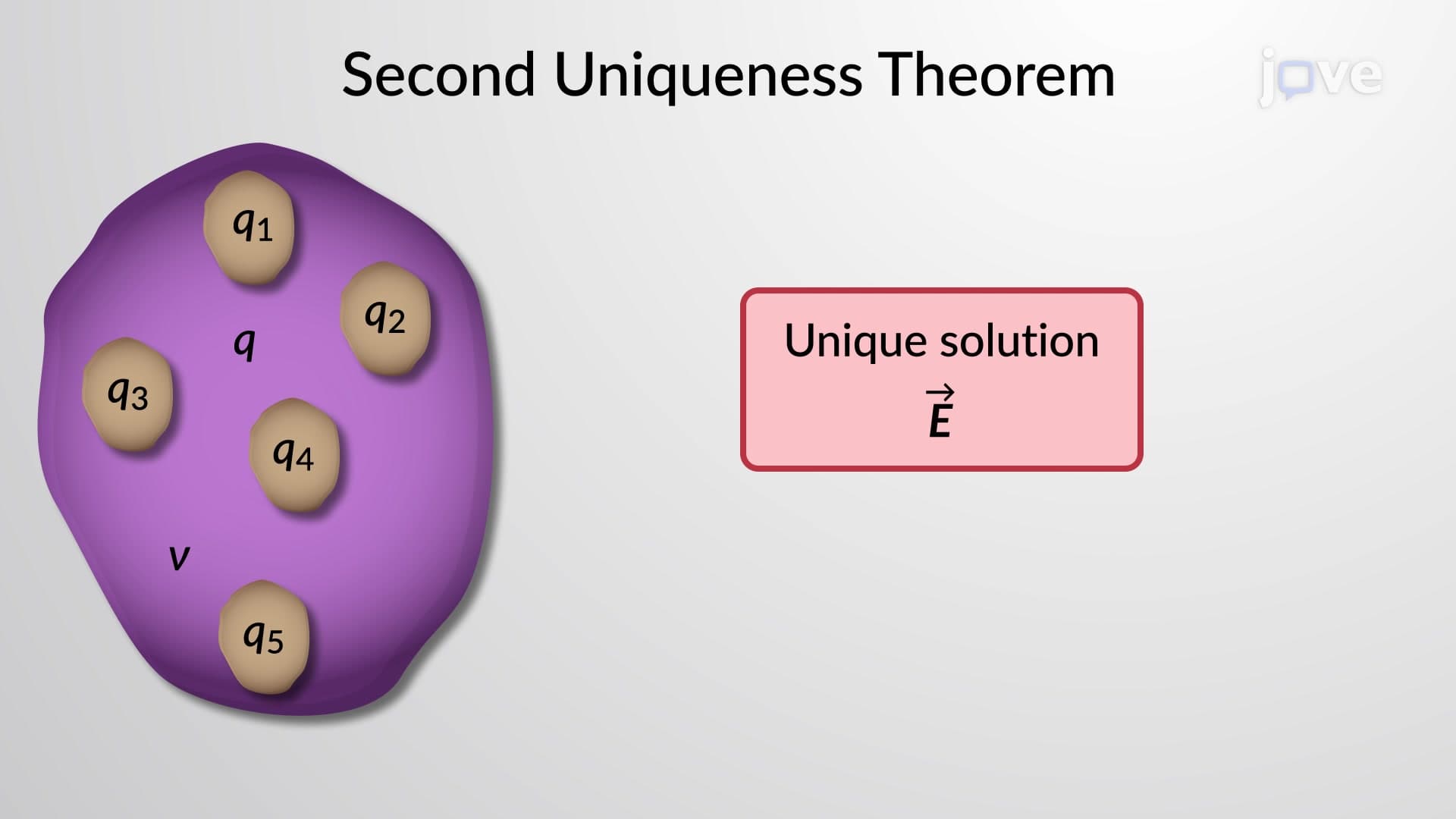
Ever wondered how engineers designing the complex electrical systems in Tesla's Gigafactory ensure there's only one correct solution for electric fields in multi-conductor environments? The second uniqueness theorem proves that when you know the total charge on each conductor and charge density between them, the electric field configuration is uniquely determined—no ambiguity, no multiple solutions. This fundamental principle in electrostatics underlies the design of everything from smartphone circuits to power grid transformers across the United States. Watch the full video on JoVE Coach to master this concept with expert-led visuals and step-by-step explanations.
The second uniqueness theorem serves as a cornerstone of electrostatic theory, providing mathematical certainty that electric field configurations have unique solutions under specific boundary conditions. Unlike its counterpart (the first uniqueness theorem, which deals with potential boundary conditions), this theorem focuses on charge-based constraints. When engineers at companies like Intel design microprocessor layouts with multiple conducting elements, they rely on this theorem's guarantee that their calculated electric fields represent the only possible solution.
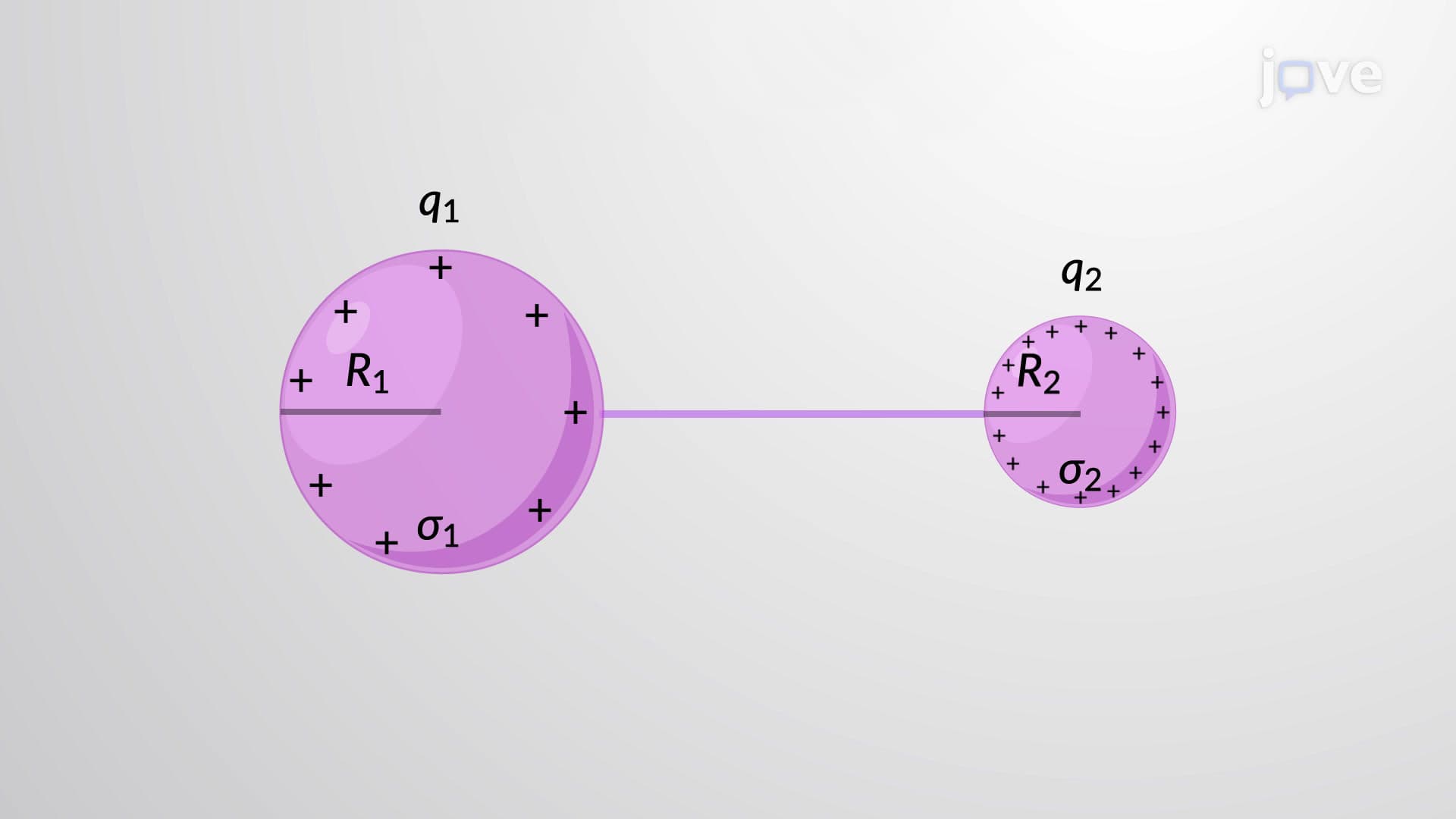
The theorem's power lies in its practical applicability. Consider a typical scenario: multiple conducting plates in a capacitor array, each carrying a known total charge, with specified charge distributions in the dielectric material between them. The second uniqueness theorem assures us that there exists exactly one electric field configuration satisfying these constraints—eliminating the possibility of multiple valid solutions that could complicate design calculations.
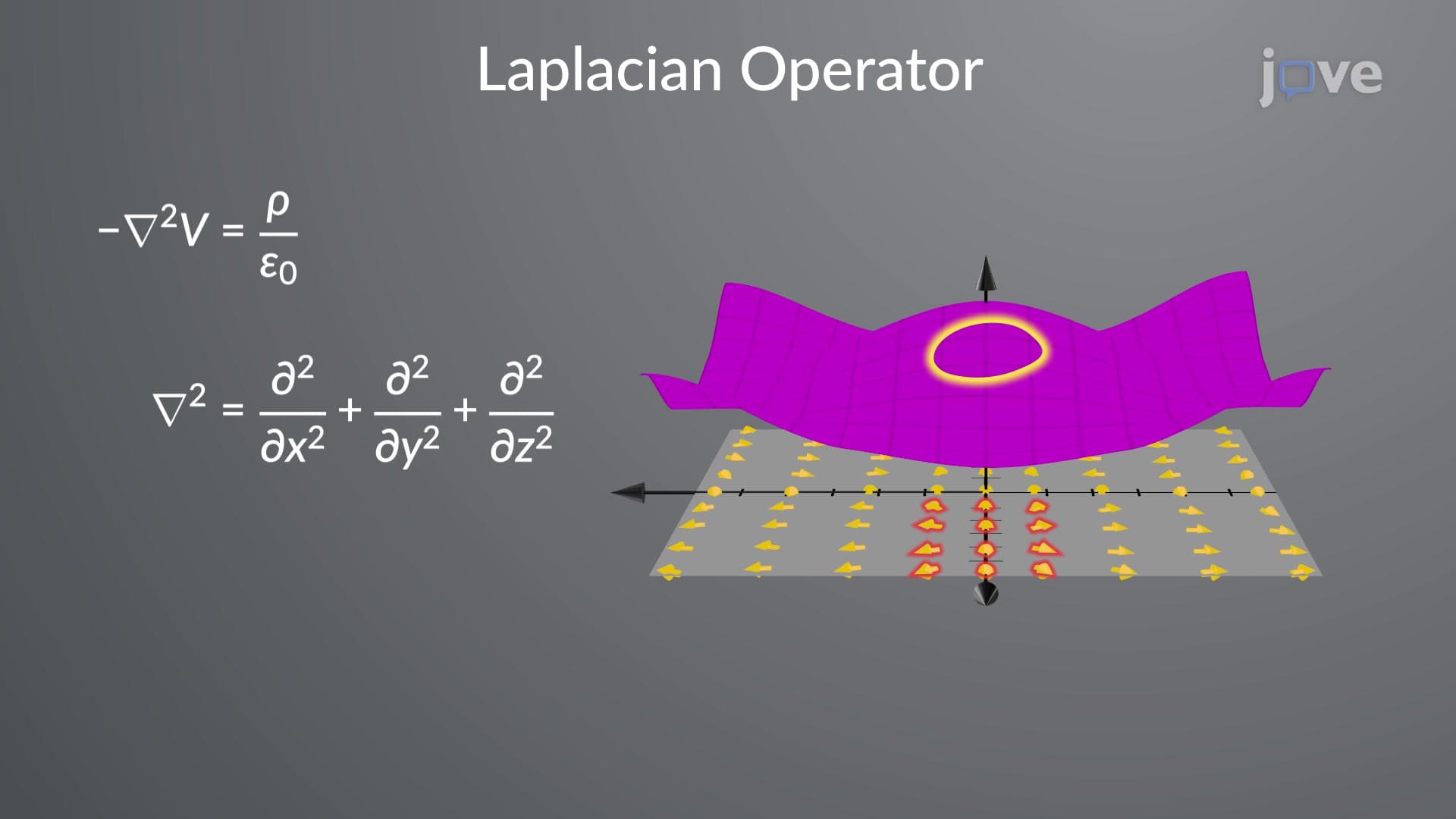
The theorem's proof employs an elegant contradiction approach. Assume two different electric field solutions exist for the same charge configuration. Define a third field as the mathematical difference between these hypothetical solutions. Through careful application of Gauss's law in differential form (∇·E = ρ/ε₀) within the volume and integral form (∮E·dA = Q_enclosed/ε₀) over conductor surfaces, this difference field must satisfy very restrictive conditions.
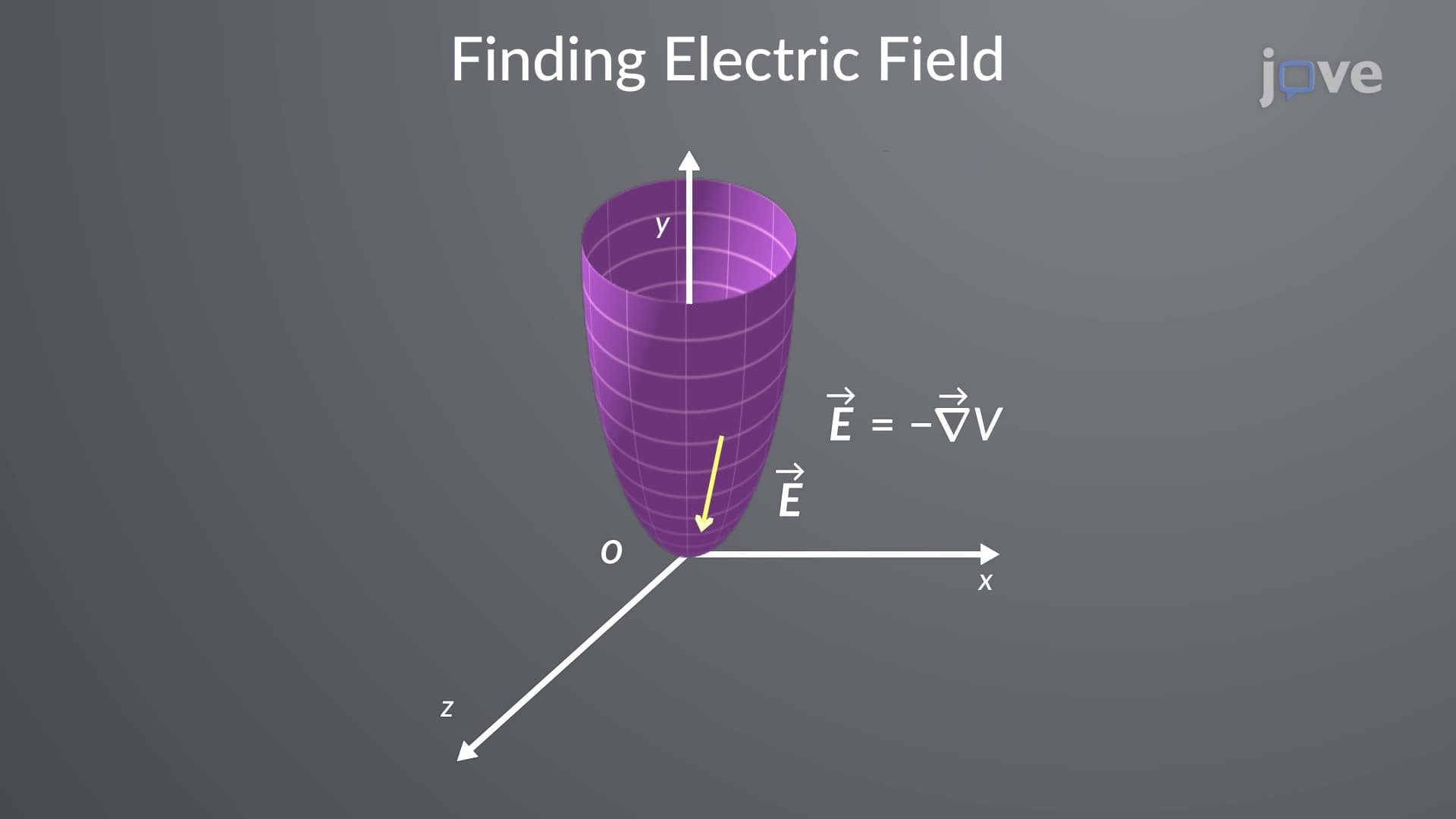
The key insight involves examining ∇·(φE), where φ represents the potential associated with the difference field. Using the vector calculus product rule, this expression becomes φ(∇·E) + E·(∇φ). Since ∇φ = -E for electrostatic fields, and the divergence of our difference field equals zero, we get -E·E = -|E|². Integrating this over the entire volume and applying the divergence theorem reveals that the difference field's magnitude must be zero everywhere—proving the original two solutions were identical.
This theorem finds extensive application in designing electrical systems across American industries. NASA's spacecraft electrical systems, for instance, involve complex conductor arrangements where precise field calculations are crucial for preventing electrical breakdown in the vacuum of space. Similarly, high-voltage transmission lines operated by utilities like Pacific Gas & Electric rely on accurate field predictions to maintain safe clearance distances and prevent corona discharge.
Students preparing for the AP Physics C: Electricity and Magnetism exam frequently encounter problems requiring application of uniqueness theorems. The MCAT also tests understanding of electrostatic principles, though typically at a more conceptual level. College-level physics courses (particularly those following the standard sequence at institutions like MIT or UC Berkeley) emphasize how these theorems provide the mathematical foundation ensuring that electromagnetic field calculations yield reliable, reproducible results essential for engineering design.
Frequently Asked Questions
The second uniqueness theorem states that if you know the total charge on each conductor and the charge density distribution in the space between conductors, then the electric field configuration is uniquely determined. This means there's exactly one possible electric field solution that satisfies these boundary conditions, providing mathematical certainty for electrostatic calculations in complex multi-conductor systems.
The first uniqueness theorem deals with potential boundary conditions (specifying voltages on conductor surfaces), while the second uniqueness theorem focuses on charge boundary conditions. Both guarantee unique solutions but under different types of constraints. Engineering applications often use whichever theorem matches the known parameters in a given problem.
Yes, understanding uniqueness theorems is part of the AP Physics C: Electricity and Magnetism curriculum. Expect conceptual questions about when solutions are unique and possibly proof-related problems. The College Board emphasizes mathematical reasoning in electrostatics, making this theorem's proof technique valuable for demonstrating field relationships.
The MCAT typically tests the conceptual understanding rather than detailed mathematical proofs. You might see questions asking why electric field solutions are unique in certain configurations or how this principle applies to biological systems like nerve conduction. Focus on understanding the practical implications rather than memorizing the complete mathematical proof.
Modern semiconductor manufacturing relies heavily on this theorem for designing integrated circuits with predictable electrical behavior. Companies like Texas Instruments and Qualcomm use field calculations based on uniqueness theorems to optimize chip performance. Without guaranteed unique solutions, engineers couldn't confidently predict how electronic devices would function.
The basic concept requires only algebra and introductory calculus, making it accessible to high school AP students. The complete proof involves vector calculus (divergence, gradient) typically covered in college-level multivariable calculus. However, understanding the theorem's practical significance and applications doesn't require mastering every mathematical detail.
Focus on understanding when the theorem applies: know the required boundary conditions (total charges and charge densities) and practice identifying scenarios where uniqueness is guaranteed. Work through example problems involving multiple conductors, and understand how the proof's contradiction method demonstrates uniqueness. Create concept maps linking this theorem to Gauss's law and boundary value problems.
This theorem provides foundation for studying Green's reciprocity theorems, method of images for solving boundary value problems, and advanced electromagnetic field theory. Graduate-level courses in electromagnetic theory and mathematical physics extensively use uniqueness principles. Understanding this theorem prepares you for more sophisticated field calculation techniques used in antenna design and plasma physics.
Related Micro-courses
Related Subjects
 Math Fundamentals 11 micro-courses›
 Statistics 17 micro-courses›