Loading subject page…

- Physics
- Electric Potential
- Calculations of Electric Potential II
Micro-course: Electric Potential
54,321 views
Learn key concepts and earn your certificate.

Calculations of Electric Potential II

00:00
01:27
Video Summary: Calculations of Electric Potential Ii Explained
Did you know that the electric field around your smartphone screen involves dipole interactions similar to those powering MRI machines in US hospitals? Calculations of electric potential II becomes essential when analyzing these complex charge systems, particularly electric dipoles where equal and opposite charges create unique potential patterns. Understanding how to calculate potential at various distances from dipoles helps explain everything from molecular behavior in pharmaceutical research to the electromagnetic fields in Tesla's autopilot sensors. Watch the full video on JoVE Coach to master this concept with expert-led visuals and step-by-step explanations.
- Understand the fundamental principles behind calculations of electric potential II for electric dipole systems and their mathematical derivations
- Identify the key variables in dipole potential calculations, including charge separation distance, observation point location, and dipole moment magnitude
- Analyze how the Pythagorean theorem and polar coordinates simplify distance calculations in dipole potential problems
- Apply binomial approximation techniques to derive simplified expressions for electric potential when observation distances exceed charge separation
- Evaluate the inverse square relationship between electric potential and distance in dipole systems
- Recognize how dipole moment direction affects the magnitude and sign of electric potential at different observation points
- Compare potential calculations for single charges versus dipole systems to understand superposition principles
- Explore real-world applications of dipole potential calculations in molecular physics and electromagnetic device design
Understanding Calculations of Electric Potential II for Dipole Systems
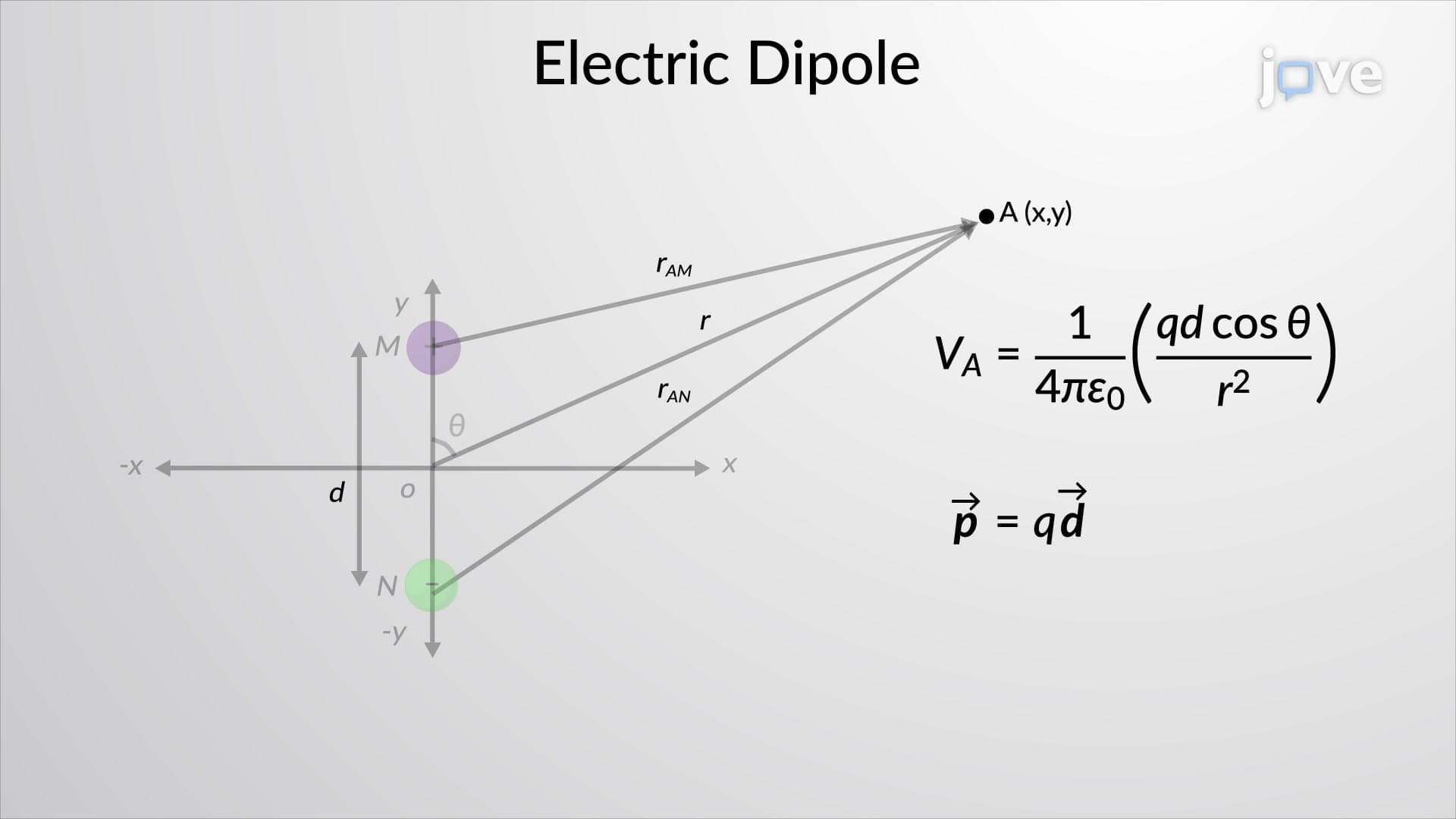
The calculations of electric potential II extend beyond single-charge scenarios to examine more complex systems, particularly electric dipoles. An electric dipole consists of two equal but opposite charges separated by a fixed distance, creating a fundamental building block for understanding molecular behavior, antenna design, and medical imaging technology used in US healthcare systems.
Mathematical Framework and Distance Calculations
When calculating electric potential for dipoles, we must determine distances from each charge to the observation point. Using the Pythagorean theorem, we can express these distances in terms of the separation distance (d) and the observation distance (r). For practical calculations, especially when r >> d, polar coordinates provide significant mathematical simplification.
The potential at any point equals the algebraic sum of potentials from both charges: V = kq/r(+) - kq/r(-), where k represents Coulomb's constant. This superposition principle appears frequently on AP Physics exams and college-level electromagnetism courses across US universities like MIT and Stanford.
Binomial Approximation and Simplified Expressions
Advanced dipole potential calculations employ binomial approximation when the observation distance significantly exceeds charge separation. This mathematical technique transforms complex radical expressions into manageable linear terms, making calculations feasible for engineering applications in companies like Boeing or General Electric.
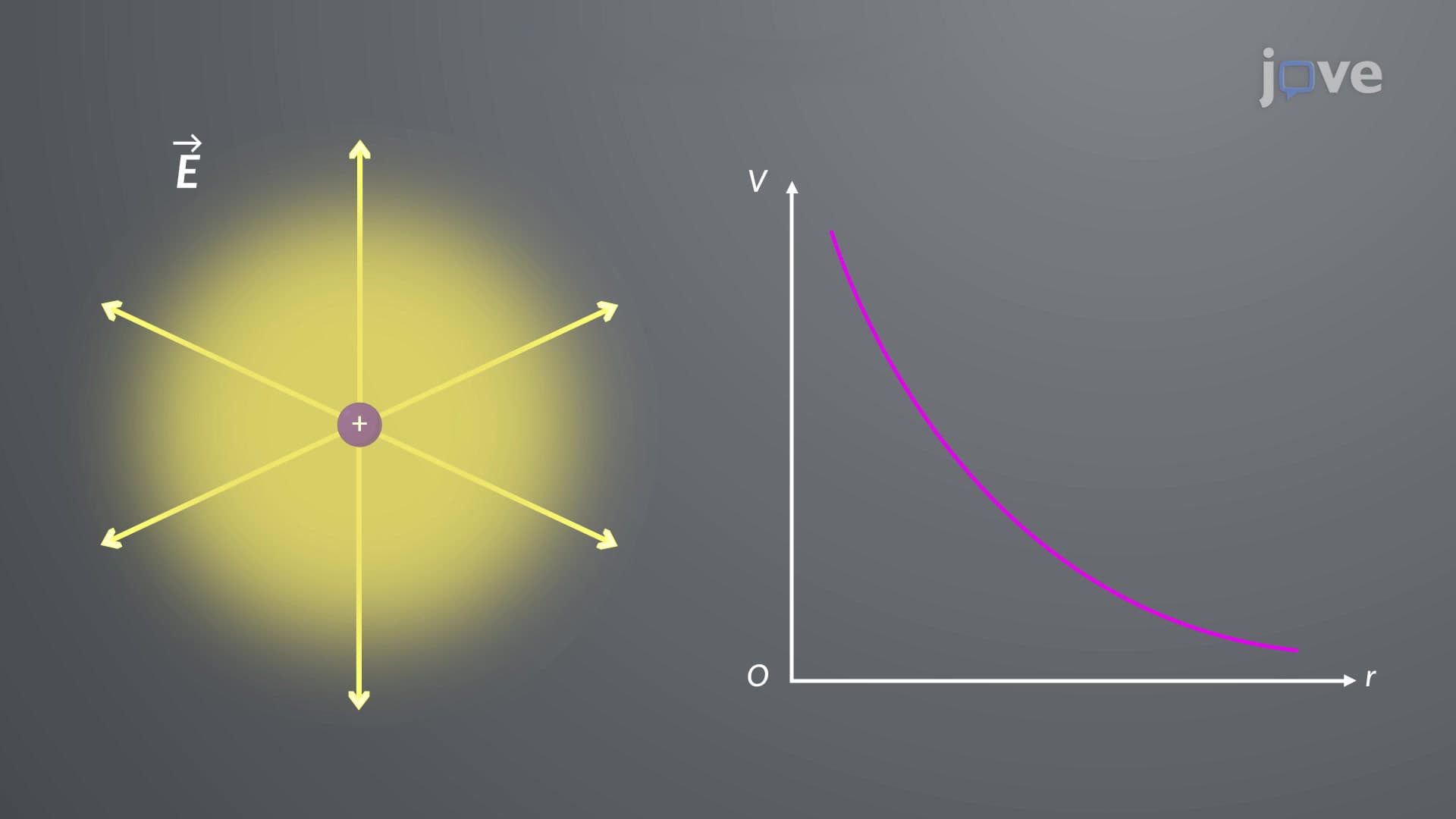
The resulting simplified expression reveals that dipole potential decreases proportionally to 1/r², contrasting with single-charge systems where potential decreases as 1/r. This distinction proves crucial for students preparing for the MCAT or physics GRE examinations.
Dipole Moment and Directional Dependencies
The dipole moment (p = qd) represents a vector quantity combining charge magnitude with separation distance. The potential's angular dependence through cos(θ) means that potential varies dramatically based on observation angle relative to the dipole axis. This directional sensitivity explains how radio antennas achieve directional broadcasting and how molecular interactions determine protein folding in biochemical research conducted at US institutions like the National Institutes of Health.
Understanding these angular dependencies helps students tackle challenging problems on standardized tests and provides foundation knowledge for advanced coursework in physical chemistry, biomedical engineering, and telecommunications technology.
Frequently Asked Questions
Calculations of electric potential II focus on multi-charge systems, particularly electric dipoles with equal and opposite charges. Unlike single-charge calculations using V = kq/r, dipole calculations require vector addition of potentials from multiple charges and often employ approximation techniques for distant observation points.
These calculations commonly appear on AP Physics C exams and college midterms through problems involving dipole moment determination, potential mapping, and approximation validation. Students typically encounter questions requiring binomial expansion techniques and angular dependence analysis for different observation points.
MCAT electric potential questions require solid algebra skills, basic trigonometry for angular components, and comfort with approximation techniques like binomial expansion. Focus on understanding when approximations apply and how dipole orientation affects potential magnitude and sign.
Electric dipoles explain the fundamental physics behind MRI machines used in US hospitals, where molecular dipole moments create detectable signals. Additionally, defibrillator technology relies on dipole principles to restore normal heart rhythms through controlled electric field application.
While challenging, motivated high school students can master these concepts with proper foundation in algebra and basic trigonometry. Many US high schools successfully teach dipole calculations in AP Physics courses, making this accessible for college-bound students.
Focus on understanding the physical meaning rather than memorization-dipoles combine two opposite single-charge potentials, approximations work when distances are large, and directional effects come from vector geometry. Practice deriving formulas from basic principles during study sessions.
Progress to electric field calculations for dipoles, then explore multipole expansions, electromagnetic radiation from accelerating dipoles, and quantum mechanical dipole transitions. These concepts appear in advanced physics courses and graduate school entrance exams.
Break the problem into vector components using trigonometry, apply the general dipole potential formula V = (1/4πε₀)(p·r̂/r²), and remember that potential is a scalar quantity requiring algebraic rather than vector addition of contributions from each charge.
Related Micro-courses


