Loading video…


 15 Concepts
 54.3K views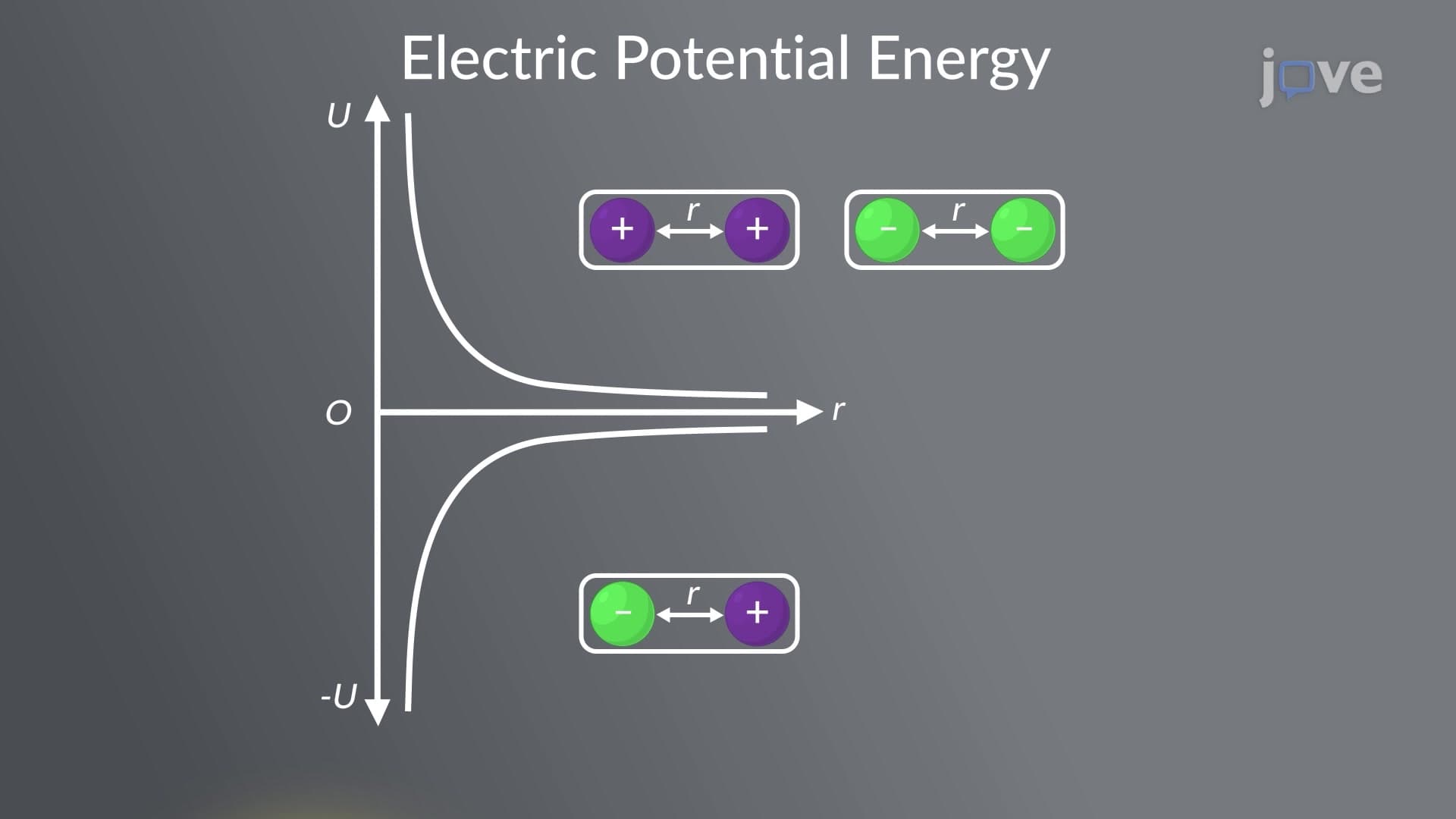

Video Summary: Electric Potential Energy of Two Explained
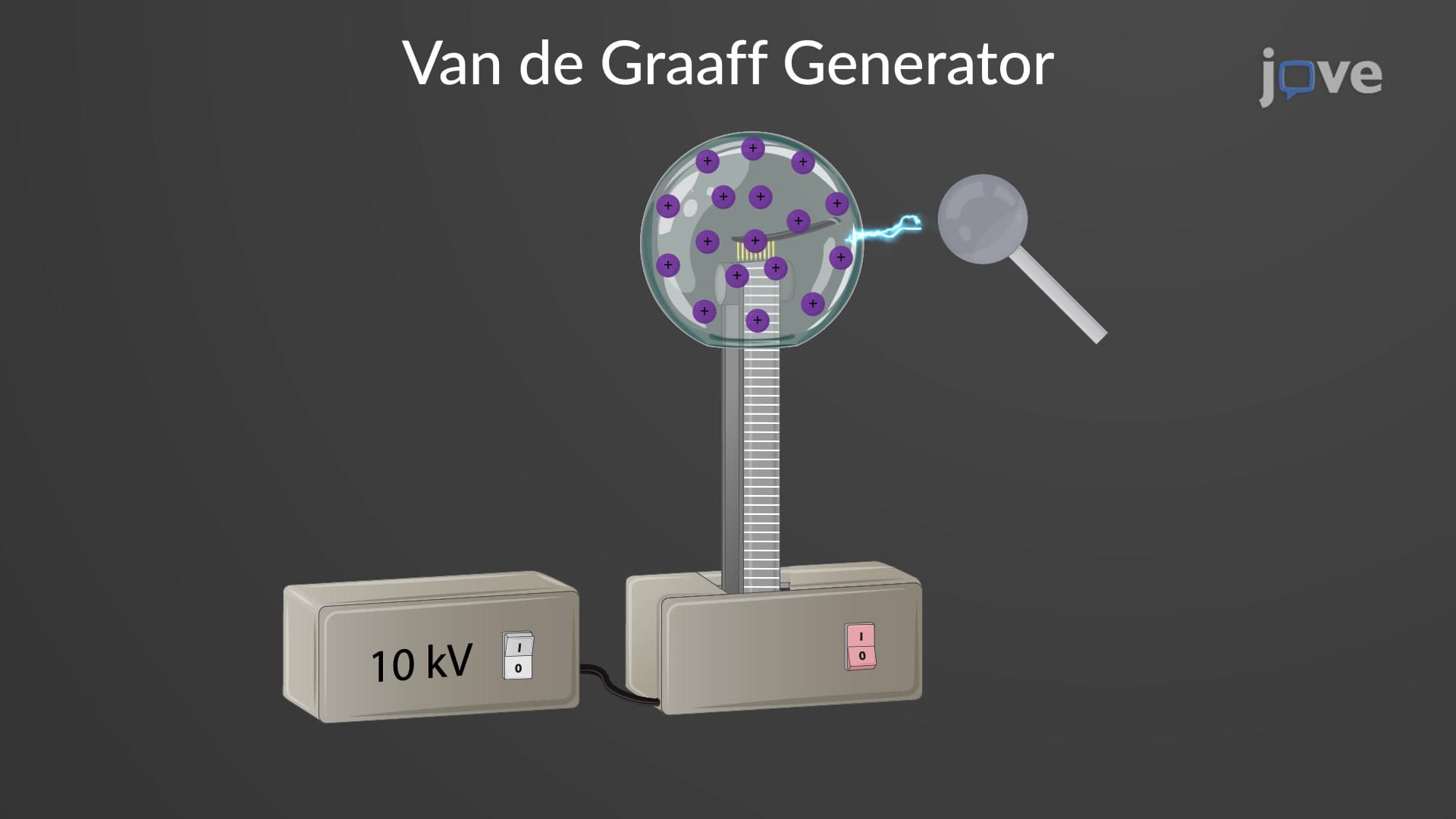
Did you know that the GPS satellites orbiting 12,000 miles above Earth rely on precise electric potential energy calculations to maintain their positioning systems? The electric potential energy of two charged objects determines how they interact across space, whether attracting like the electrons and protons in your smartphone's battery or repelling like the matching charges in a Van de Graaff generator at the Boston Museum of Science. This fundamental physics concept explains energy storage in electric fields and powers everything from cardiac defibrillators to particle accelerators. Watch the full video on JoVE Coach to master this concept with expert-led visuals and step-by-step explanations.
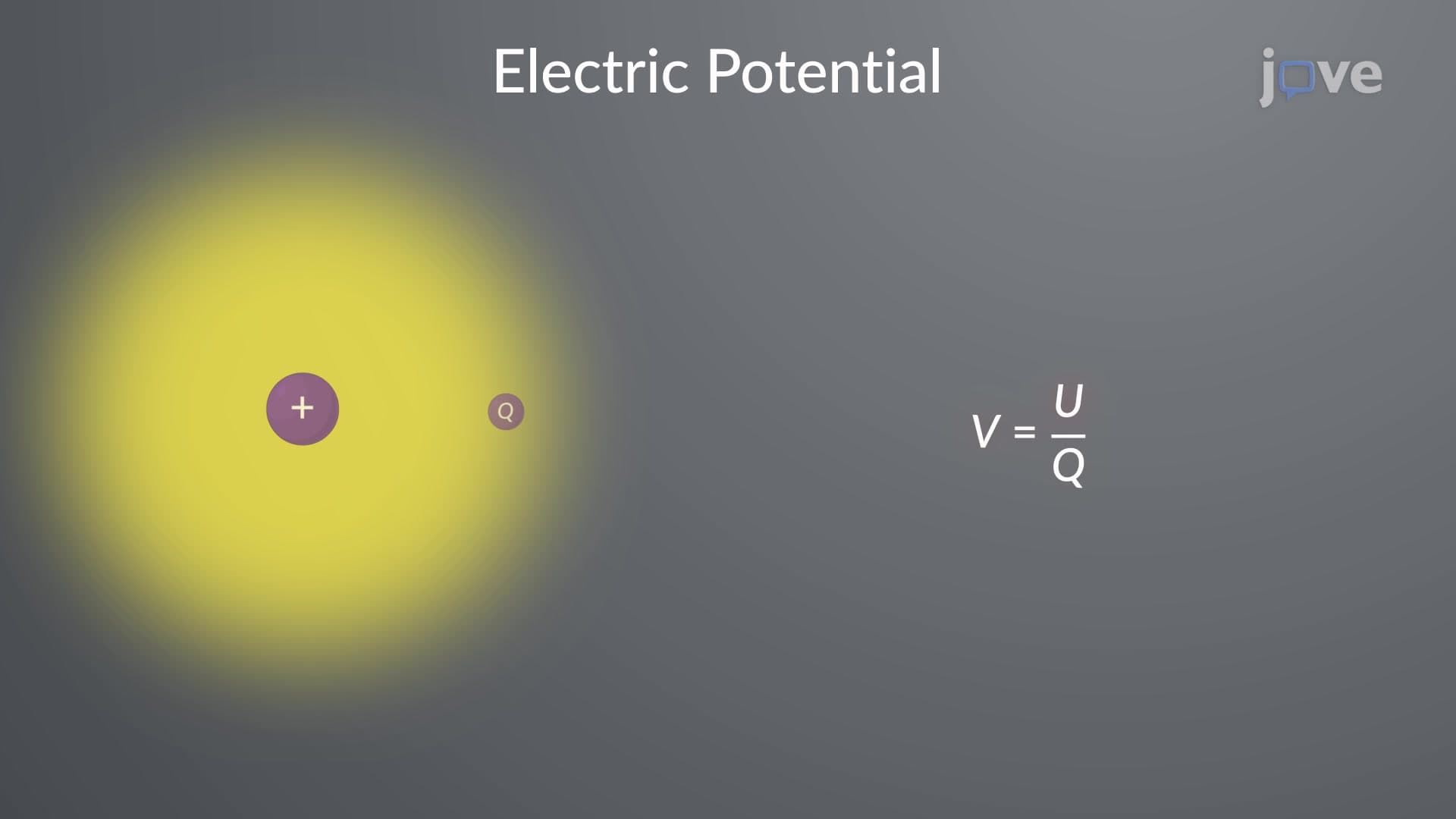
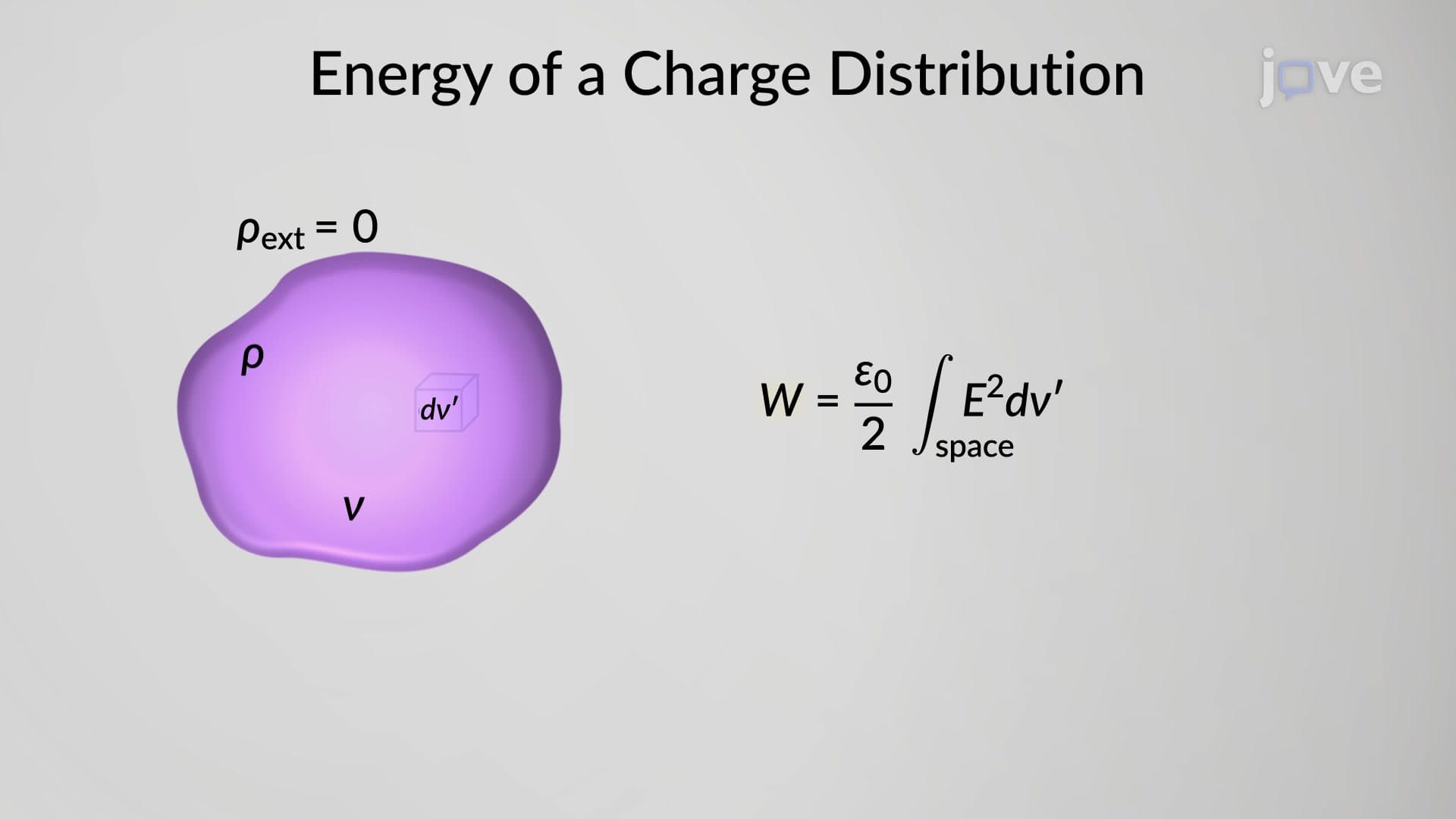
The electric potential energy of two charged particles represents the stored energy in their electric field interaction. Unlike gravitational potential energy, which is always attractive, electric potential energy can be either positive (repulsive) or negative (attractive) depending on charge polarity. This fundamental concept governs everything from atomic structure to the operation of capacitors in electronic circuits.
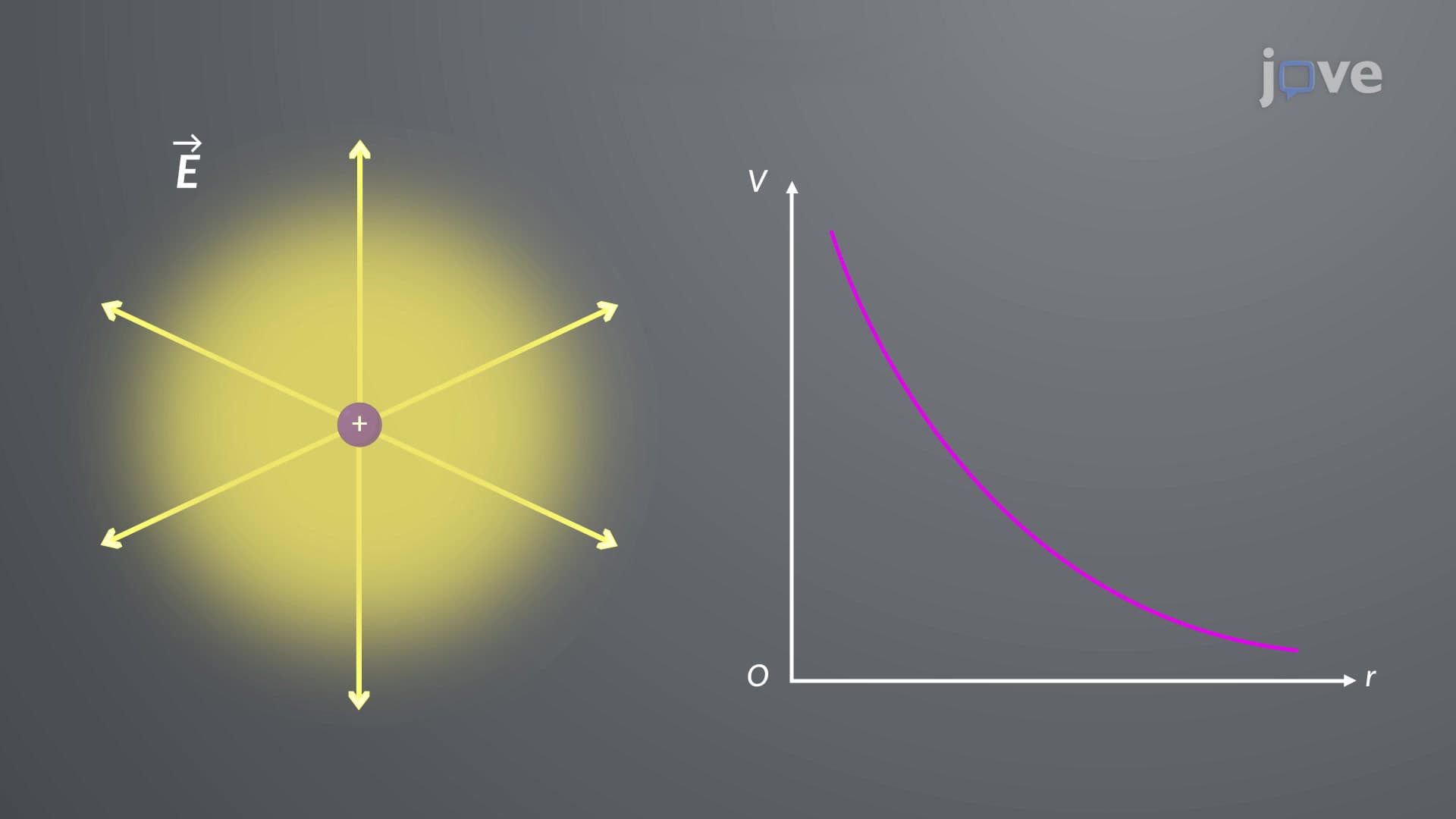
The mathematical expression for electric potential energy between two point charges follows Coulomb's law: U = k(q₁q₂)/r, where k is Coulomb's constant (8.99 × 10⁹ N⋅m²/C²), q₁ and q₂ are the charges, and r is their separation distance. This inverse relationship means doubling the distance reduces potential energy by half, while halving the distance doubles the stored energy.
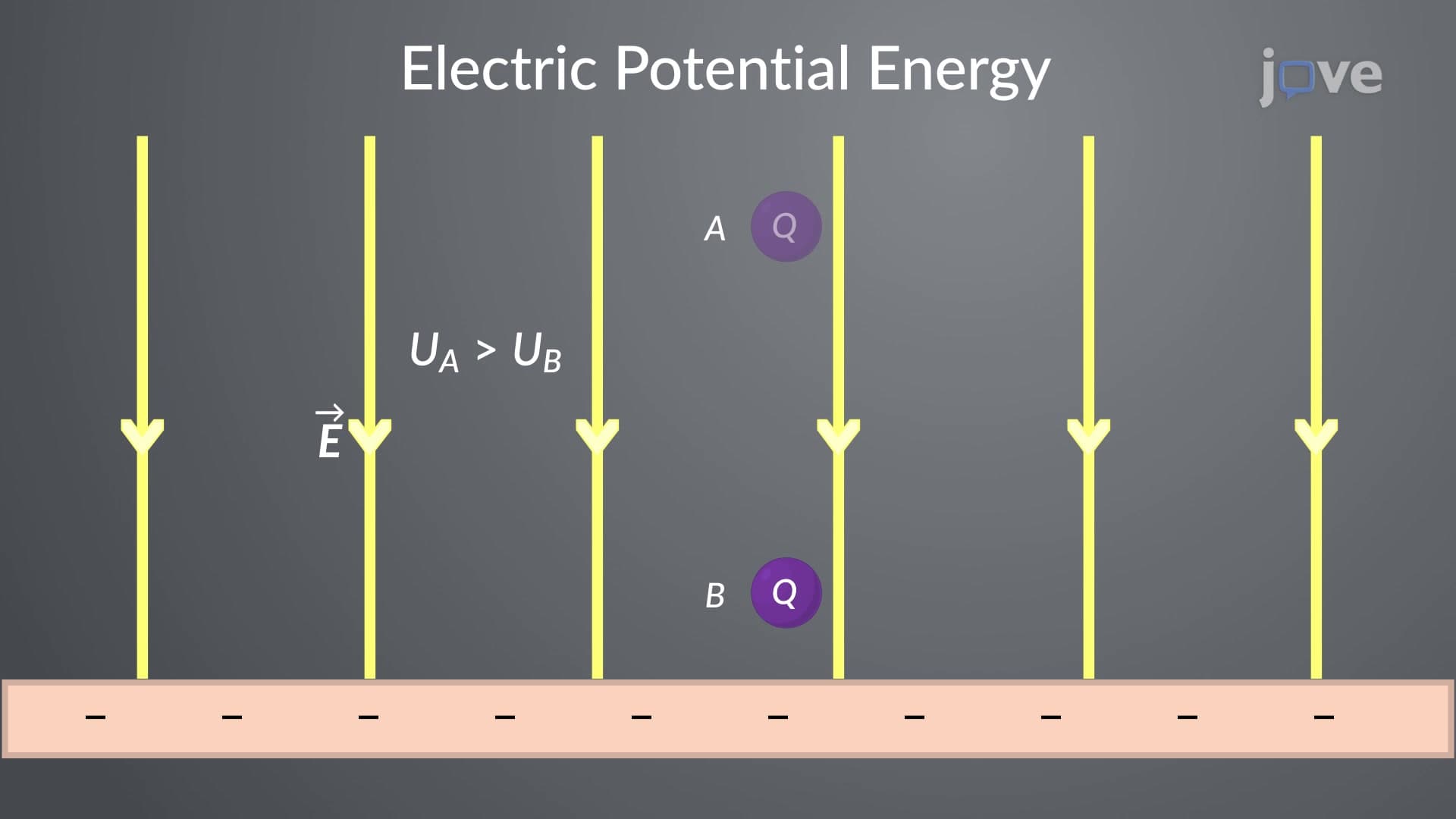
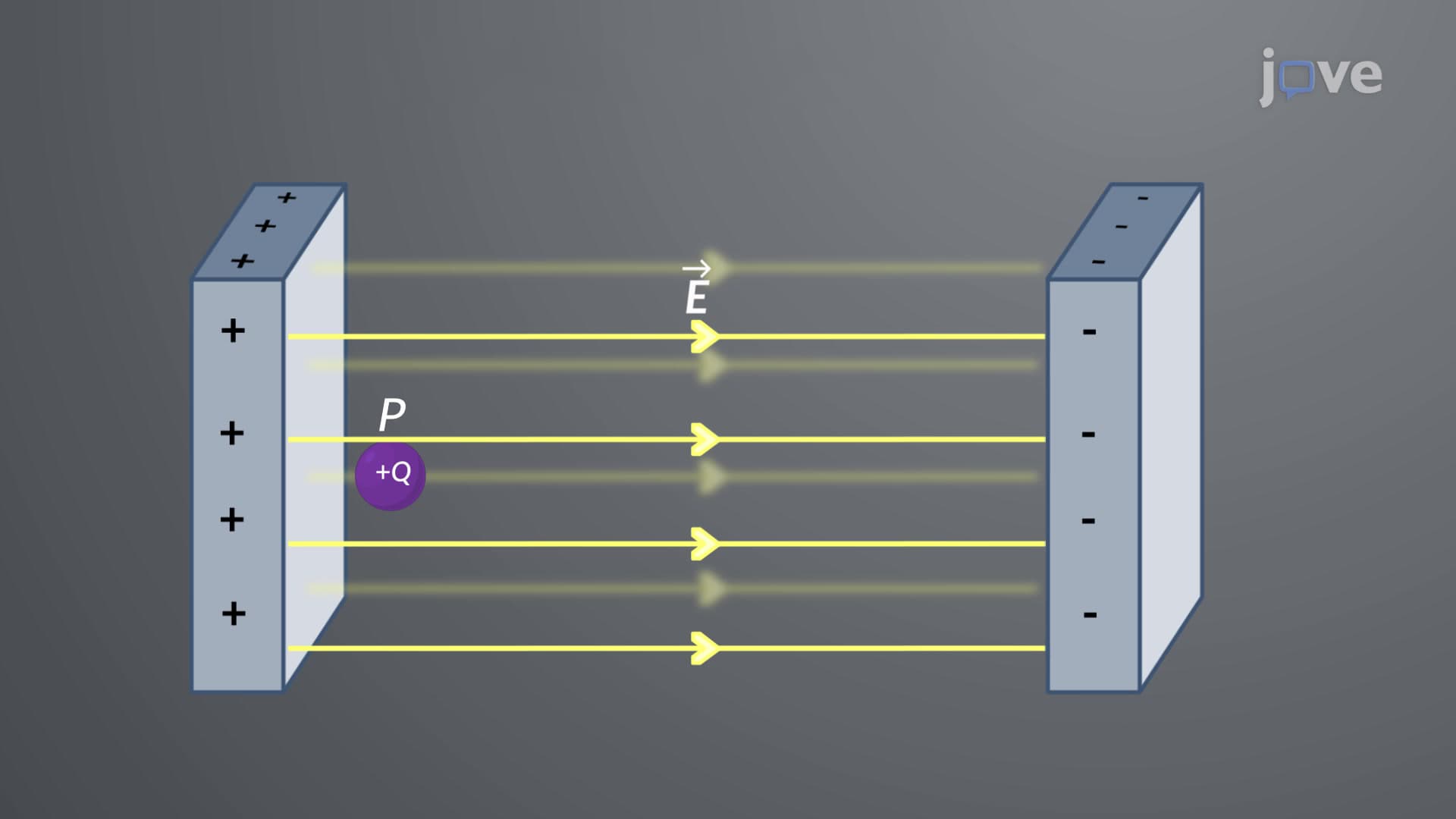
When charges move within electric fields, potential energy converts to kinetic energy following conservation principles. If two like charges start at rest and are released, their positive potential energy decreases as they accelerate apart, with lost potential energy becoming kinetic energy. Conversely, opposite charges naturally attract, converting negative potential energy to kinetic energy as they approach each other.
This energy transformation explains how particle accelerators at Fermilab near Chicago can propel protons to near-light speeds. The electric fields perform work on charged particles, converting stored potential energy into tremendous kinetic energy for high-energy physics experiments.
Electric potential energy uses infinity as its zero reference point, meaning all finite distances have measurable energy values. Like charges (positive-positive or negative-negative) always have positive potential energy because work is required to bring them together against their natural repulsion. Unlike charges (positive-negative) have negative potential energy because the electric field naturally does work to bring them together.
Understanding electric potential energy proves essential for AP Physics students and appears frequently on SAT Subject Tests and college physics exams. Medical device engineers use these principles designing defibrillators at companies like Medtronic in Minneapolis, where precise energy calculations ensure proper cardiac treatment. Similarly, Tesla's battery engineers in Nevada apply potential energy concepts to optimize lithium-ion cell performance and safety systems.
Related Micro-courses