Loading video…


 15 Concepts
 54.3K views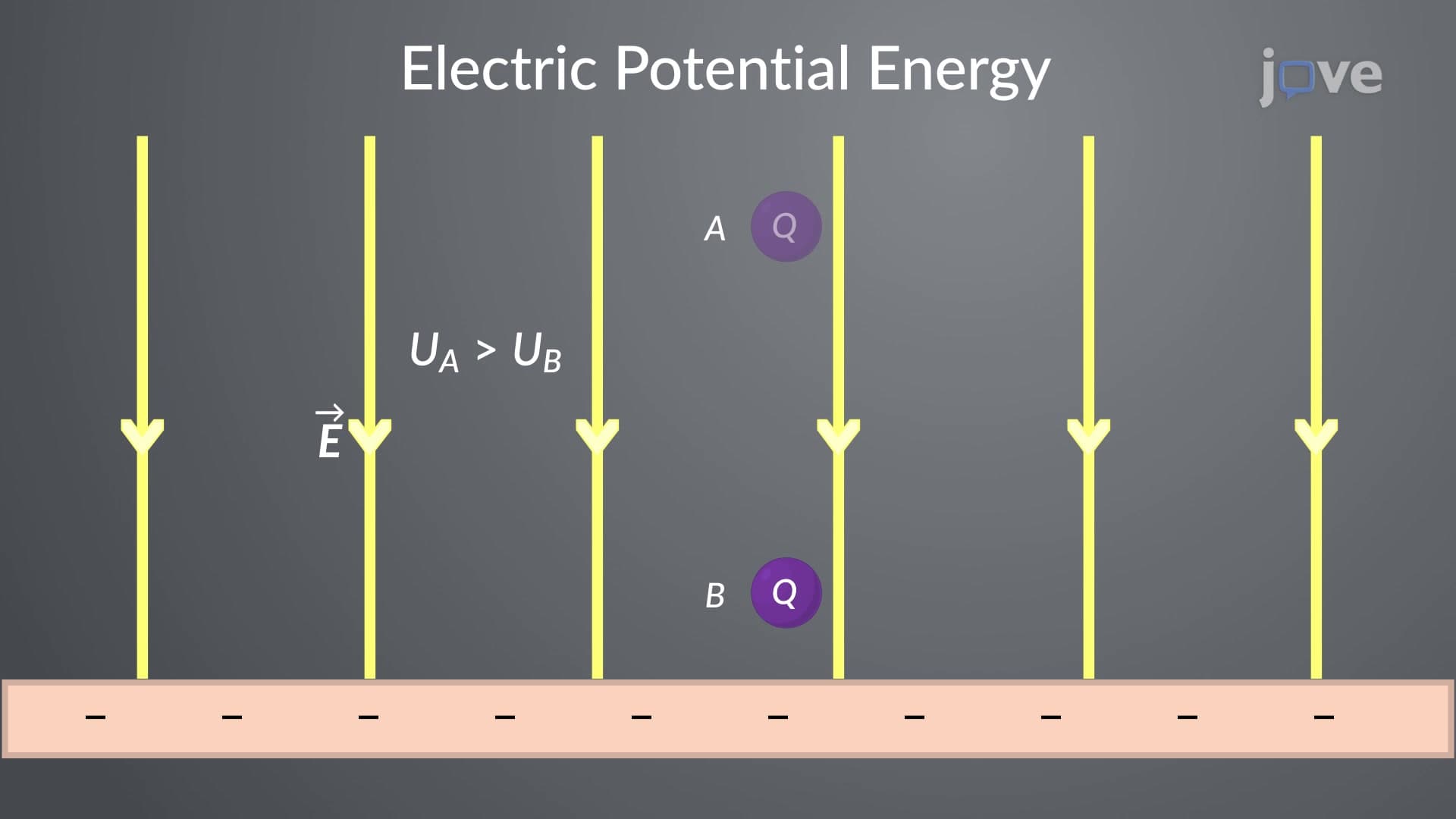

Video Summary: Electric Potential Energy in Electrostatics
Ever wonder why your hair stands up after rubbing a balloon or going down a plastic slide? This phenomenon involves electric potential energy in electrostatics, the energy stored when charged particles interact across distances. In everyday devices like capacitors in smartphones and defibrillators in hospitals, understanding Electric Potential Energy in Electrostatics becomes crucial for predicting how charges behave when brought together or separated. Watch the full video on JoVE Coach to master this concept with expert-led visuals and step-by-step explanations.
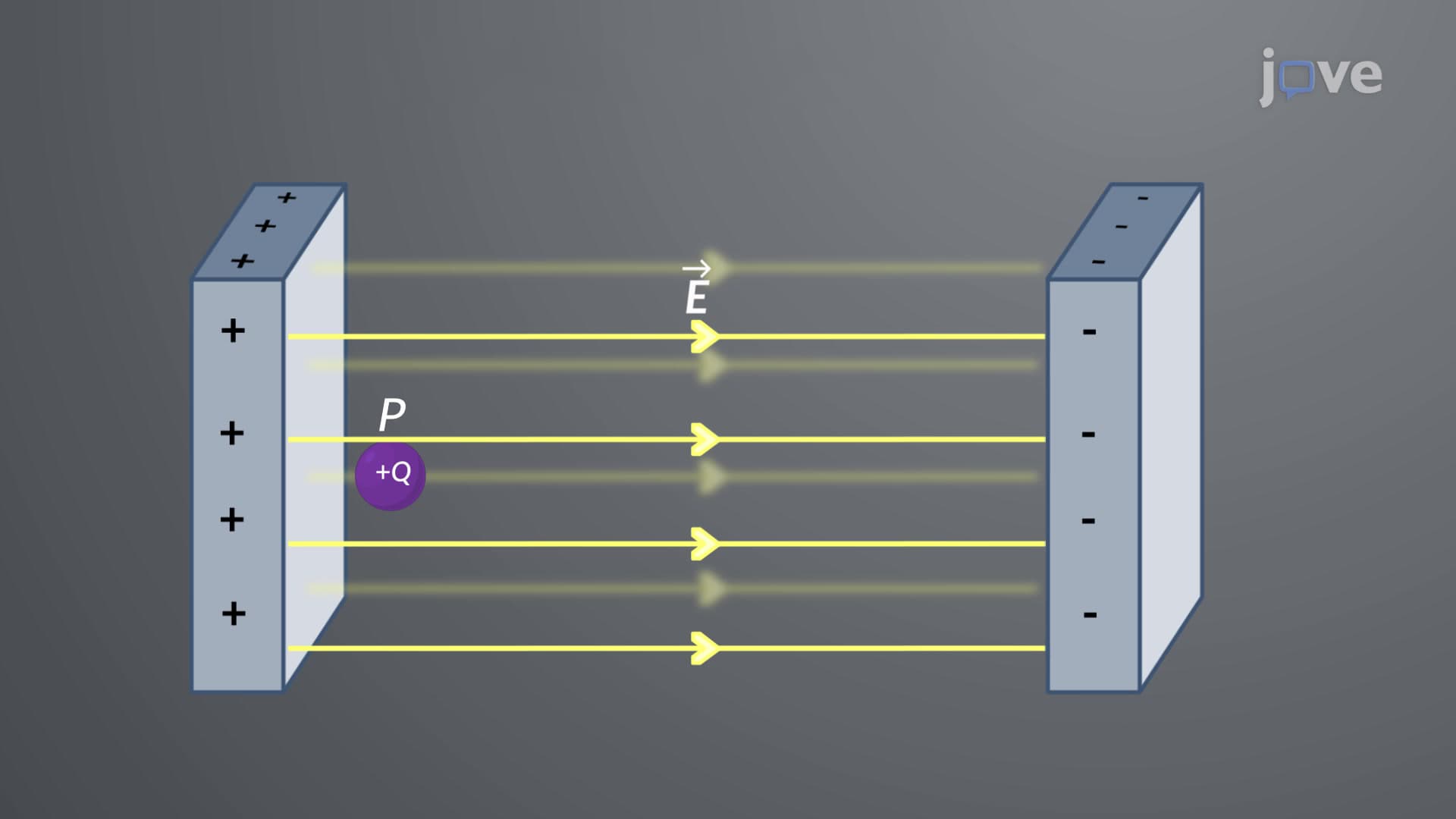
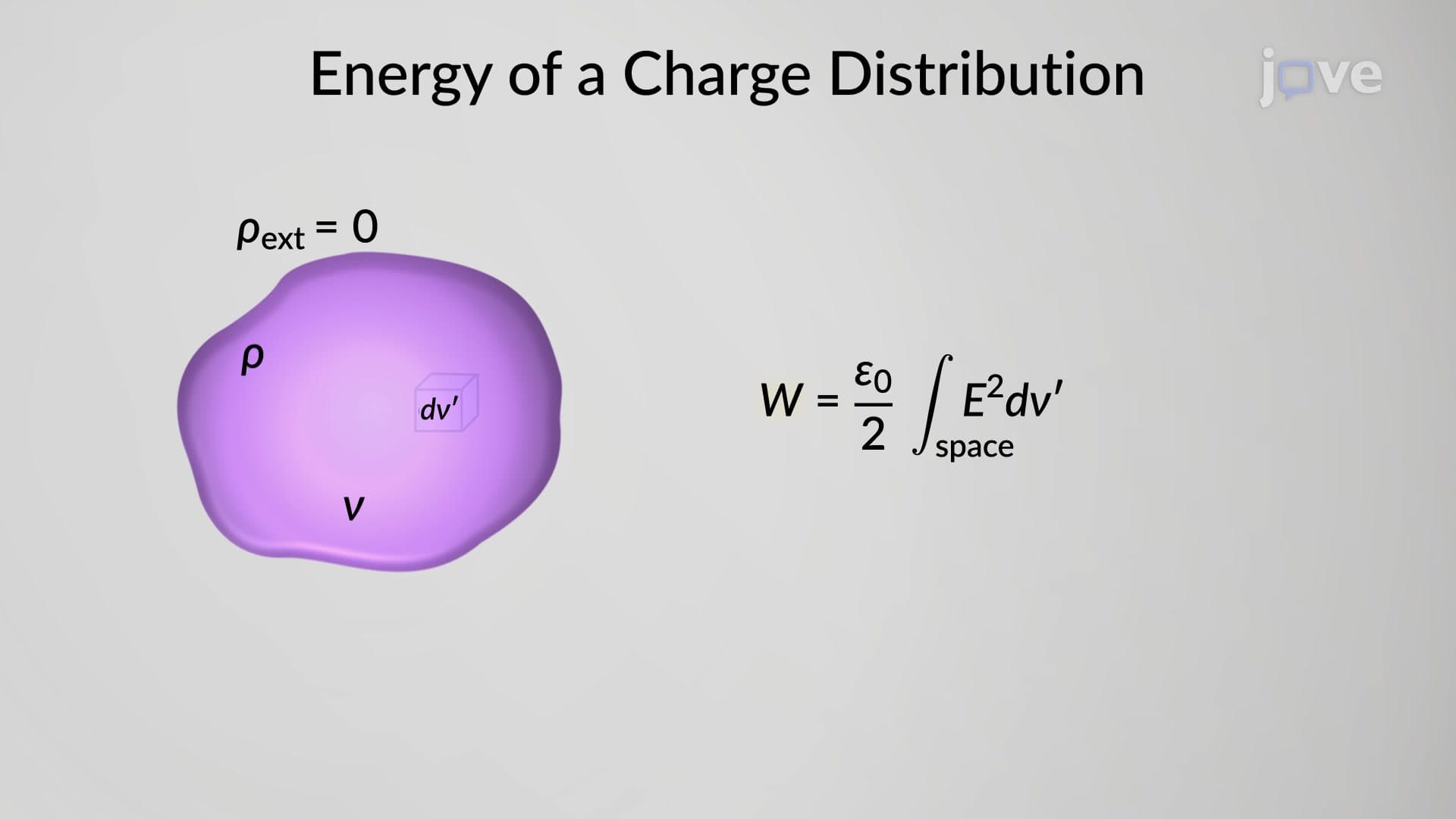
Electric potential energy represents the stored energy within a system of charged particles due to their electrostatic interactions. Unlike kinetic energy, which depends on motion, this potential energy depends entirely on the positions and magnitudes of charges within the system. When we say a system has high electric potential energy in electrostatics, we're describing the work required to assemble those charges from infinite separation against their natural electrostatic forces.
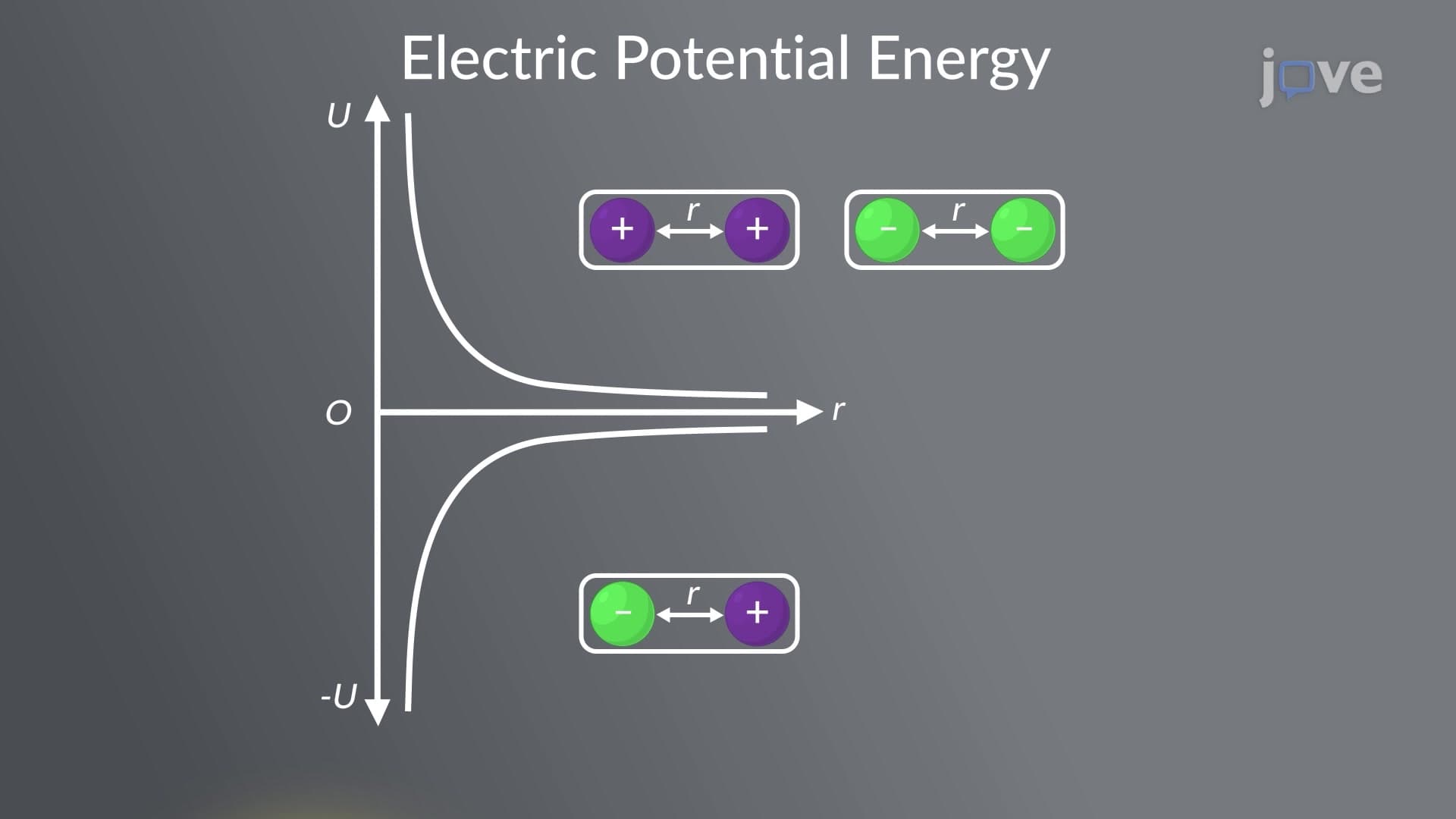
The mathematical foundation builds on Coulomb's law, where potential energy U = k(q1)(q2)/r. Here, k represents Coulomb's constant (8.99 × 10^9 N⋅m²/C²), q1 and q2 are the charge magnitudes, and r is their separation distance. This inverse relationship with distance means potential energy changes dramatically as charges move closer or farther apart.
Consider two fundamental scenarios that frequently appear on AP Physics exams and college assessments. When opposite charges interact (like a proton and electron), their attractive force naturally pulls them together. As they approach, the system's potential energy decreases while kinetic energy increases, similar to a ball rolling downhill. The total mechanical energy remains constant, demonstrating energy conservation.
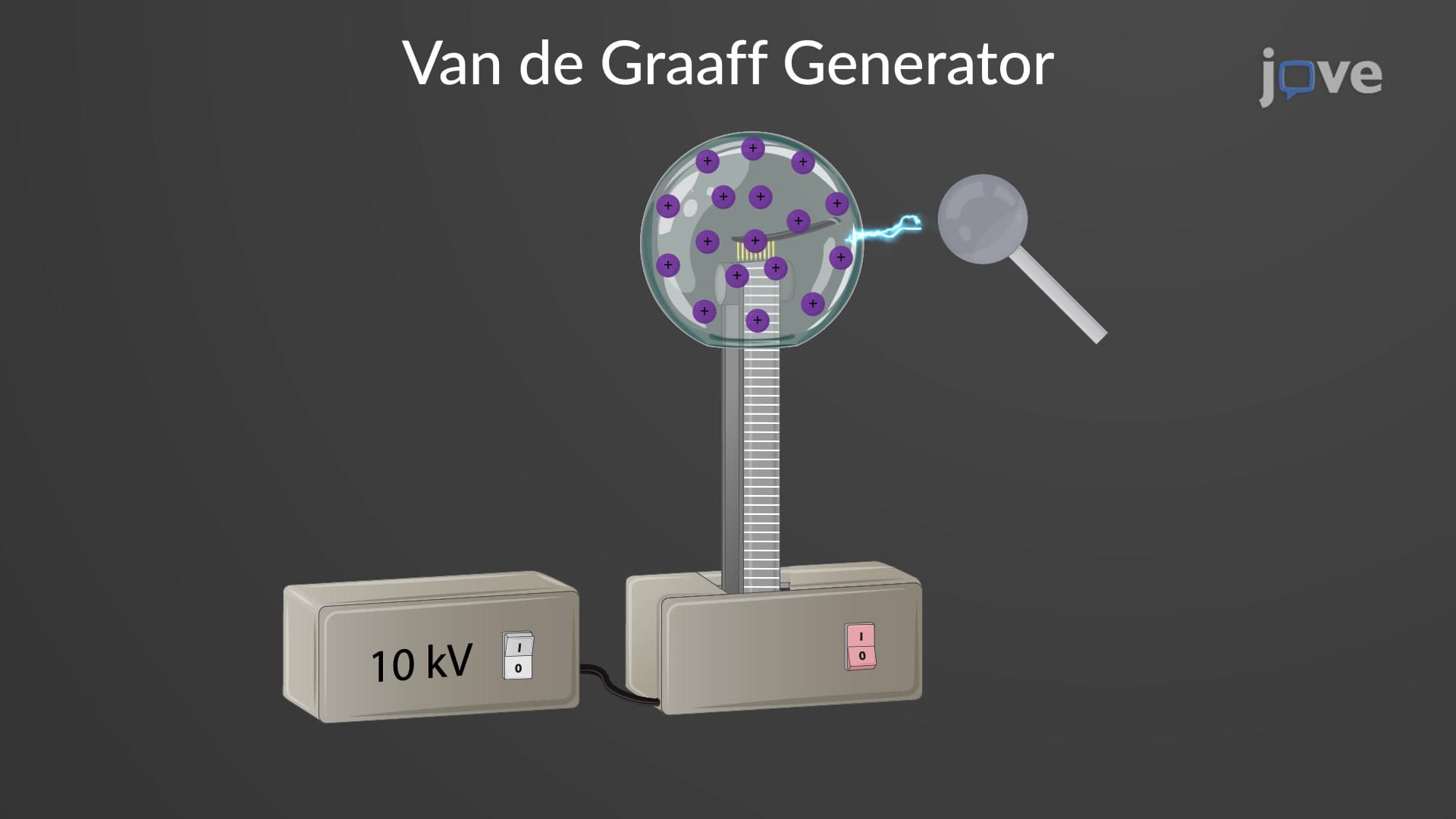
Conversely, when like charges interact (two protons or two electrons), their repulsive force creates an energy barrier. Moving them closer requires external work, increasing the system's potential energy. This scenario appears in practical applications like Van de Graaff generators used in physics demonstrations across US high schools and universities.
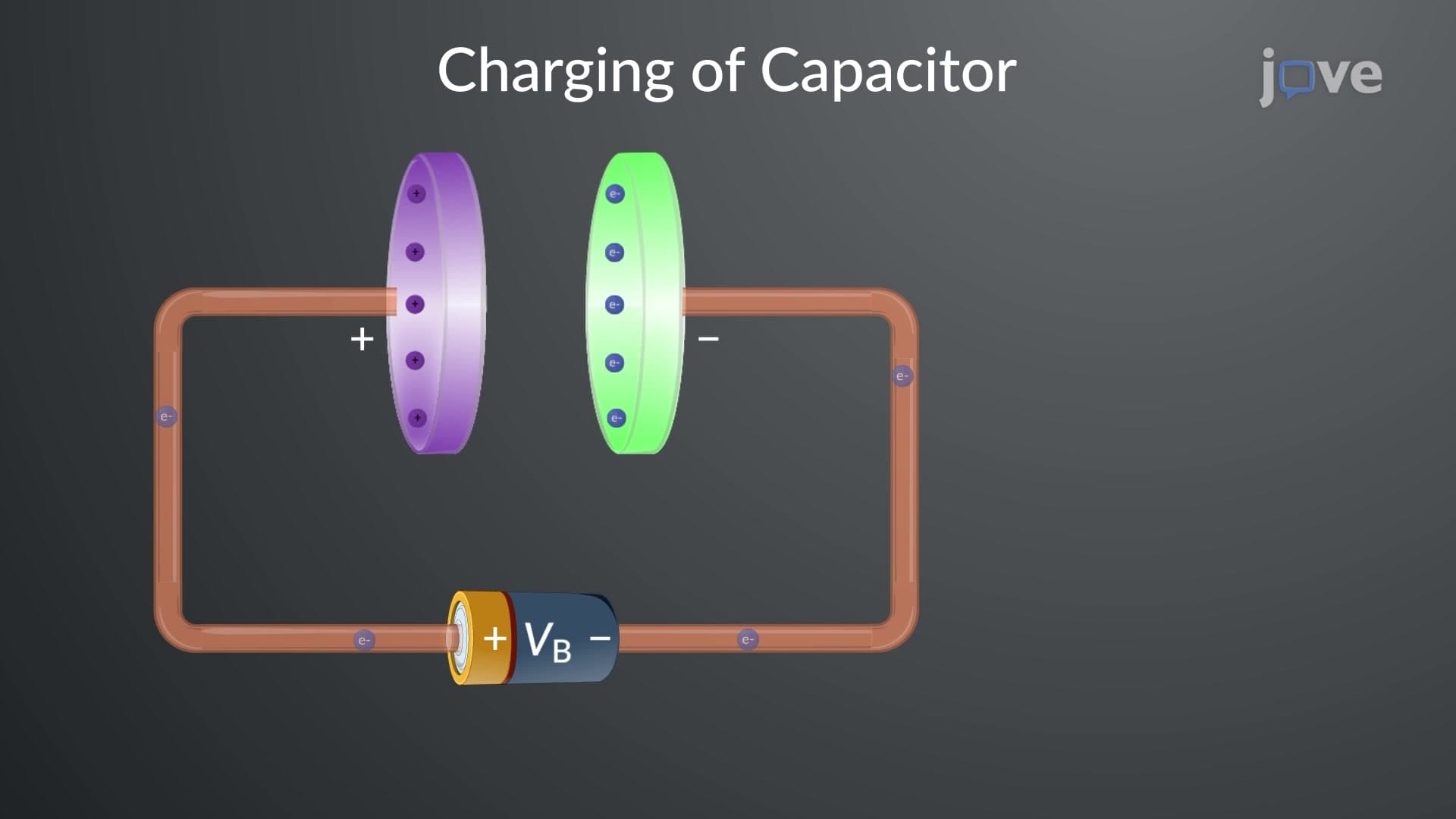
The conservative nature of electrostatic forces ensures that work done depends only on initial and final positions, not the path taken. This principle underlies capacitor design in electronic devices, from smartphones to cardiac defibrillators used in US hospitals. Engineers calculate energy storage capacity using potential energy principles, determining how much charge a device can hold at specific voltages.
In medical applications, understanding electric potential energy in electrostatics becomes critical for MRI safety protocols and electrotherapy devices. The energy stored in charged systems can be precisely controlled for therapeutic benefits while avoiding dangerous discharge scenarios.
Students preparing for MCAT physics sections or college physics exams should focus on identifying charge signs, calculating distances accurately, and applying energy conservation. Remember that potential energy can be negative (attractive systems) or positive (repulsive systems), with zero potential energy defined at infinite separation. Practice problems involving multiple charges, like those found on AP Physics C exams, require systematic application of superposition principles and careful attention to vector directions.
Related Micro-courses