Loading subject page…

- Physics
- Gauss's Law
- Electric Field of a Non Uniformly Charged Sphere
Micro-course: Gauss's Law
75,400 views
Learn key concepts and earn your certificate.
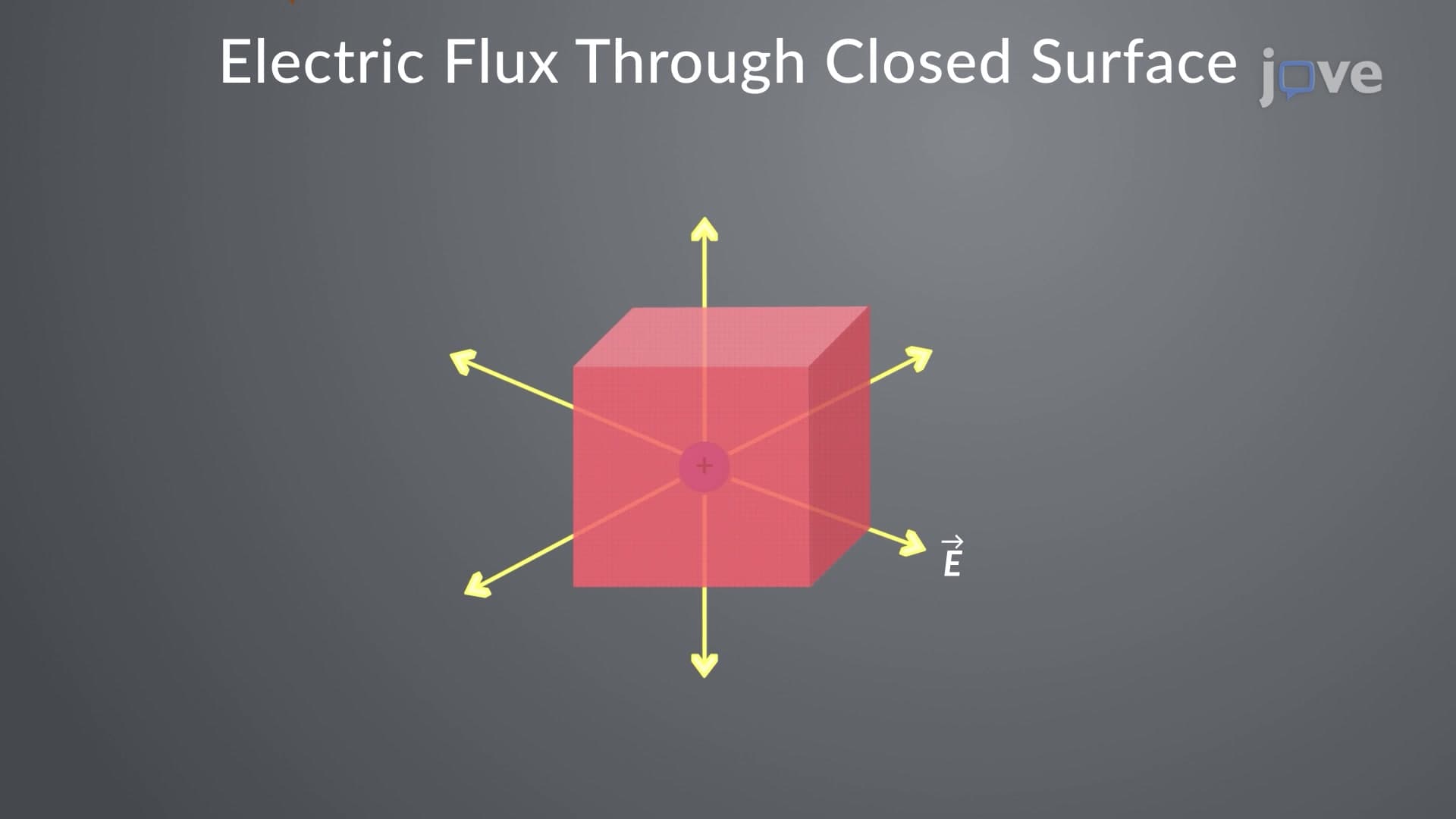

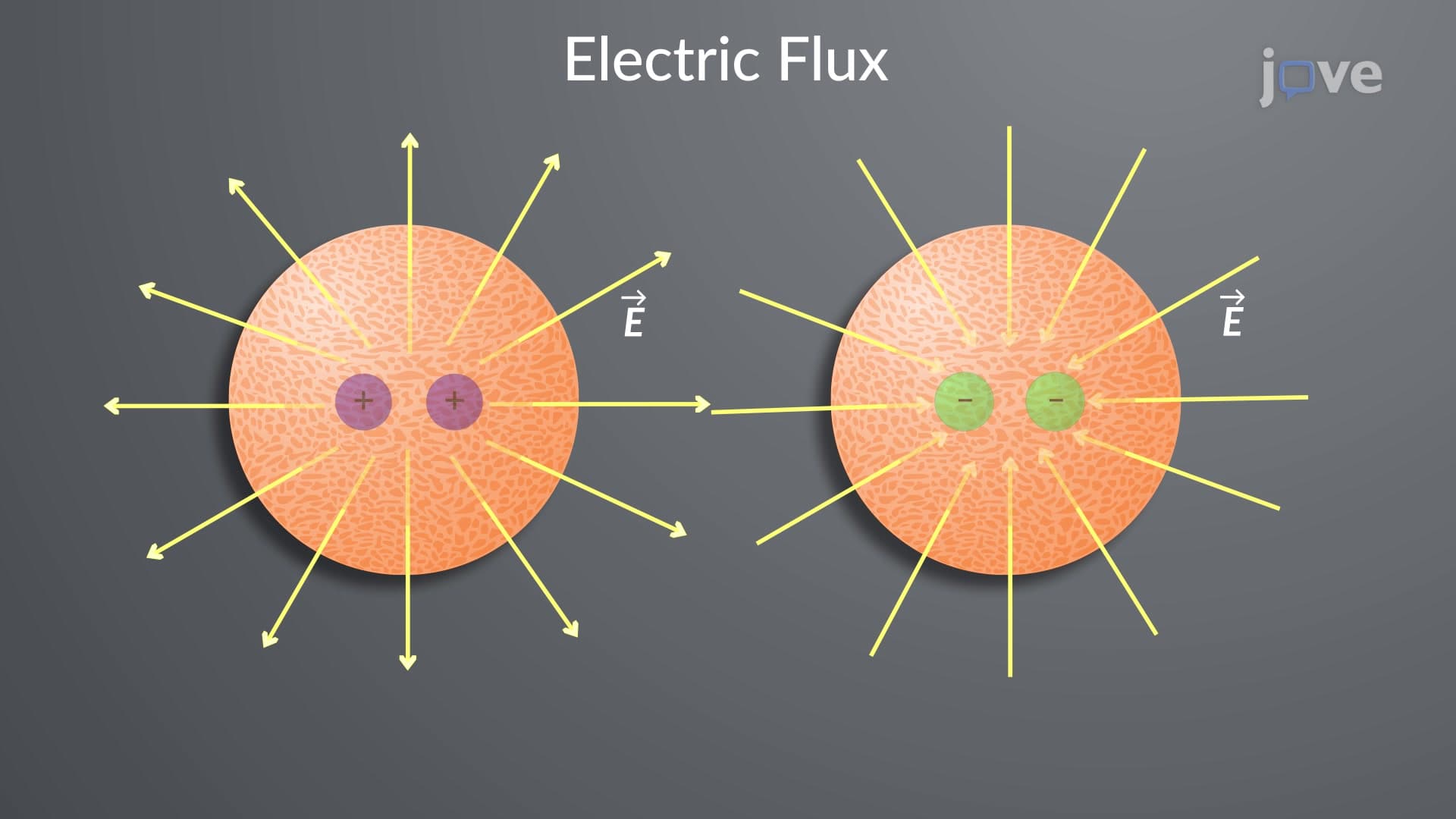
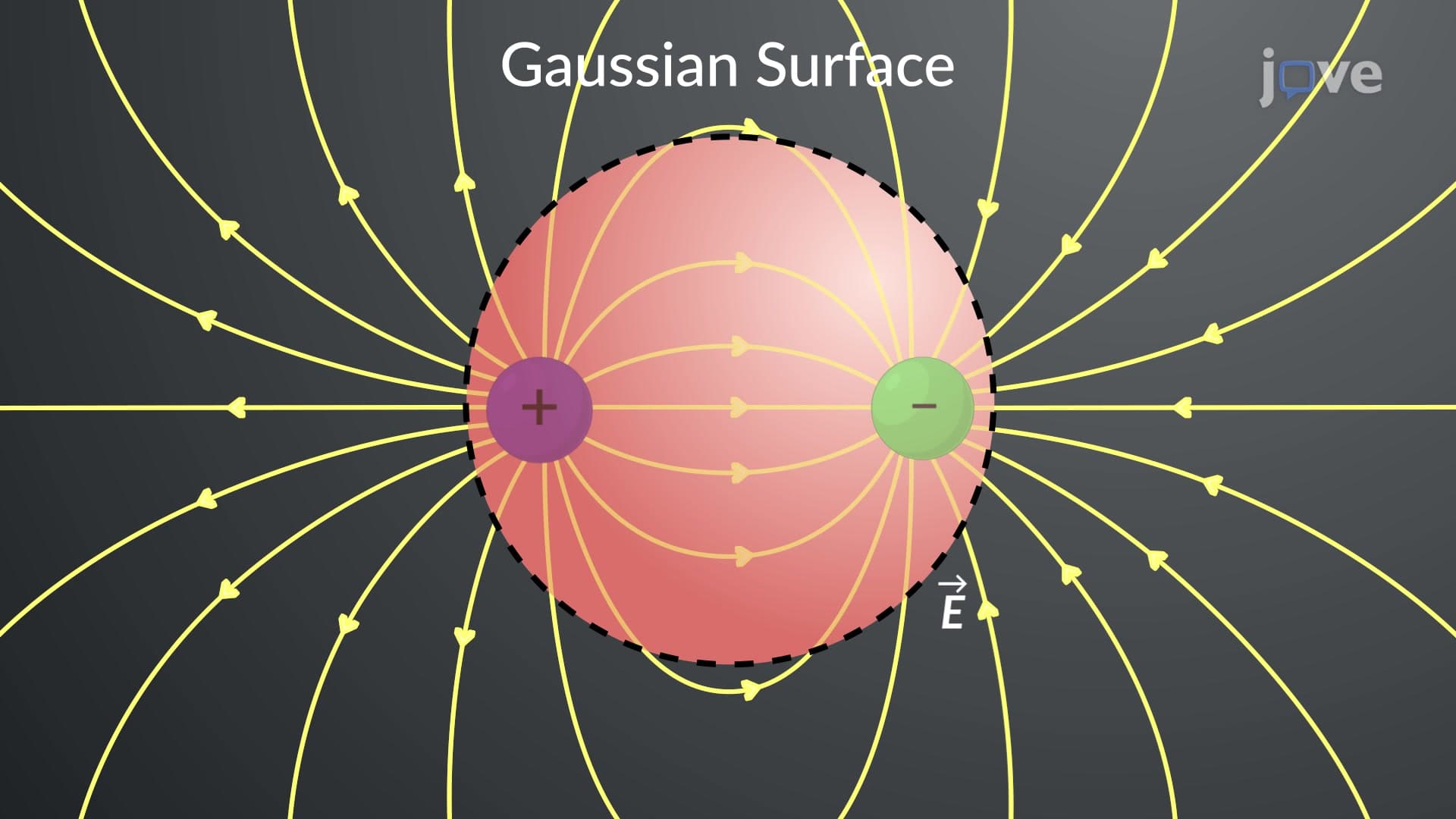
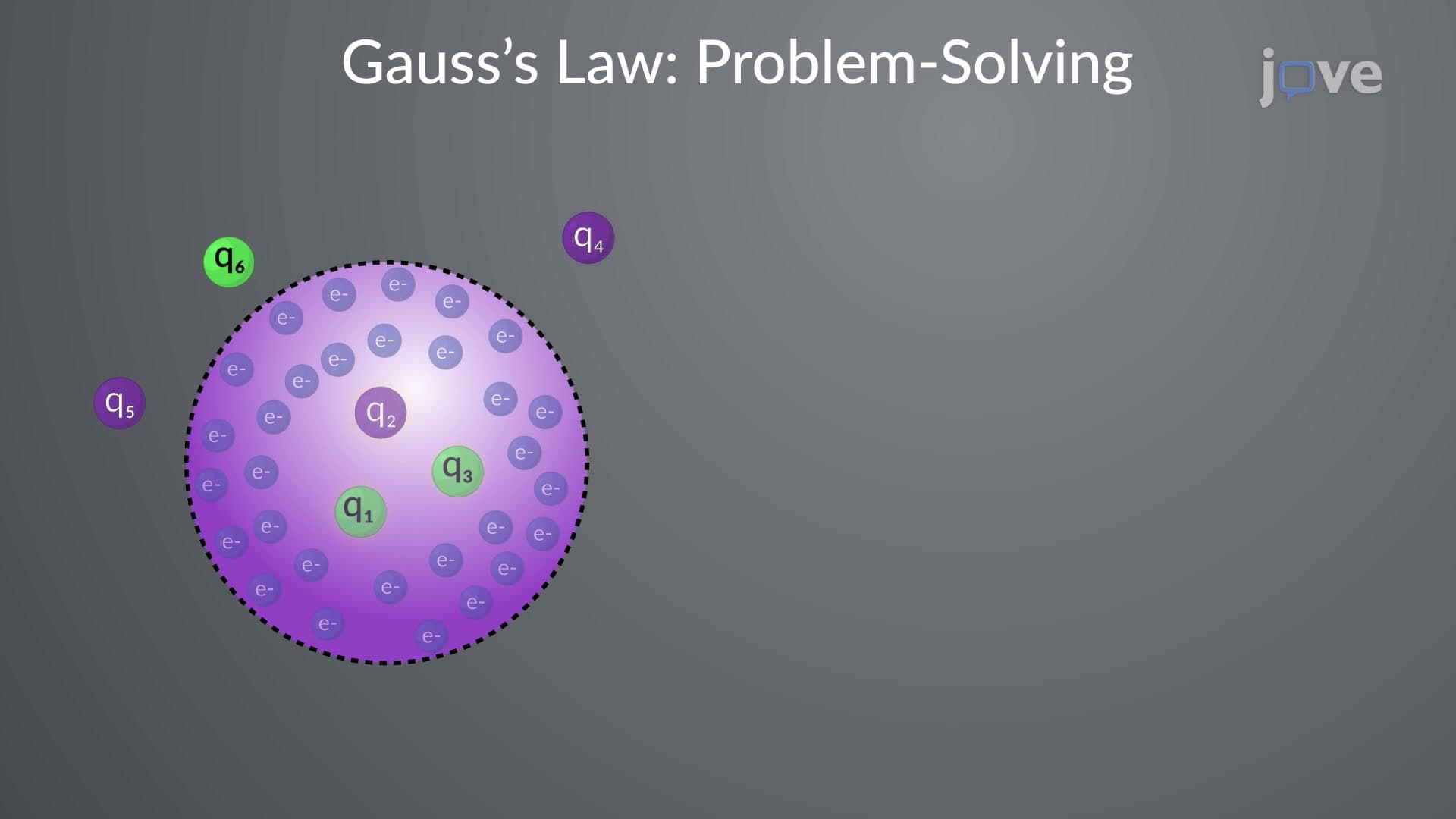
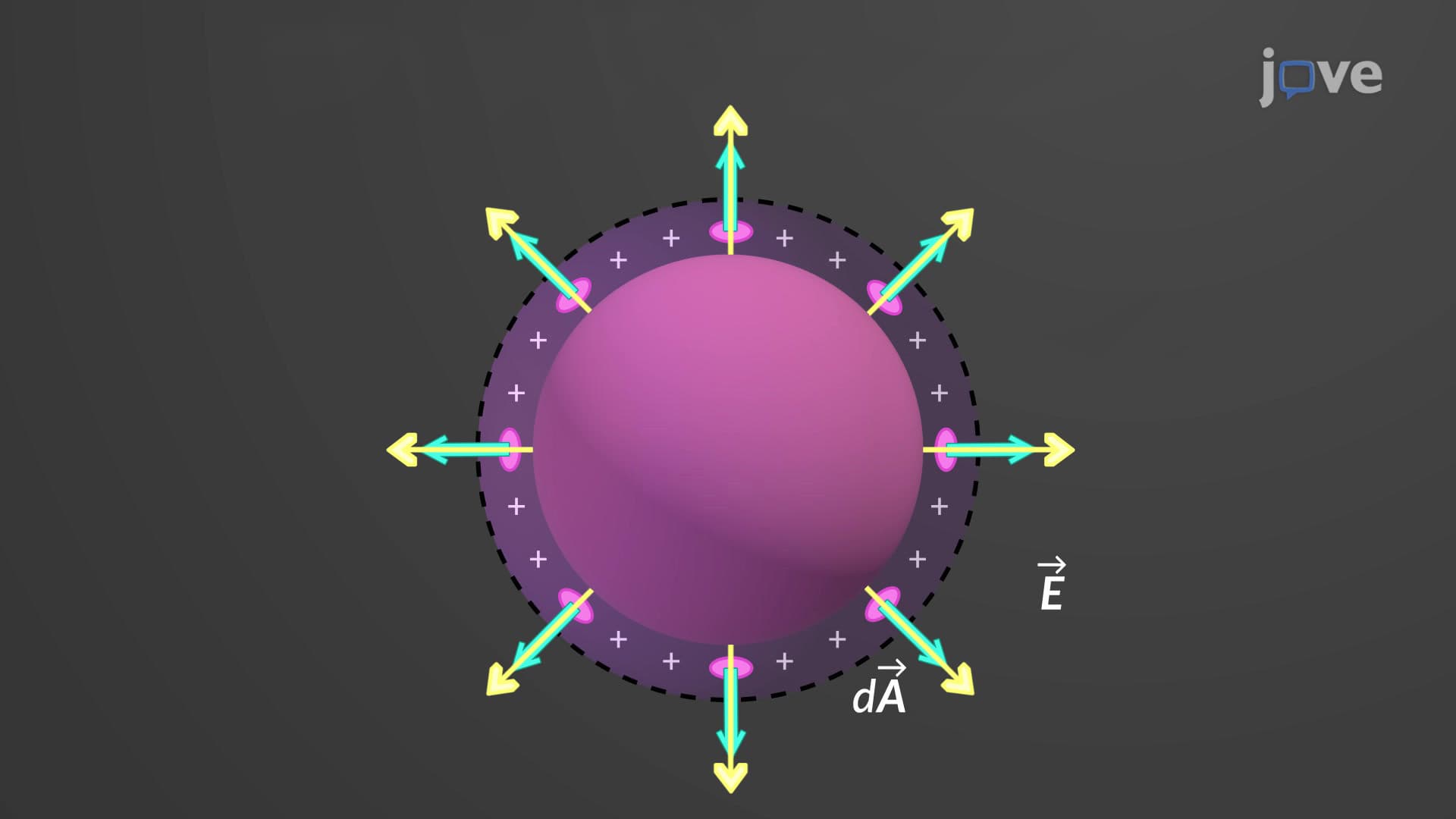
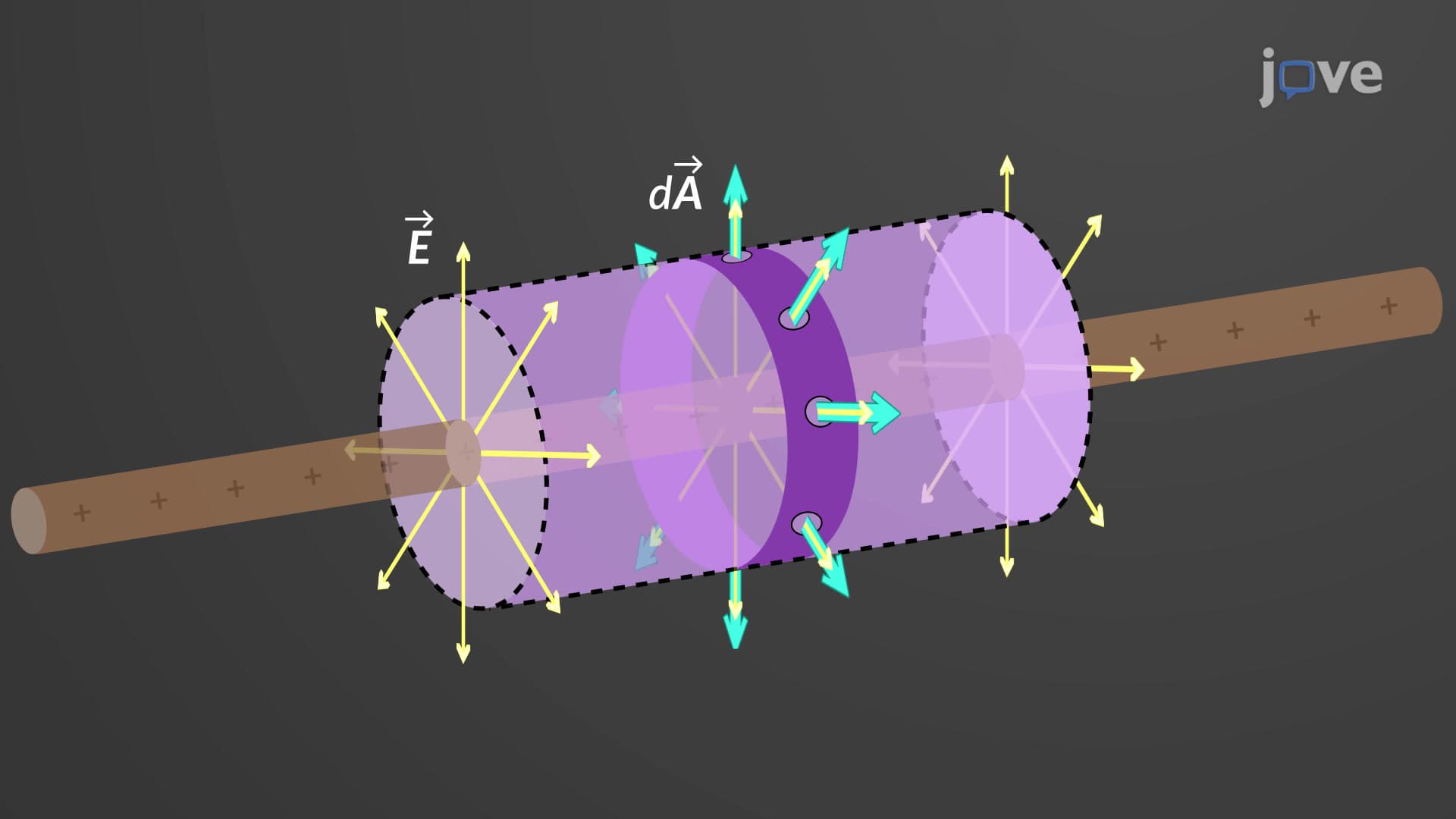
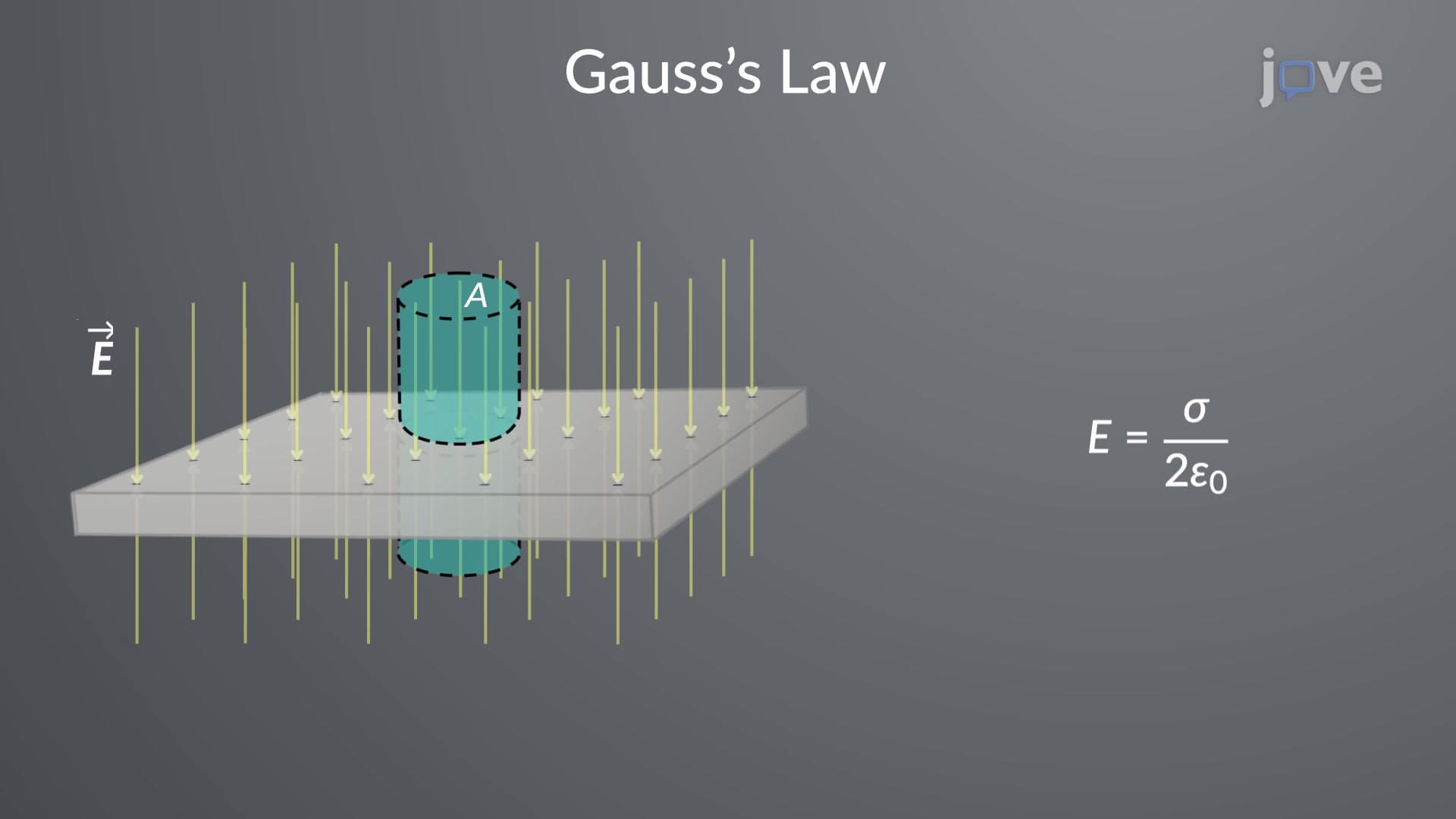


Electric Field of a Non Uniformly Charged Sphere

00:00
01:22
Video Summary: Electric Field Non Uniformly Charged Sphere Explained
Ever wondered how your smartphone's capacitive touchscreen detects your finger through complex charge distributions? The electric field non uniformly charged sphere concept explains how electric fields behave around objects with varying charge densities, like the layered charge distributions in modern electronic devices. This fundamental principle governs everything from particle accelerators at Fermilab to the ion channels in our nerve cells. Watch the full video on JoVE Coach to master this concept with expert-led visuals and step-by-step explanations.
- Understand how electric field non uniformly charged sphere calculations differ from uniform charge distributions and apply Gauss's law correctly
- Identify the key mathematical steps for finding electric fields both inside and outside spheres with radially varying charge density
- Analyze how spherical symmetry simplifies complex charge distribution problems even when density varies with radius
- Apply integration techniques to calculate total enclosed charge in non-uniform charge distributions
- Evaluate electric field strength at different distances from the sphere's center using appropriate Gaussian surfaces
- Compare field behavior inside versus outside the charged sphere and explain the physical reasoning
- Recognize real-world applications in plasma physics, semiconductor devices, and atmospheric charge phenomena
- Explore how these principles extend to other non-uniform charge geometries in advanced electromagnetism
Understanding Electric Field Non Uniformly Charged Sphere Fundamentals
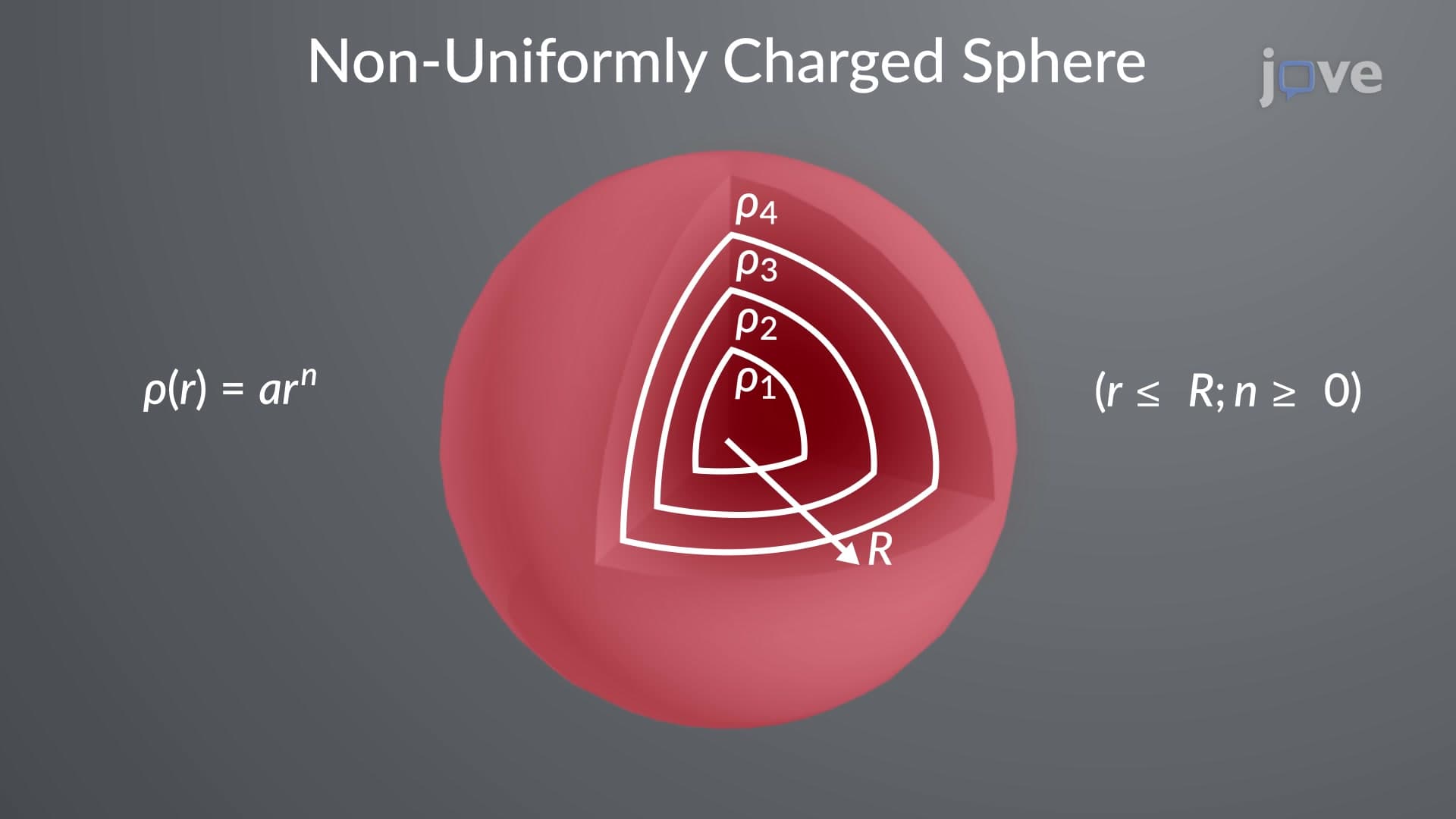
The electric field non uniformly charged sphere represents one of electromagnetism's most challenging yet practical scenarios. Unlike uniform charge distributions where density remains constant, non-uniform spheres have charge density that varies with position-typically as a function of radius ρ(r). This complexity mirrors real-world situations like plasma balls, charged atmospheric droplets, and even the charge distribution in atomic nuclei.
Mathematical Framework and Gauss's Law Application
When dealing with non-uniform charge distributions, Gauss's law becomes our primary tool: ∮E·dA = Q(enclosed)/ε₀. The key insight is that spherical symmetry still applies despite the non-uniform density. For a point outside the sphere (r > R), we construct a Gaussian surface of radius r and integrate the charge density over the entire sphere volume to find Q(enclosed) = ∫₀ᴿ ρ(r')·4πr'²dr'. The electric field then becomes E = Q(enclosed)/(4πε₀r²).
For points inside the sphere (r < R), the calculation changes dramatically. The Gaussian surface now only encloses charge up to radius r, so Q(enclosed) = ∫₀ʳ ρ(r')·4πr'²dr'. This creates a field that depends on both the specific charge distribution function and the observation point's location within the sphere.
Real-World Applications and Exam Relevance
This concept frequently appears on AP Physics C exams and college-level electromagnetism courses. Students at institutions like MIT and Stanford encounter these problems in their introductory physics sequences. Practical applications include understanding how Van de Graaff generators accumulate charge, modeling Earth's atmospheric electric field variations, and analyzing plasma confinement in fusion research at Princeton's plasma physics laboratory.
The mathematical techniques developed here-particularly the integration of charge densities and proper application of Gauss's law-form the foundation for advanced topics in electromagnetic field theory. These skills prove essential for students pursuing engineering, physics, or pre-medical tracks, especially when studying bioelectromagnetism or semiconductor device physics.
Frequently Asked Questions
An electric field non uniformly charged sphere involves charge density that varies with position (usually radius), unlike uniform spheres where charge density stays constant throughout. The mathematical analysis requires integration over varying density functions rather than simple multiplication. This complexity makes the problem more realistic for modeling actual physical systems like plasma balls or atmospheric charge distributions.
Start by identifying the charge density function ρ(r), then apply Gauss's law with appropriate Gaussian surfaces. For points outside (r > R), integrate over the entire sphere; for inside points (r < R), integrate only up to radius r. Practice with common density functions like ρ(r) = Ar or ρ(r) = B/r² to build pattern recognition for exam speed.
Master spherical coordinate integration, particularly ∫r²dr patterns since charge elements have volume 4πr²dr. Shell integration becomes crucial-you're essentially adding up thin spherical shells of charge. Review integration by parts and substitution methods, as these frequently appear when density functions involve polynomials or exponentials.
Medical imaging technologies like MRI use these principles for understanding charge distributions in biological tissues. Semiconductor manufacturing relies on ion implantation creating non-uniform charge regions. Atmospheric scientists study lightning formation through non-uniform charge distributions in storm clouds, directly applying these mathematical models to predict severe weather patterns.
While the full mathematical treatment requires integral calculus, the conceptual understanding remains accessible. Focus first on qualitative behavior-how fields change inside versus outside, why symmetry matters, and physical intuition about charge distributions. The quantitative calculations can be approached gradually as mathematical skills develop.
Don't memorize-understand the process. Practice the systematic approach: identify symmetry, choose Gaussian surface, determine enclosed charge through integration, apply Gauss's law. Create a step-by-step checklist and work through 5-10 different density functions until the pattern becomes automatic. This builds problem-solving confidence rather than formula dependence.
This topic introduces essential mathematical techniques used throughout advanced physics and engineering: multivariable integration, symmetry arguments, and field theory concepts. These skills directly transfer to studying Maxwell's equations, quantum field theory, and electromagnetic wave propagation-foundational topics for careers in physics, electrical engineering, and research science.
Progress to magnetic field calculations with current distributions, then electromagnetic induction and Maxwell's equations. Explore potential energy functions and equipotential surfaces. Advanced students should investigate multipole expansions and Green's functions-mathematical tools that extend these sphere concepts to arbitrary charge geometries in graduate-level electromagnetism.
Related Micro-courses