Loading subject page…

- Physics
- Gauss's Law
- Charge on a Conductor
Micro-course: Gauss's Law
75,400 views
Learn key concepts and earn your certificate.

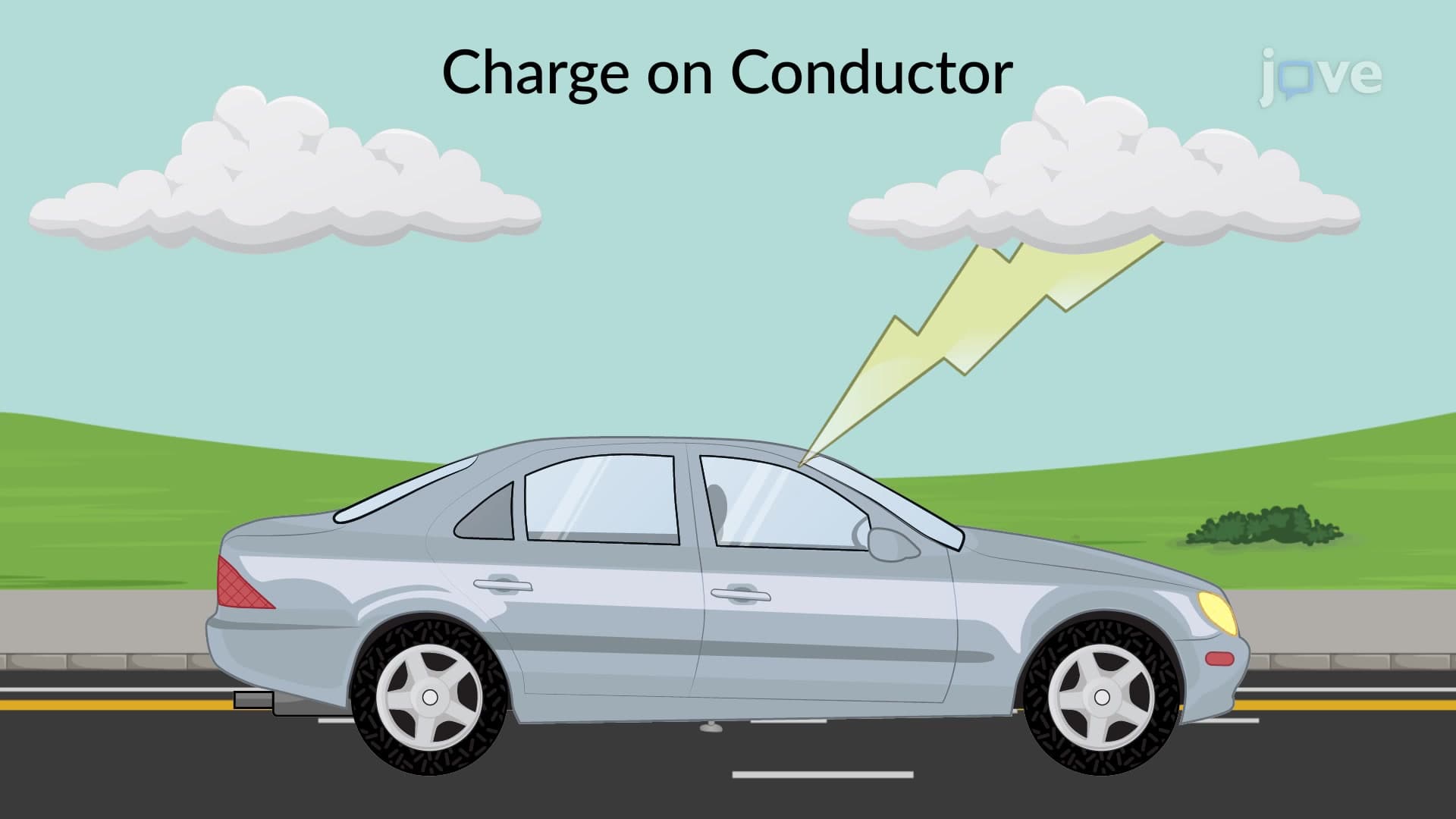
Charge on a Conductor

00:00
01:26
Video Summary: What Is Charge on a Conductor
Ever wondered why you're safe inside a car during a lightning storm? The charge on a conductor behaves in fascinating ways that protect you from electrical danger. When lightning strikes a car's metal body, the electric charges distribute only on the outer surface, leaving the interior completely charge-free. This principle explains why passengers remain unharmed inside vehicles during electrical storms across the United States. Understanding charge distribution on conductors reveals the physics behind everyday safety mechanisms and advanced electrical systems. Watch the full video on JoVE Coach to master this concept with expert-led visuals and step-by-step explanations.
- Understand what is charge on a conductor and how electric charges distribute exclusively on conductor surfaces
- Identify the relationship between electrostatic equilibrium and charge distribution in conducting materials
- Analyze how Gauss's Law explains why conductor interiors remain charge-free under all conditions
- Compare charge behavior on solid conductors versus hollow conductors with enclosed charges
- Evaluate real-world applications of conductor charge distribution in lightning protection and electrical safety
- Apply the principle of charge redistribution to solve electrostatics problems involving conducting spheres and cavities
- Recognize how conductor surfaces acquire induced charges when external electric fields are present
- Explore the connection between zero electric field inside conductors and surface charge concentration
Understanding Charge On A Conductor Fundamentals
Charge on a conductor represents one of the most elegant principles in electrostatics, governing how electric charges behave when placed on or near conducting materials. Unlike insulators where charges remain fixed at their initial positions, conductors allow free movement of electrons, creating unique charge distribution patterns that follow predictable physical laws.
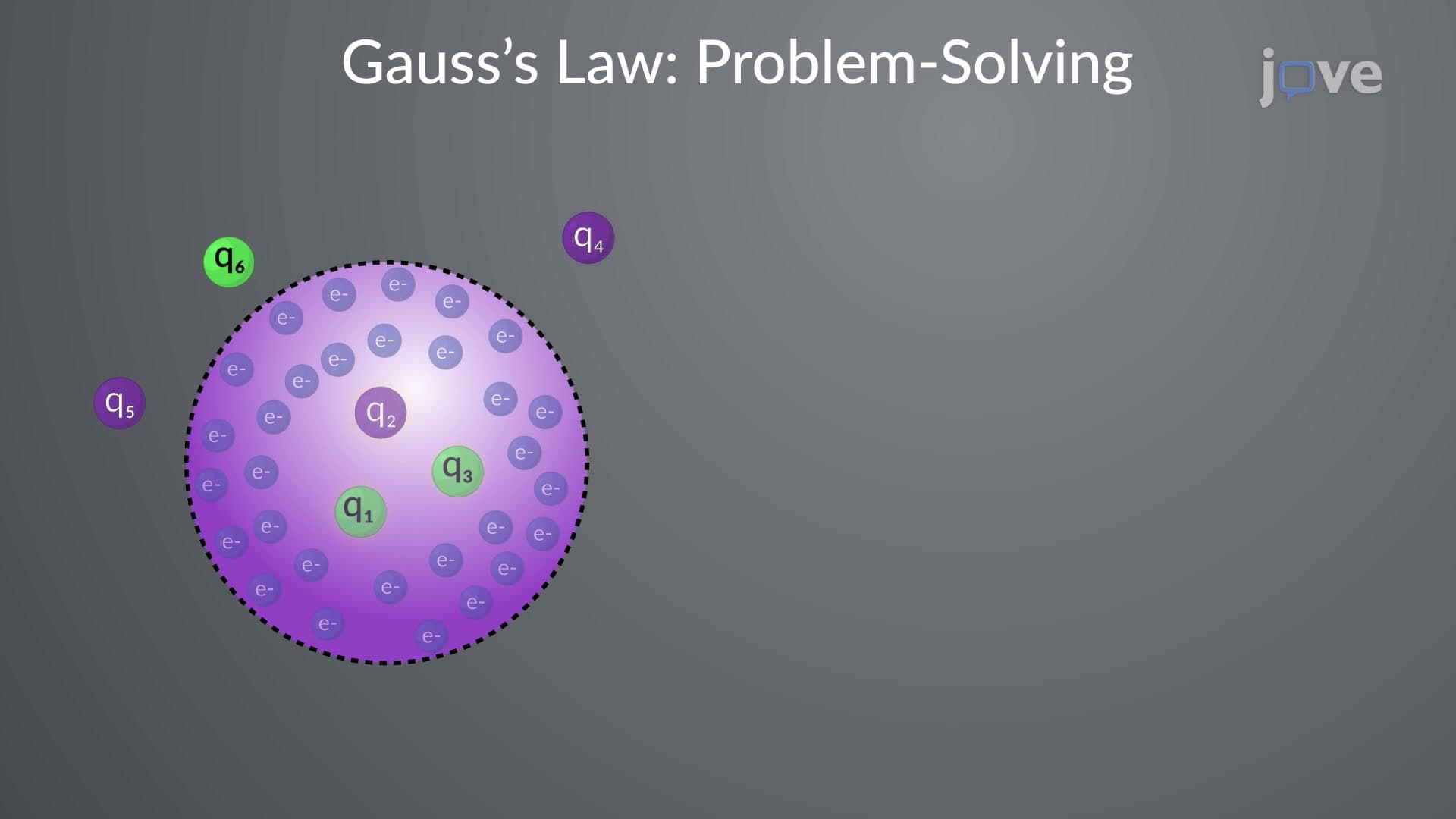
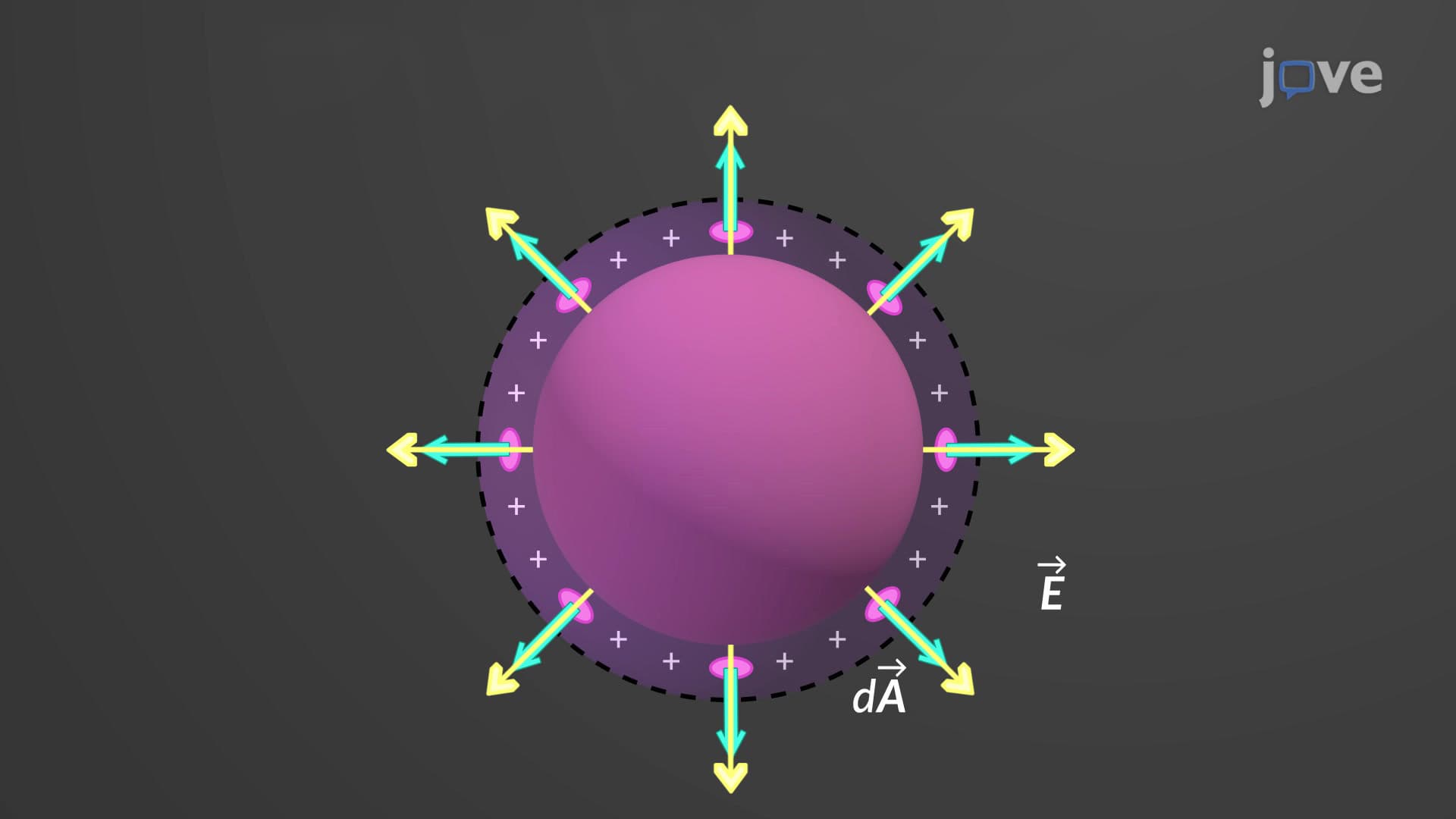
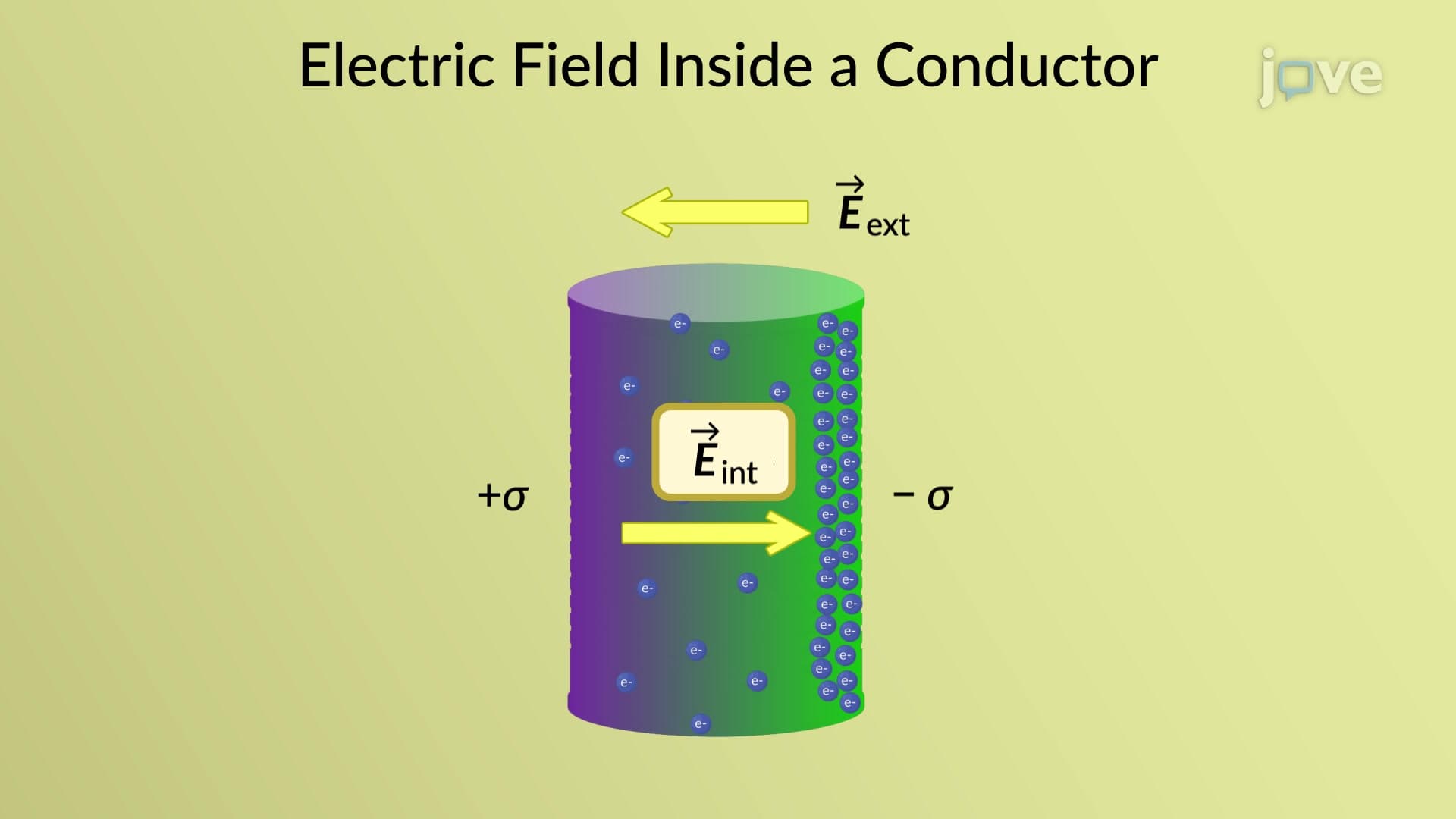
When charges are introduced to a conductor, they experience mutual repulsion and migrate to positions of lowest potential energy. This migration continues until electrostatic equilibrium is achieved, meaning no further charge movement occurs. The final result is always the same: all excess charges reside exclusively on the conductor's outer surface, with zero charge density throughout the interior volume.
Electrostatic Equilibrium and Surface Charge Distribution
The physics behind conductor charge behavior stems from the requirement that electric field strength inside any conductor must equal zero under electrostatic conditions. Free electrons within the conductor material respond instantly to any internal electric field by moving to cancel it out. This creates a self-regulating system where charge redistribution automatically maintains zero internal field.
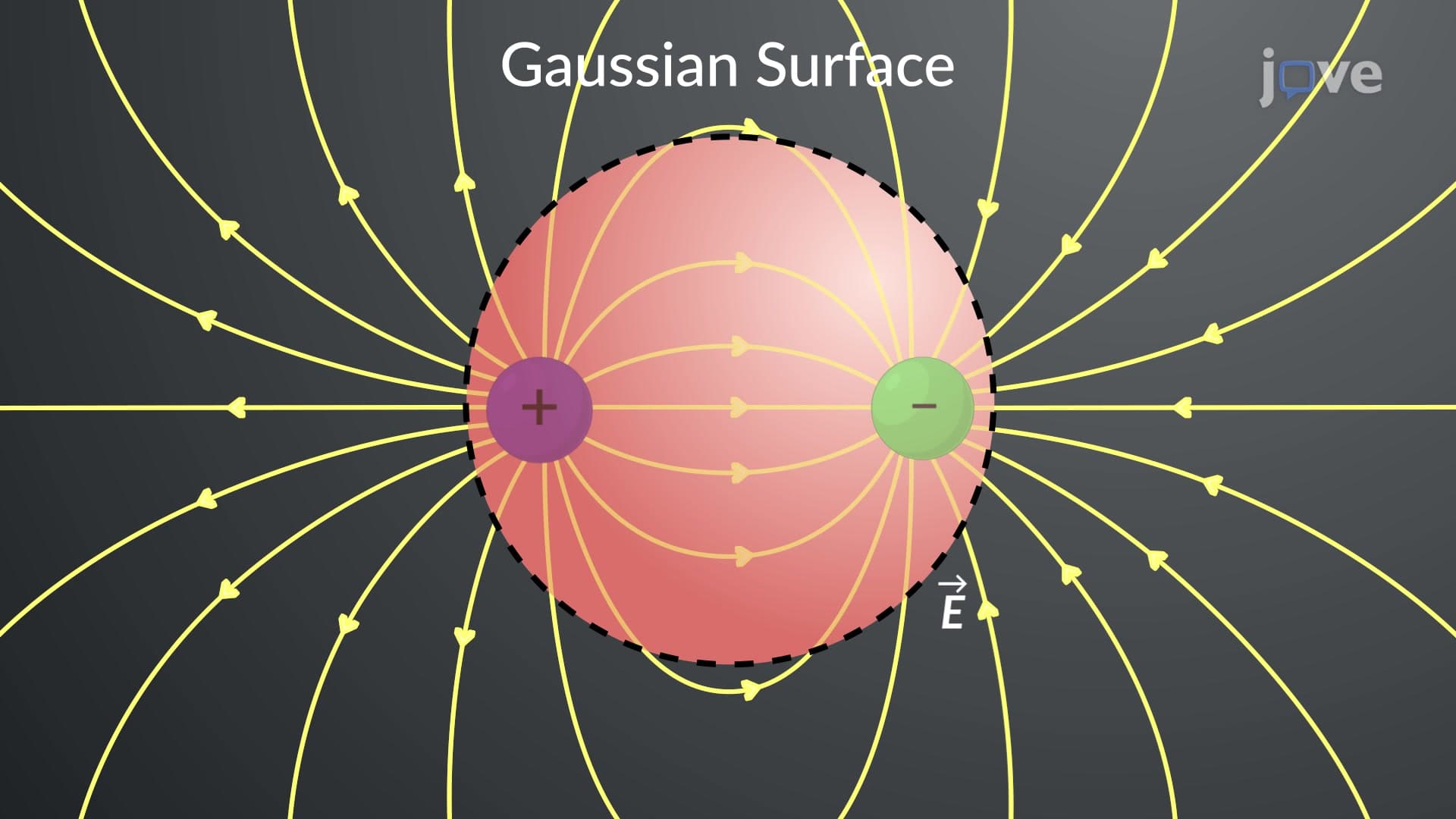
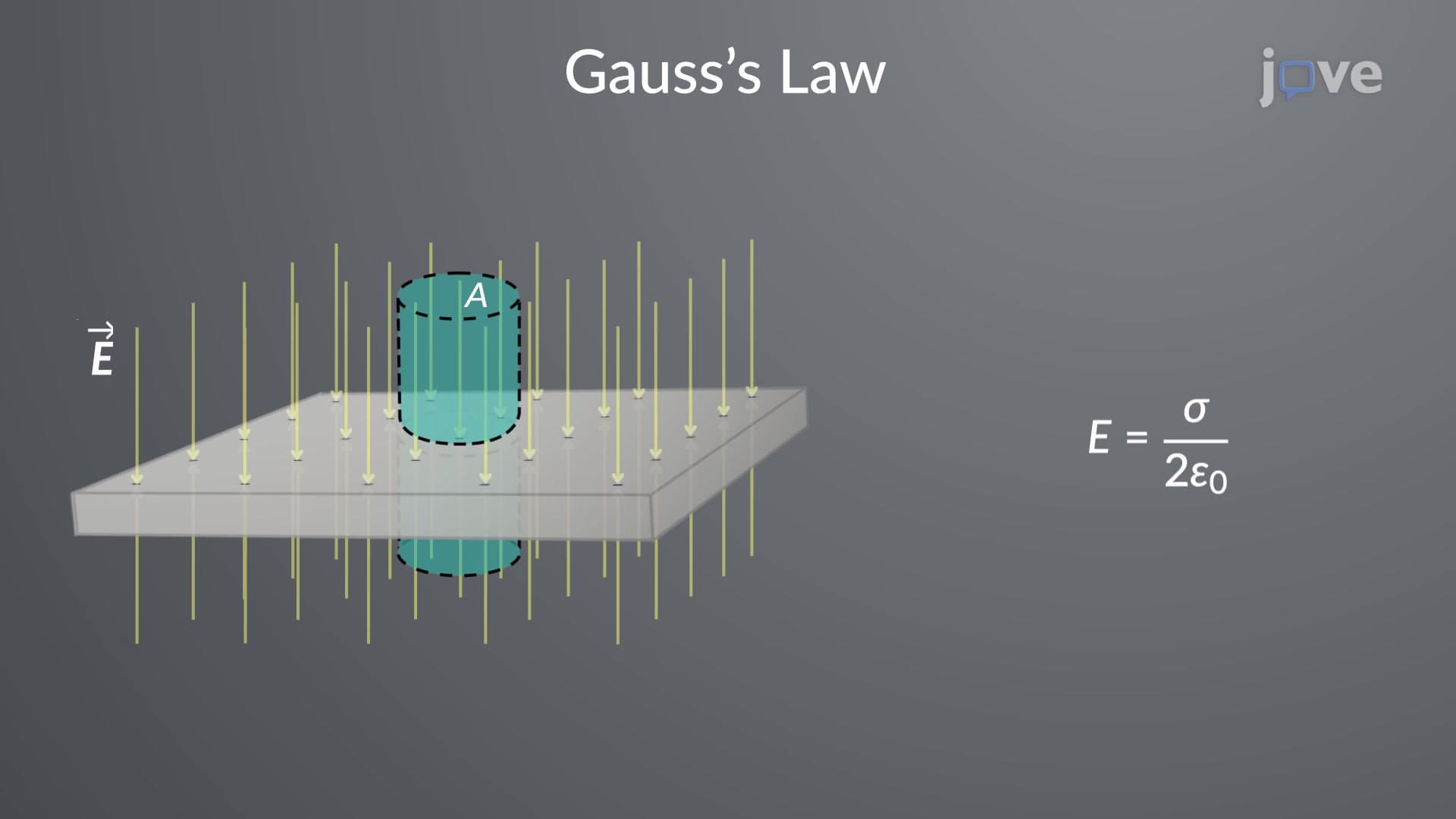
Gauss's Law provides the mathematical framework for understanding this phenomenon. Since the electric field inside a conductor is zero, any Gaussian surface drawn entirely within the conductor must enclose zero net charge. This principle applies whether the conductor is solid or contains internal cavities, making it invaluable for solving complex electrostatics problems on AP Physics exams and college-level coursework.
Hollow Conductors and Induced Charges
When charges are placed inside hollow conductors, fascinating charge induction occurs on inner surfaces. Consider a positively charged object lowered into a metal container-the container's inner surface develops negative charges exactly equal in magnitude to the enclosed positive charge. Simultaneously, the outer surface acquires positive charges to maintain overall electrical neutrality.
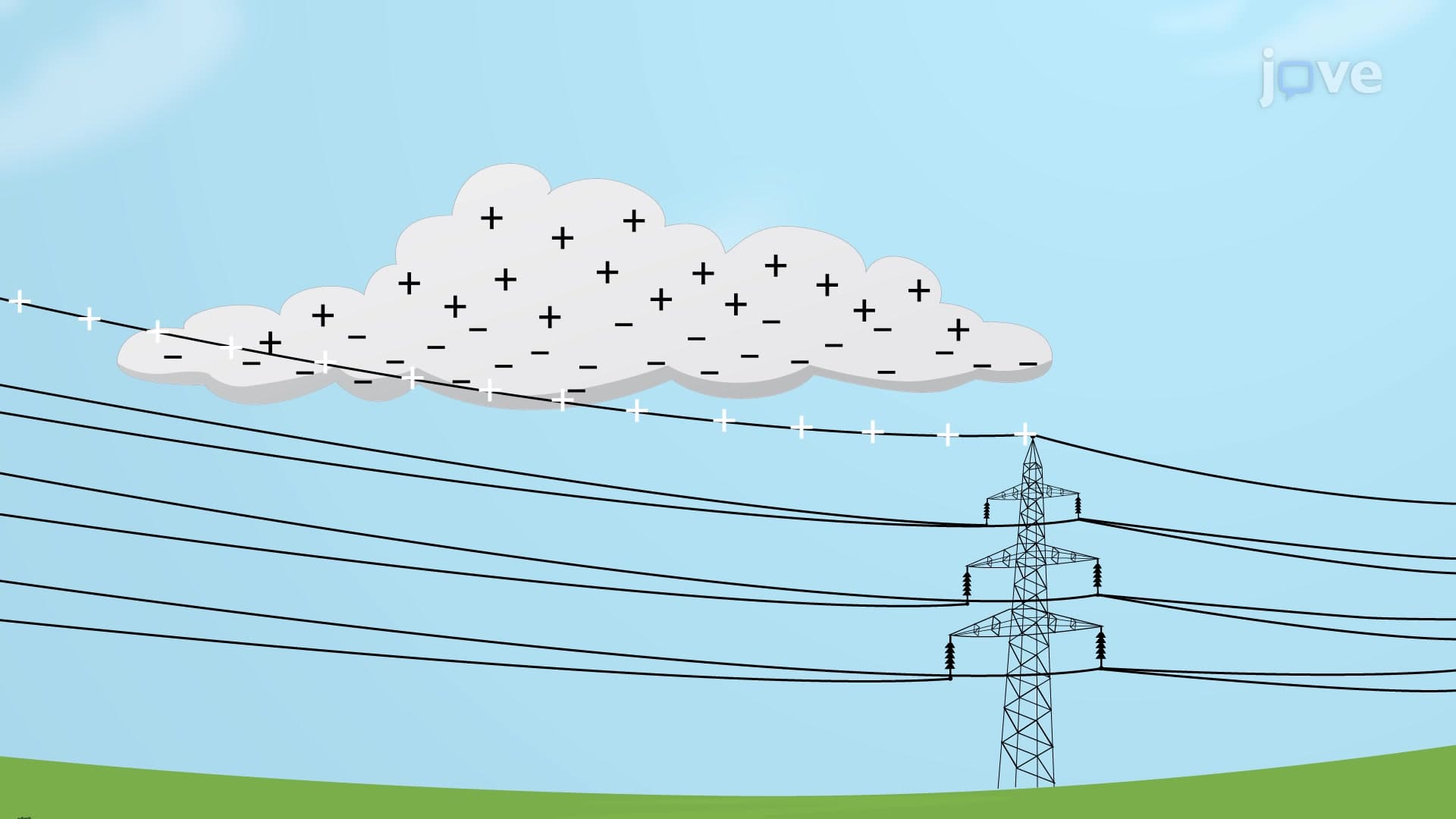
This principle explains the operation of Faraday cages used in sensitive electronic equipment across American laboratories and research facilities. The same physics protects passengers in aircraft struck by lightning, where the metal fuselage acts as a conducting shell, directing electrical current around the passenger compartment rather than through it.
Practical Applications and Exam Relevance
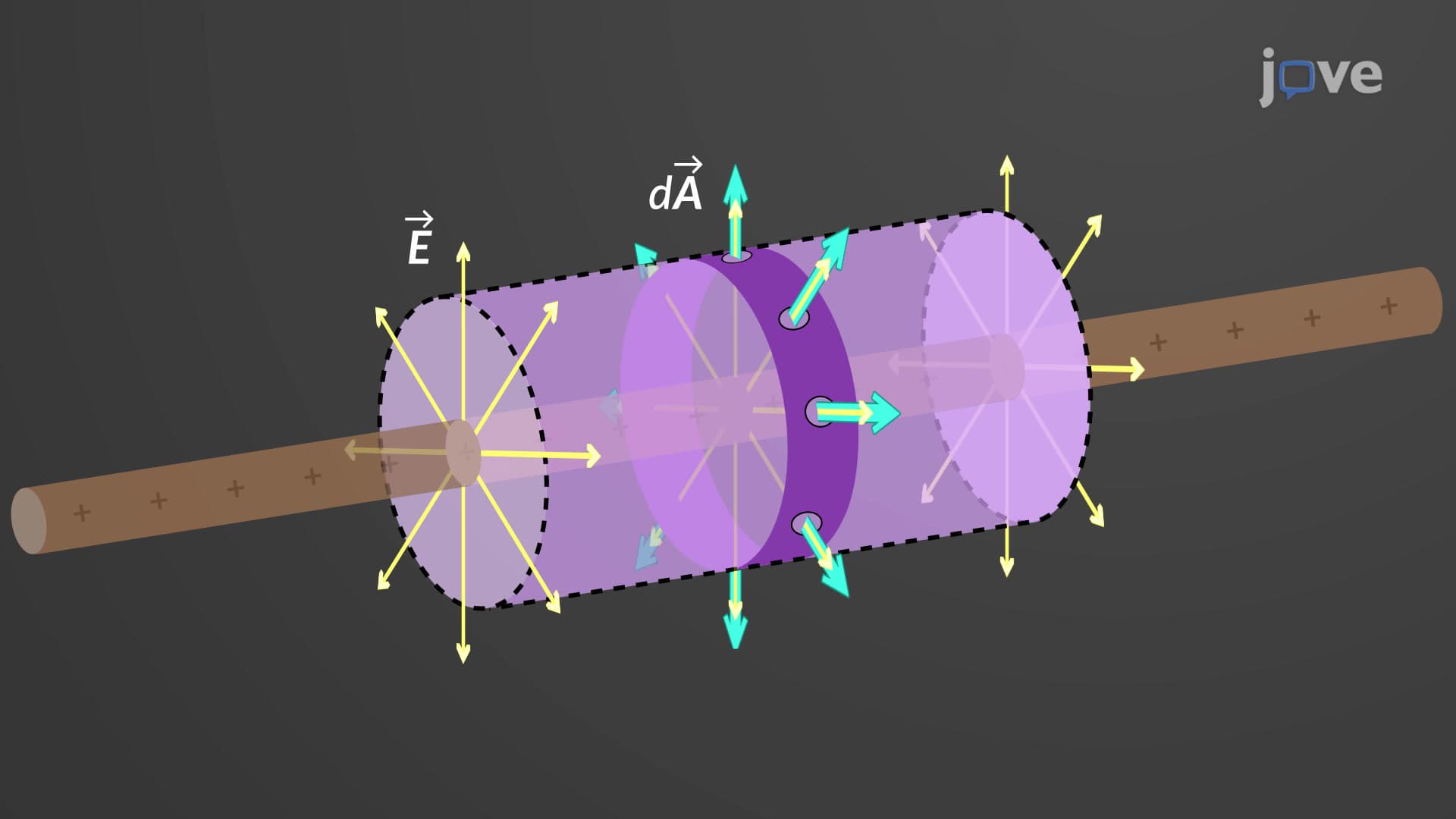
Understanding conductor charge distribution proves essential for success on standardized exams including the MCAT physics section and AP Physics C: Electricity and Magnetism. Students frequently encounter problems involving conducting spheres, cylindrical conductors, and complex geometries where charge distribution must be determined using electrostatic principles.
Real-world applications extend from lightning rods protecting American buildings to the design of electronic shielding in smartphones and computers. Van de Graaff generators, commonly found in science museums across the United States, demonstrate spectacular conductor charging effects that illustrate these fundamental principles in action.
Frequently Asked Questions
Charge on a conductor refers to electric charges that distribute exclusively on the conductor's outer surface due to mutual repulsion between like charges. The conductor's interior always remains completely free of excess charges because free electrons move to cancel any internal electric field. This creates a natural "shell" of surface charge that protects the interior from electrical effects.
AP Physics C frequently tests conductor charging through free-response questions involving Gauss's Law applications and electrostatic equilibrium scenarios. Students must demonstrate understanding of zero internal electric field, surface charge density calculations, and induced charge relationships. Practice problems typically involve conducting spheres, cylinders, and hollow conductors with point charges inside cavities.
The MCAT physics section emphasizes conductor charging because it demonstrates fundamental electrostatic principles essential for understanding biological systems and medical technology. Medical devices like EKG machines rely on conductor shielding, while nerve signal transmission involves conductor-like properties. Understanding charge distribution helps explain electrical safety in clinical environments and biomedical equipment design.
When you touch a charged conductor, charges redistribute instantly to include your body as part of the conducting system. If the conductor was positively charged, some positive charge transfers to your body until both reach the same electric potential. This explains why you might feel a shock when touching a doorknob after walking on carpet-stored charge equalizes between conductor surfaces.
Conductor charging principles protect you daily through grounded electrical systems, lightning rods, and Faraday cage effects in cars and airplanes. When lightning strikes a vehicle, charges flow around the metal exterior rather than through the interior space. Similarly, electrical outlets use grounding to safely redirect excess charges to Earth, preventing dangerous charge buildup in appliances.
Conductor charge distribution concepts are highly accessible using basic electrostatic principles and logical reasoning. While advanced calculations require calculus-based physics, the fundamental ideas depend on simple charge repulsion and equilibrium concepts. High school students can master the core principles through qualitative understanding and practice with conceptual problems before tackling mathematical applications.
Focus on understanding the "why" behind charge behavior rather than memorizing formulas. Practice identifying conductor types (solid, hollow, grounded), sketch charge distributions for different scenarios, and work through Gauss's Law applications systematically. Create concept maps linking electrostatic equilibrium, zero internal field, and surface charging to build comprehensive understanding for both multiple-choice and free-response questions.
Conductor charging principles form the foundation for electromagnetic induction, capacitor theory, and AC circuit analysis in advanced physics courses. Students progress to studying time-varying charges, electromagnetic waves, and complex conductor geometries. These concepts become essential for electrical engineering coursework, graduate-level electrodynamics, and specialized fields like plasma physics and semiconductor technology.
Related Micro-courses