Loading subject page…
- Physics
- Linear Momentum, Impulse and Collisions
- Conservation of Momentum: Problem Solving
Micro-course: Linear Momentum, Impulse and Collisions
196,000 views
Learn key concepts and earn your certificate.









Conservation of Momentum: Problem Solving

00:00
01:30
Video Summary: Conservation of Momentum Problem Solving Explained
Did you know that when a NASA Space Shuttle launches, the massive rocket pushes against Earth with the same force Earth pushes back? Conservation of momentum problem solving explains this fundamental physics principle through systematic mathematical analysis. Whether you're analyzing rocket propulsion or collision dynamics in automotive safety testing, mastering Conservation of Momentum Problem Solving Explained requires understanding how momentum transfers between interacting objects in closed systems. Watch the full video on JoVE Coach to master this concept with expert-led visuals and step-by-step explanations.
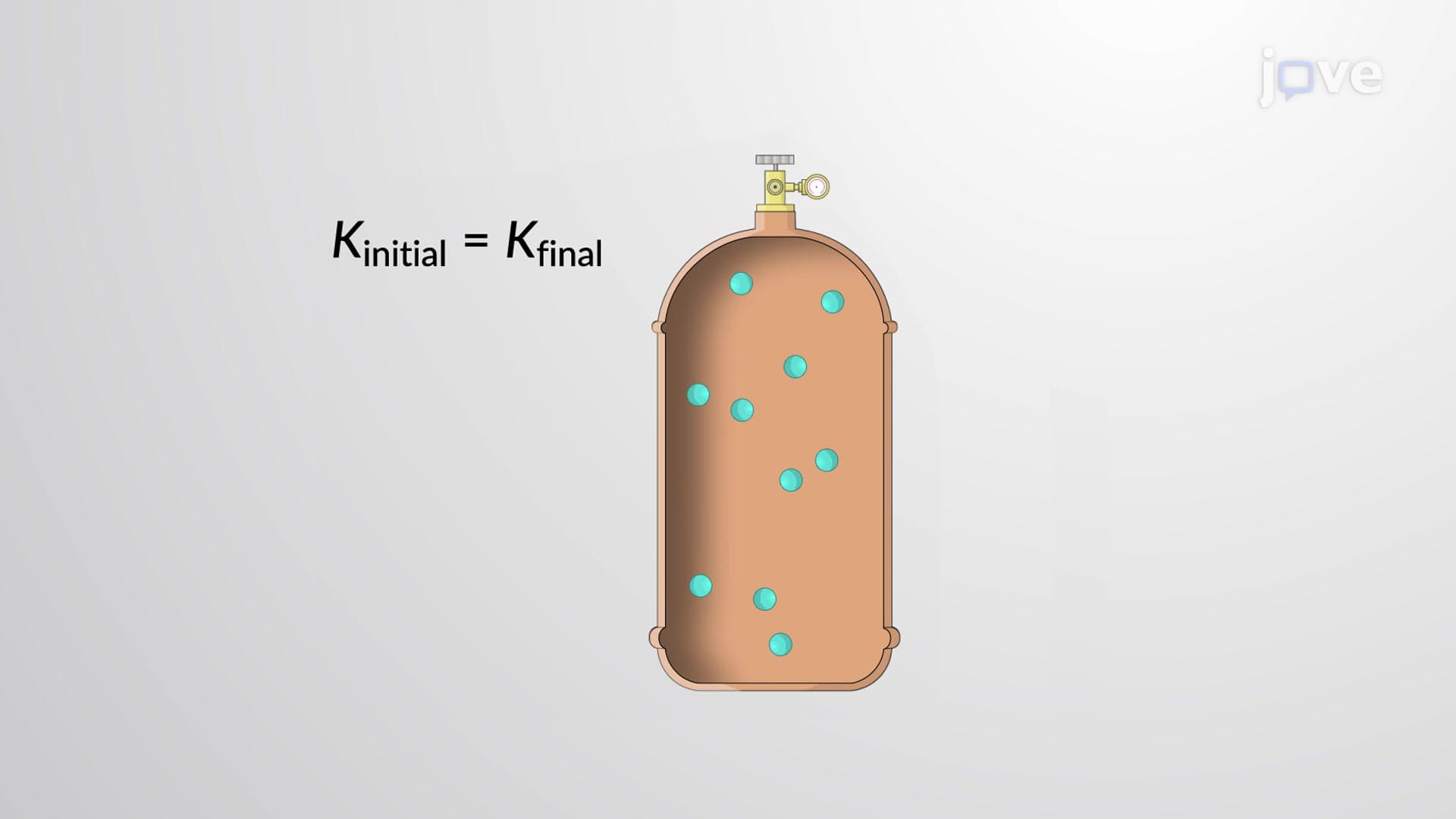
- Understand how Conservation of Momentum Problem Solving Explained applies to closed systems where external forces are negligible
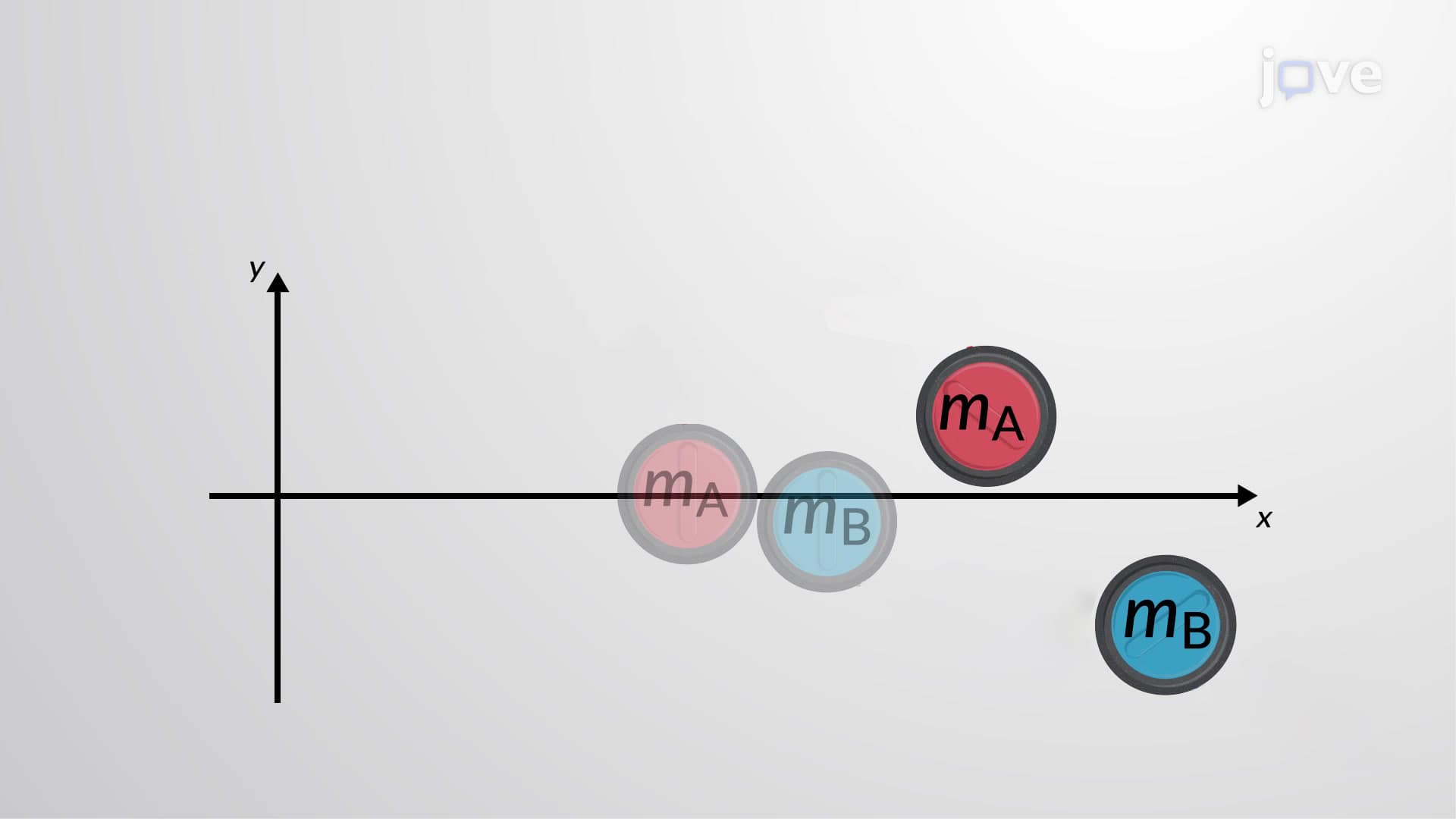
- Identify the initial and final momentum states of all objects involved in collisions or explosions
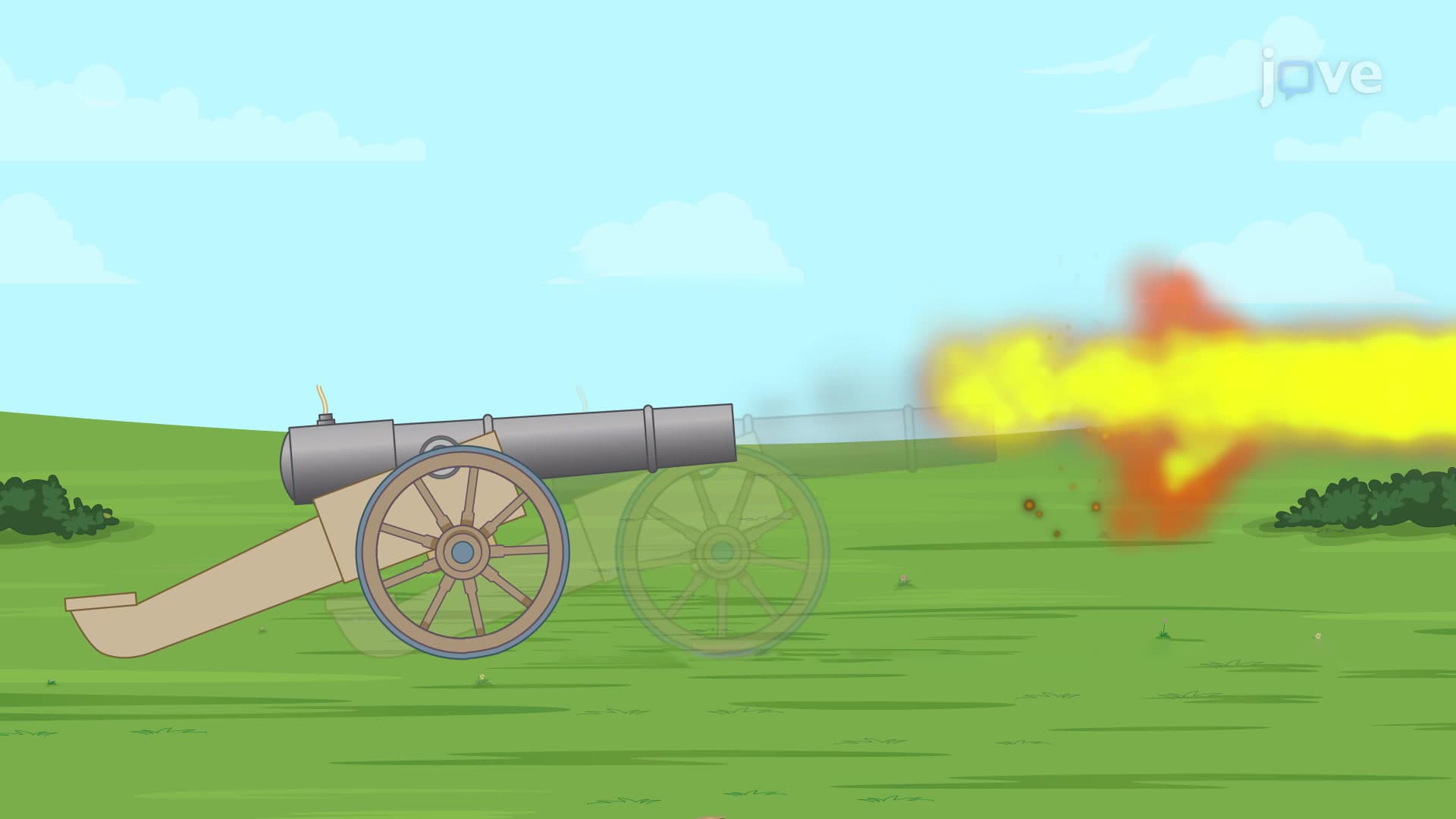
- Analyze cannon recoil problems by applying the principle that total momentum before equals total momentum after interaction
- Apply momentum conservation equations to solve for unknown velocities, masses, or momentum values systematically
- Recognize when to use positive and negative velocity signs based on chosen coordinate systems
- Evaluate whether friction and other external forces can be ignored in momentum conservation calculations
- Compare momentum before and after interactions to verify that momentum is truly conserved in the system
- Explore real-world applications from spacecraft propulsion to sports collisions using momentum conservation principles
Understanding Conservation of Momentum Problem Solving
Conservation of momentum problem solving forms the cornerstone of introductory physics mechanics, appearing frequently on AP Physics exams and college midterms. This fundamental principle states that in a closed system with no external forces, the total momentum remains constant before and after any interaction. Students encounter this concept when analyzing everything from billiard ball collisions to rocket launches at Kennedy Space Center.
Setting Up Momentum Conservation Problems
Successful momentum problem solving begins with proper system identification. Define your closed system by identifying all interacting objects and confirming that external forces (like friction) are negligible or can be ignored. Next, establish a coordinate system with clear positive and negative directions. For the classic cannon problem, choosing the projectile's direction as positive simplifies calculations significantly.
The momentum conservation equation takes the simple form: momentum(initial) = momentum(final), or mathematically: m1v1(initial) + m2v2(initial) = m1v1(final) + m2v2(final). This equation becomes particularly powerful when solving for unknown quantities in collision and explosion scenarios commonly tested on the MCAT and AP Physics C exams.
Solving Cannon Recoil Problems
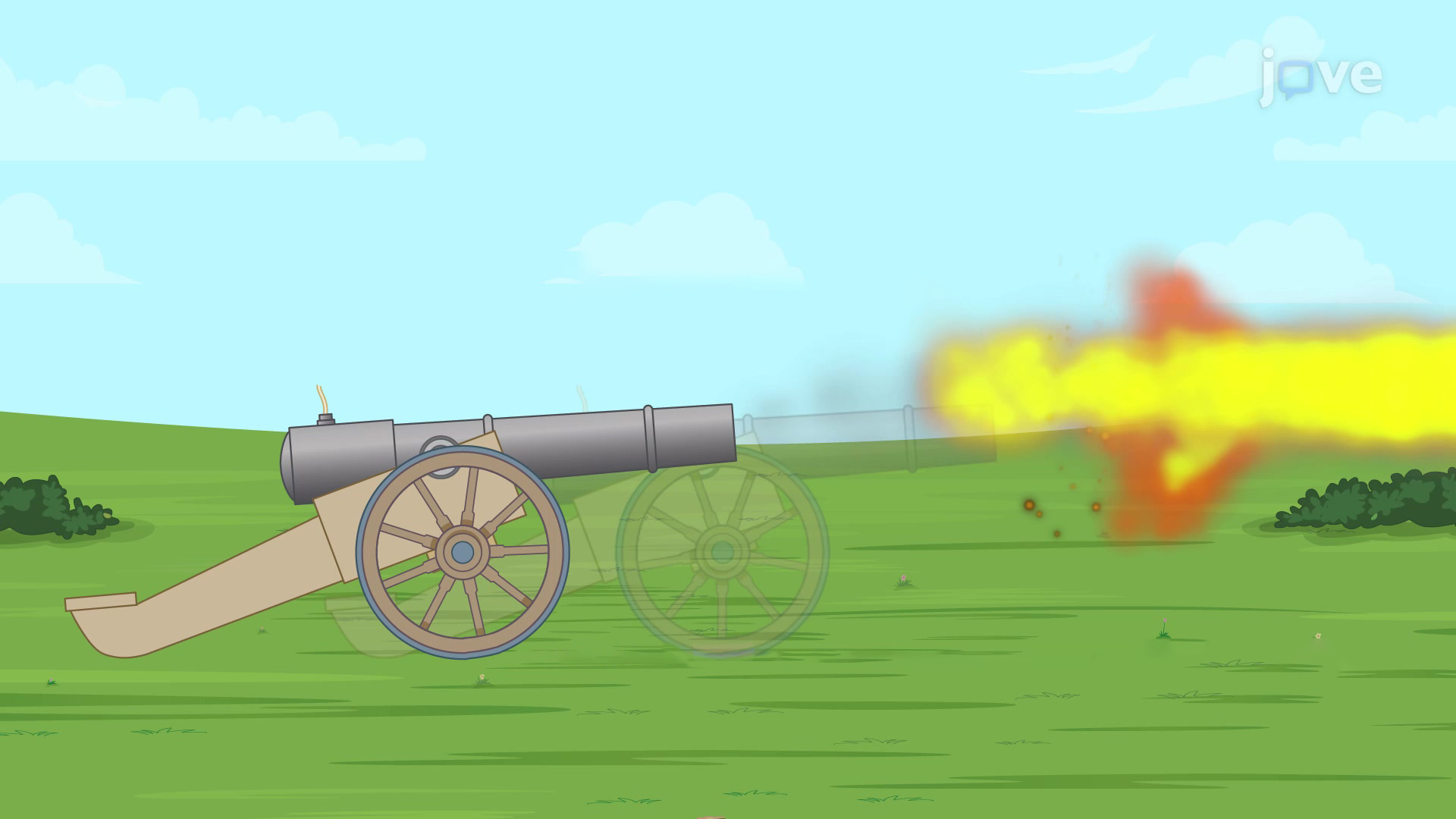
Cannon recoil problems exemplify momentum conservation in explosive interactions. Initially, both cannon and projectile remain stationary, making initial momentum zero. After firing, the system's total momentum must still equal zero, meaning the cannon's momentum exactly opposes the projectile's momentum. This principle explains why military artillery pieces require massive stabilization systems to manage recoil forces.
When working through calculations, students often struggle with sign conventions. Remember that negative velocity simply indicates motion opposite to your chosen positive direction. In our cannon example, the negative velocity confirms the cannon moves backward relative to the projectile's forward motion, exactly as physics predicts.
Real-World Applications and Exam Strategy
Conservation of momentum appears across diverse applications, from analyzing car crash safety systems to understanding jet propulsion in commercial aircraft. NASA engineers routinely apply these principles when calculating spacecraft trajectories and fuel requirements for missions to the International Space Station.
For exam success, practice identifying closed systems quickly and setting up momentum equations systematically. College physics instructors frequently test this concept through multi-part problems combining momentum conservation with energy considerations, requiring solid foundational understanding of both principles.
Frequently Asked Questions
Conservation of momentum problem solving is a systematic approach to analyzing interactions between objects using the principle that total momentum remains constant in closed systems. This fundamental concept appears throughout physics, from particle collisions in nuclear reactors to spacecraft maneuvering, making it essential for understanding how objects transfer motion. Students encounter momentum problems extensively on AP Physics, MCAT, and college physics exams.
AP Physics exams frequently feature momentum conservation in both multiple-choice and free-response sections, often combined with energy conservation or collision analysis. Typical problems include elastic and inelastic collisions, explosion scenarios like cannon recoil, and two-dimensional momentum conservation. Students should practice identifying closed systems, setting up coordinate systems, and solving for unknown velocities or masses systematically.
MCAT physics sections include momentum conservation problems within broader mechanics contexts, particularly focusing on biological applications like blood flow dynamics or biomechanical impacts. These problems typically require understanding both linear momentum conservation and its relationship to Newton's laws. Success requires quick problem identification and systematic equation setup under time pressure.
Modern car safety features like airbags and crumple zones are designed using momentum conservation principles to manage collision forces. During crashes, momentum transfers between vehicles according to conservation laws, while safety systems extend collision time to reduce impact forces on passengers. Understanding these principles helps explain why larger vehicles often fare better in collisions and why seatbelts are crucial for passenger protection.
Conservation of momentum builds naturally on Newton's laws and basic algebra, making it accessible to students with solid foundational math skills. The concept itself is intuitive, momentum doesn't disappear, but applying it systematically requires practice with sign conventions and coordinate systems. Students who master basic algebraic manipulation typically succeed with momentum problems through consistent practice and clear problem-solving strategies.
Focus on systematic problem-solving approaches: identify the closed system, establish coordinate systems with clear positive directions, write momentum conservation equations, and solve algebraically before substituting numbers. Practice diverse problem types including collisions, explosions, and two-dimensional scenarios. Create summary sheets with common problem setups and solution strategies for quick review before exams.
After momentum conservation, explore energy conservation and the work-energy theorem, which often combine with momentum in complex problems. Angular momentum conservation extends these principles to rotational motion, appearing frequently in advanced physics courses. Students planning engineering or physics majors should also study impulse-momentum theorem and its applications to force analysis in mechanical systems.
Related Micro-courses

14 Concepts
14 Concepts

12 Concepts