Loading video…


 19 Concepts
 196K views

Video Summary: What Is Impulse Momentum Theorem
Ever wonder why NFL players wear helmets with thick padding, or why cars have crumple zones? The impulse momentum theorem explains how extending the time of impact dramatically reduces the forces involved in collisions. This fundamental physics principle shows that impulse equals the change in momentum, making it crucial for understanding everything from sports safety to automotive design. For instance, when a baseball player catches a fastball, they naturally pull their glove back to increase the contact time and reduce the sting on their hand. Watch the full video on JoVE Coach to master this concept with expert-led visuals and step-by-step explanations.
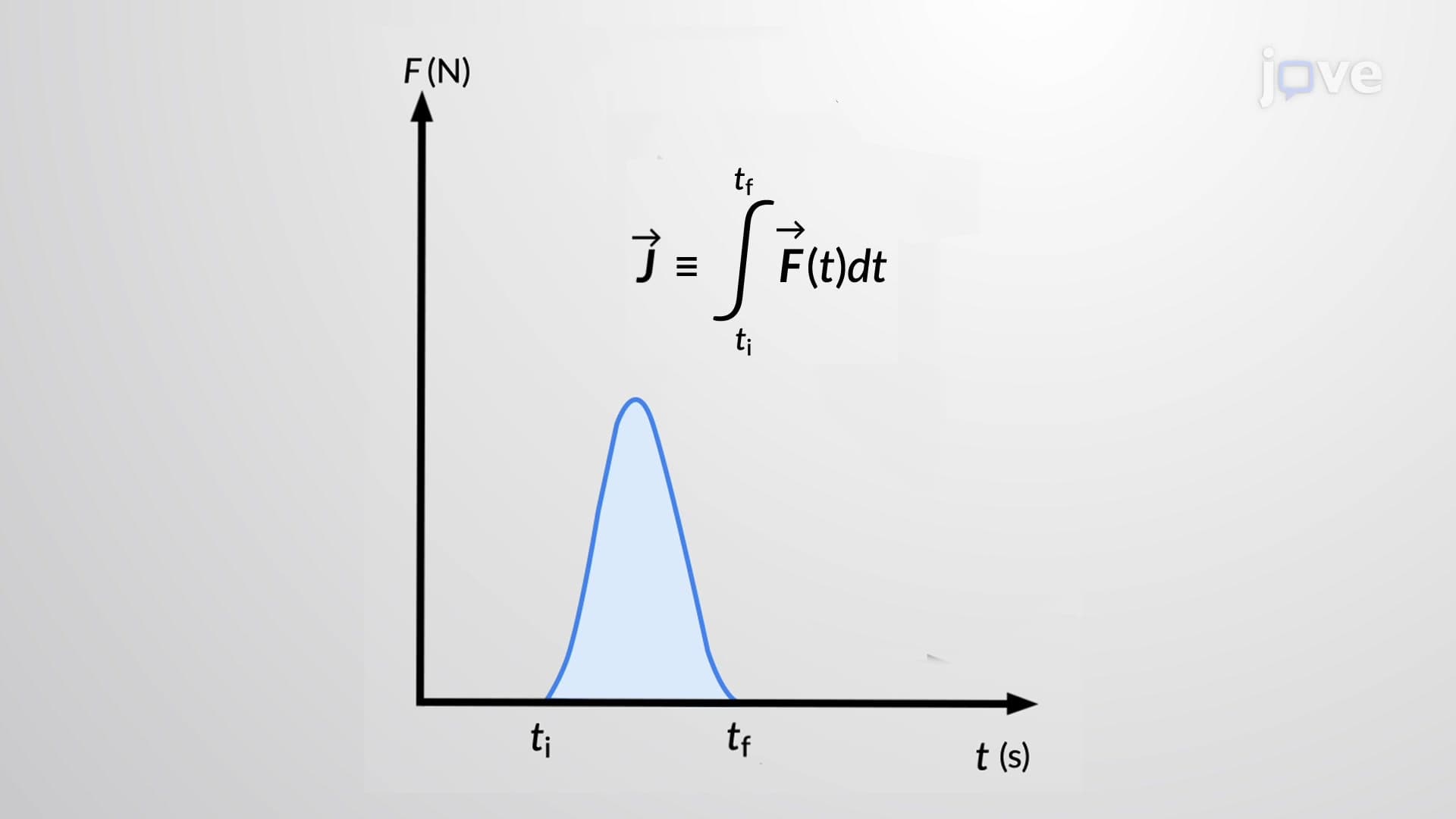
The impulse momentum theorem represents one of physics' most practical and powerful principles, directly connecting Newton's second law to real-world collision dynamics. At its core, this theorem states that the impulse delivered to an object equals its change in momentum. Mathematically, this relationship appears as J = Δp = FΔt, where J represents impulse, Δp represents momentum change, F represents the average force, and Δt represents the time interval.
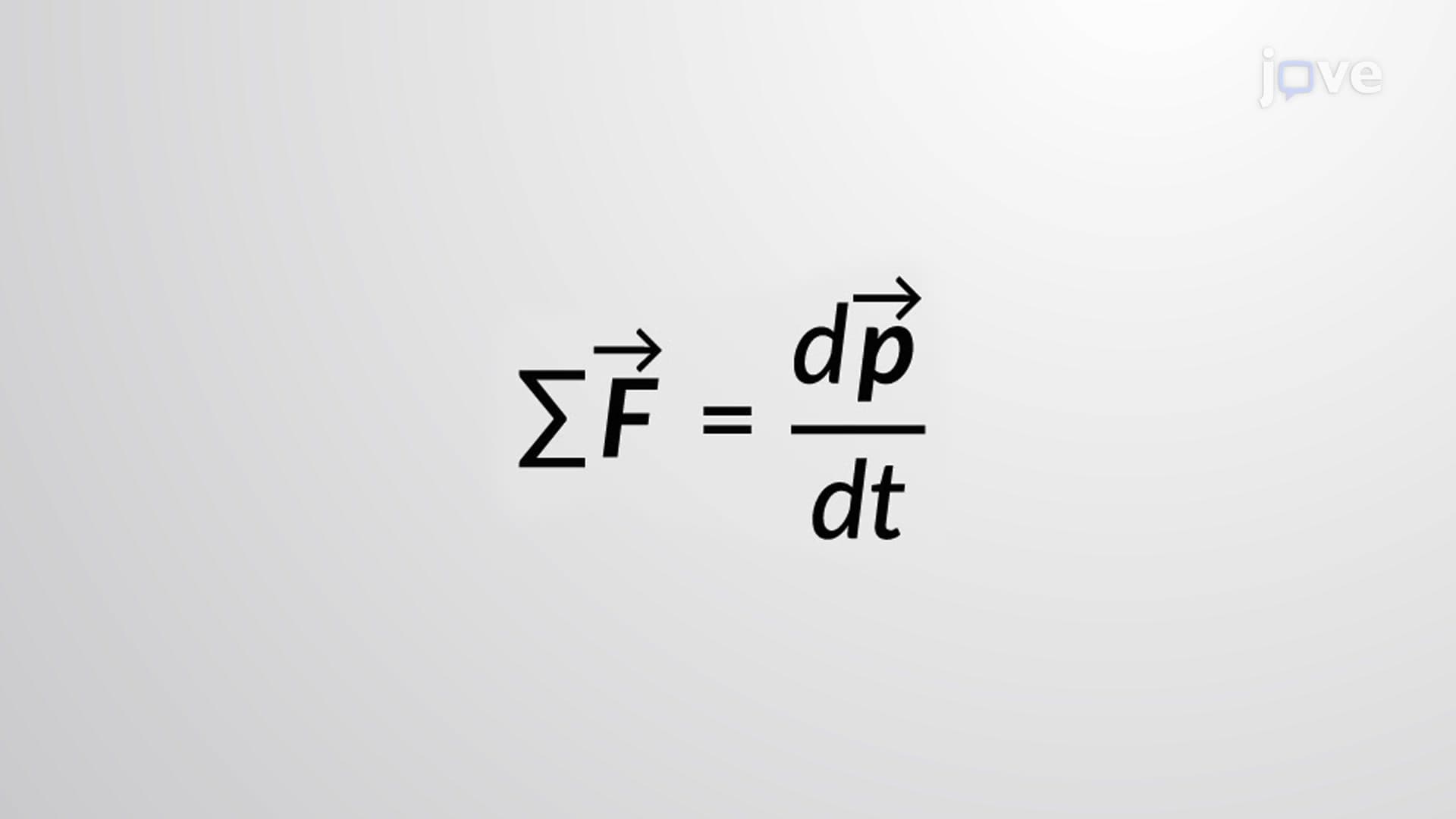
This principle emerges from Newton's second law when expressed in terms of momentum: F = Δp/Δt. Rearranging this equation gives us FΔt = Δp, revealing that the product of force and time (impulse) equals the momentum change. This relationship proves invaluable for analyzing collisions, impacts, and any scenario involving changing motion.
The impulse momentum theorem definition becomes crystal clear when examining safety applications across American industries and sports. Consider how airbags in vehicles work: during a collision, they dramatically increase the time over which a passenger's momentum changes from their initial velocity to zero. Without an airbag, a passenger might stop in 0.1 seconds against the dashboard, experiencing enormous forces. With an airbag, this stopping time extends to 0.5 seconds, reducing the force by a factor of five.
Similarly, in American football, players learn tackling techniques that demonstrate this principle. A proper tackle involves wrapping up and driving through the opponent over a longer time period, rather than delivering a quick, sharp hit. This technique not only proves more effective but also reduces injury risk by distributing the momentum change over a greater time interval.
Students preparing for AP Physics, SAT Subject Tests, or college-level mechanics courses frequently encounter impulse momentum theorem problems. These typically involve calculating unknown forces, time intervals, or velocity changes in collision scenarios. For example, a common problem might ask students to determine the average force exerted by a baseball bat on a ball, given the ball's mass, initial and final velocities, and contact time.
The theorem's power lies in its ability to solve problems where forces vary over time. While the actual force during a collision might fluctuate dramatically, the impulse momentum theorem allows us to work with average forces, making complex real-world scenarios mathematically manageable.
The impulse momentum theorem overview reveals its fundamental role in connecting classical mechanics to more advanced physics topics. This principle serves as a stepping stone to understanding conservation of momentum in closed systems, the relationship between kinetic energy and momentum, and even concepts in quantum mechanics where momentum plays a crucial role.
In engineering applications, this theorem guides the design of everything from shock absorbers in buildings during earthquakes to protective gear for extreme sports athletes, making it an essential concept for students pursuing STEM careers.
Related Micro-courses