Loading subject page…

- Physics
- Linear Momentum, Impulse and Collisions
- Gravitational Potential Energy for Extended Objects
Micro-course: Linear Momentum, Impulse and Collisions
196,000 views
Learn key concepts and earn your certificate.





Gravitational Potential Energy for Extended Objects

00:00
01:07
Video Summary: Gravitational Potential Energy for Extended Objects Explained
When a demolition crew drops a wrecking ball, why does the entire 5,000-pound sphere behave as if all its mass is concentrated at one point? Gravitational potential energy for extended objects reveals this fascinating principle: any object's gravitational potential energy can be calculated by treating its entire mass as concentrated at its center of mass. From NASA's rocket stages to construction cranes lifting steel beams across American skyscrapers, this concept explains how engineers predict energy transformations in complex systems. Watch the full video on JoVE Coach to master this concept with expert-led visuals and step-by-step explanations.
- Understand how gravitational potential energy for extended objects differs from point mass calculations and why the center of mass becomes the key reference point
- Identify the mathematical relationship between differential mass elements and total gravitational potential energy using integral calculus
- Analyze how uniform mass distribution allows engineers to simplify complex energy calculations for real-world structures
- Apply the center of mass principle to calculate gravitational potential energy for composite objects like multi-stage rockets or architectural frameworks
- Recognize why the summation approach for discrete masses transforms into integral calculus for continuous mass distributions
- Evaluate energy conservation scenarios involving extended objects in free fall under uniform gravitational acceleration
- Compare gravitational potential energy calculations between point masses and extended objects to understand when approximations are valid
- Explore practical applications in engineering design where center of mass calculations determine structural stability and energy requirements
Understanding Gravitational Potential Energy For Extended Objects
Unlike point masses where gravitational potential energy calculations are straightforward, gravitational potential energy for extended objects requires a more sophisticated approach. When dealing with real-world objects-from the Space Shuttle's external fuel tank to a suspension bridge's main cables-we must account for how mass is distributed throughout the object's volume.
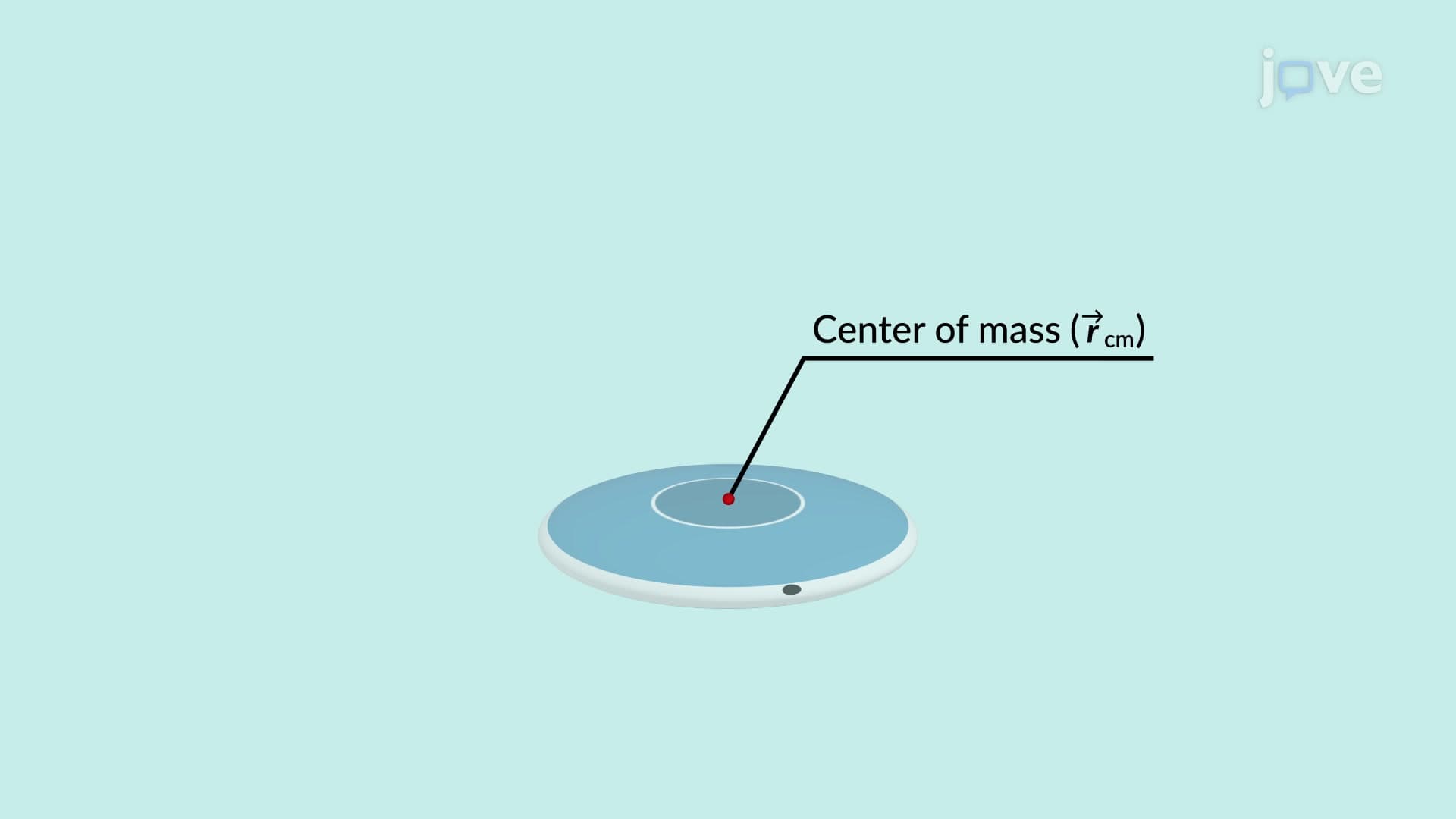
The fundamental breakthrough comes from recognizing that any extended object's gravitational potential energy can be calculated as if all its mass were concentrated at its center of mass. This principle revolutionizes engineering calculations, allowing structural engineers designing skyscrapers in cities like New York or Los Angeles to predict energy requirements without analyzing every individual steel beam separately.
Mathematical Foundation: From Summation to Integration
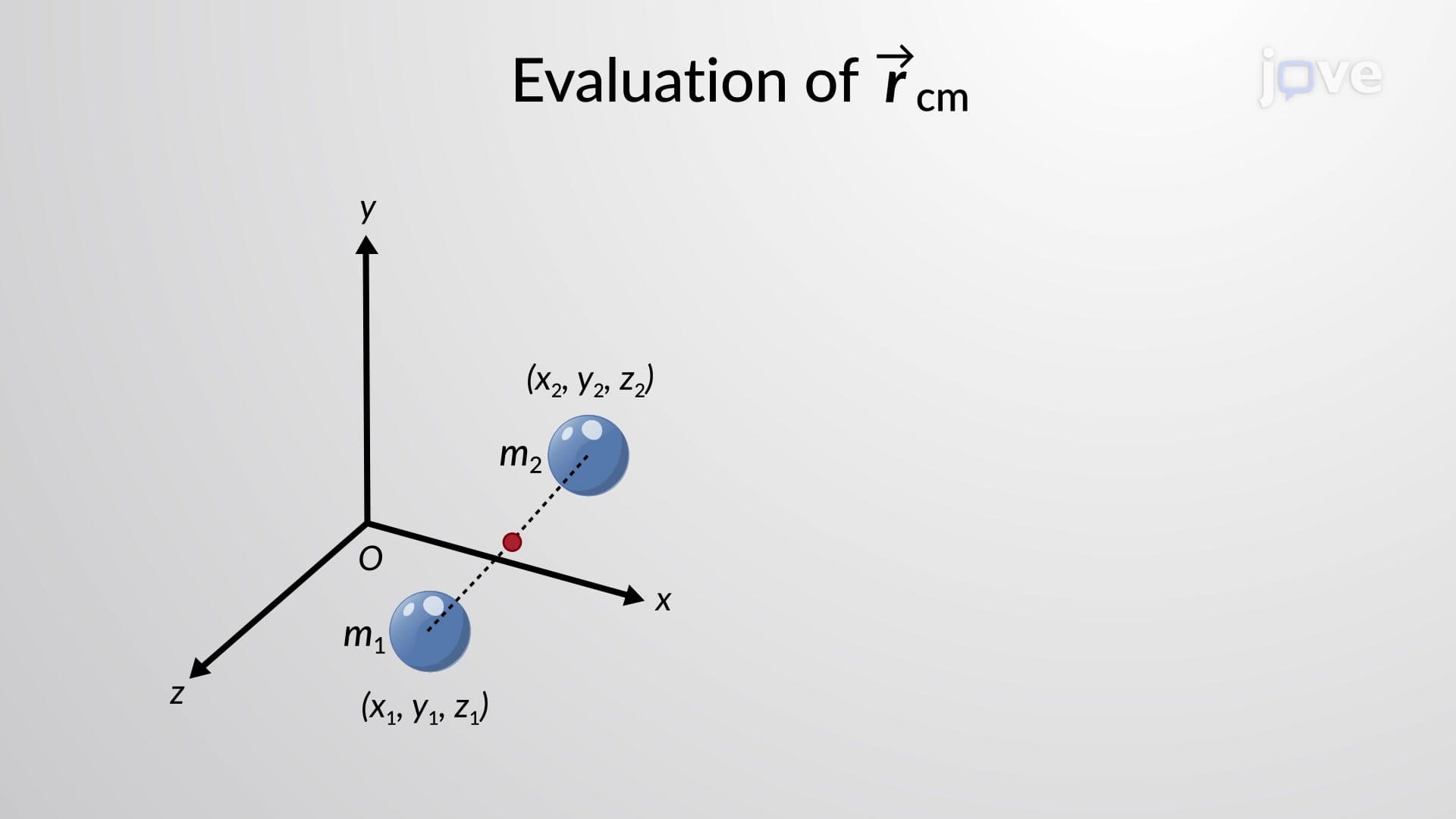
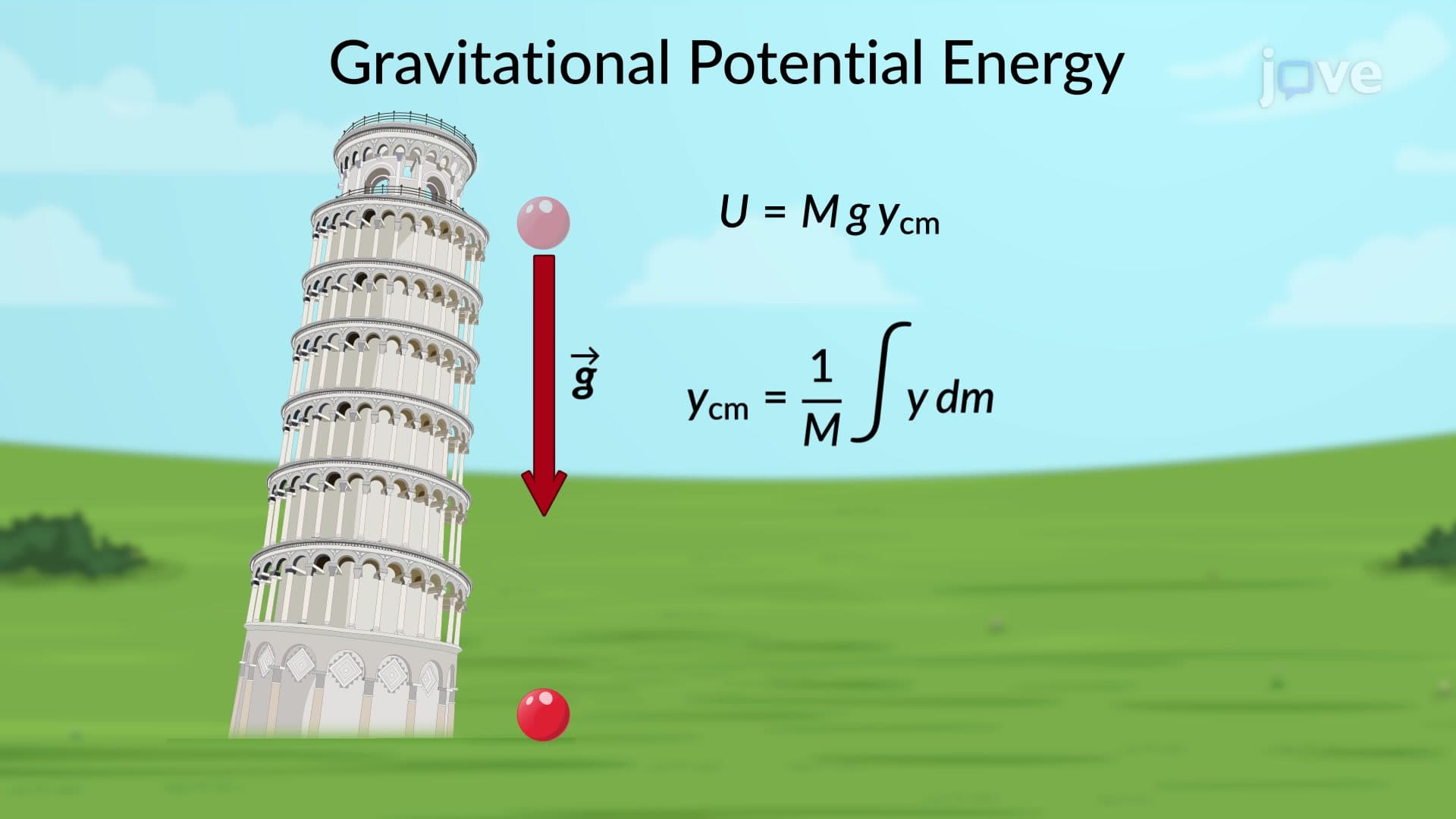
For discrete point masses, we calculate the center of mass using: R(cm) = (Σm(i) × r(i)) / M(total). However, extended objects require replacing discrete masses with differential mass elements (dm) and summations with integrals. This transformation reflects the continuous nature of mass distribution in real materials.
The total gravitational potential energy becomes: U(total) = ∫(dm × g × y), where y represents the height coordinate. Through mathematical manipulation involving the center of mass definition, this simplifies to U(total) = M(total) × g × y(cm), where y(cm) is the center of mass height.
Practical Applications in Engineering and Physics
This principle appears frequently on AP Physics exams and college-level mechanics courses. Students encounter problems involving compound objects like a hammer (dense head with lighter handle) or architectural elements where mass distribution significantly affects energy calculations.
Consider NASA's Space Launch System: engineers calculate the rocket's gravitational potential energy changes during ascent by tracking the center of mass of the entire multi-stage system, rather than analyzing thousands of individual components. Similarly, civil engineers designing earthquake-resistant buildings in California use center of mass calculations to predict how structures will respond to seismic forces.
Real-World Problem Solving
When solving gravitational potential energy problems for extended objects, identify whether the mass distribution is uniform (constant density) or non-uniform. For uniform objects like a solid steel beam, the center of mass coincides with the geometric center. For non-uniform objects like a baseball bat (heavier at one end), the center of mass shifts toward the denser region, affecting energy calculations accordingly.
Frequently Asked Questions
Gravitational potential energy for extended objects treats the object's entire mass as concentrated at its center of mass, simplifying complex calculations. Unlike point masses where energy equals mgh directly, extended objects require finding the center of mass first, then applying U = Mgh using the center of mass height. This approach works because gravitational force acts uniformly on all mass elements within the object.
Yes, this concept frequently appears on AP Physics C: Mechanics exams and college-level physics courses, particularly in energy conservation problems. Expect questions involving compound objects like rods with varying density, multi-part systems, or objects rolling down inclines. The MCAT also tests this concept in physics passages involving biomechanical systems like human body segments during motion.
Focus on identifying the center of mass location first, then apply standard potential energy formulas using that reference point. Practice with common shapes: uniform rods (center at midpoint), triangular objects (center at centroid), and composite systems. College physics textbooks often include problems with L-shaped objects or systems with multiple materials having different densities.
Aerospace engineers at companies like Boeing and SpaceX use these calculations to optimize fuel requirements for rocket launches and satellite deployments. Construction firms building high-rises in earthquake-prone areas like San Francisco apply these principles to predict how buildings respond to seismic forces. Even sports equipment designers use center of mass calculations to optimize golf club and baseball bat performance.
While the mathematical derivation uses integral calculus, you can understand and apply the core concept using algebra and basic physics principles. High school AP Physics 1 students successfully solve these problems by focusing on the center of mass concept rather than the underlying integration. The key insight-that all mass acts as if concentrated at one point-requires no advanced mathematics to comprehend.
Create a systematic approach: first locate the center of mass, then apply energy conservation principles using that reference point. Draw clear diagrams showing mass distribution and center of mass location. Practice with everyday objects-estimate where a hammer's center of mass lies, then verify through balancing experiments. This hands-on approach reinforces theoretical understanding needed for exam success.
Explore rotational kinetic energy and moment of inertia, which build directly on center of mass concepts you've learned. These topics appear together in advanced mechanics problems involving rolling objects, spinning systems, and combined translational-rotational motion. Understanding how mass distribution affects both gravitational potential energy and rotational inertia provides a complete foundation for advanced physics coursework.
Related Micro-courses

14 Concepts
14 Concepts

12 Concepts