Loading subject page…


196,003 views


Video Summary: Rocket Propulsion in a Gravitational Field Fundamentals
Did you know that SpaceX's Falcon Heavy rocket must overcome Earth's gravitational pull with over 5 million pounds of thrust just to reach orbit? Rocket propulsion in a gravitational field: fundamentals involves understanding how rockets generate momentum while fighting gravity's downward force. NASA's Space Launch System uses these same principles to send astronauts back to the Moon. Watch the full video on JoVE Coach to master this concept with expert-led visuals and step-by-step explanations.
When NASA launches rockets from Kennedy Space Center, engineers must account for Earth's gravitational field pulling the vehicle downward with a force of mg, where m is the rocket's mass and g is gravitational acceleration (9.8 m/s²). This creates a complex physics problem that combines Newton's laws of motion with momentum conservation principles.
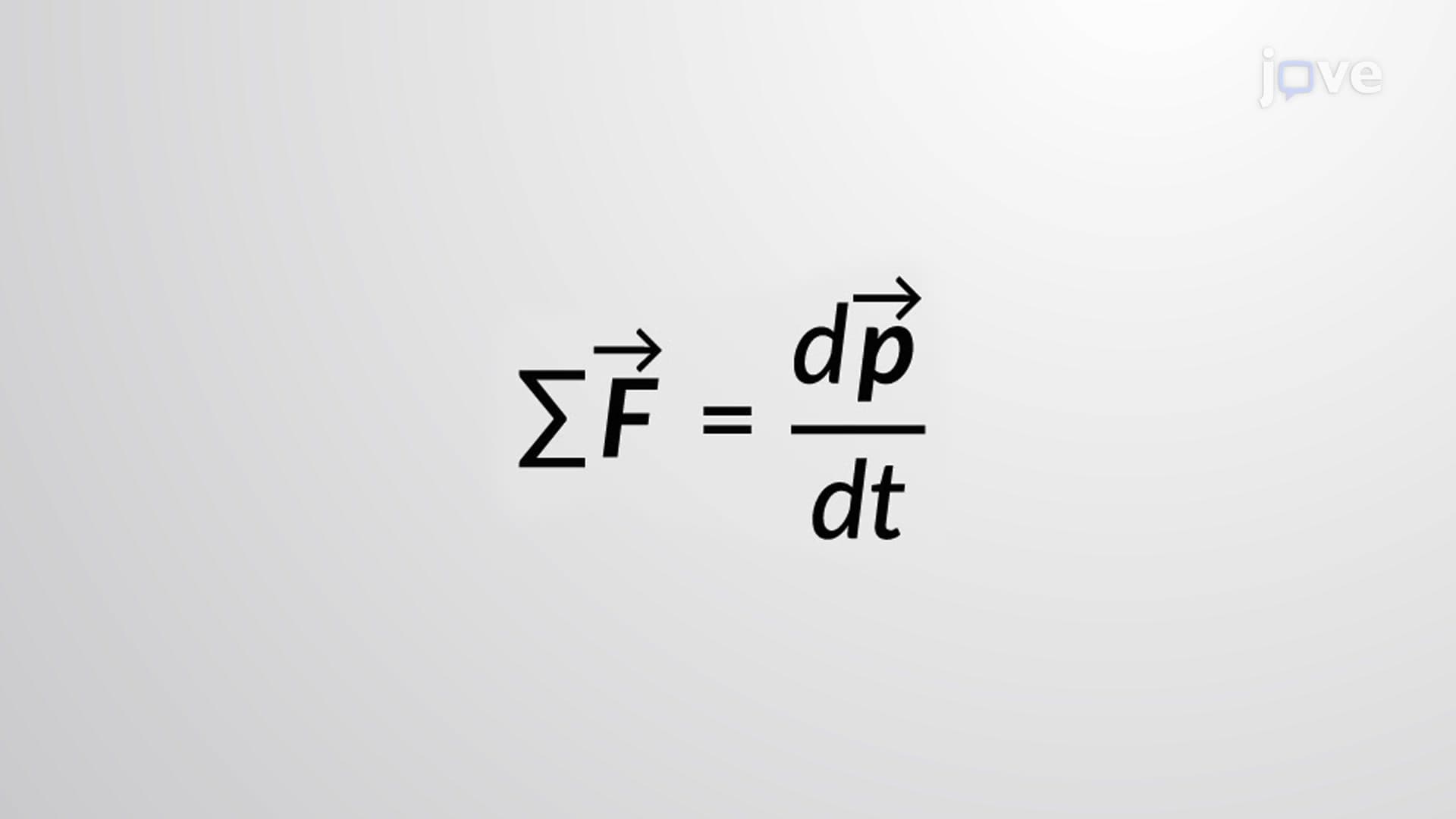
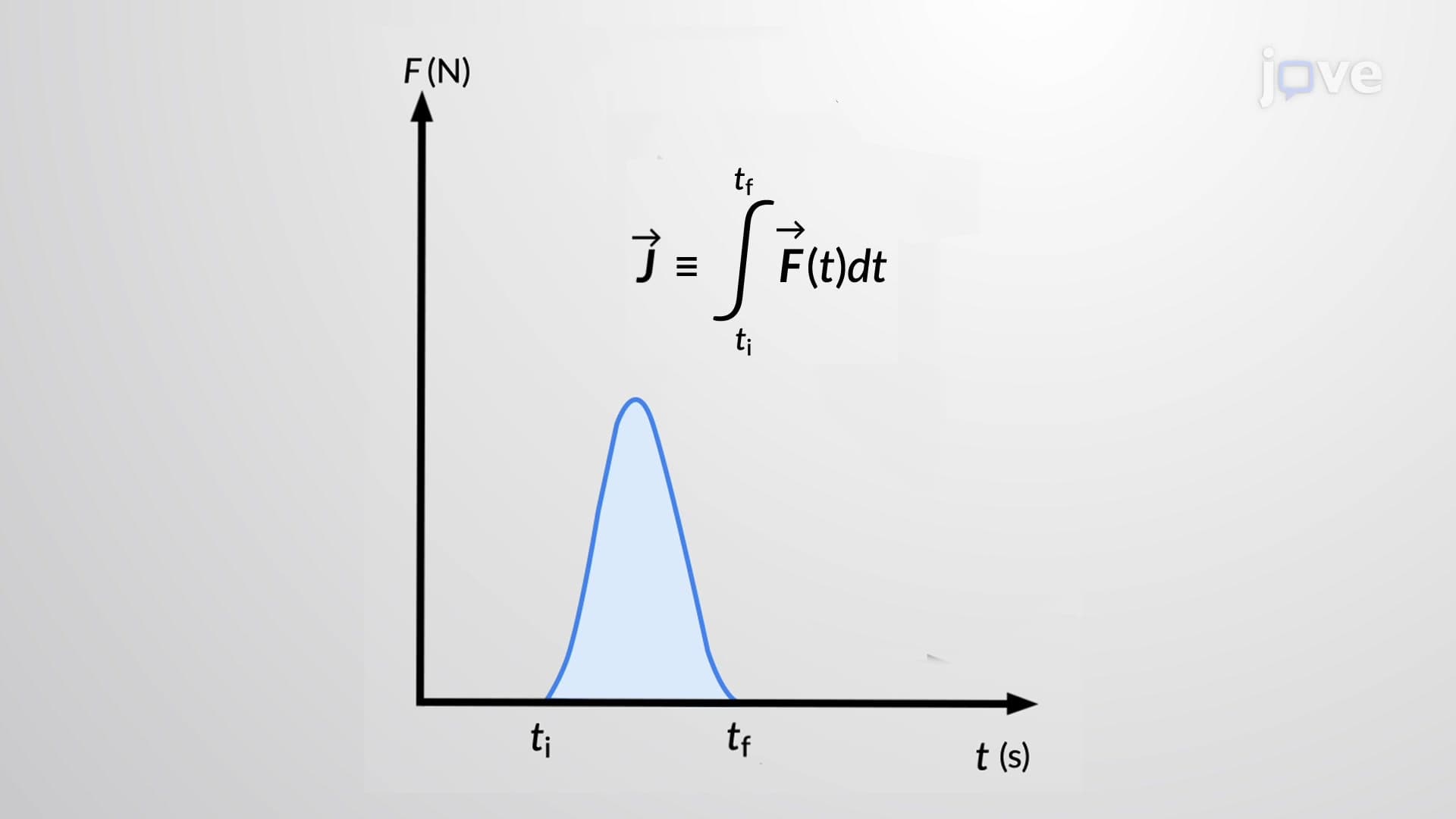
As rockets ascend, gravity applies a continuous downward force opposite to their upward motion. Over any small time interval dt, this gravitational force creates an impulse equal to F·dt = mg·dt. According to the impulse-momentum theorem, this impulse equals the change in momentum of the entire rocket-fuel system. This concept frequently appears on AP Physics exams, where students must calculate how gravitational impulse affects rocket trajectories over specific time periods.
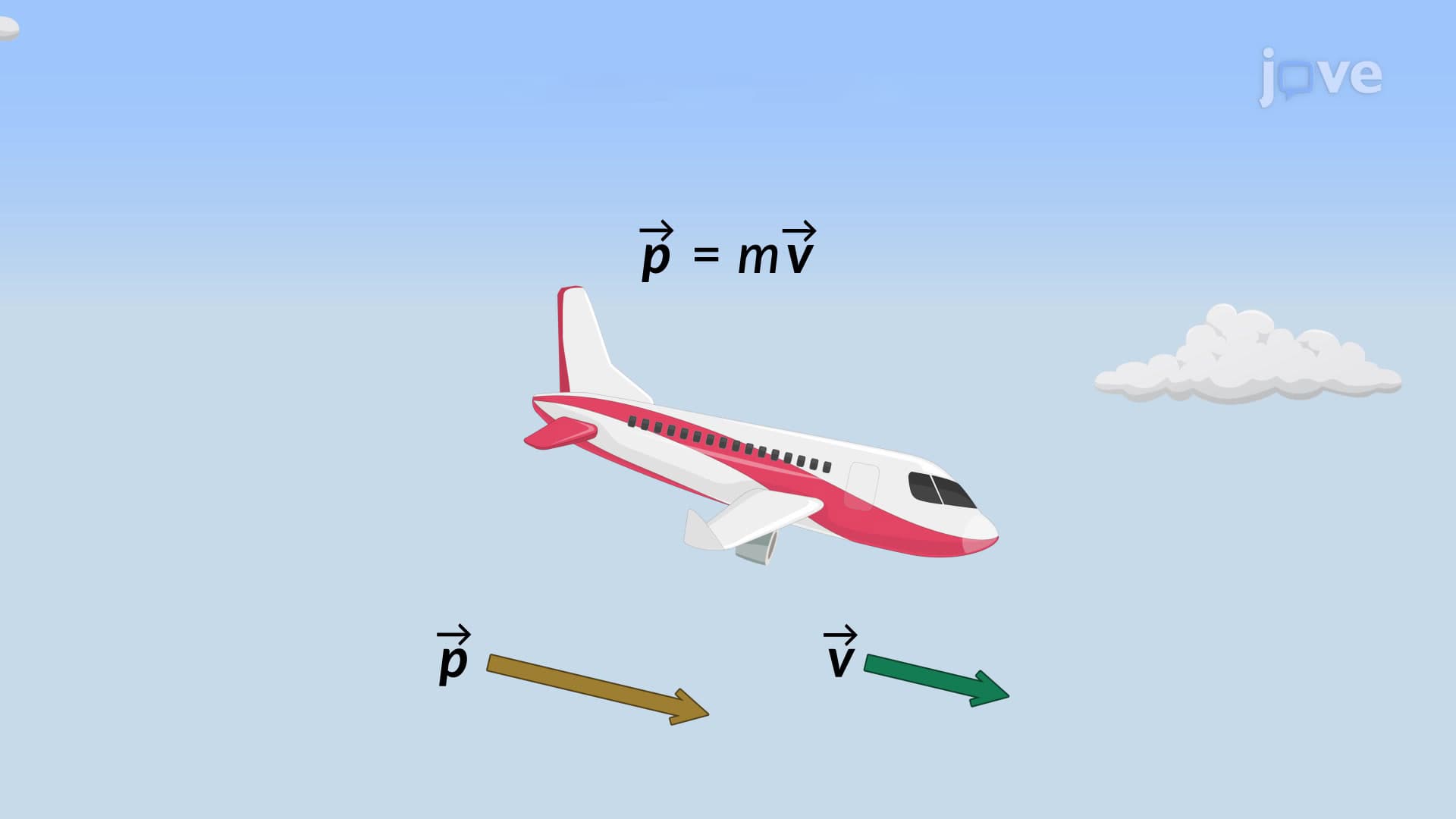
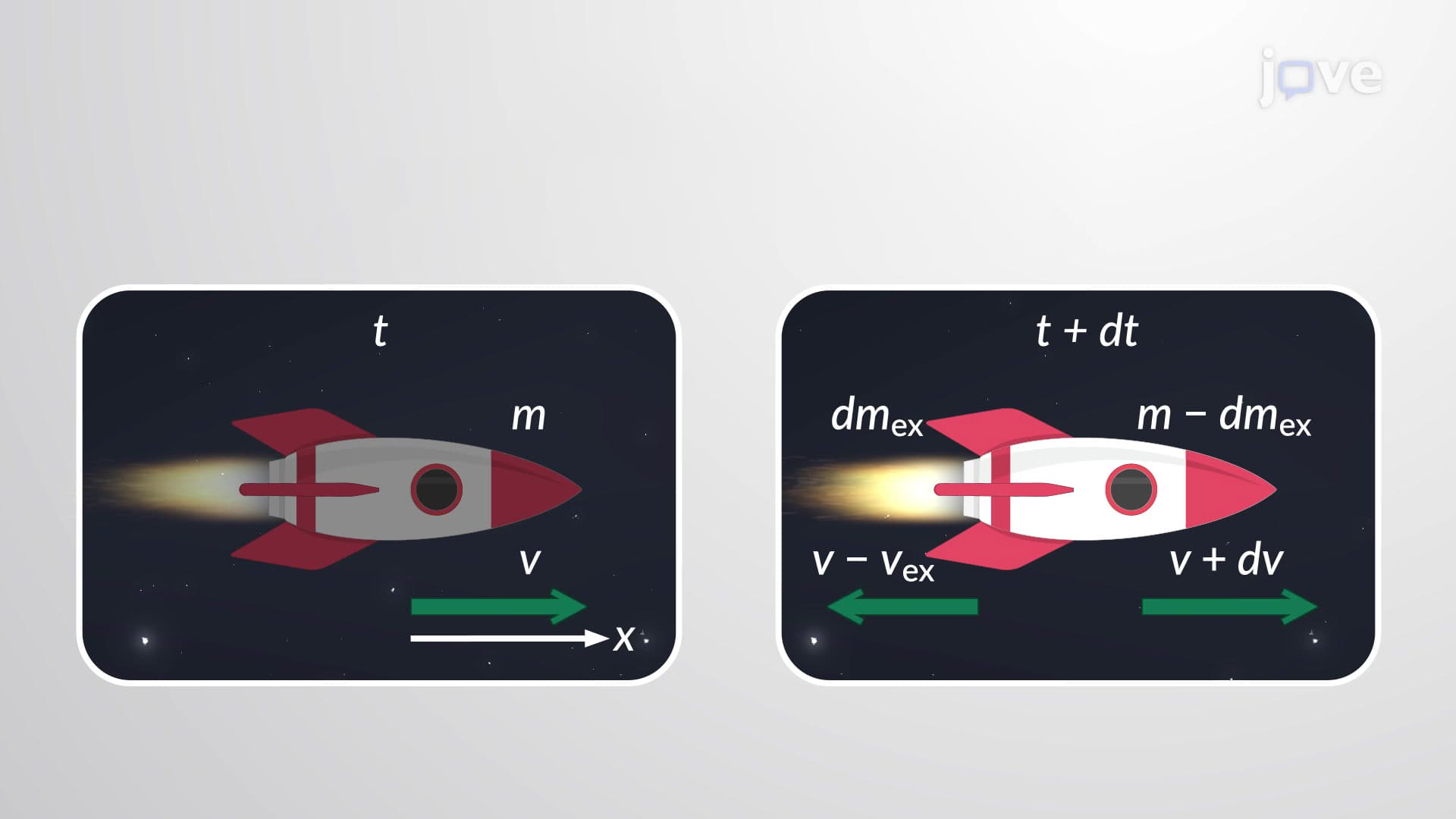
The total momentum of a rocket system includes both the ascending rocket body and the expelled exhaust gases. Initially, a rocket of mass m moving with velocity v has momentum mv. During combustion, the system splits: expelled gases gain momentum in the negative y-direction (downward), while the rocket's remaining mass (m - dm) gains velocity (v + dv). Conservation of momentum requires that the total system momentum remains constant, accounting for gravitational effects.
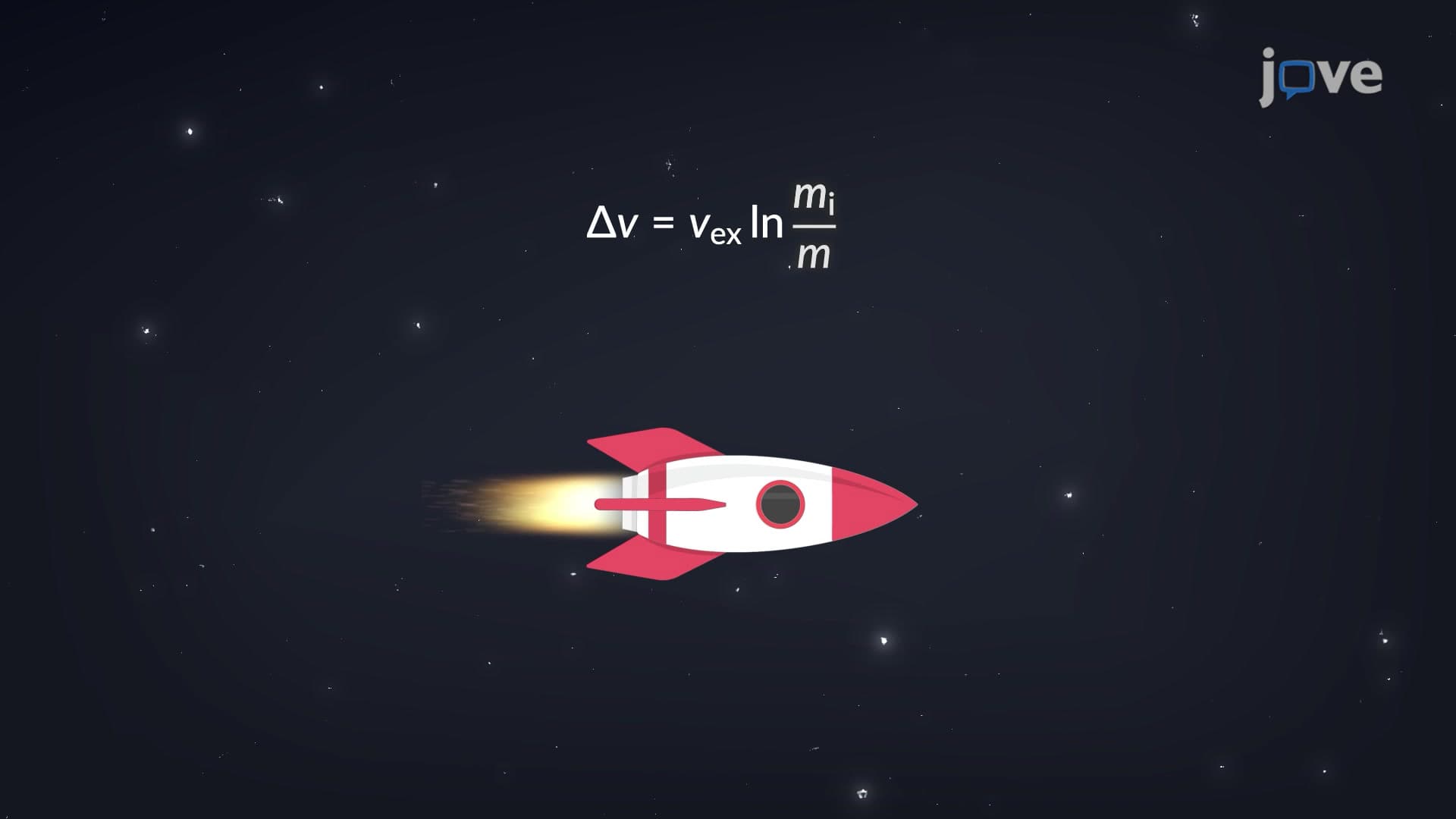
The fundamental equation for rocket motion in gravitational fields simplifies to dv = (exhaust velocity × dm)/m - g·dt, where the first term represents thrust acceleration and the second represents gravitational deceleration. SpaceX engineers use these calculations to determine fuel requirements for Falcon 9 missions to the International Space Station. College physics courses typically emphasize how neglecting smaller terms (like dm·dv products) simplifies complex differential equations while maintaining accuracy for practical rocket design calculations.
Related Micro-courses