Loading subject page…

- Physics
- Linear Momentum, Impulse and Collisions
- Rocket Propulsion In Empty Space - II
Micro-course: Linear Momentum, Impulse and Collisions
196,000 views
Learn key concepts and earn your certificate.







Rocket Propulsion In Empty Space - II

00:00
01:12
Video Summary: Rocket Propulsion in Empty Space Advanced Concepts
Ever wondered how NASA's Artemis rockets generate over 8.8 million pounds of thrust to escape Earth's gravitational pull? Rocket propulsion in empty space: advanced concepts reveals the fascinating physics behind spacecraft acceleration through momentum conservation and mass ejection principles. Unlike airplanes that push against air, rockets in the vacuum of space rely entirely on Newton's third law, ejecting high-velocity exhaust gases to propel forward-the same principle powering SpaceX's Falcon Heavy missions. Watch the full video on JoVE Coach to master this concept with expert-led visuals and step-by-step explanations.
- Understand the fundamental principles of rocket propulsion in empty space: advanced concepts and how conservation of momentum governs spacecraft acceleration
- Analyze the mathematical relationship between rocket mass, exhaust velocity, and resulting acceleration using the rocket equation
- Apply Newton's laws of motion to explain why rockets can accelerate in the vacuum of space without external support
- Evaluate how decreasing rocket mass affects acceleration performance throughout a mission trajectory
- Identify the critical variables in the ideal rocket equation and their impact on maximum achievable velocity
- Compare rocket propulsion efficiency with different fuel types and mass ratios in real spacecraft designs
- Recognize how combustion rate and exhaust velocity determine the thrust force generated by rocket engines
- Explore practical applications of rocket propulsion concepts in current US space missions and satellite deployments
Understanding Rocket Propulsion in Empty Space: Advanced Concepts
Rocket propulsion in the vacuum of space operates on fundamentally different principles than terrestrial transportation. Unlike cars that push against roads or planes that push against air, rockets must carry both fuel and oxidizer, creating their own reaction mass for propulsion. This self-contained system enables spacecraft to accelerate in environments completely devoid of matter.
Conservation of Momentum: The Driving Force
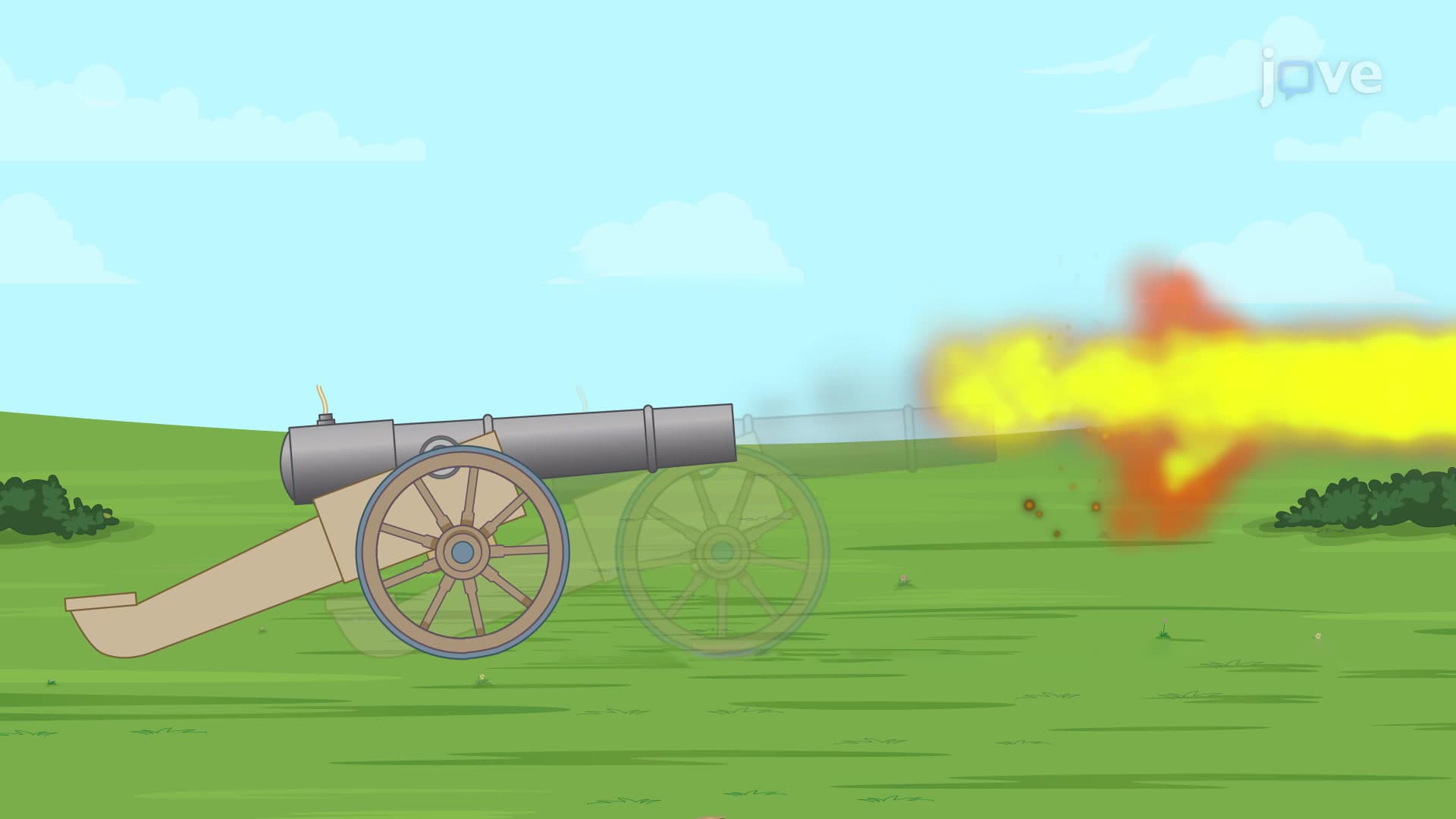
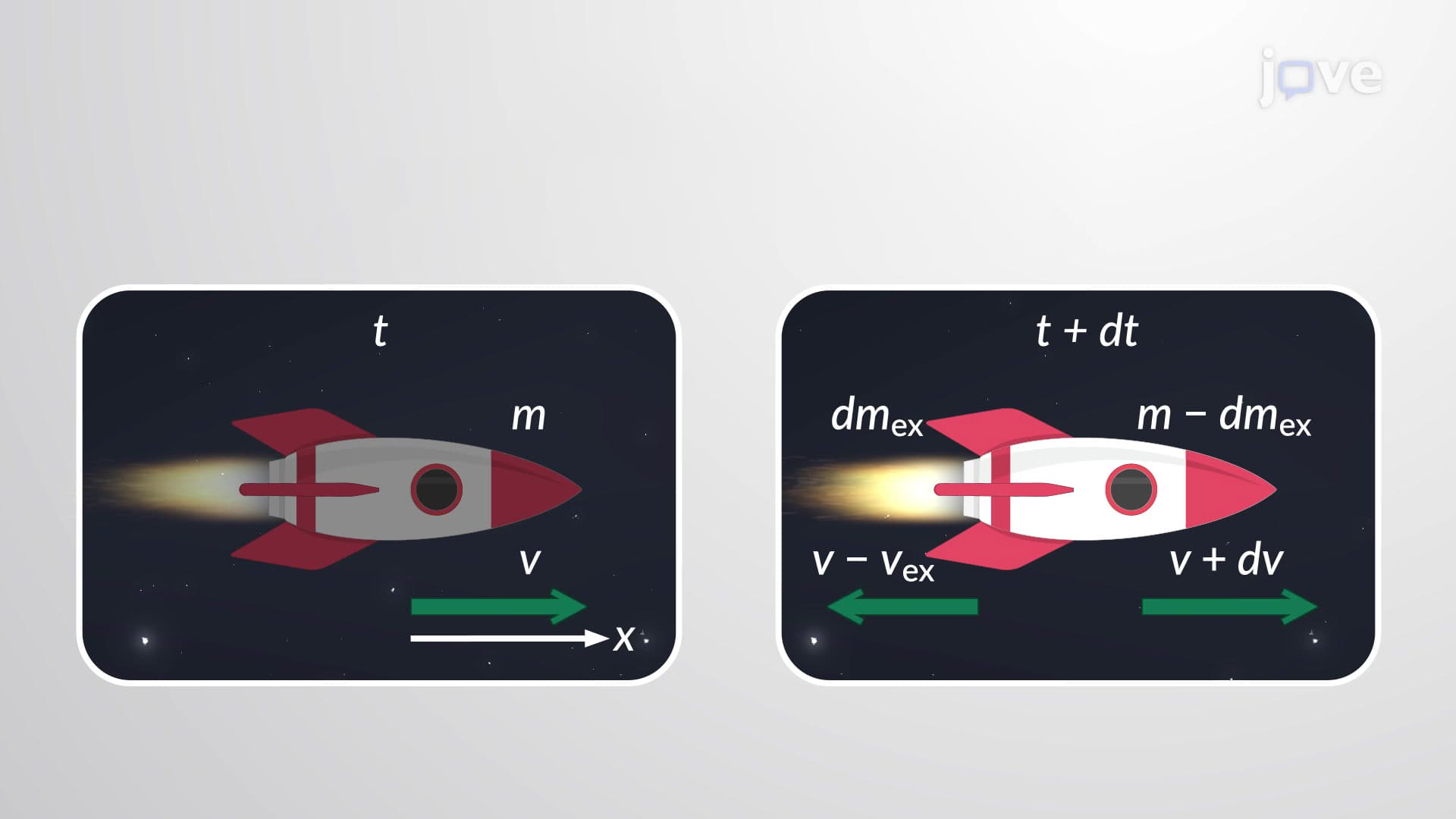
The physics behind rocket acceleration centers on conservation of linear momentum, a principle extensively covered in AP Physics C and college-level mechanics courses. When a rocket burns fuel, it ejects hot gases at high velocity in one direction, causing the rocket to accelerate in the opposite direction. Mathematically, this relationship appears as:
Initial momentum = Final momentum of rocket + Final momentum of exhaust gases
As the rocket continuously ejects mass, its own mass decreases while maintaining momentum conservation. This creates a fascinating scenario where acceleration actually increases over time, even with constant thrust, because F = ma and mass (m) is decreasing.
The Ideal Rocket Equation and Practical Applications
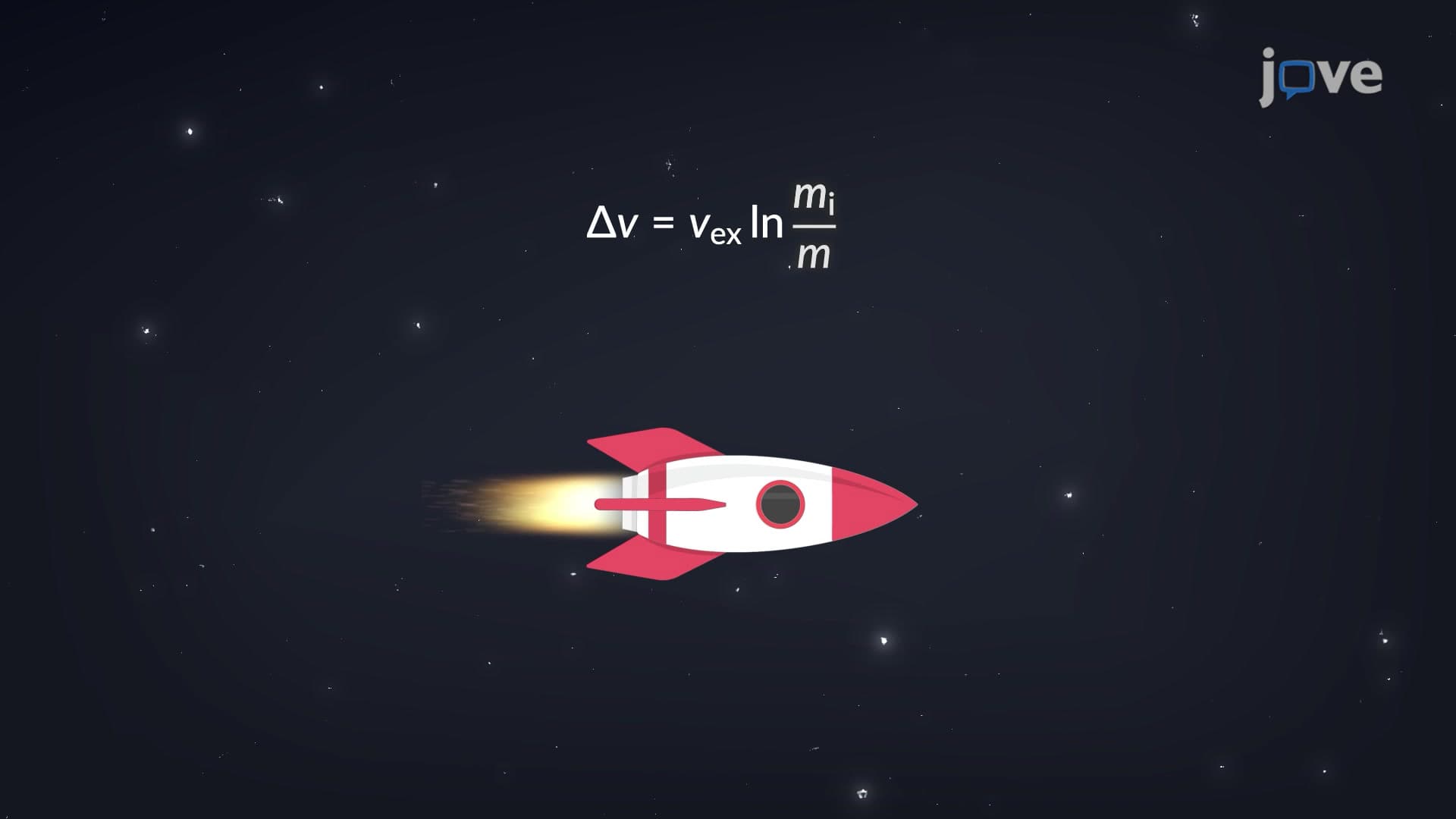
The derivation of the ideal rocket equation, also known as the Tsiolkovsky rocket equation, provides crucial insights into spacecraft design. The equation v = v(exhaust) × ln(m(initial)/m(final)) reveals that maximum velocity depends logarithmically on the mass ratio and linearly on exhaust velocity.
NASA's Space Launch System exemplifies these principles in action. The rocket's initial mass exceeds 2.6 million kilograms, with approximately 85% being propellant. This high mass ratio, combined with hydrogen-oxygen combustion producing exhaust velocities around 4,400 m/s, enables the tremendous velocity changes needed for lunar missions.
Advanced Concepts in Modern Rocket Design
Contemporary rocket engines like SpaceX's Raptor engines demonstrate advanced propulsion concepts through methane-oxygen combustion and staged combustion cycles. These designs optimize the relationship between combustion rate (mass flow) and exhaust velocity to maximize thrust while minimizing fuel consumption.
For students preparing for standardized tests, understanding these concepts proves essential. The MCAT frequently includes rocket propulsion problems in its physics sections, while AP Physics C examinations often feature momentum conservation scenarios involving rockets. College physics courses extensively use rocket problems to illustrate calculus-based mechanics principles, particularly when mass varies with time.
Frequently Asked Questions
Rocket propulsion in empty space relies on internal mass ejection rather than external surfaces for thrust generation. Unlike cars or planes that push against external mediums, rockets carry their own reaction mass (fuel and oxidizer) and operate via Newton's third law. This enables acceleration in complete vacuum where no external matter exists to provide resistance or support.
These concepts frequently appear as momentum conservation problems with variable mass systems. Expect questions involving thrust calculations, velocity changes with mass ratios, and multi-stage rocket scenarios. The College Board often includes rocket problems in both mechanics and electricity/magnetism sections, particularly when discussing electromagnetic propulsion systems.
Absolutely - MCAT physics extensively tests momentum conservation and Newton's laws through rocket scenarios. Understanding mass-velocity relationships and thrust calculations provides excellent preparation for variable mass dynamics questions. These concepts also connect to thermodynamics topics frequently tested on medical school entrance exams.
The Artemis program showcases multi-stage rockets where each stage optimizes mass ratios for specific mission phases. The Space Launch System uses different propellant combinations and engine designs to maximize efficiency during Earth escape versus lunar insertion maneuvers. These real missions demonstrate how theoretical rocket equations translate into practical spacecraft design.
While the complete mathematical derivation involves calculus, the core concepts use algebra and basic physics principles accessible to high school students. Understanding momentum conservation and Newton's laws provides the foundation, with calculus mainly used for deriving the ideal rocket equation. Most introductory courses focus on applying the final equations rather than complex derivations.
Focus on momentum conservation as your starting point for all rocket problems. Practice identifying initial and final states, including both rocket and exhaust masses and velocities. Create concept maps connecting thrust, mass flow rate, exhaust velocity, and acceleration. Work through NASA mission examples to see real-world applications of theoretical concepts.
Rocket propulsion integrates momentum conservation, Newton's laws, energy conservation, and thermodynamics into comprehensive problems. These connections appear throughout physics curricula, from introductory mechanics through advanced dynamics. Understanding rocket principles strengthens your grasp of variable mass systems and prepares you for engineering physics applications.
Consider studying ion propulsion systems used in deep space missions, nuclear thermal rockets for Mars exploration, and electromagnetic launch systems. These advanced concepts build upon fundamental momentum principles while introducing electromagnetic fields and nuclear physics applications. Many aerospace engineering programs use these topics as capstone projects.
Related Micro-courses

14 Concepts
14 Concepts

12 Concepts