Loading…
Loading video…

53,700 views
Ever wondered why power lines hum or how electric motors generate motion? The magnetic force on a current creates these everyday phenomena when electric current flows through conductors in magnetic fields. Consider the magnetic levitation trains being tested in the US—they rely on precisely controlled magnetic forces acting on current-carrying conductors to achieve frictionless motion. This fundamental physics concept explains how current-carrying wires experience forces in magnetic fields, from the right-hand rule to calculating actual force magnitudes. Watch the full video on JoVE Coach to master this concept with expert-led visuals and step-by-step explanations.
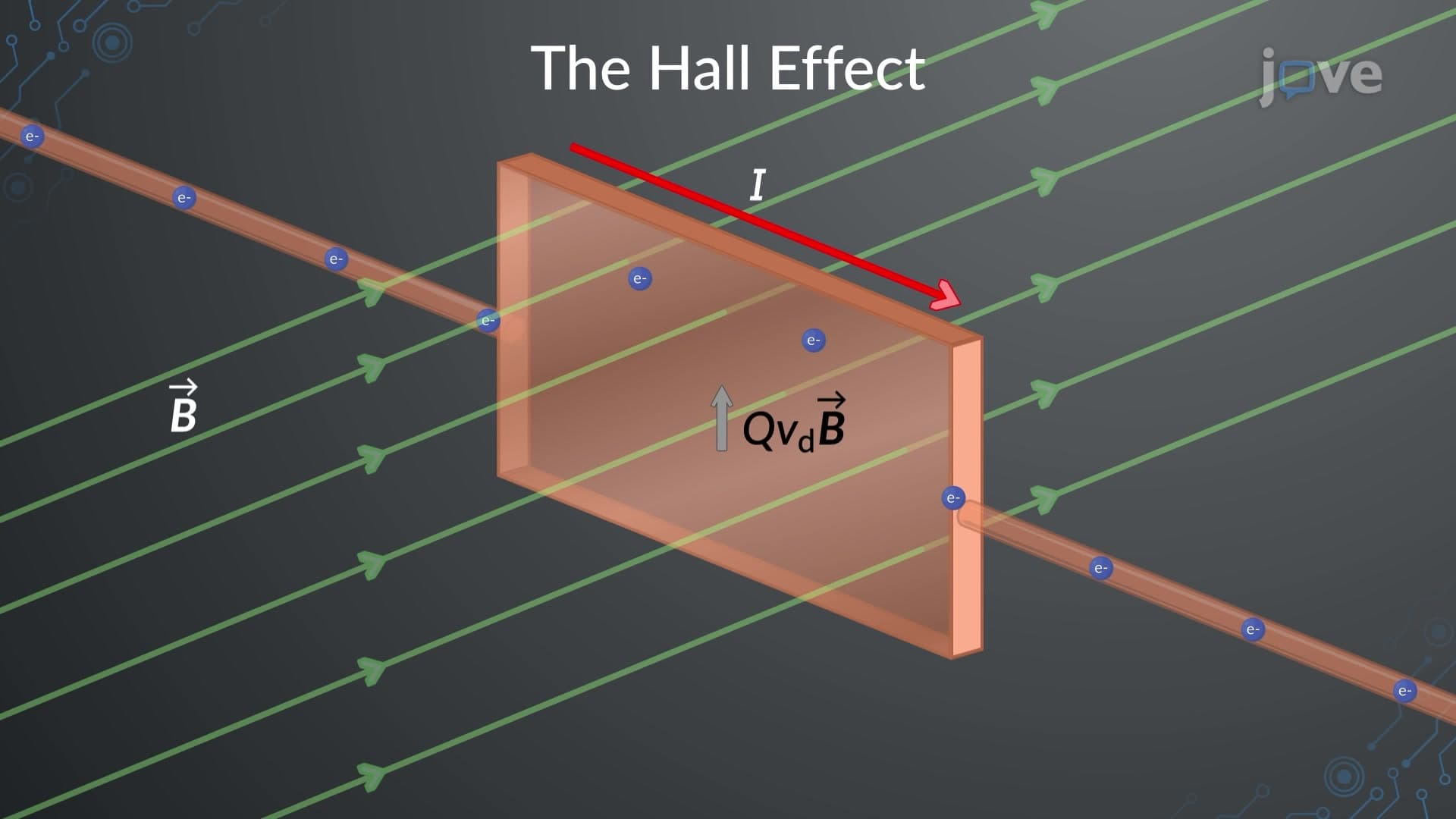
When electric current flows through a conductor placed in a magnetic field, the moving charges experience a magnetic force that translates into a force on the entire conductor. This phenomenon underlies countless technologies from MRI machines at Johns Hopkins Hospital to the electric motors in Tesla vehicles manufactured in California.
The magnetic force arises because current represents moving electric charges, and moving charges always experience forces in magnetic fields. In a typical copper wire, billions of electrons drift slowly (about 0.1 mm/s) while the current effect travels at nearly the speed of light.
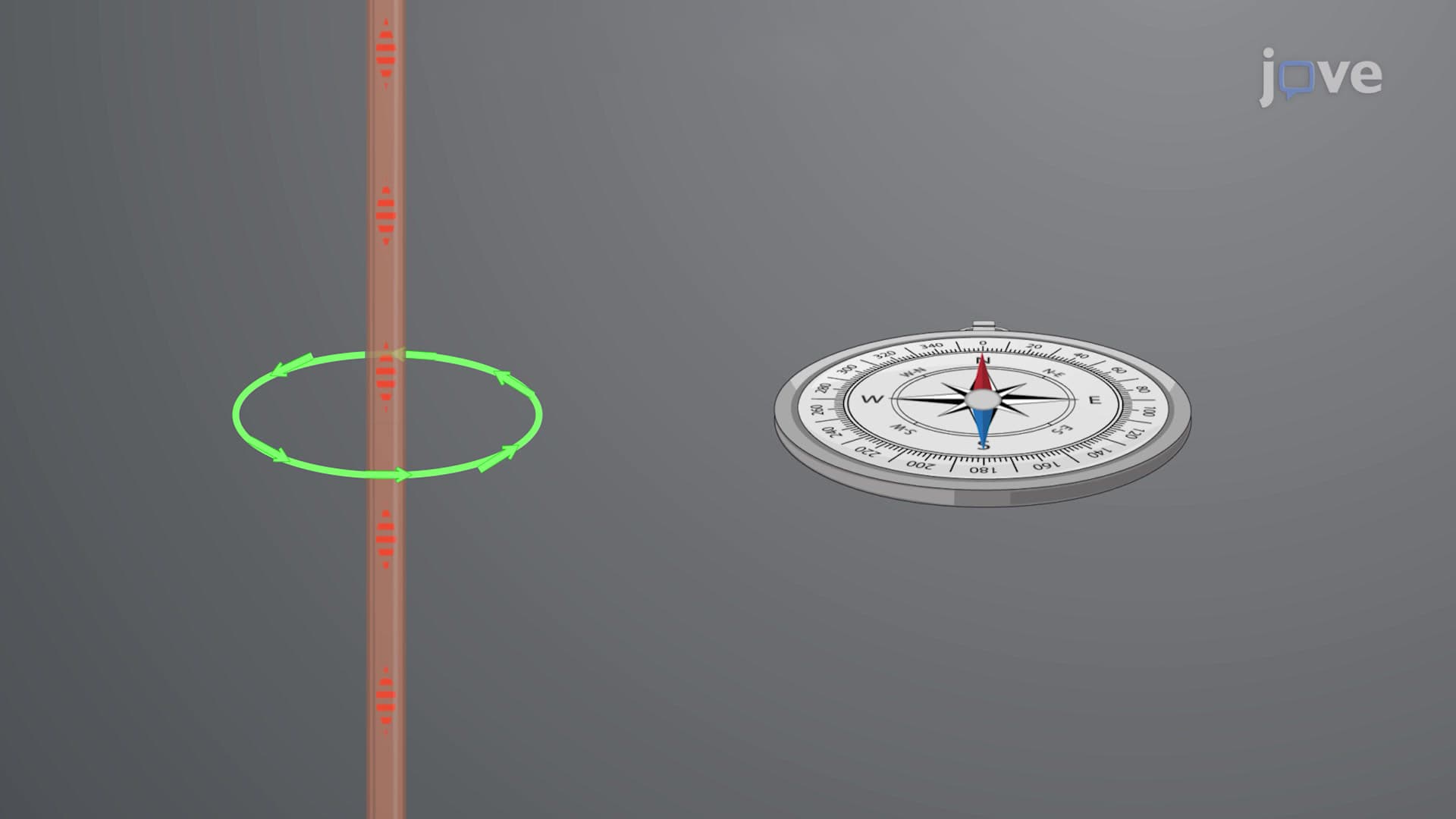
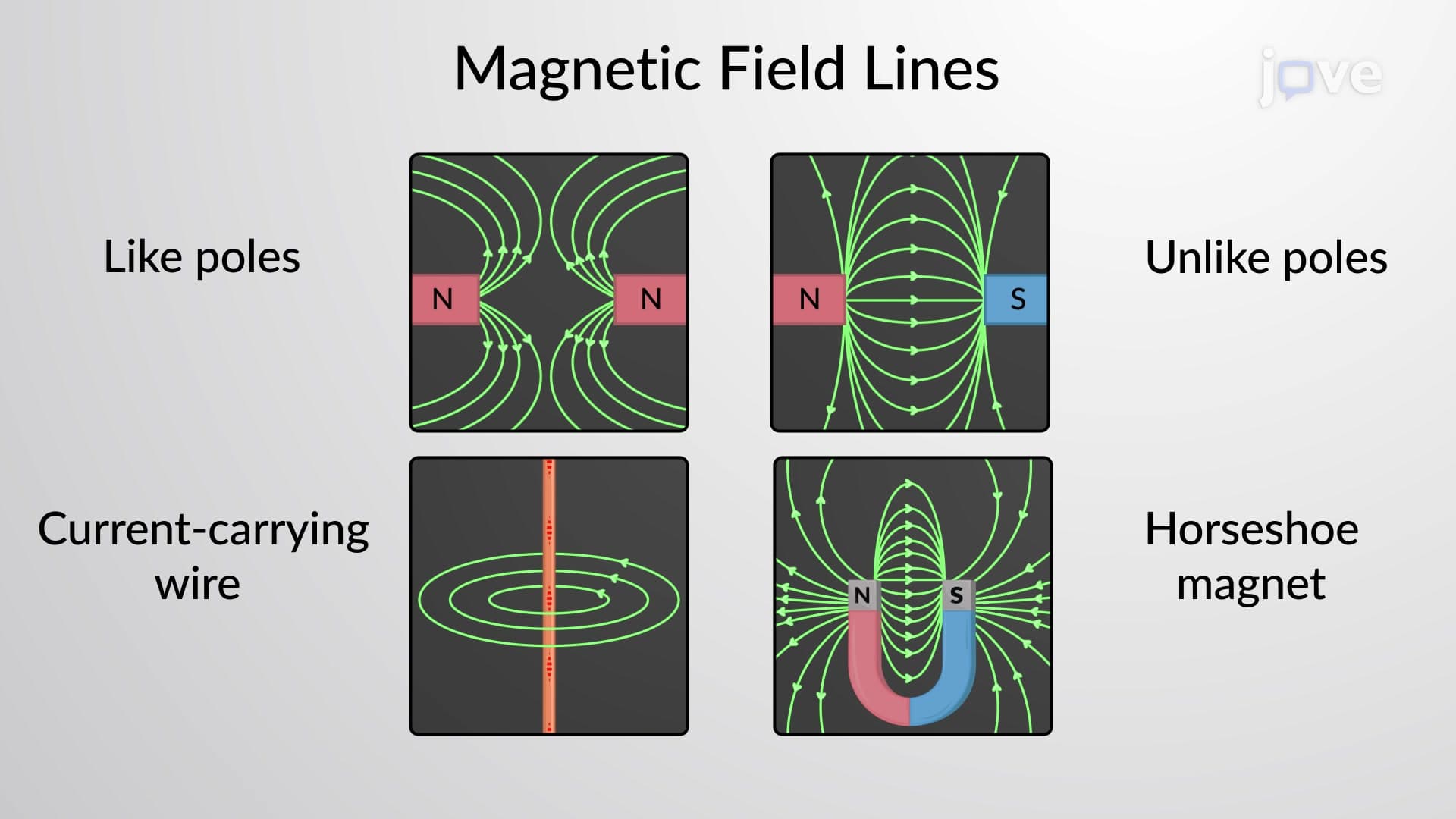
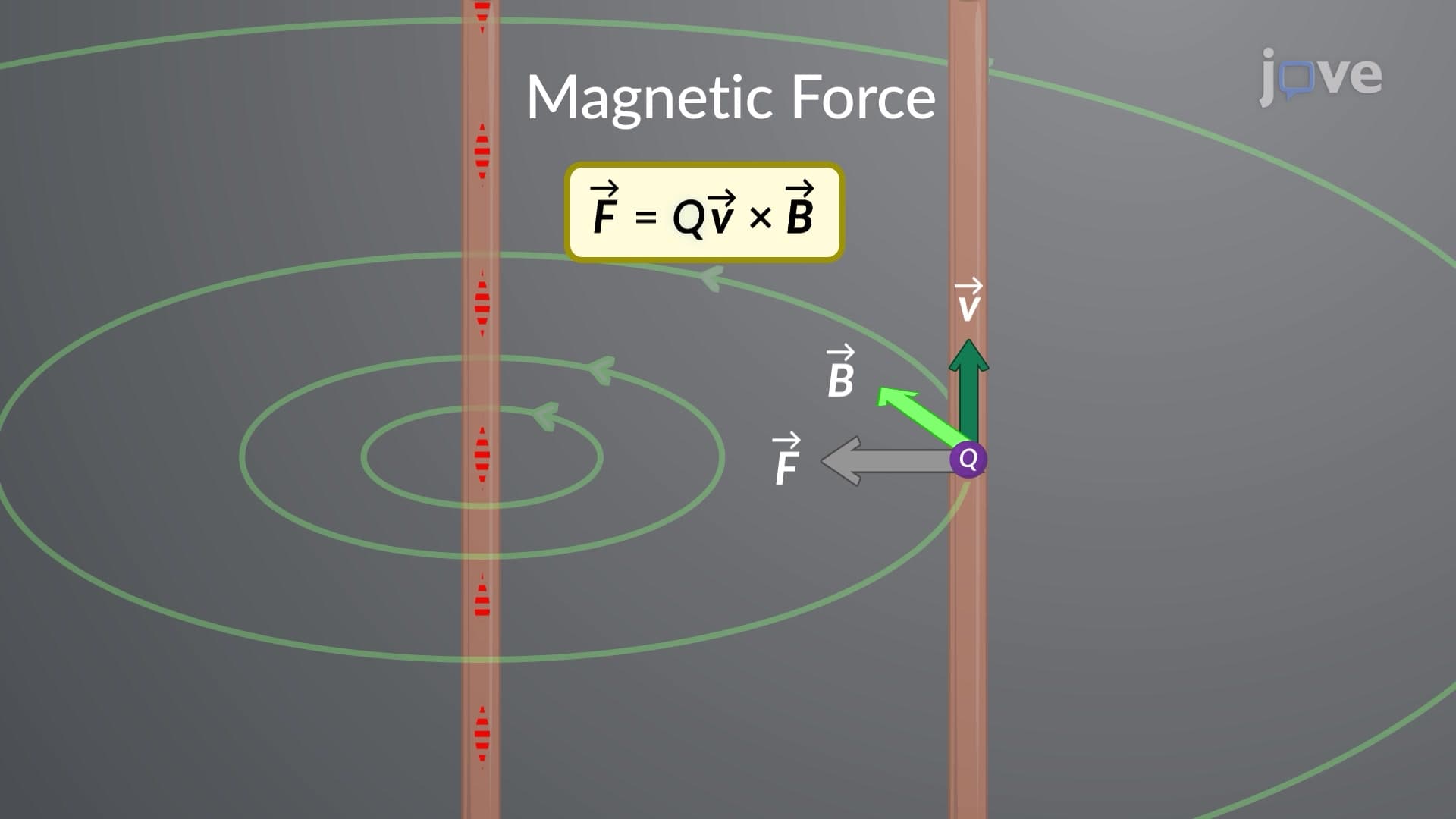
Determining magnetic field direction around current-carrying conductors requires the right-hand rule: point your thumb in the current direction, and your curled fingers show the magnetic field lines. These concentric circular field lines explain why compass needles deflect near power lines.
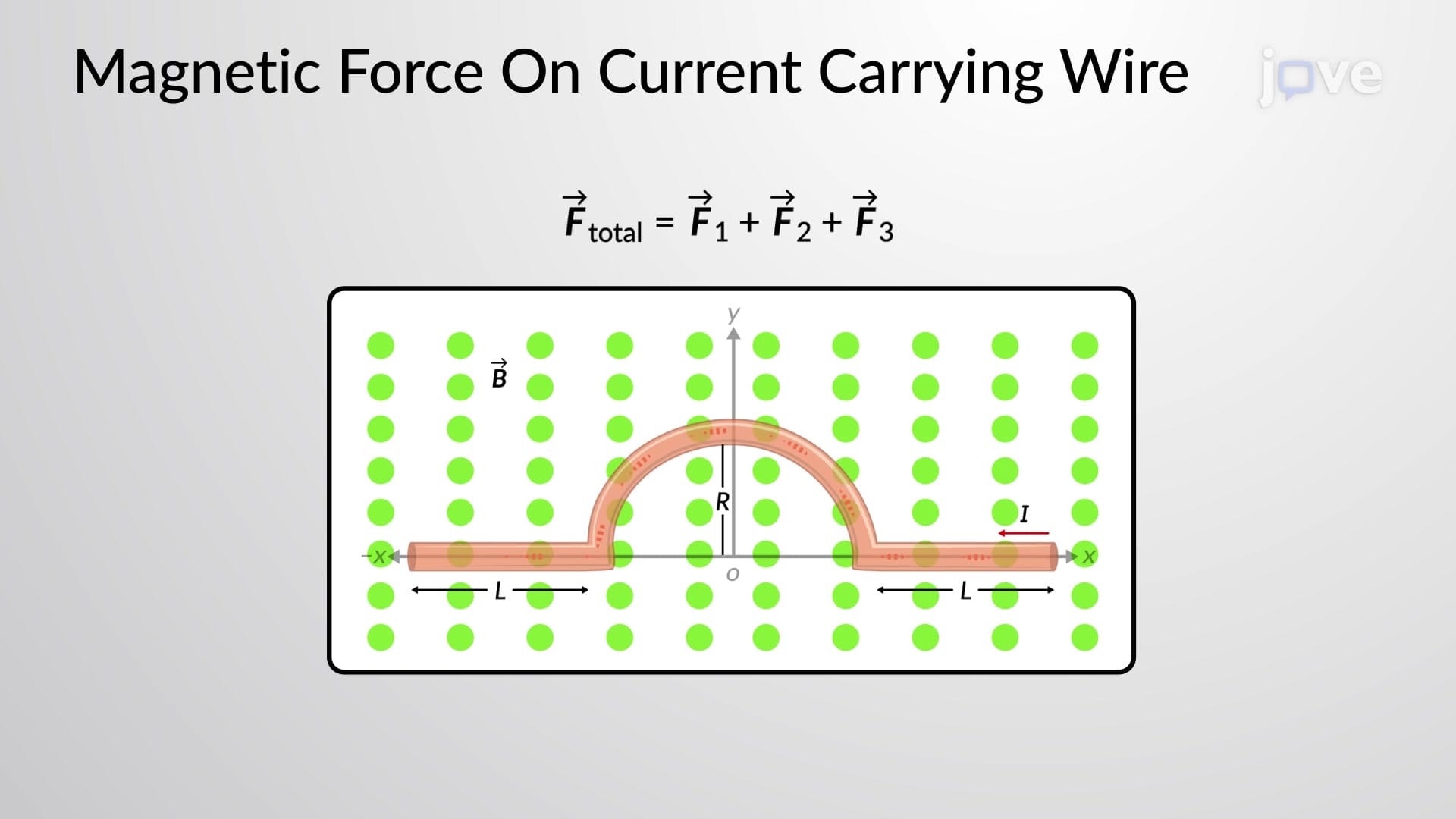
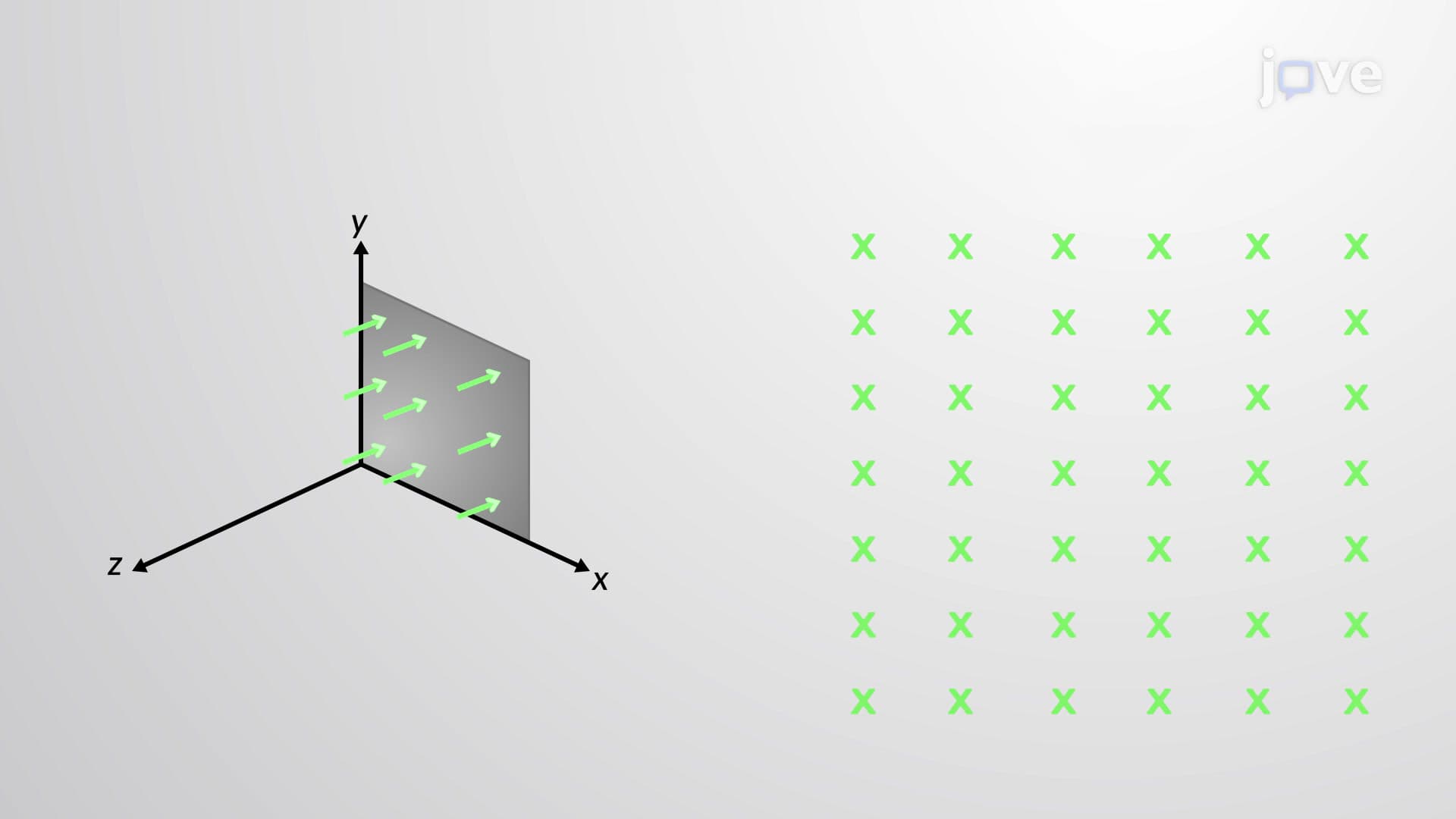
For field notation, dots (•) represent magnetic fields pointing out of the page, while crosses (×) indicate fields pointing into the page. This convention appears frequently on AP Physics exams and college assessments, making visualization crucial for problem-solving success.
The total magnetic force on a current-carrying conductor equals F = I × L × B × sin(θ), where I represents current, L is conductor length, B is magnetic field strength, and θ is the angle between current and field directions. Maximum force occurs when current and field are perpendicular (θ = 90°).
This equation emerges from analyzing individual charge motion. If n represents charge density and A is cross-sectional area, then nAL gives the total number of charges in length L. Each charge q moving with drift velocity v experiences force qvB, leading to the bulk current relationship.
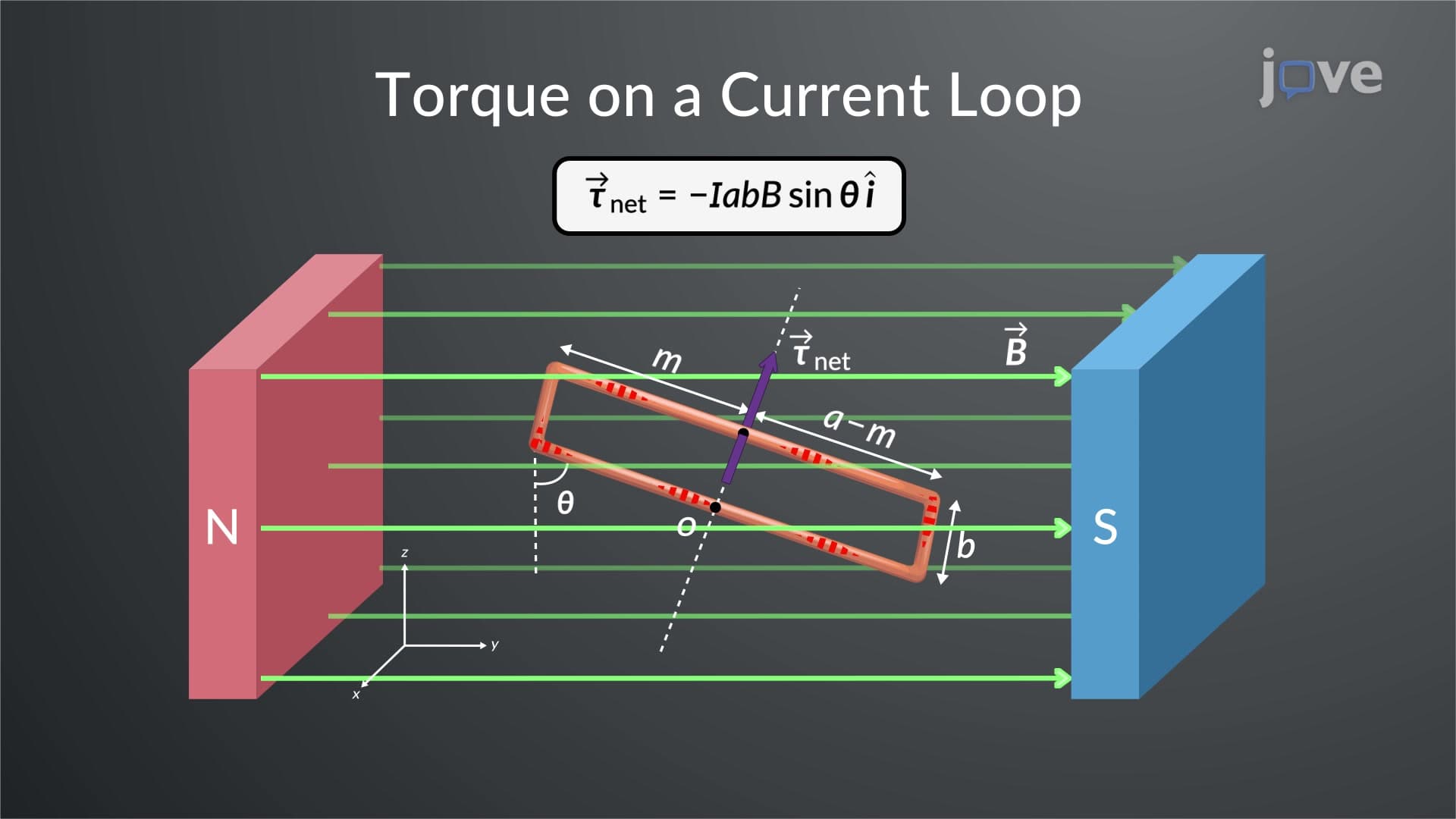
Electric motors in everything from car starters to industrial equipment rely on magnetic forces on current to generate rotation. The principle appears in MCAT physics sections, AP Physics C examinations, and undergraduate physics courses nationwide.
Students preparing for college physics exams should practice vector analysis, as magnetic force problems often involve three-dimensional thinking. The concept connects directly to electromagnetic induction, making it foundational for advanced studies in electrical engineering programs at institutions like MIT or Stanford.
Frequently Asked Questions
Magnetic force on a current is the force experienced by a current-carrying conductor when placed in a magnetic field. This force results from the magnetic field exerting forces on the moving electric charges that constitute the current. The force can cause the conductor to move, vibrate, or experience mechanical stress, which is the principle behind electric motors and speakers.
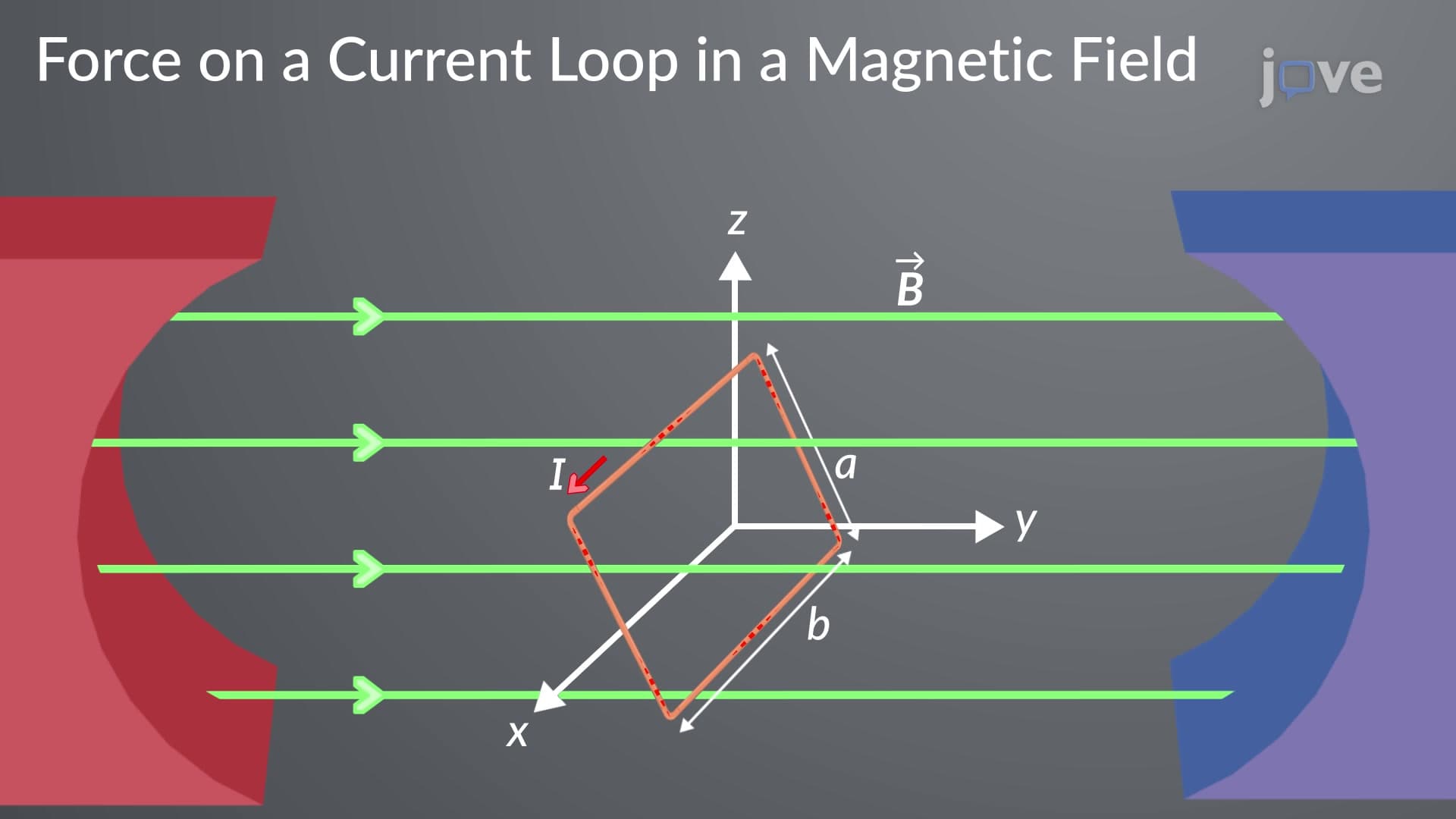
AP Physics C: Electricity and Magnetism frequently tests magnetic force on current through calculation problems and conceptual questions. Students must apply F = ILB sin(θ), use right-hand rules for direction, and analyze scenarios involving current loops in magnetic fields. The College Board often includes questions about forces between parallel current-carrying wires and applications in electric motors.
Yes, this concept appears in introductory physics courses at virtually all US universities and is essential for engineering students. College exams typically involve more complex geometries, integration for non-uniform fields, and connections to electromagnetic induction. It's also fundamental preparation for advanced courses in electrical engineering and physics.
Magnetic levitation projects like those being developed by companies in the Northeast Corridor use controlled magnetic forces on current-carrying conductors to achieve levitation and propulsion. Current in the train's conductors interacts with magnetic fields from the track to create lifting forces that eliminate friction, potentially enabling speeds over 300 mph between major cities like New York and Washington, D.C.
The basic concept is accessible to students who understand electric current and basic vector concepts from Algebra II. While three-dimensional visualization can be challenging initially, consistent practice with right-hand rules and systematic problem-solving approaches make this topic manageable. Most students master the fundamentals within a few weeks of focused study.
Focus on mastering the right-hand rule through repeated practice, memorize the force equation F = ILB sin(θ), and work numerous problems involving different conductor orientations. Create diagrams for each problem showing current direction, magnetic field direction, and resulting force direction. Practice with released AP Physics problems and university physics textbook exercises to build confidence.
Magnetic force on current and electromagnetic induction are complementary phenomena—one involves mechanical force from magnetic fields on current, while the other involves induced current from changing magnetic fields. Together, they explain how electric generators convert mechanical energy to electrical energy and how motors convert electrical energy to mechanical work, forming the foundation of modern electrical power systems.
Next, explore electromagnetic induction, including Faraday's law and Lenz's law, which explain how changing magnetic fields generate electric current. Then progress to AC circuits, transformers, and electromagnetic waves. For engineering-focused students, study electric motor design and control systems, which directly apply these magnetic force principles in practical applications.
Related Micro-courses
Related Subjects
 Math Fundamentals 11 micro-courses›
 Statistics 17 micro-courses›