Loading…
Loading video…

53,700 views
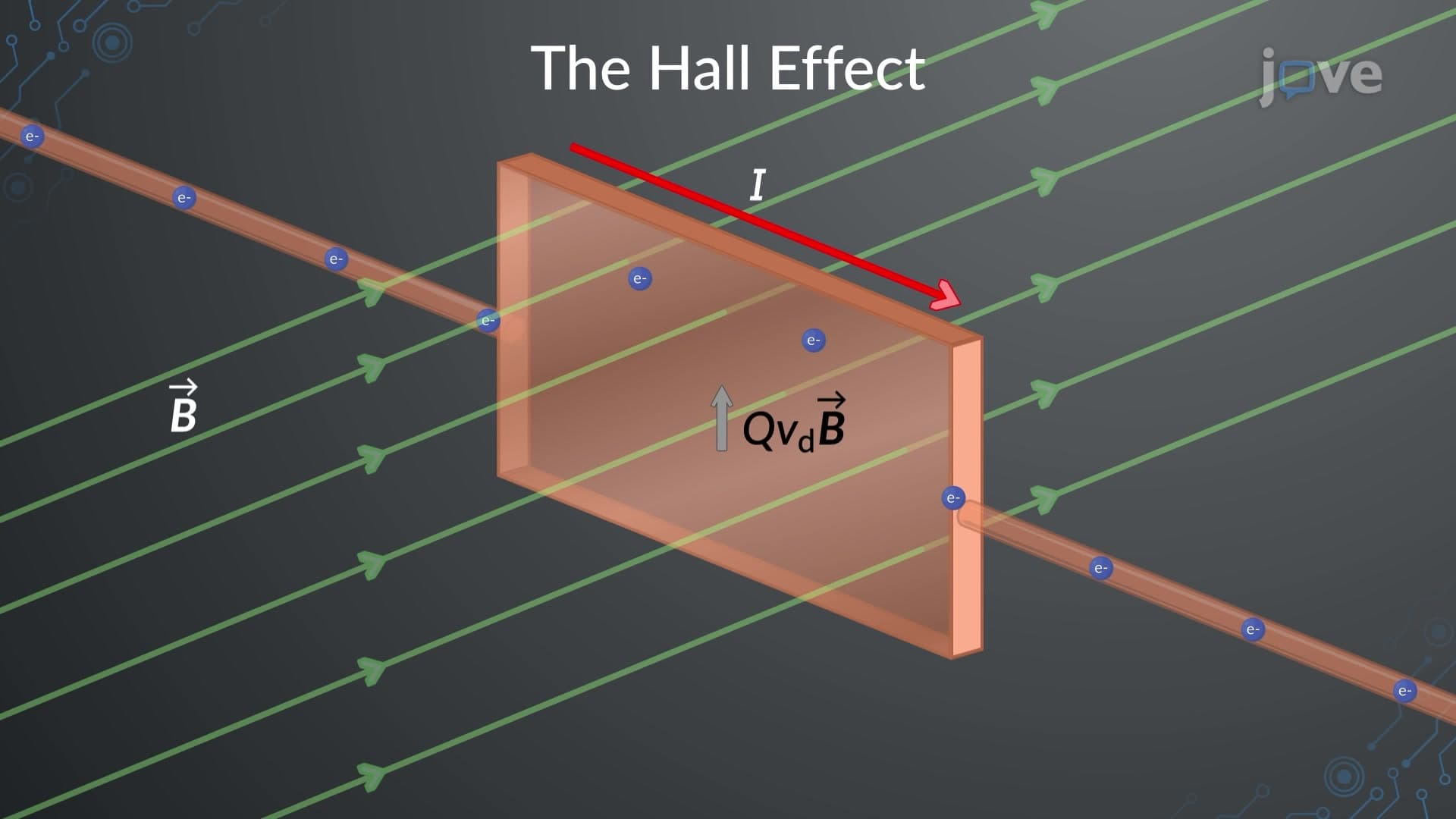
Ever wondered how your smartphone's compass knows which direction is north? The Hall effect makes this possible by detecting magnetic fields through charge separation in conductors. When electrons in a current-carrying material encounter a perpendicular magnetic field, they accumulate on one side, creating a measurable voltage difference. This phenomenon powers everything from navigation systems in Tesla vehicles to magnetic sensors in medical equipment across US hospitals. Watch the full video on JoVE Coach to master this concept with expert-led visuals and step-by-step explanations.
The Hall effect represents one of the most elegant demonstrations of electromagnetic force interactions in physics. Discovered by Edwin Hall at Johns Hopkins University in 1879, this phenomenon occurs when a magnetic field perpendicular to current flow causes charge carriers to deflect, creating a voltage difference across the conductor's width.
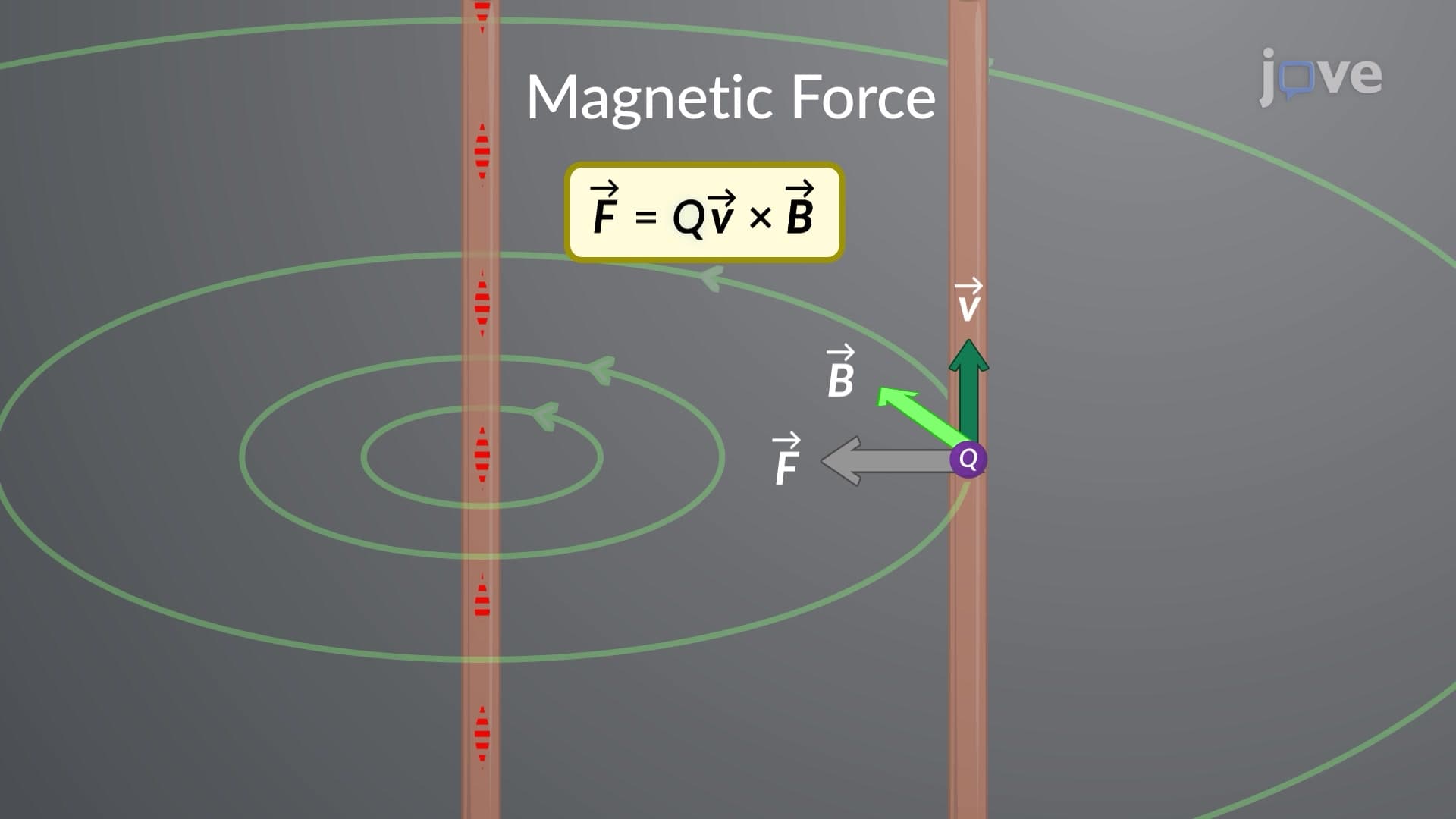
When electrons flow through a rectangular conductor carrying current, they typically move in relatively straight paths. However, introducing a magnetic field perpendicular to both the current direction and the conductor's width fundamentally changes this behavior. The moving electrons experience a magnetic force described by F = q(v × B), where q represents the electron charge, v the drift velocity, and B the magnetic field strength.
This magnetic force causes electrons to curve toward one side of the conductor, leaving behind positively charged atomic cores on the opposite side. As charge accumulation continues, an electric field develops across the conductor's width, generating an opposing electric force on the electrons. Eventually, these forces balance: F(electric) = F(magnetic), preventing further charge drift and establishing the Hall voltage.
The Hall voltage (V_H) depends on several key parameters: current magnitude, magnetic field strength, conductor thickness, and charge carrier density. This relationship makes the Hall effect invaluable for magnetic field measurement using Hall probes, which are standard equipment in physics laboratories across universities like MIT and Stanford.
Students preparing for AP Physics exams frequently encounter Hall effect calculations involving these relationships. The concept also appears in college-level courses covering semiconductor physics and electronic materials, particularly when studying charge carrier mobility in different materials.
The Hall effect powers numerous technologies essential to American industry and daily life. Automotive manufacturers like Ford and General Motors use Hall effect sensors in anti-lock braking systems and engine timing controls. Medical equipment manufacturers incorporate Hall sensors in MRI machines and portable magnetic field detectors used in hospitals nationwide.
Understanding this concept proves crucial for students pursuing engineering careers, particularly in electronics and materials science programs at institutions like Georgia Tech and UC Berkeley, where the Hall effect appears in both theoretical coursework and practical laboratory investigations.
Frequently Asked Questions
The Hall effect occurs when a magnetic field causes moving electric charges in a conductor to separate to opposite sides, creating a voltage difference. This happens because the magnetic field exerts a force on the moving charges, pushing them sideways until electric and magnetic forces balance.
AP Physics C and college physics exams typically test Hall effect calculations involving magnetic force, drift velocity, and charge carrier density relationships. Students must apply F = qvB and relate current to charge carrier motion. Practice problems often involve calculating Hall voltage or determining magnetic field strength from given parameters.
You interact with Hall effect devices constantly through smartphone compasses, computer hard drive sensors, and automotive systems like speedometers and ignition timing. Tesla and other electric vehicle manufacturers use Hall sensors for motor control, while home security systems employ them in door and window sensors.
The Hall effect builds naturally on concepts you already know: electric current, magnetic fields, and force relationships. If you understand that moving charges experience forces in magnetic fields (covered in basic electromagnetism), the Hall effect simply extends this to explain charge separation and voltage generation.
Focus on understanding the fundamental force relationships and charge separation mechanism rather than memorizing complex formulas. MCAT questions emphasize conceptual understanding of how magnetic fields affect charge carrier motion and the resulting voltage generation. Practice relating this to biological applications like nerve conduction.
Yes, many high school and college physics labs include Hall effect demonstrations using thin metal strips, permanent magnets, and sensitive voltmeters. These hands-on experiments help visualize the charge separation process and measure actual Hall voltages, making the concept more concrete than theoretical descriptions alone.
The Hall effect connects to advanced topics like semiconductor physics, quantum mechanics of charge carriers, and electromagnetic induction. Students planning engineering careers should explore related concepts including magnetoresistance, spin electronics, and quantum Hall effects studied in graduate programs.
Mastering the Hall effect develops skills in analyzing multi-force systems and equilibrium conditions that apply broadly across physics. The systematic approach of identifying forces, applying equilibrium conditions, and relating microscopic charge motion to macroscopic measurements strengthens problem-solving abilities for electromagnetism and beyond.
Related Micro-courses
Related Subjects
 Math Fundamentals 11 micro-courses›
 Statistics 17 micro-courses›