Loading subject page…

- Physics
- Magnetic Forces and Fields
- Magnetic Flux
Micro-course: Magnetic Forces and Fields
53,700 views
Learn key concepts and earn your certificate.




Magnetic Flux


00:00
01:18
Video Summary: What Is Magnetic Flux
Ever wonder how your smartphone's wireless charging pad knows when your phone is placed on it? Magnetic flux is the key concept behind this everyday technology, measuring how much magnetic field passes through a surface area. From MRI machines at Johns Hopkins Hospital to the transformers powering your home, understanding what is magnetic flux reveals the invisible forces shaping our modern world. Watch the full video on JoVE Coach to master this concept with expert-led visuals and step-by-step explanations.
- Understand what is magnetic flux and how it quantifies magnetic field strength through a given surface area
- Identify the mathematical relationship between magnetic field strength, surface area, and angle in flux calculations
- Analyze how changing the angle between magnetic field lines and surface area affects total magnetic flux
- Compare situations where magnetic flux is maximized versus minimized based on field orientation
- Apply the dot product formula to calculate magnetic flux in various geometric configurations
- Recognize that magnetic flux through any closed surface equals zero due to Gauss's law for magnetism
- Evaluate real-world applications of magnetic flux in electrical generators, transformers, and wireless charging systems
- Explore the connection between magnetic flux and electromagnetic induction in practical devices
Understanding What is Magnetic Flux: The Foundation
Magnetic flux serves as a fundamental measure in electromagnetism, quantifying how much magnetic field penetrates through a specific surface area. Think of it like measuring how much sunlight passes through a window, the amount depends on both the brightness of the light and the window's size and orientation. In physics terms, magnetic flux (represented by the Greek letter Φ) equals the magnetic field strength multiplied by the surface area and the cosine of the angle between them.
Mathematical Framework and Calculation Methods
The magnetic flux definition relies on vector mathematics, specifically the dot product between the magnetic field vector (B) and the area vector (A). For a uniform magnetic field, the formula simplifies to: Φ = B × A × cos(θ), where θ represents the angle between the magnetic field and the surface normal. When studying what is magnetic flux in detail, students discover that maximum flux occurs when the magnetic field runs perpendicular to the surface (θ = 0°), while zero flux results when the field runs parallel to the surface (θ = 90°).
This concept frequently appears on AP Physics exams and college-level electromagnetic courses across universities like MIT and Stanford. Students preparing for the MCAT will encounter magnetic flux in contexts involving medical imaging technology and electromagnetic radiation.
Real-World Applications in American Technology
The magnetic flux concept drives countless technologies throughout the United States. Electric power generation at facilities like the Hoover Dam relies on magnetic flux changes as turbines rotate copper coils through magnetic fields. Tesla's electric vehicle charging stations use controlled magnetic flux to transfer energy wirelessly. Even the magnetic strips on credit cards depend on flux principles to store and read data.
In medical settings, MRI machines at hospitals like Mayo Clinic create detailed body images by manipulating magnetic flux through human tissue. The gradients in magnetic field strength produce varying flux values that translate into the detailed anatomical images doctors use for diagnosis.
Gauss's Law for Magnetism: A Fundamental Principle
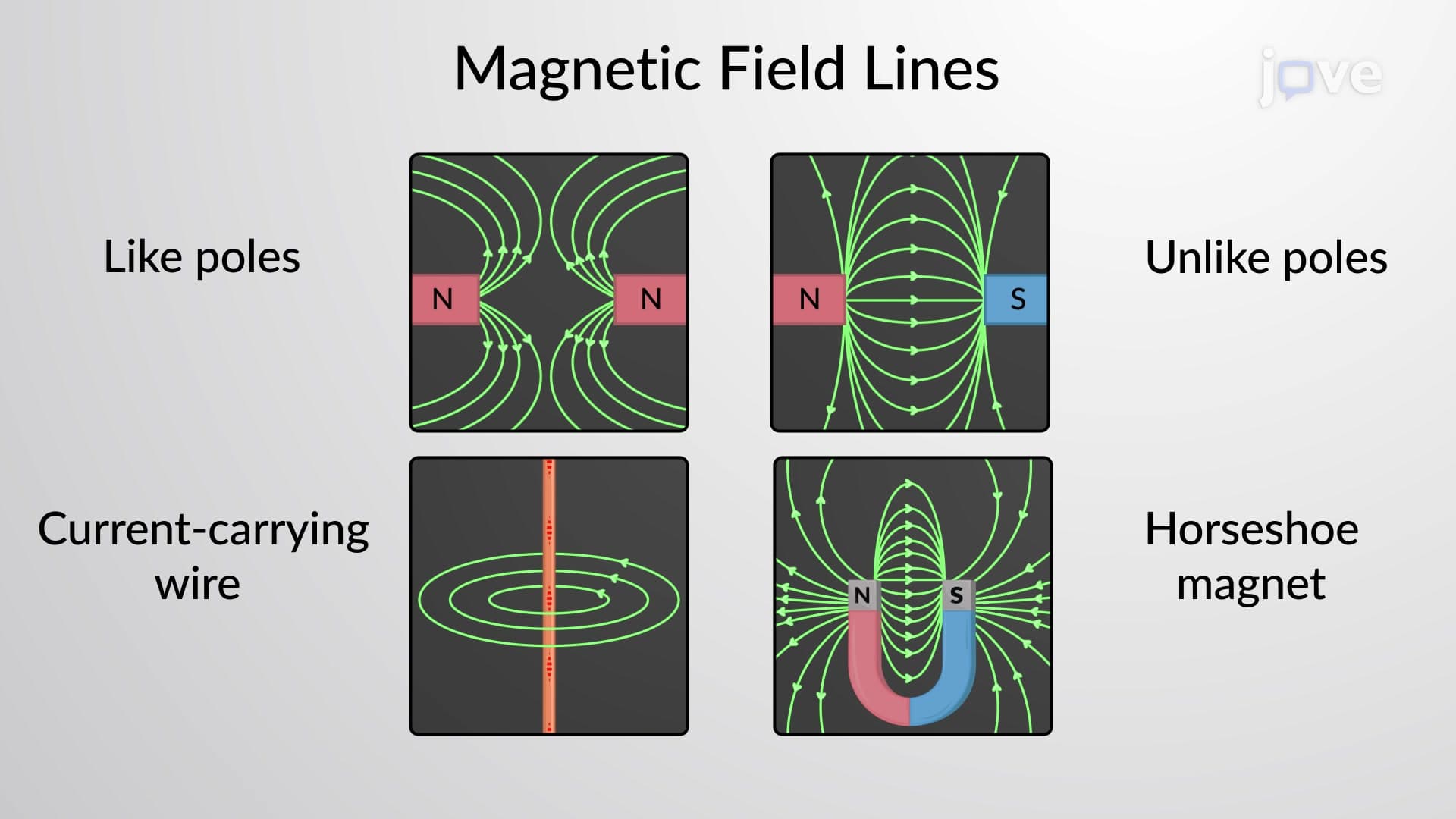
A crucial aspect of any magnetic flux study guide involves understanding that magnetic field lines form continuous loops without beginning or ending points. This means the total magnetic flux through any closed surface always equals zero, a principle known as Gauss's law for magnetism. Unlike electric charges that can exist independently, magnetic poles always occur in pairs, ensuring magnetic field lines that enter a closed surface must also exit it.
This principle has practical implications in engineering applications, from designing magnetic shielding for sensitive electronics to understanding how Earth's magnetic field protects us from solar radiation.
Frequently Asked Questions
Magnetic flux measures how much magnetic field passes through a surface, like counting how many magnetic field lines pierce through a given area. It depends on the field strength, surface size, and angle between them. The concept helps explain everything from electric generators to wireless phone chargers.
Magnetic flux equals the dot product of magnetic field vector and area vector, mathematically expressed as Φ = B · A = BA cos(θ). The SI unit is the weber (Wb). This definition appears consistently in AP Physics, college electromagnetism courses, and MCAT preparation materials.
AP Physics C exams commonly test magnetic flux through calculation problems involving rotating coils, changing magnetic fields, and electromagnetic induction. Students must apply the flux formula and understand how flux changes drive induced EMF. Practice with College Board released questions helps master these concepts.
MCAT physics sections include magnetic flux in contexts of medical imaging, electromagnetic radiation, and basic circuit analysis. Understanding flux helps with MRI physics, electromagnetic spectrum questions, and bioelectricity topics. Focus on conceptual understanding rather than complex calculations.
Electric generators at power plants like those operated by Duke Energy convert mechanical energy to electricity by rotating coils through magnetic fields. As coils rotate, magnetic flux through them changes continuously, inducing electrical current according to Faraday's law. This principle powers everything from wind turbines to hydroelectric dams.
Absolutely, magnetic flux concepts build on basic trigonometry and vector understanding typically covered in high school physics. Focus on visualizing magnetic field lines passing through surfaces and how changing angles affects the total count. The mathematical formulation follows naturally from this physical intuition.
Create visual diagrams showing magnetic fields at different angles to surfaces, practice calculating flux for various geometric shapes, and work through electromagnetic induction problems. Use online simulations to visualize how changing field orientation affects flux values, then connect these changes to practical applications.
Mastering magnetic flux provides the foundation for electromagnetic induction, Maxwell's equations, and electromagnetic wave propagation. These concepts appear in advanced physics courses, electrical engineering programs, and graduate-level electromagnetic theory. Strong flux comprehension also supports understanding of quantum mechanics and field theory.
Related Micro-courses