Loading video…


 12 Concepts
 53.7K views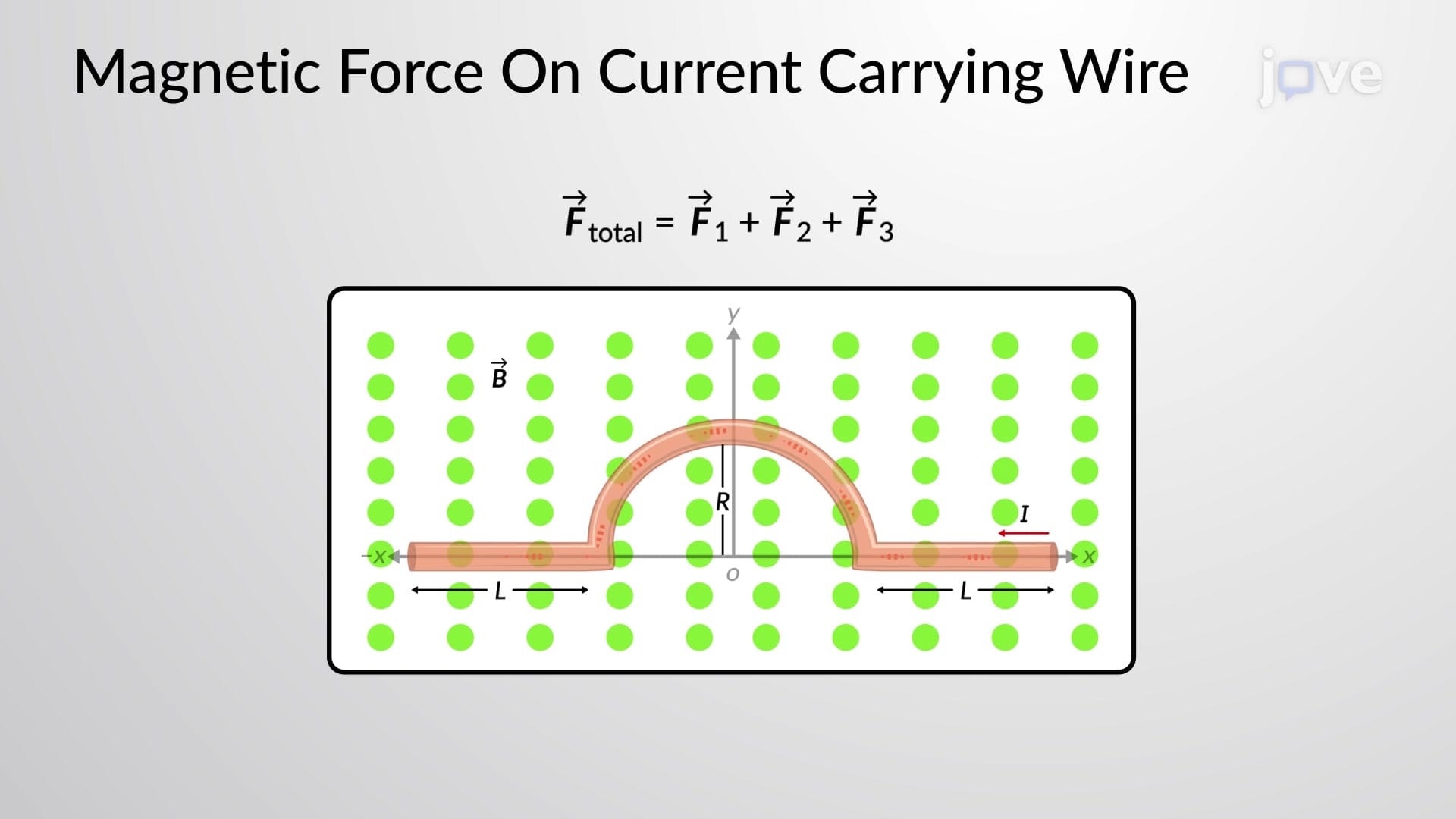

Video Summary: Magnetic Force on Current Carrying Explained
When electric current flows through the copper wiring in an MRI machine, it experiences powerful magnetic forces that help generate the precise imaging fields used in US hospitals. Magnetic force on current carrying conductors creates measurable effects that can be calculated using vector analysis and integration techniques. This problem examines a complex conductor shape-combining straight segments and a curved semicircle-placed in a uniform magnetic field to determine the total force magnitude and direction. Watch the full video on JoVE Coach to master this concept with expert-led visuals and step-by-step explanations.
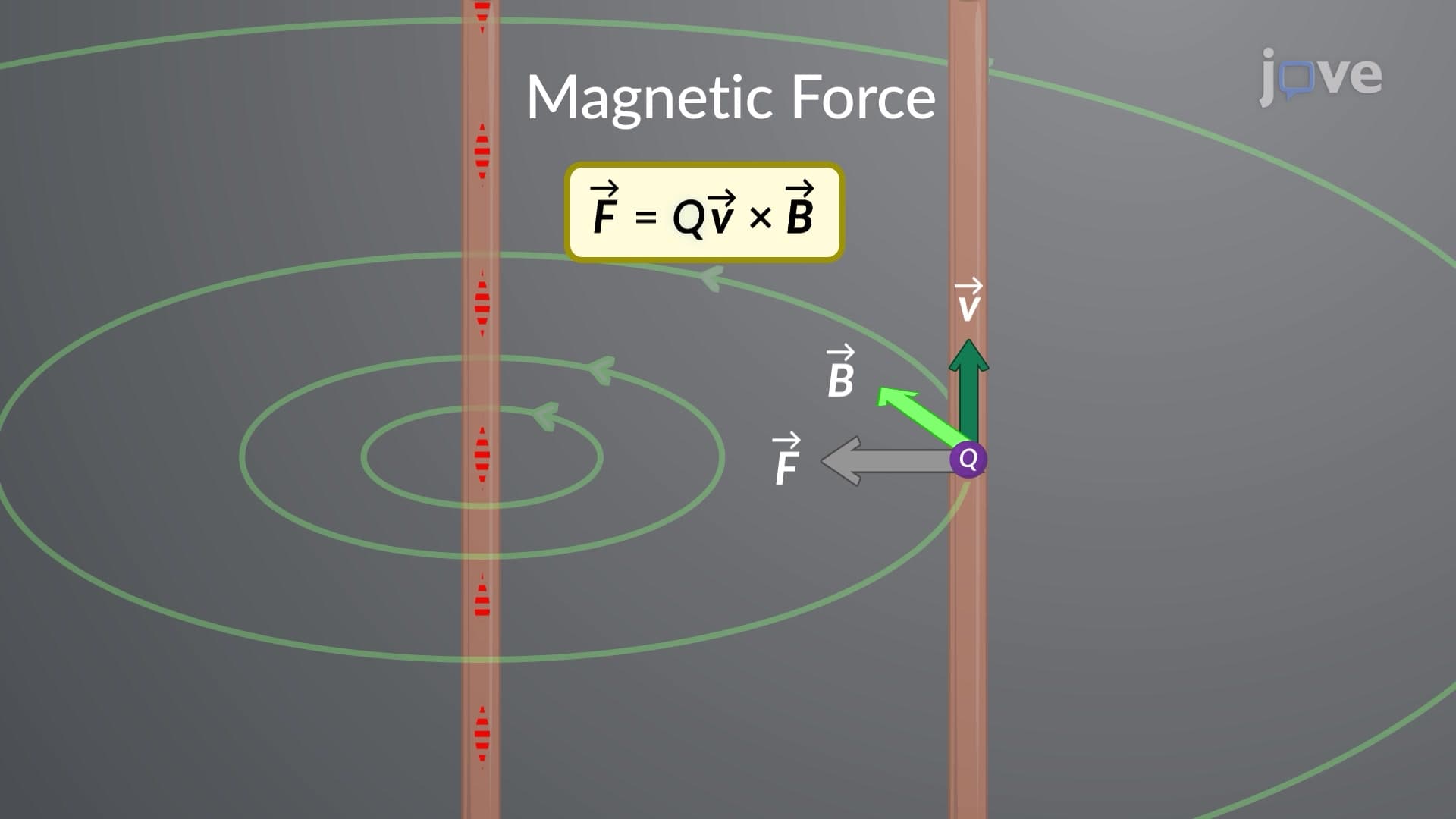
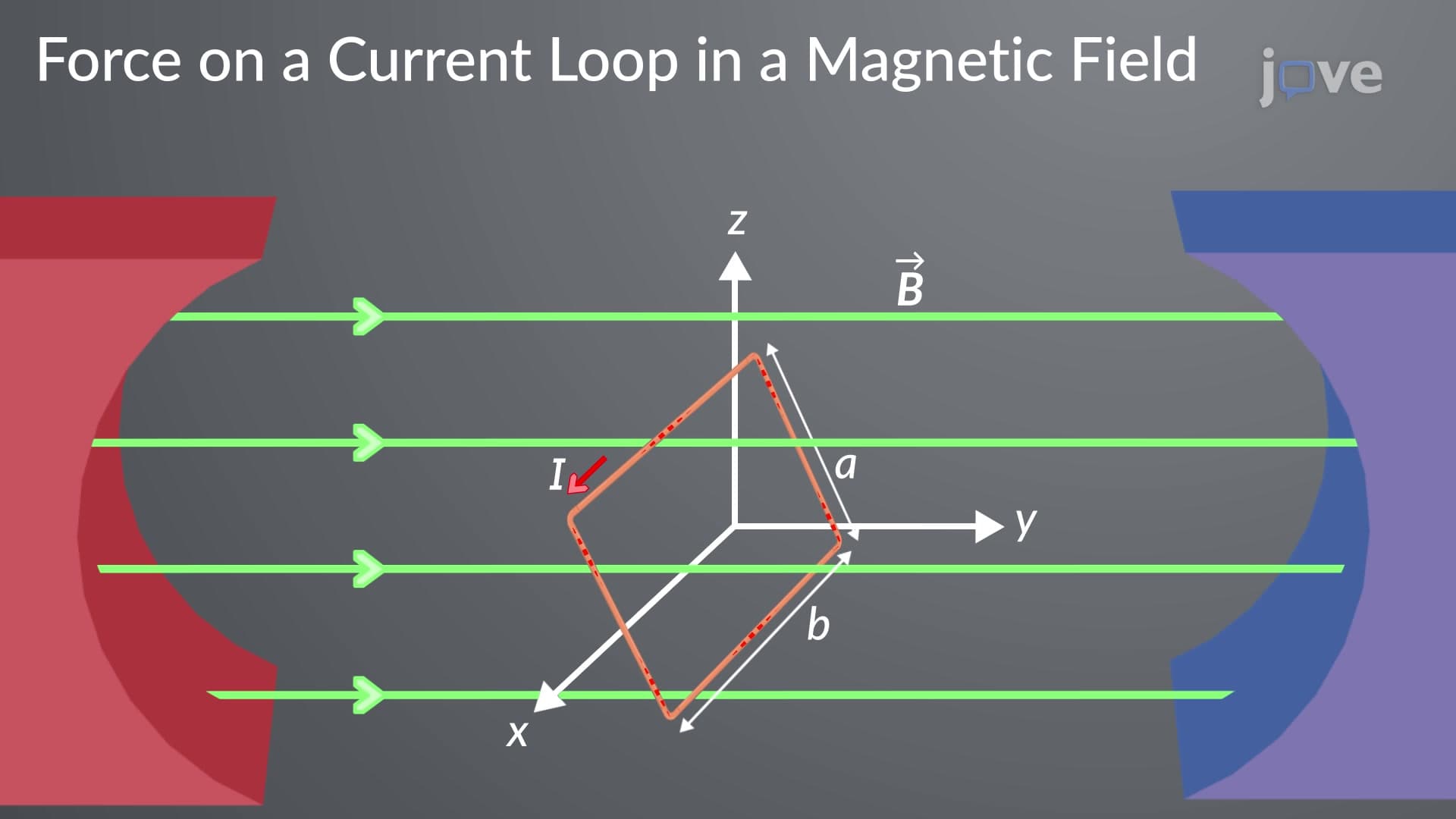
The fundamental principle governing magnetic force on current carrying wires stems from the interaction between moving charges and magnetic fields. When current flows through a conductor, it consists of moving electrons that experience forces in external magnetic fields. This force follows the relationship F = I × L × B × sin(θ), where I represents current magnitude, L is the conductor length, B is magnetic field strength, and θ is the angle between current direction and magnetic field.
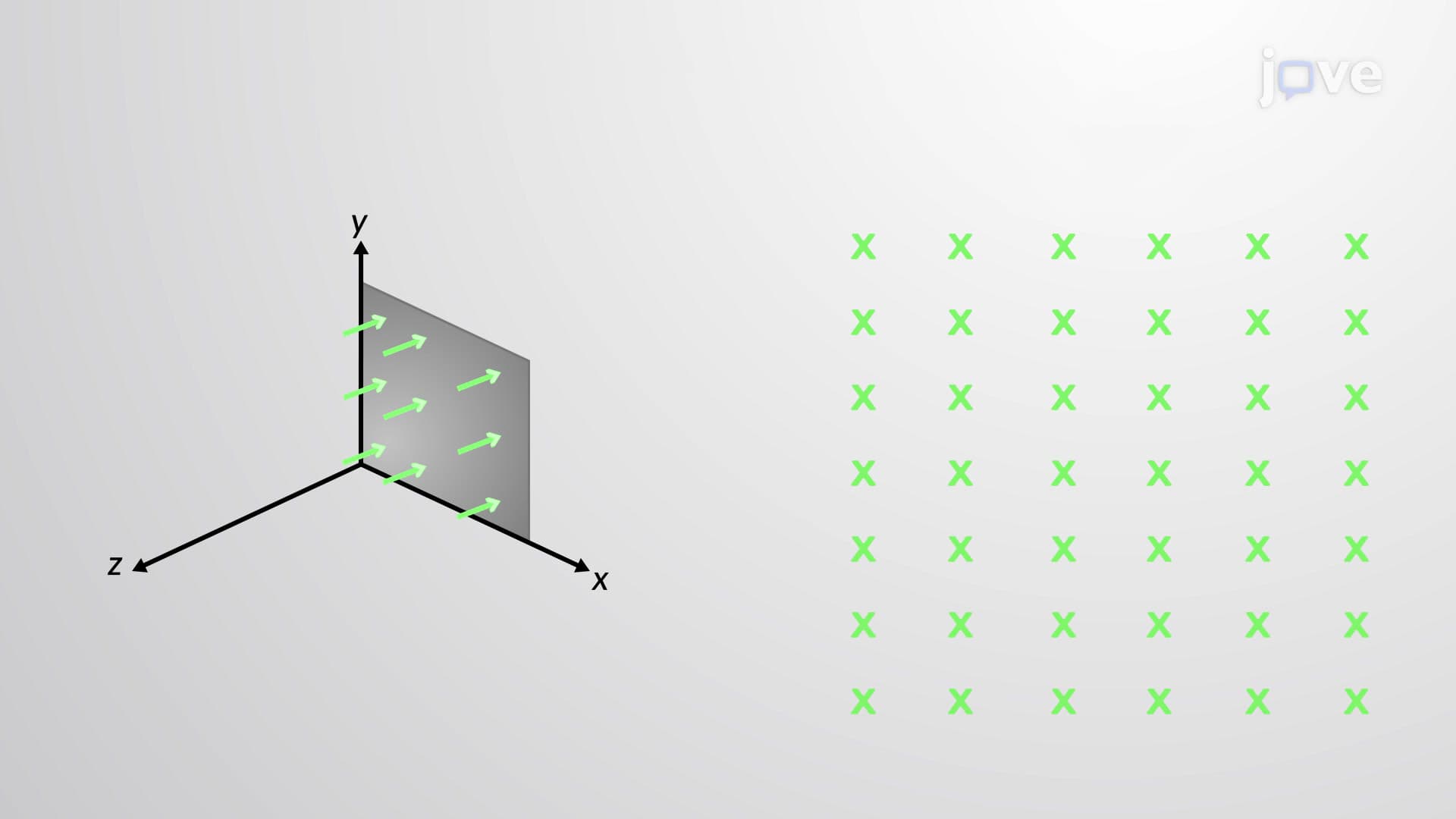
For the straight segments parallel to the x-axis in this problem, the current flows horizontally while the magnetic field points outward from the plane. Using the right-hand rule, point your fingers in the current direction, curl them toward the magnetic field direction, and your thumb indicates the force direction. Since the current and magnetic field are perpendicular (θ = 90°), sin(θ) = 1, maximizing the force magnitude. Each straight segment of length L experiences force F = ILB in the positive y-direction.
The semicircular portion requires calculus-based analysis because the current direction continuously changes along the curve. By dividing the semicircle into infinitesimal elements dl, each element can be treated as a straight segment. At any point, the element makes angle θ with the reference direction, creating force components that vary with position. The infinitesimal force dF = I × dl × B acts radially outward from the semicircle's center. Integration over the entire semicircle from θ = 0 to θ = π yields the total force contribution from the curved section.
This type of problem frequently appears on AP Physics C exams and college-level electromagnetism courses. In practical applications, magnetic forces on current-carrying conductors operate in electric motors (found in Tesla vehicles manufactured in US facilities), MRI machines in American hospitals, and particle accelerators like Fermilab in Illinois. The force calculations help engineers design electromagnetic systems and predict mechanical stresses on conductors. Students preparing for the MCAT physics section should master these vector analysis and integration techniques, as they form the foundation for understanding more complex electromagnetic phenomena in medical imaging technologies.
Related Micro-courses