Loading video…


 12 Concepts
 53.7K views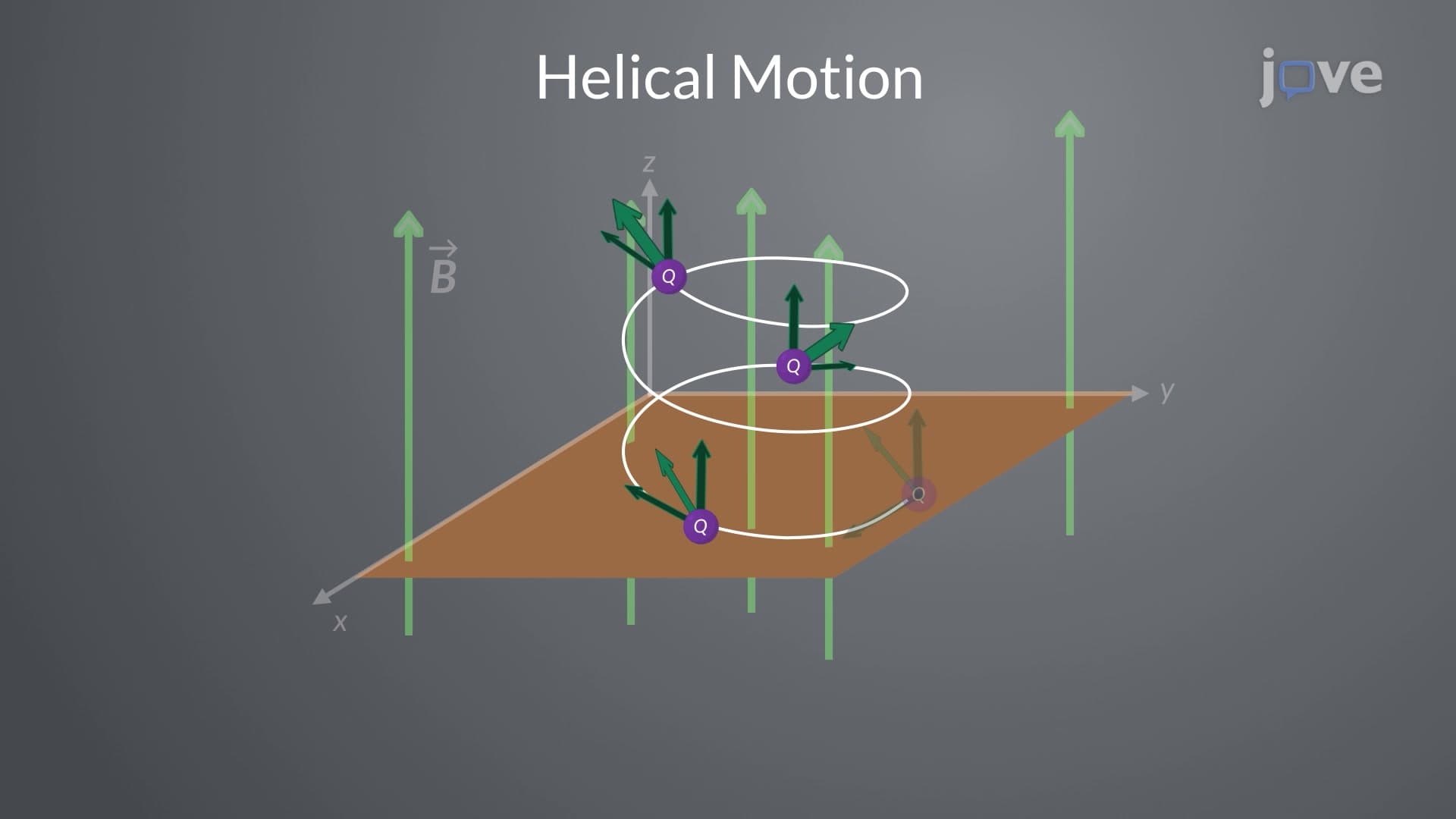

Video Summary: What Is Motion Charged Particle
Ever wondered why the Aurora Borealis creates those stunning spiral patterns across Alaska's night sky? The motion charged particle phenomenon explains how electrically charged particles from solar winds interact with Earth's magnetic field, creating these mesmerizing displays. When a charged particle moves through a magnetic field, it follows predictable circular or helical paths due to the Lorentz force - the same principle used in MRI machines at hospitals like Johns Hopkins. Understanding what is motion charged particle reveals fundamental physics governing everything from particle accelerators to medical imaging technology. Watch the full video on JoVE Coach to master this concept with expert-led visuals and step-by-step explanations.
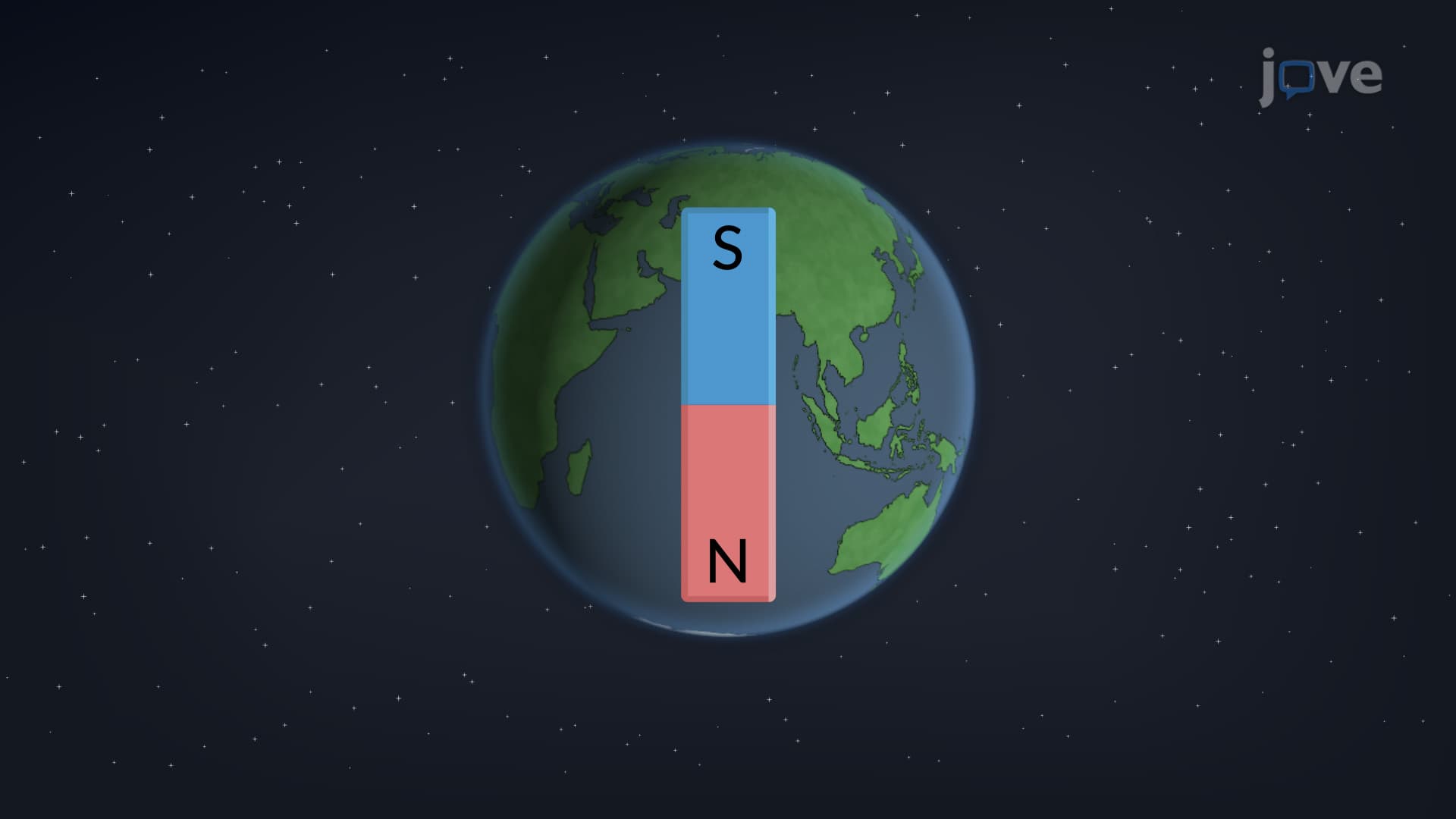
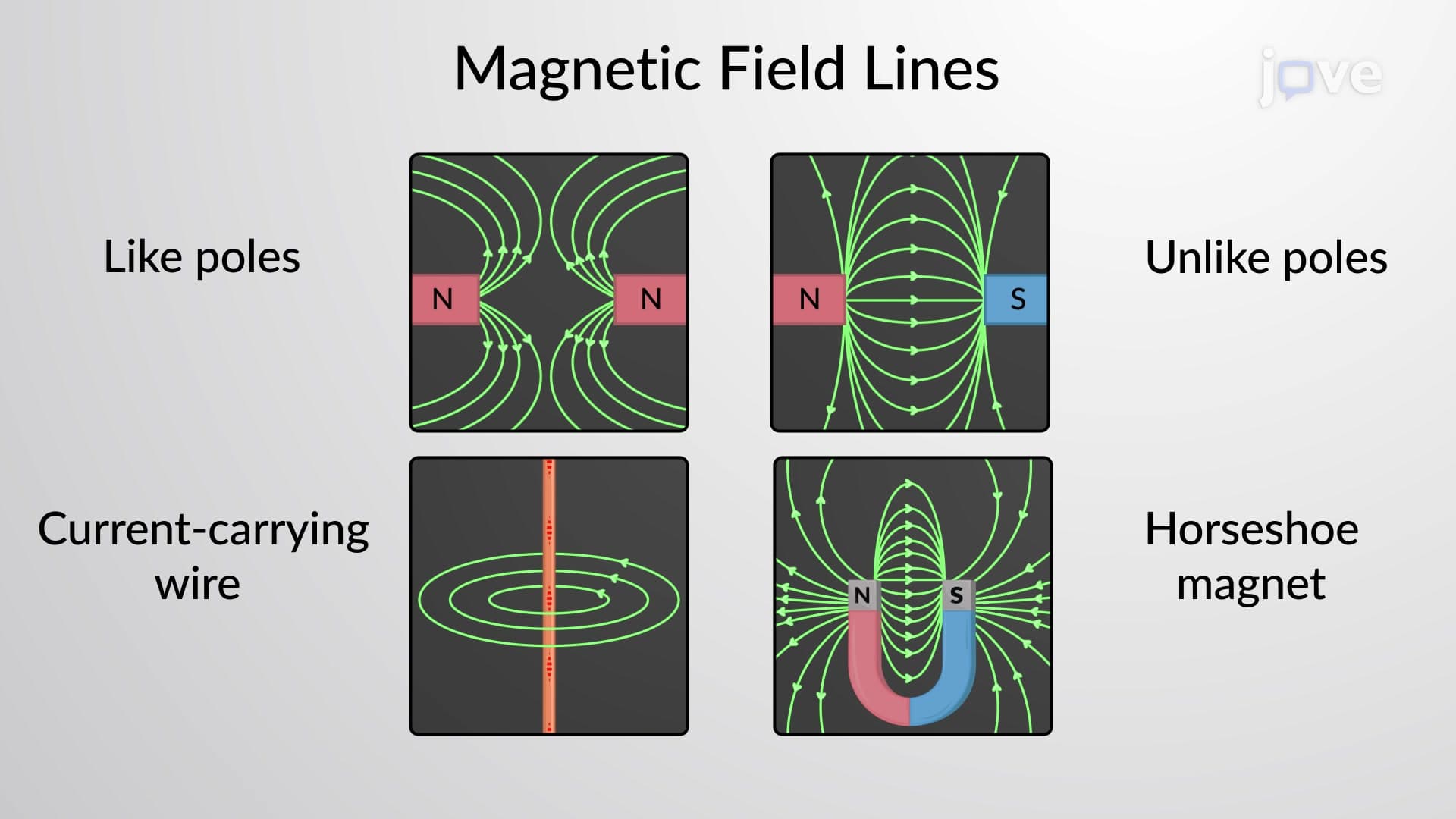
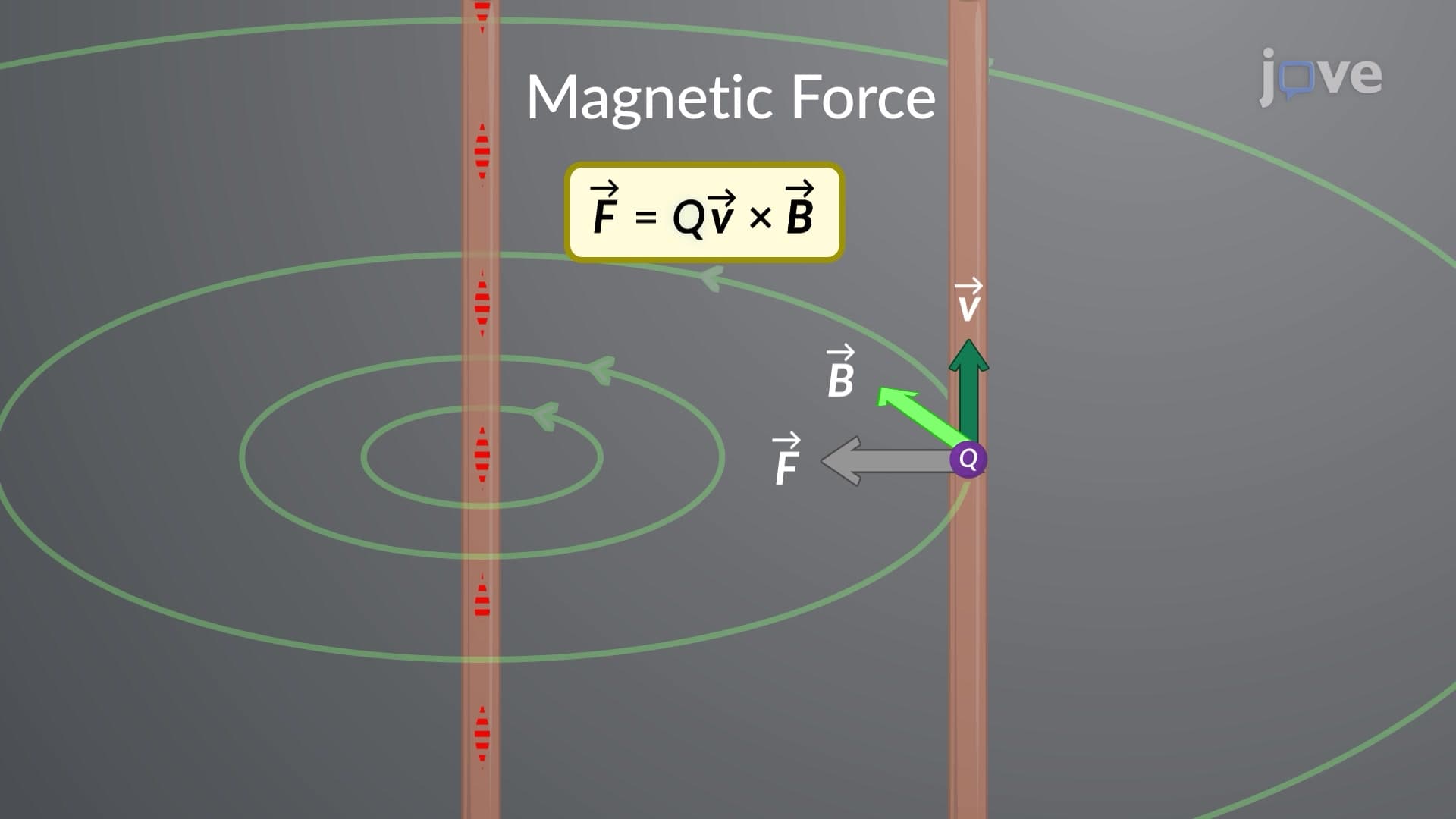
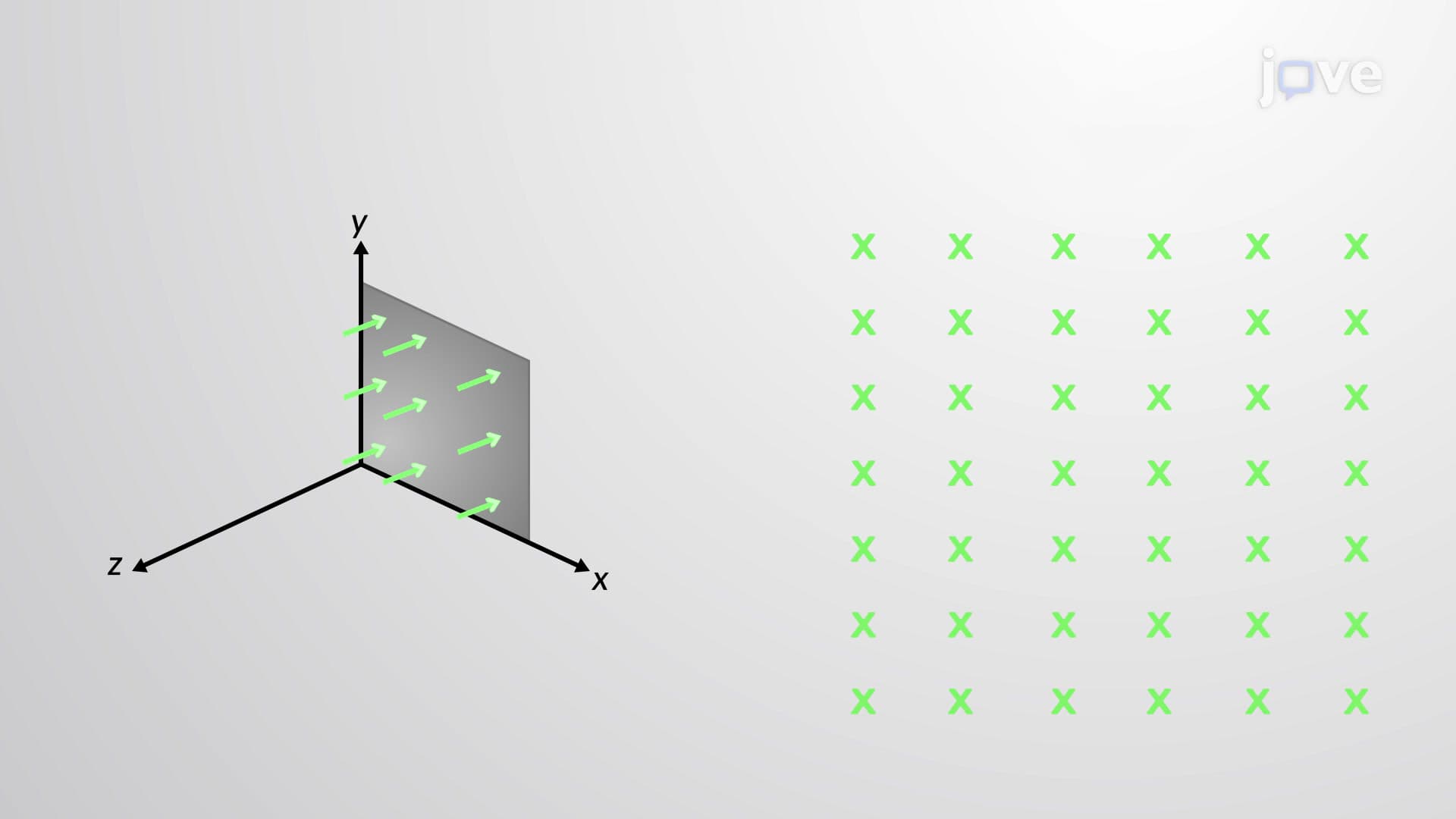
Motion charged particle describes the behavior of electrically charged objects moving through magnetic fields. When a charged particle enters a magnetic field, it experiences the Lorentz force, which acts perpendicular to both the particle's velocity and the magnetic field direction. This perpendicular force creates fascinating motion patterns that appear throughout nature and technology.
The Lorentz force equation F = Q(v × B) shows that force magnitude depends on the particle's charge (Q), velocity (v), and magnetic field strength (B). Since this force acts perpendicular to velocity, it changes the particle's direction without altering its speed - similar to how a string constrains a ball in circular motion.
When charged particles move perpendicular to uniform magnetic fields, they follow perfect circular paths. This occurs because the Lorentz force provides exactly the centripetal force needed for circular motion. Setting these forces equal: QvB = mv²/r, we can solve for the orbital radius: r = mv/QB.
This relationship reveals key insights: heavier particles create larger circles, while stronger magnetic fields or higher charges create tighter curves. The period T = 2πm/QB remains constant regardless of velocity - a principle exploited in cyclotron particle accelerators at facilities like Fermilab near Chicago.
Real-world scenarios rarely involve perfectly perpendicular motion. When charged particles enter magnetic fields at angles, they exhibit helical (corkscrew) motion. The velocity component parallel to the magnetic field remains unaffected, creating steady motion along field lines, while the perpendicular component generates circular motion.
This helical motion explains phenomena like charged particle behavior in Earth's magnetosphere, where solar wind particles spiral along magnetic field lines toward the poles, creating auroras. The pitch (distance between helical turns) equals v(parallel) × T, where v(parallel) represents the velocity component along the magnetic field.
Understanding motion charged particle principles proves essential for AP Physics students and appears frequently on standardized tests. Medical applications include MRI machines, which use magnetic fields to manipulate hydrogen atoms in human tissue, and mass spectrometers that separate isotopes based on their circular motion radii.
Particle accelerators represent another crucial application, using magnetic fields to guide high-energy particles along precise paths. The Large Hadron Collider uses superconducting magnets to bend particle beams, while medical cyclotrons produce radioisotopes for cancer treatment at major hospitals nationwide.
Related Micro-courses