Loading video…


 12 Concepts
 53.7K views

Video Summary: What are Magnetic Fields
Ever wondered how an MRI machine at Johns Hopkins Hospital can see inside your body without surgery? Magnetic fields create invisible forces that surround all magnets, from tiny refrigerator magnets to massive Earth-sized fields that protect us from solar radiation. These vector quantities, measured in tesla units, exert forces on moving charged particles through the cross-product relationship between velocity and field strength. Watch the full video on JoVE Coach to master this concept with expert-led visuals and step-by-step explanations.
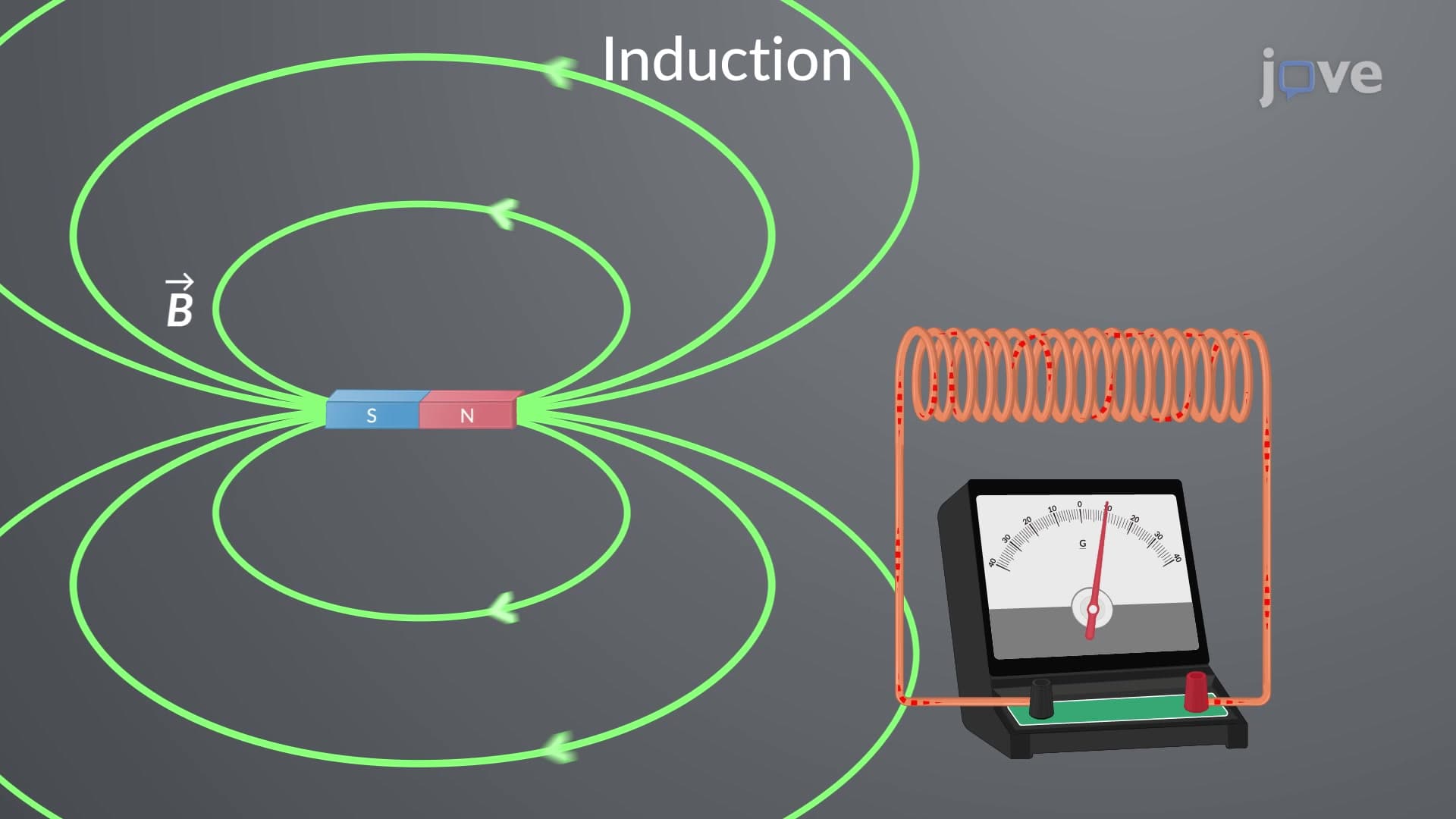
Magnetic fields represent one of nature's fundamental force fields, creating invisible regions of influence around magnetic materials and moving charges. Unlike static forces we can directly observe, magnetic fields reveal themselves only through their effects on other magnetic objects or moving charged particles. These fields permeate space around every magnet, from the powerful superconducting magnets in Stanford's particle accelerators to the weak magnetic field generated by electrical wiring in your home.
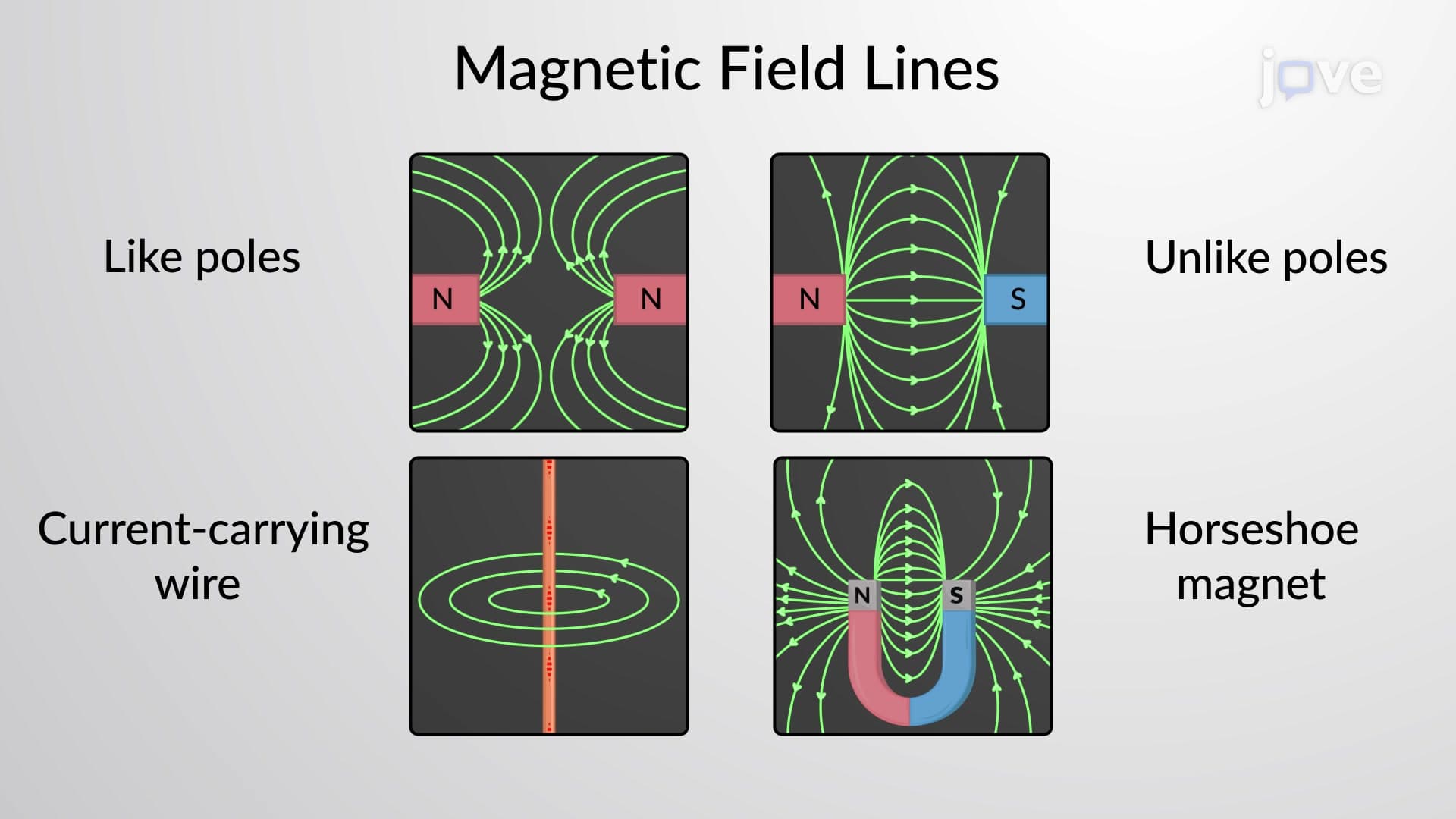
Several types of magnetic fields exist in nature and technology. Permanent magnets, like those found in loudspeakers at Bose Corporation's Massachusetts facilities, create static magnetic fields through aligned atomic magnetic moments. Current-induced fields, discovered by Hans Christian Oersted, form around any wire carrying electrical current-this principle powers the electromagnets in Tesla's electric vehicle motors. Earth's geomagnetic field, generated by molten iron circulation in the planet's core, creates a protective magnetic shield extending thousands of miles into space.
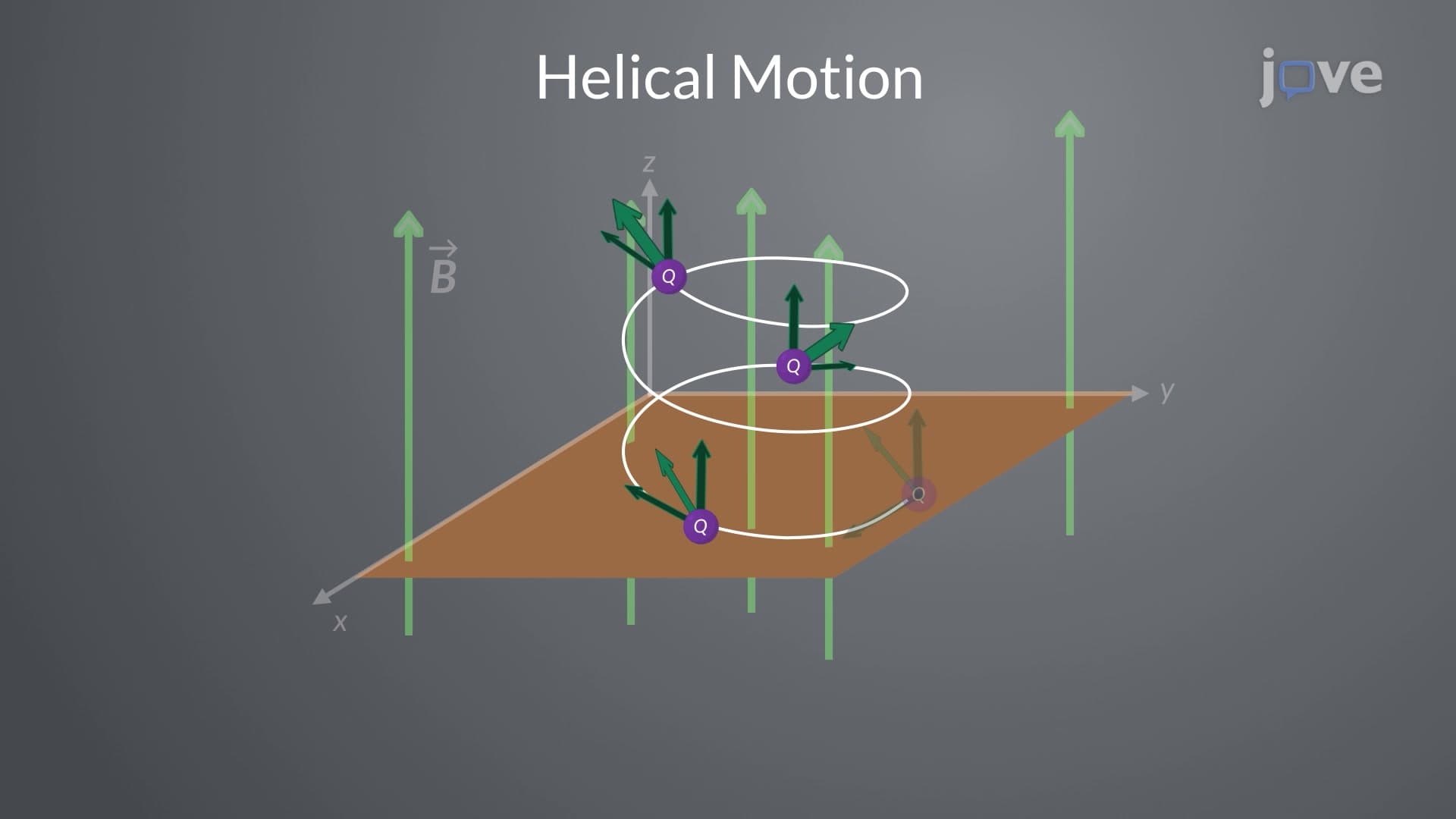
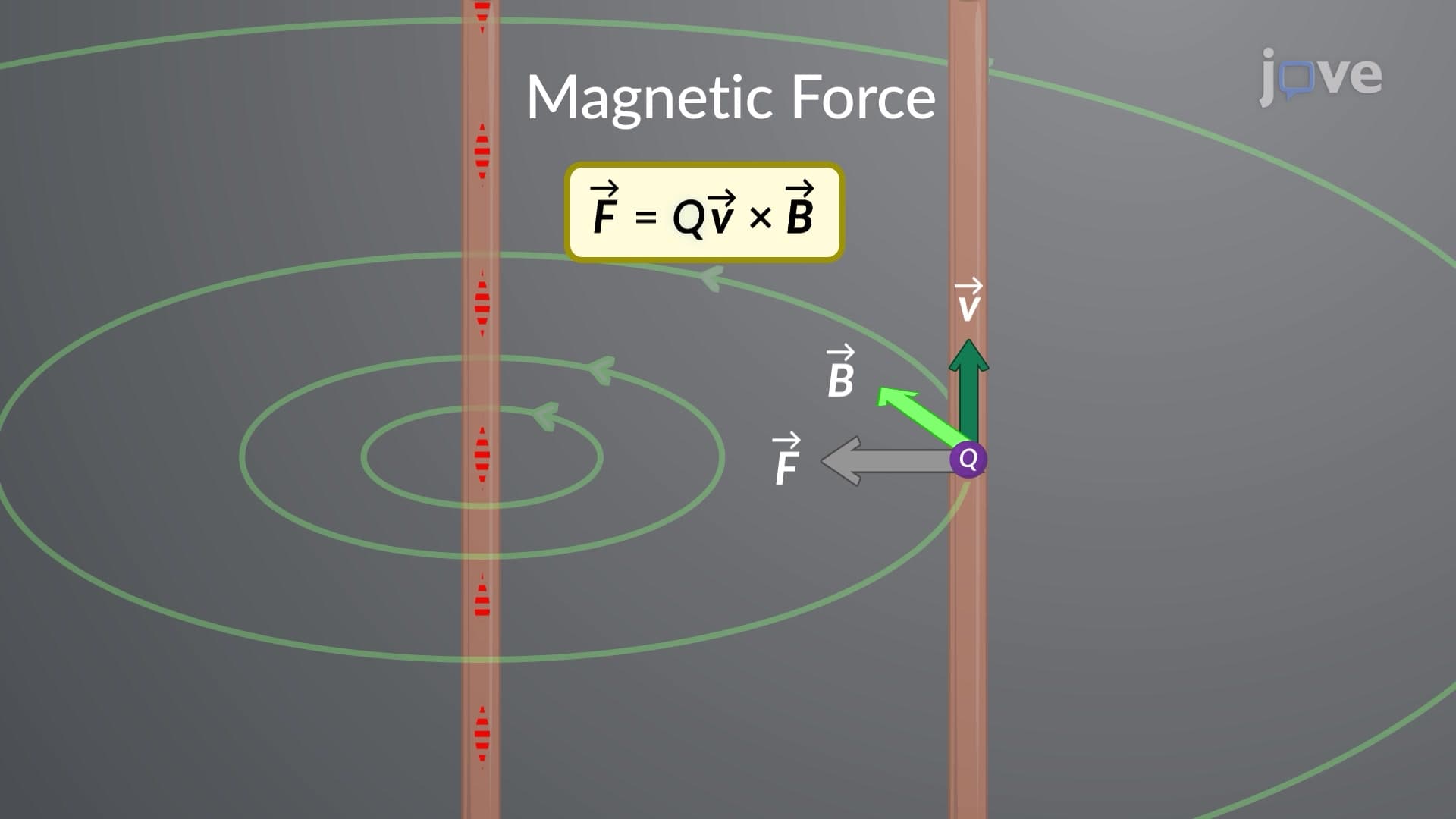
The magnetic force equation F = Q(v × B) describes how charged particles interact with magnetic fields. This cross-product relationship means the force always acts perpendicular to both the particle's velocity and the magnetic field direction. Students preparing for AP Physics C or college-level electromagnetism courses must master this three-dimensional relationship. The right-hand rule provides a practical method for determining force directions: point fingers along velocity, curl toward the magnetic field, and your thumb indicates the force direction on positive charges.
Understanding magnetic fields proves essential for numerous career paths in STEM fields. Biomedical engineers designing MRI systems at companies like GE Healthcare rely on precise magnetic field control. Electrical engineers at power companies use magnetic field principles in transformer design and power transmission systems. For students taking the MCAT, magnetic field concepts frequently appear in physics passages, particularly relating to charged particle motion in medical imaging devices. College physics courses typically dedicate 2-3 weeks to electromagnetic field theory, making this fundamental knowledge crucial for academic success.
Related Micro-courses