Loading video…


 12 Concepts
 53.7K views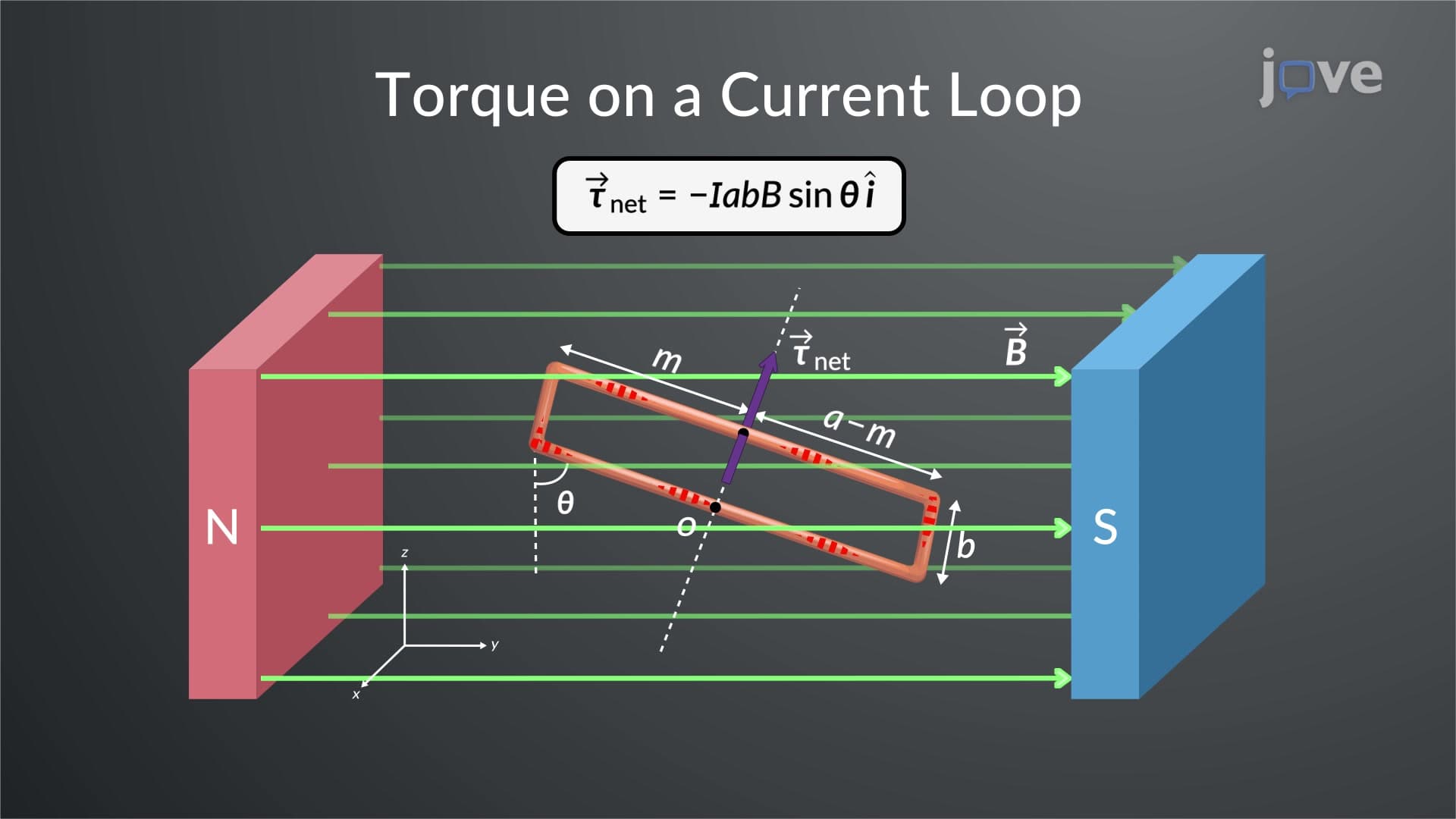

Video Summary: Torque on a Current Loop Explained
Ever wondered how electric motors in Tesla cars generate their incredible torque? The secret lies in understanding torque on a current loop, the fundamental principle behind electromagnetic rotation. When a rectangular current-carrying loop sits in a magnetic field, it experiences forces that create rotational motion, just like in the electric motors powering everything from household fans to industrial machinery across American manufacturing plants. This torque on a current loop explained concept reveals how magnetic dipole moments determine the strength and direction of electromagnetic torque. Watch the full video on JoVE Coach to master this concept with expert-led visuals and step-by-step explanations.
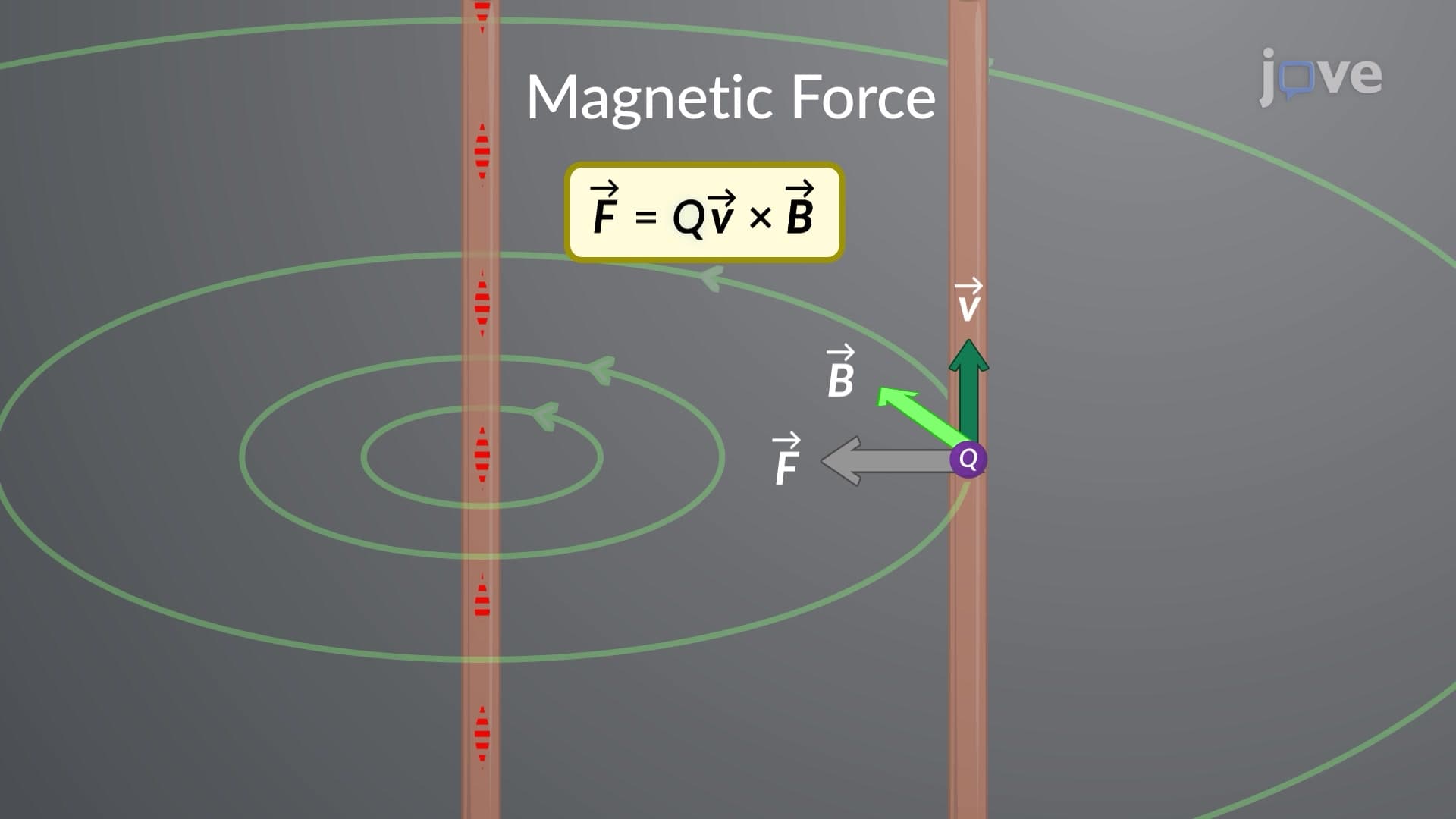
Torque on a current loop represents one of electromagnetism's most practical applications, forming the foundation for electric motors, generators, and countless electromagnetic devices. When a current-carrying loop sits within a uniform magnetic field, the interaction between moving charges and magnetic field lines creates forces that attempt to rotate the loop around a specific axis.
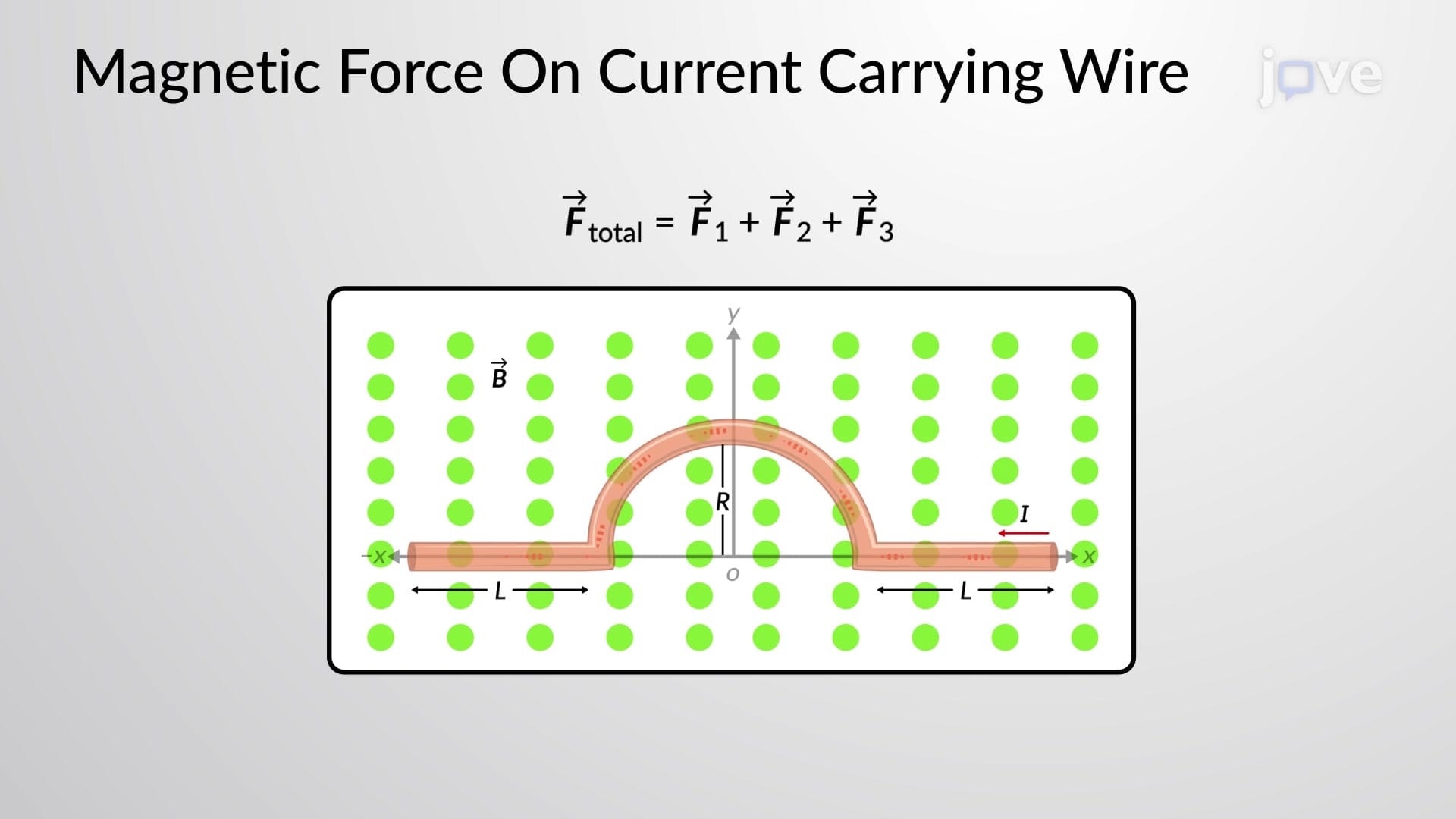
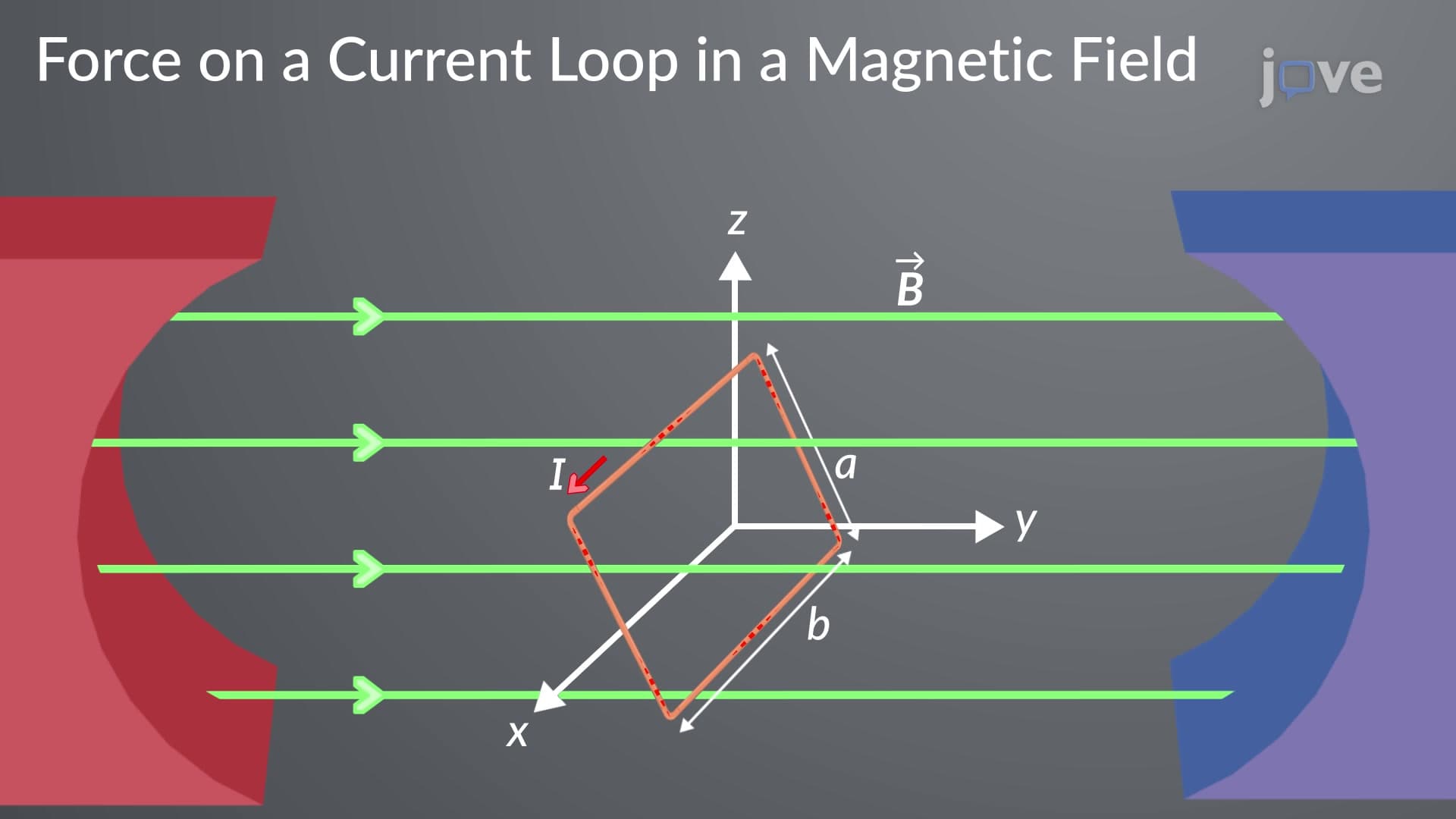
Consider a rectangular loop with dimensions *a* and *b* carrying steady current *I*. The magnetic field exerts forces on each segment of the loop according to *F = I × L × B*, where *L* represents the length of each segment. Crucially, forces acting on opposite sides of the loop are equal in magnitude but opposite in direction, creating zero net translational force. However, these forces don't cancel rotationally, they form what physicists call a torque couple.
The current loop behaves as a magnetic dipole, characterized by its magnetic dipole moment *μ = I × A*, where *A* represents the loop's enclosed area. This vector quantity points perpendicular to the loop plane, following the right-hand rule: curl your fingers in the current's direction, and your thumb indicates the dipole moment's direction.
This concept appears frequently on AP Physics exams and college electromagnetism courses. Students at institutions like MIT and Stanford learn that the magnetic dipole moment determines how strongly the loop interacts with external magnetic fields, similar to how electric dipole moments govern electric field interactions.
The torque magnitude equals *τ = μ × B × sin(θ)*, where *θ* represents the angle between the dipole moment and magnetic field vectors. Maximum torque occurs when *θ = 90°* (loop perpendicular to field), while zero torque exists at *θ = 0°* or *180°* (loop parallel to field).
This mathematical relationship explains why electric motors use commutators to maintain optimal angles between rotor coils and magnetic fields. American automotive manufacturers like Ford and General Motors rely on these principles in their electric vehicle motor designs.
Understanding how torque on a current loop works proves essential for engineering students preparing for FE exams and practicing engineers designing electromagnetic systems. From MRI machines in US hospitals to wind turbine generators across American wind farms, current loop torque principles enable countless technologies that power modern society.
Related Micro-courses