Loading video…


 12 Concepts
 53.7K views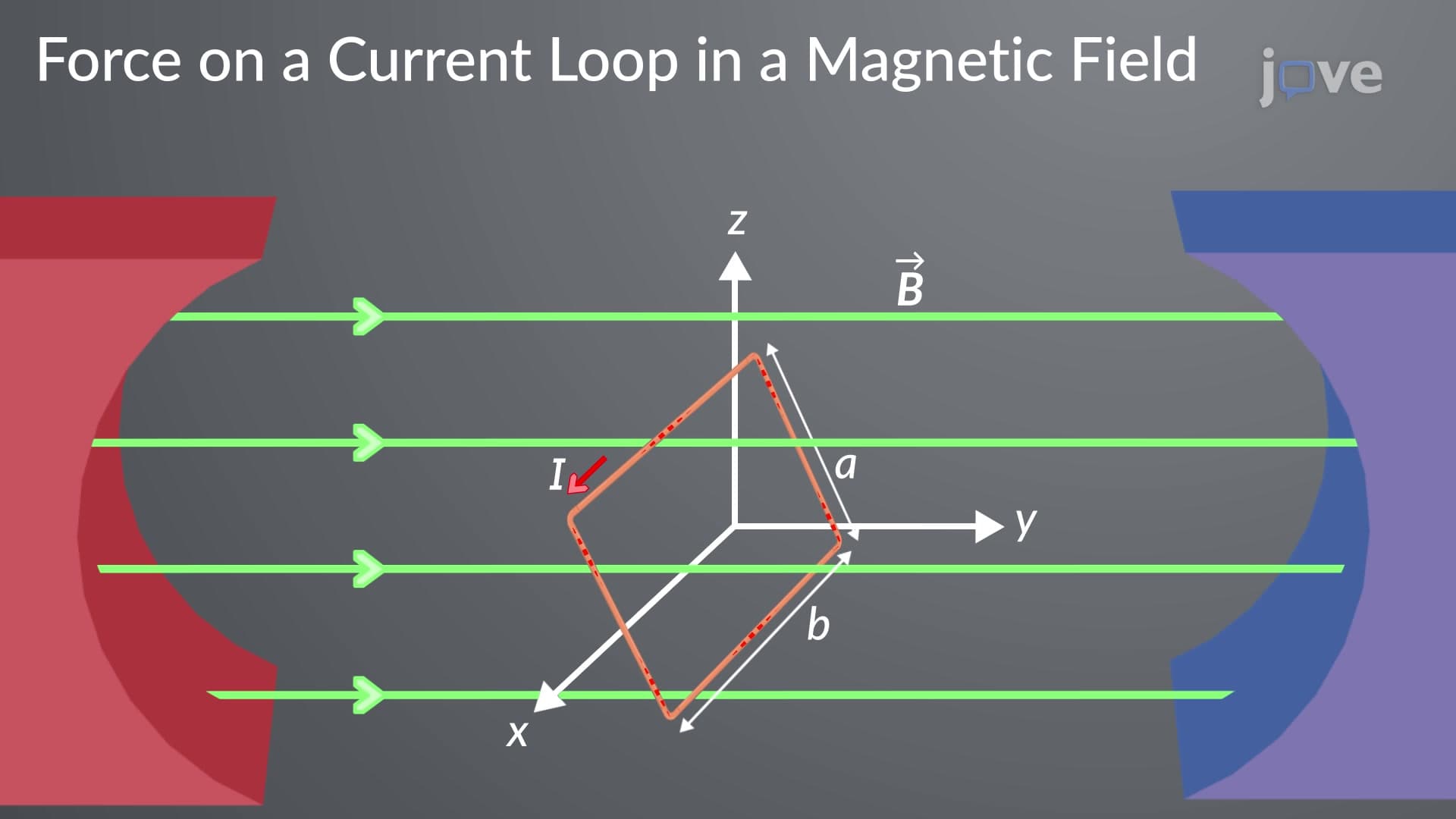

Video Summary: Force on a Current Loop Explained
Ever wonder how electric motors in Tesla vehicles or subway trains convert electricity into motion? The force on a current loop is the fundamental physics principle that makes this transformation possible. When current flows through a wire loop placed in a magnetic field, the resulting forces create the rotational motion that powers everything from industrial manufacturing equipment to household appliances across the United States. Watch the full video on JoVE Coach to master this concept with expert-led visuals and step-by-step explanations.
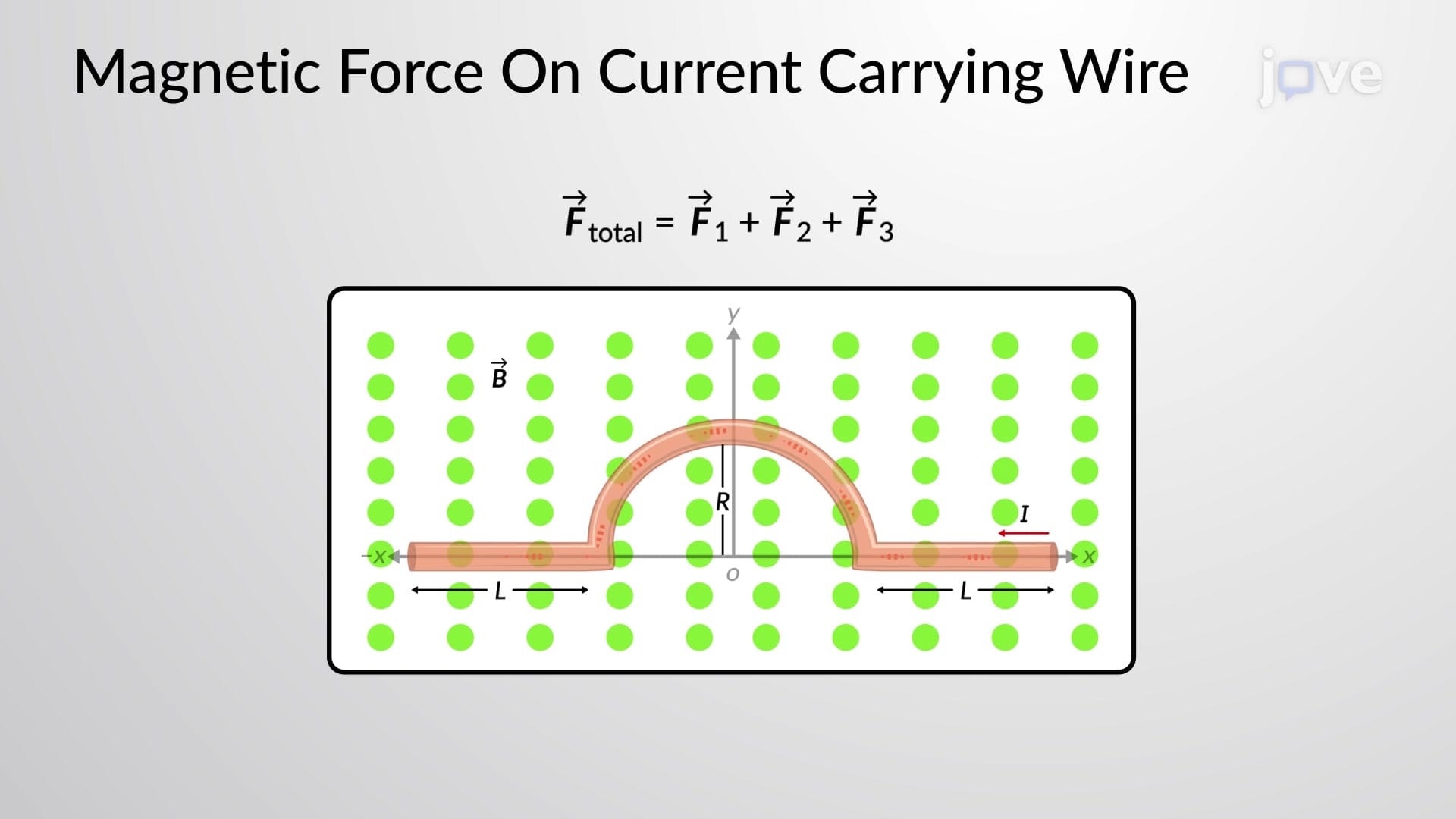
The force on a current loop represents one of the most practical applications of electromagnetic theory in modern technology. When a current-carrying wire loop is placed in a magnetic field, each segment experiences a force according to the relationship F = BIL sin(θ), where B is magnetic field strength, I is current, L is wire length, and θ is the angle between current direction and field lines.
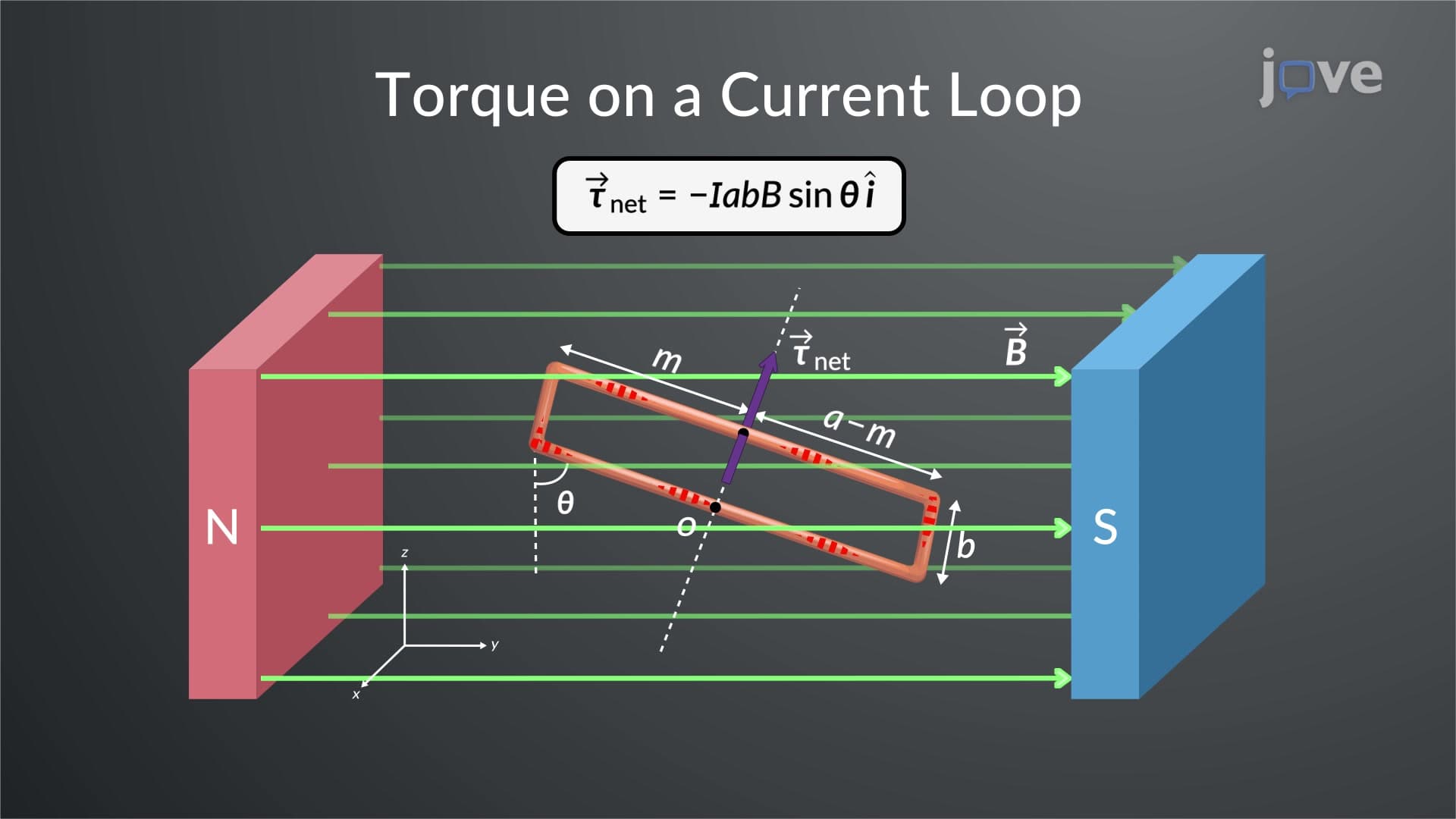
Consider a rectangular loop with dimensions a × b in a uniform magnetic field. The forces on opposite sides create a fascinating pattern: sides parallel to the field experience maximum force (sin(90°) = 1), while perpendicular sides experience forces that typically cancel out. This selective force distribution is crucial for motor operation-it's why electric vehicle motors can achieve such precise control over rotational speed and torque.
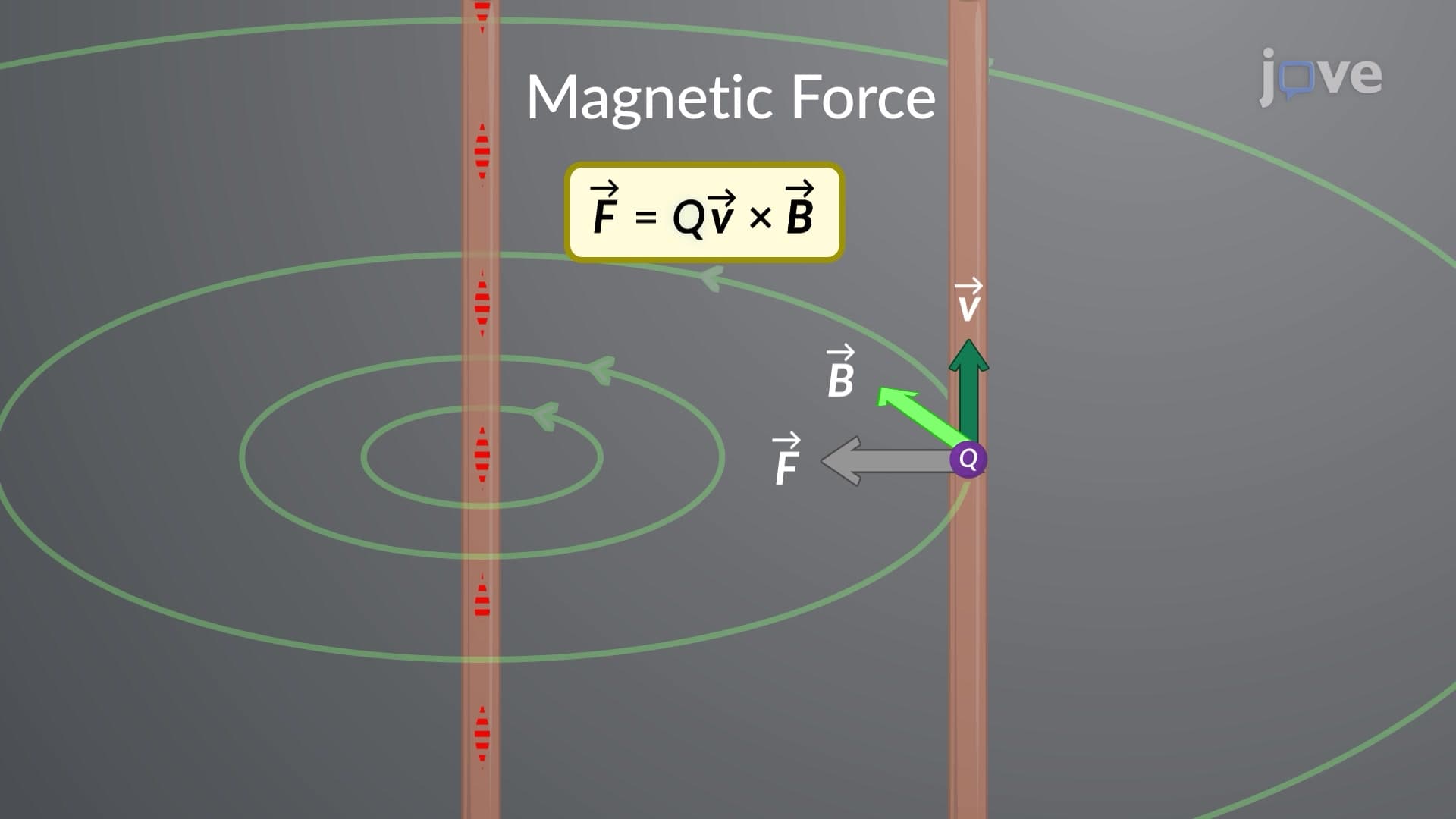
The right-hand rule becomes essential for predicting force directions. Point your fingers in the current direction, curl them toward the magnetic field direction, and your thumb indicates the force direction. This principle guides engineers at companies like General Motors and Ford when designing electric motor configurations for maximum efficiency.
The net effect of these distributed forces creates torque around the loop's center axis. In DC motors powering everything from Tesla Model S vehicles to industrial conveyor systems, this torque converts electrical energy into rotational mechanical energy with remarkable efficiency. Students preparing for AP Physics exams will encounter this concept frequently, as it bridges fundamental electromagnetic theory with practical engineering applications.
Understanding current loop behavior proves essential for MCAT preparation, particularly in physics sections covering electromagnetism. College physics courses at institutions like MIT and Stanford emphasize this concept as foundational to electromagnetic induction, motor theory, and generator principles that drive modern electrical infrastructure across the United States.
Related Micro-courses