Loading video…


 12 Concepts
 53.7K views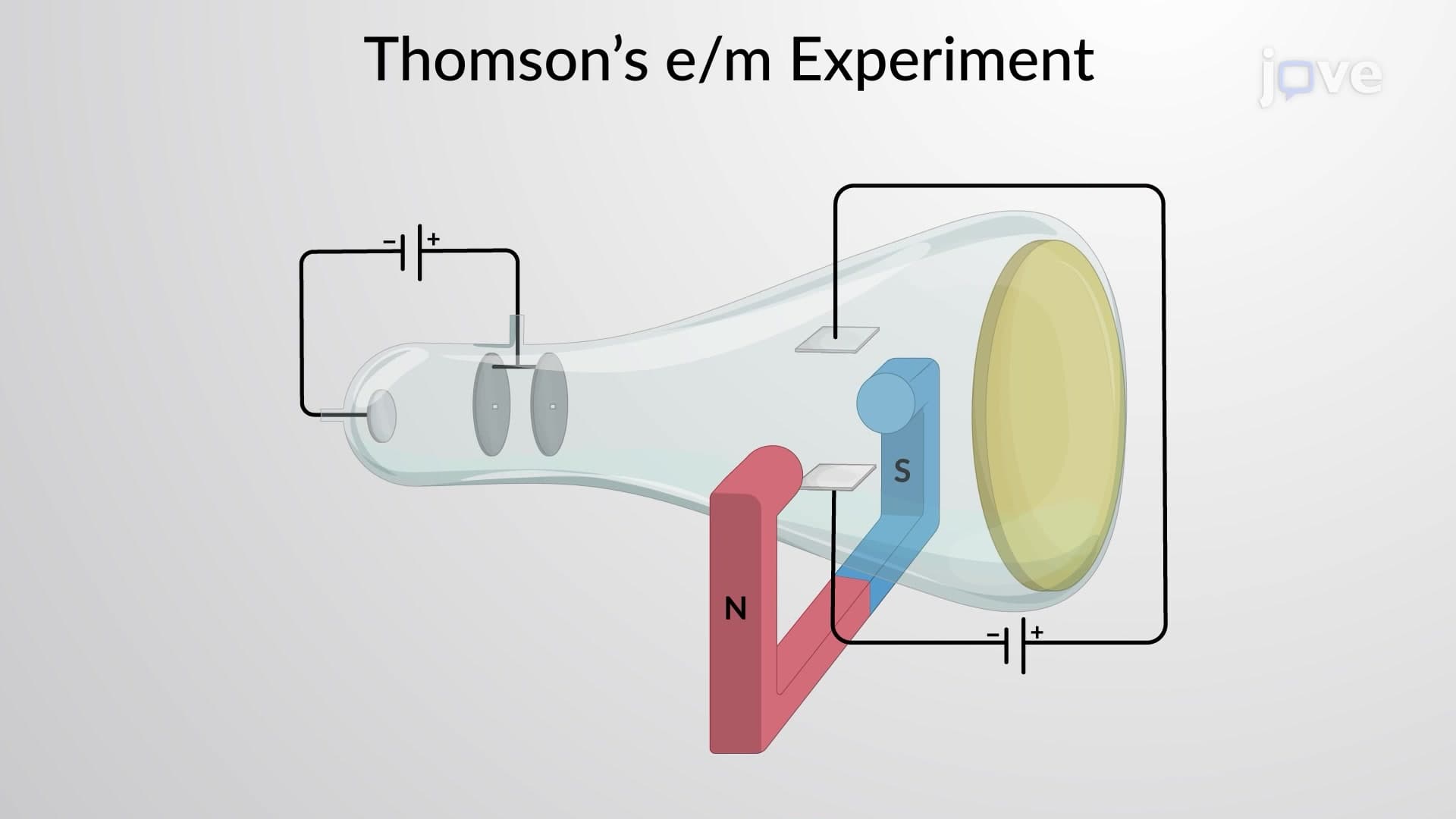

Video Summary: Thomsons E M Experiment Explained
Did you know that the discovery of the electron's charge-to-mass ratio revolutionized our understanding of atomic structure? Thomson's e/m experiment used ingenious crossed electric and magnetic fields to measure this fundamental property, leading to breakthroughs in technologies like cathode ray tubes in early television sets. This groundbreaking work by J.J. Thomson demonstrated that electrons are universal components of all matter, regardless of the source material used. Watch the full video on JoVE Coach to master this concept with expert-led visuals and step-by-step explanations.
Thomson's e/m experiment represents one of the most elegant physics experiments in history, fundamentally changing our understanding of atomic structure. The experimental apparatus consisted of an evacuated glass tube containing a heated cathode that emitted electrons, two anodes that accelerated these electrons, and a fluorescent screen that detected their impact. The genius of Thomson's design lay in his use of crossed electric and magnetic fields perpendicular to the electron beam's path.
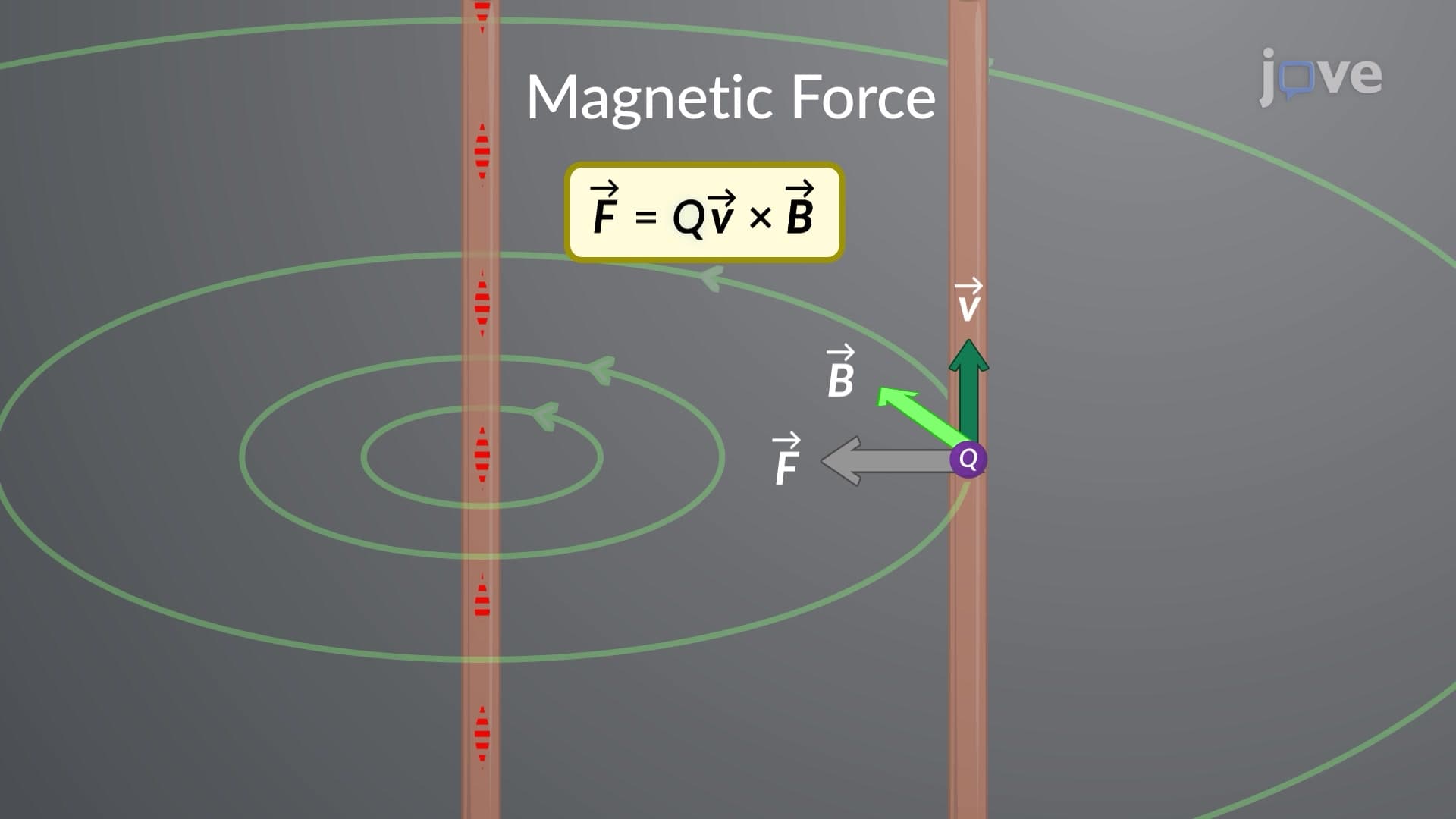
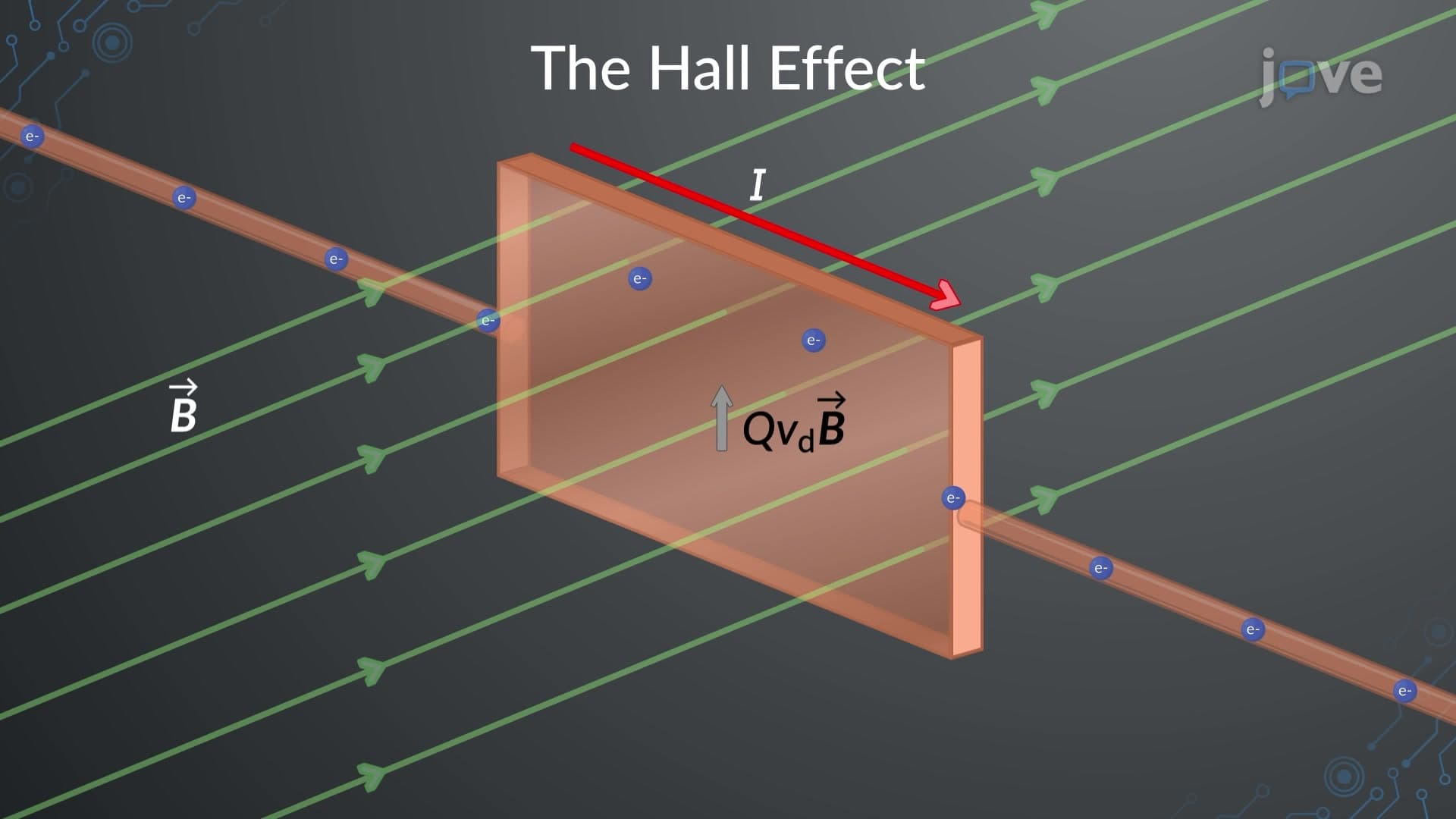
The heart of Thomson's e/m experiment tutorial lies in understanding velocity selection. When electrons pass through the crossed fields, they experience both electric force (F = qE) and magnetic force (F = qvB). Only electrons with a specific velocity-where these forces exactly balance-travel in a straight line through the apparatus. This velocity equals the ratio of electric field strength to magnetic field strength (v = E/B). Students preparing for AP Physics or college-level courses should note that this principle appears frequently on standardized tests.
How Thomson's e/m experiment works becomes clear when examining the mathematical relationships. After velocity selection, Thomson removed the magnetic field, allowing the electric field alone to deflect the electron beam. By measuring this deflection and applying principles of projectile motion, he could calculate the acceleration of electrons in the electric field. Combined with the known velocity from the selection process, Thomson derived the famous e/m ratio using the relationship: e/m = 2V/(B²r²), where V is the accelerating voltage, B is the magnetic field strength, and r is the deflection radius.
This experiment's significance extends far beyond basic physics education. Thomson's work directly led to the development of mass spectrometry, a technique now essential in fields ranging from pharmaceutical research at companies like Pfizer to environmental testing by the EPA. Medical students studying for the MCAT encounter these principles when learning about diagnostic imaging technologies. The experiment also provided the foundation for understanding cathode ray tubes, which powered television and computer monitors for decades.
Understanding Thomson's e/m experiment concept helps students grasp fundamental relationships between electricity, magnetism, and matter that appear throughout physics curricula from high school through graduate study.
Related Micro-courses