Loading…
Loading video…

53,700 views

Ever wondered how an MRI machine at Johns Hopkins Hospital can see inside your body without surgery? Magnetic fields create invisible forces that surround all magnets, from tiny refrigerator magnets to massive Earth-sized fields that protect us from solar radiation. These vector quantities, measured in tesla units, exert forces on moving charged particles through the cross-product relationship between velocity and field strength. Watch the full video on JoVE Coach to master this concept with expert-led visuals and step-by-step explanations.
Magnetic fields represent one of nature's fundamental force fields, creating invisible regions of influence around magnetic materials and moving charges. Unlike static forces we can directly observe, magnetic fields reveal themselves only through their effects on other magnetic objects or moving charged particles. These fields permeate space around every magnet, from the powerful superconducting magnets in Stanford's particle accelerators to the weak magnetic field generated by electrical wiring in your home.
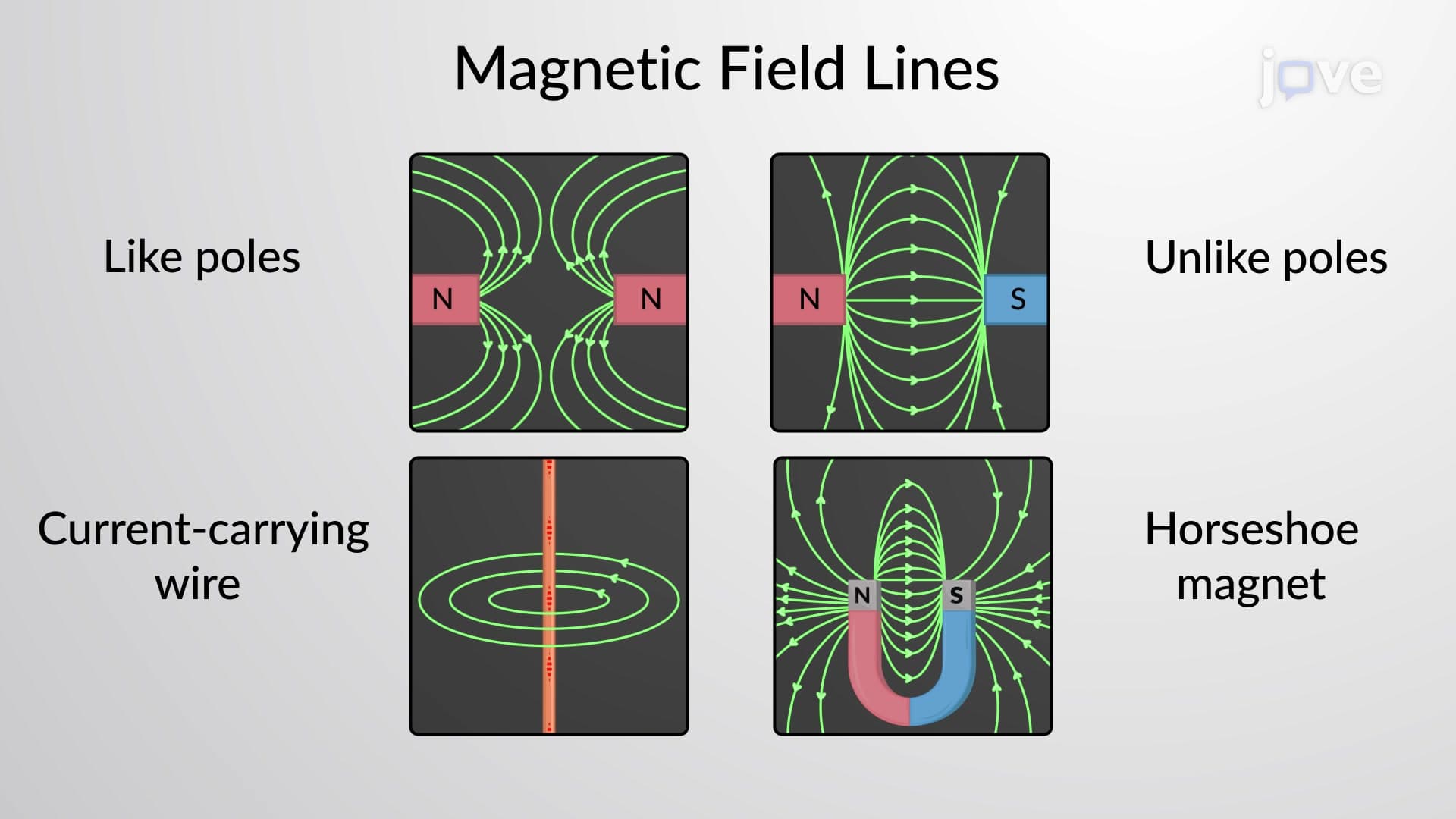
Several types of magnetic fields exist in nature and technology. Permanent magnets, like those found in loudspeakers at Bose Corporation's Massachusetts facilities, create static magnetic fields through aligned atomic magnetic moments. Current-induced fields, discovered by Hans Christian Oersted, form around any wire carrying electrical current—this principle powers the electromagnets in Tesla's electric vehicle motors. Earth's geomagnetic field, generated by molten iron circulation in the planet's core, creates a protective magnetic shield extending thousands of miles into space.
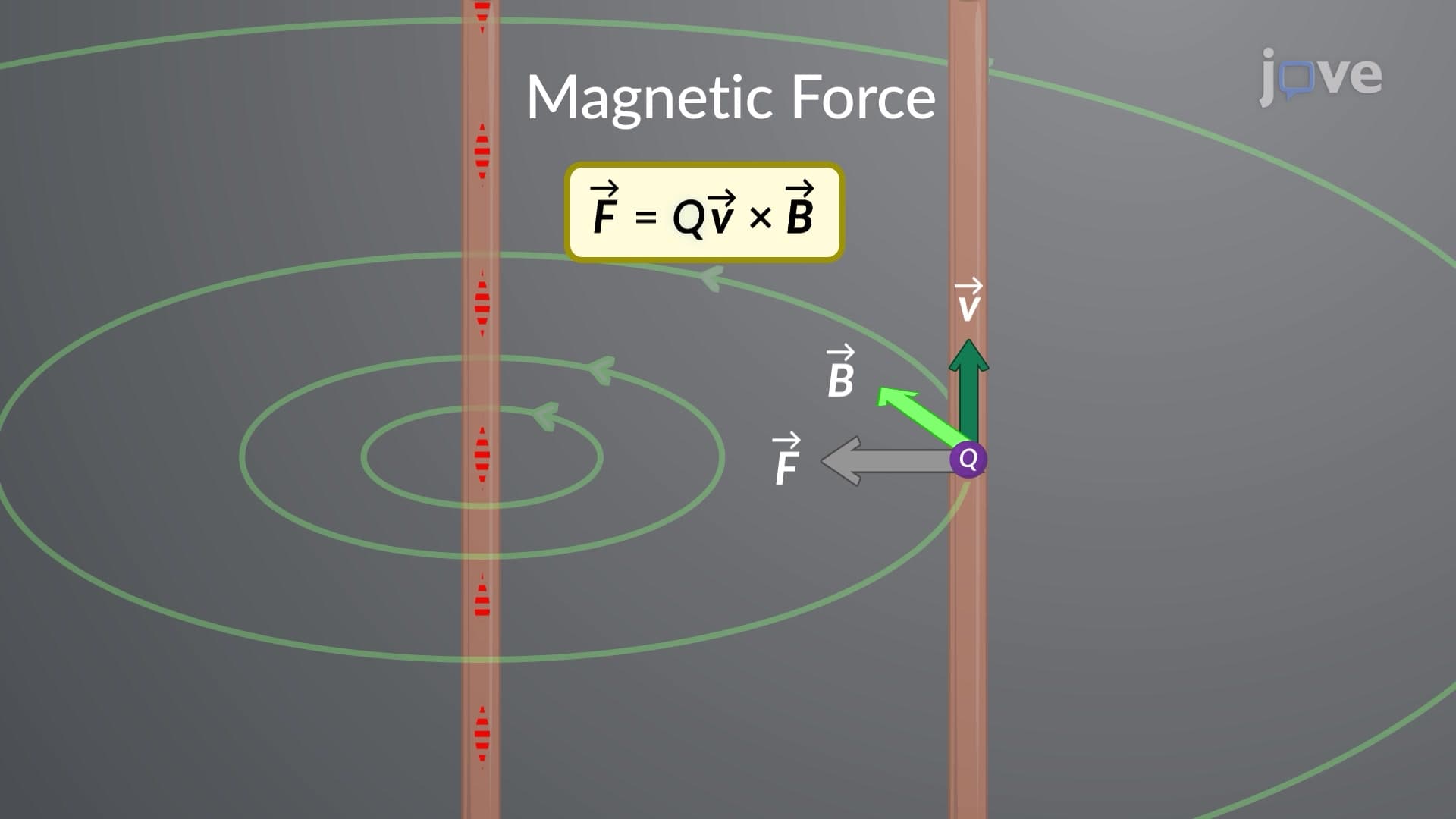
The magnetic force equation F = Q(v × B) describes how charged particles interact with magnetic fields. This cross-product relationship means the force always acts perpendicular to both the particle's velocity and the magnetic field direction. Students preparing for AP Physics C or college-level electromagnetism courses must master this three-dimensional relationship. The right-hand rule provides a practical method for determining force directions: point fingers along velocity, curl toward the magnetic field, and your thumb indicates the force direction on positive charges.
Understanding magnetic fields proves essential for numerous career paths in STEM fields. Biomedical engineers designing MRI systems at companies like GE Healthcare rely on precise magnetic field control. Electrical engineers at power companies use magnetic field principles in transformer design and power transmission systems. For students taking the MCAT, magnetic field concepts frequently appear in physics passages, particularly relating to charged particle motion in medical imaging devices. College physics courses typically dedicate 2-3 weeks to electromagnetic field theory, making this fundamental knowledge crucial for academic success.
Frequently Asked Questions
Magnetic fields are invisible regions of force that surround magnets and moving electric charges, similar to how gravity surrounds massive objects. They exert forces on other magnets and moving charged particles, creating the push-and-pull effects we observe with refrigerator magnets. These fields exist in three-dimensional space and can pass through most materials, including human tissue, which makes MRI medical imaging possible.
AP Physics C frequently tests magnetic field concepts through free-response problems involving charged particle motion, electromagnetic induction, and force calculations. Students must apply the right-hand rule, calculate cross-products, and analyze particle trajectories in uniform magnetic fields. The exam typically includes 2-3 questions worth 15-20% of the total physics score, making this topic crucial for college credit.
College electromagnetism courses cover uniform fields (constant strength and direction), radial fields around long wires, and complex field configurations in solenoids and toroids. Students learn to calculate field strength using Ampere's law and Biot-Savart law for various geometric configurations. These concepts prepare students for advanced topics in quantum mechanics and electromagnetic wave theory.
MRI machines at hospitals like Mayo Clinic use powerful magnetic fields (1.5-3.0 tesla) to align hydrogen atoms in your body, then detect their response to create detailed images. The magnetic field strength in an MRI is about 30,000 times stronger than Earth's magnetic field. This non-invasive imaging technique revolutionized medical diagnosis by providing detailed soft tissue contrast without harmful radiation.
Magnetic field concepts build naturally on electric force knowledge from earlier physics units, making them accessible to students with solid algebra and basic trigonometry skills. The main challenge involves visualizing three-dimensional force directions, which improves with practice using physical models and simulation tools. Most students master the fundamentals within 2-3 weeks of focused study.
Practice drawing magnetic field diagrams and applying the right-hand rule until it becomes automatic, then work through progressively complex problems involving multiple forces. Create flashcards for key equations and their applications, and solve past exam problems from College Board or your textbook. Focus on understanding the physical meaning behind mathematical relationships rather than memorizing formulas.
Electromagnetic induction represents the natural next step, covering how changing magnetic fields create electric currents in conductors. This leads to understanding generators, motors, and transformers that power modern technology. Advanced topics include Maxwell's equations, which unify electric and magnetic phenomena into electromagnetic wave theory, forming the foundation for wireless communication and optics.
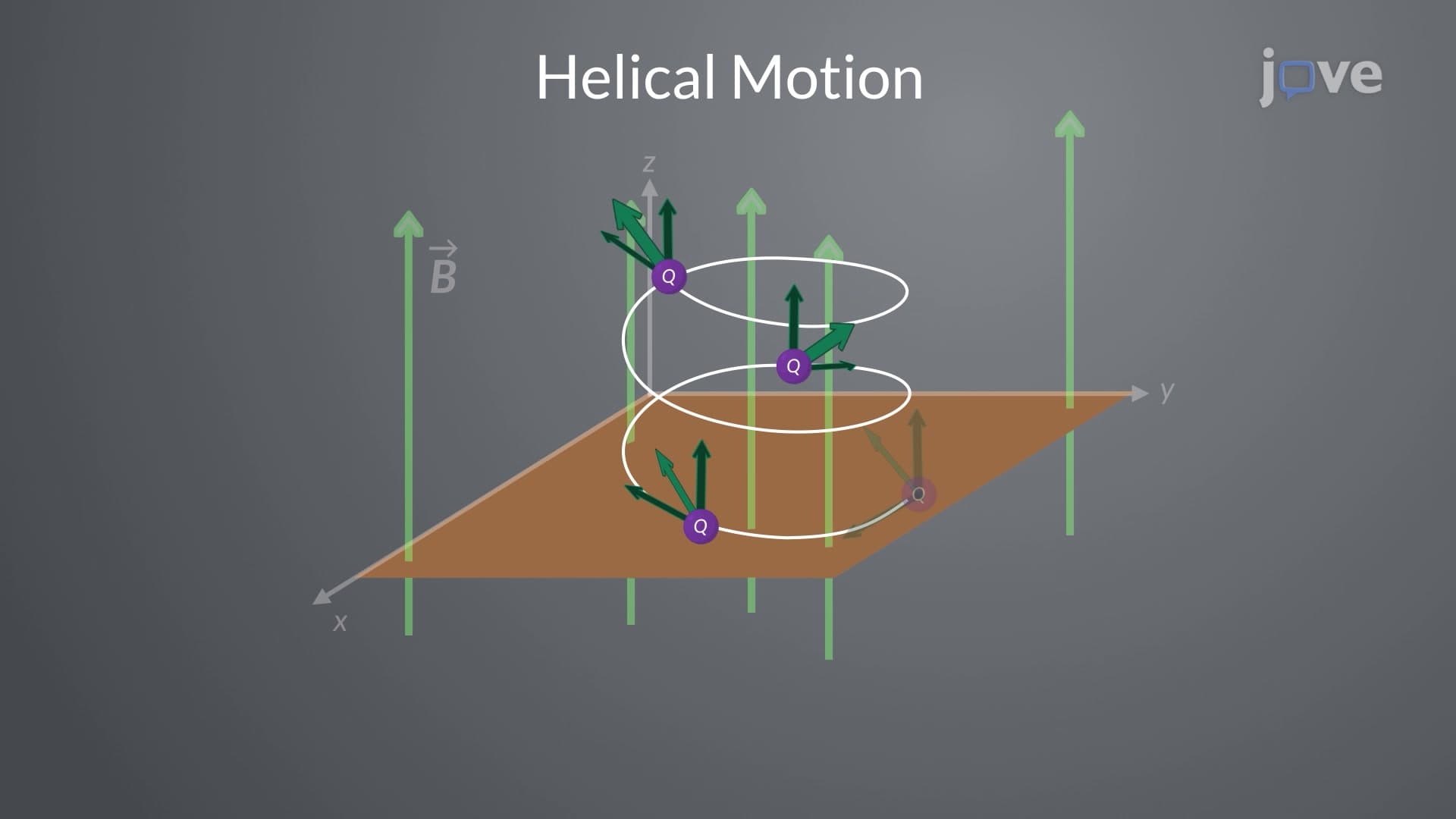
Magnetic fields connect directly to electric fields through the Lorentz force equation, demonstrating the unified nature of electromagnetic phenomena. They also relate to circular motion principles when charged particles move in uniform magnetic fields, creating helical or circular trajectories. Understanding these connections helps students see physics as an integrated system rather than isolated topics.
Related Micro-courses
Related Subjects
 Math Fundamentals 11 micro-courses›
 Statistics 17 micro-courses›