Loading…
Loading video…

53,700 views
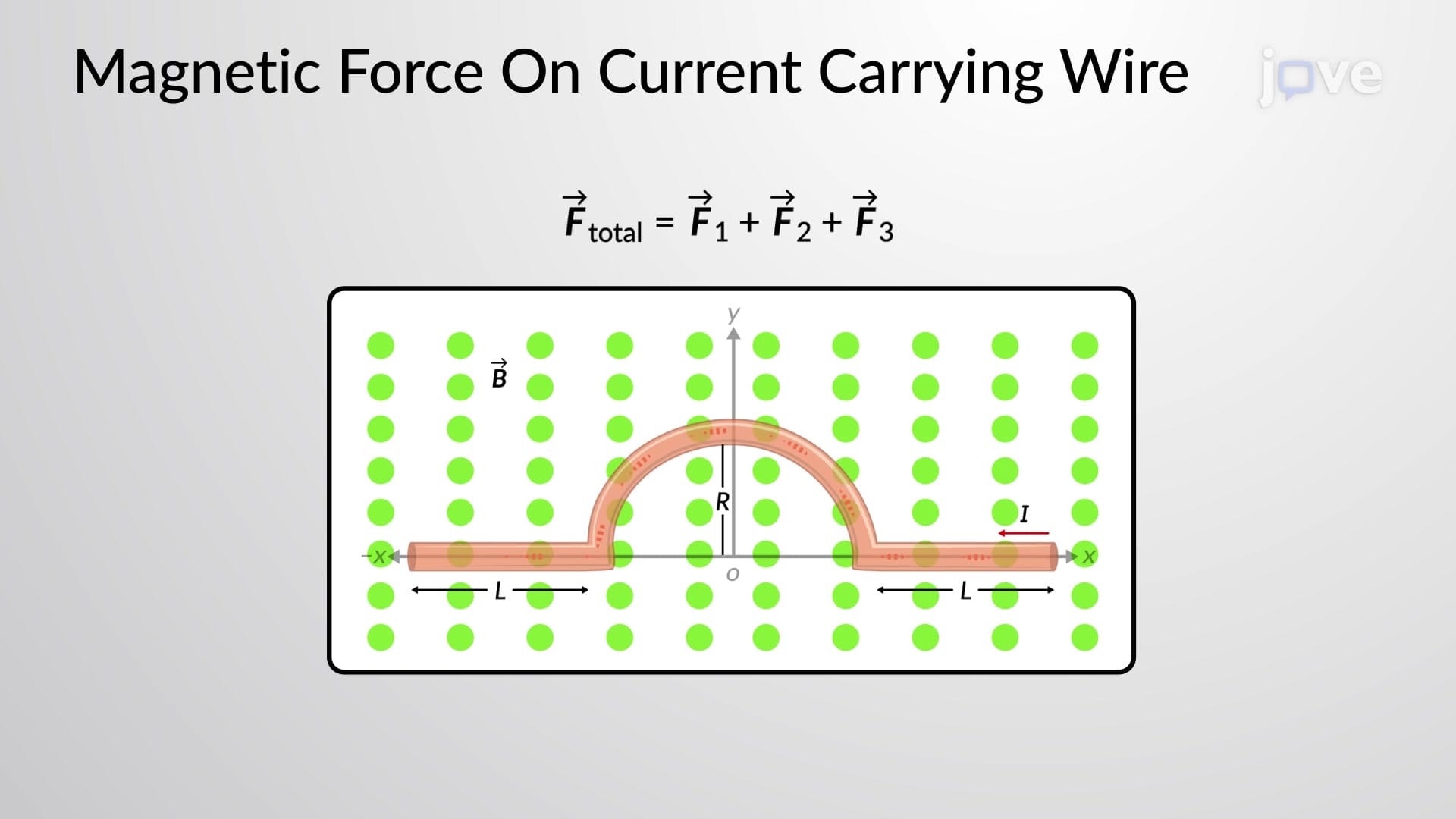
When electric current flows through the copper wiring in an MRI machine, it experiences powerful magnetic forces that help generate the precise imaging fields used in US hospitals. Magnetic force on current carrying conductors creates measurable effects that can be calculated using vector analysis and integration techniques. This problem examines a complex conductor shape—combining straight segments and a curved semicircle—placed in a uniform magnetic field to determine the total force magnitude and direction. Watch the full video on JoVE Coach to master this concept with expert-led visuals and step-by-step explanations.
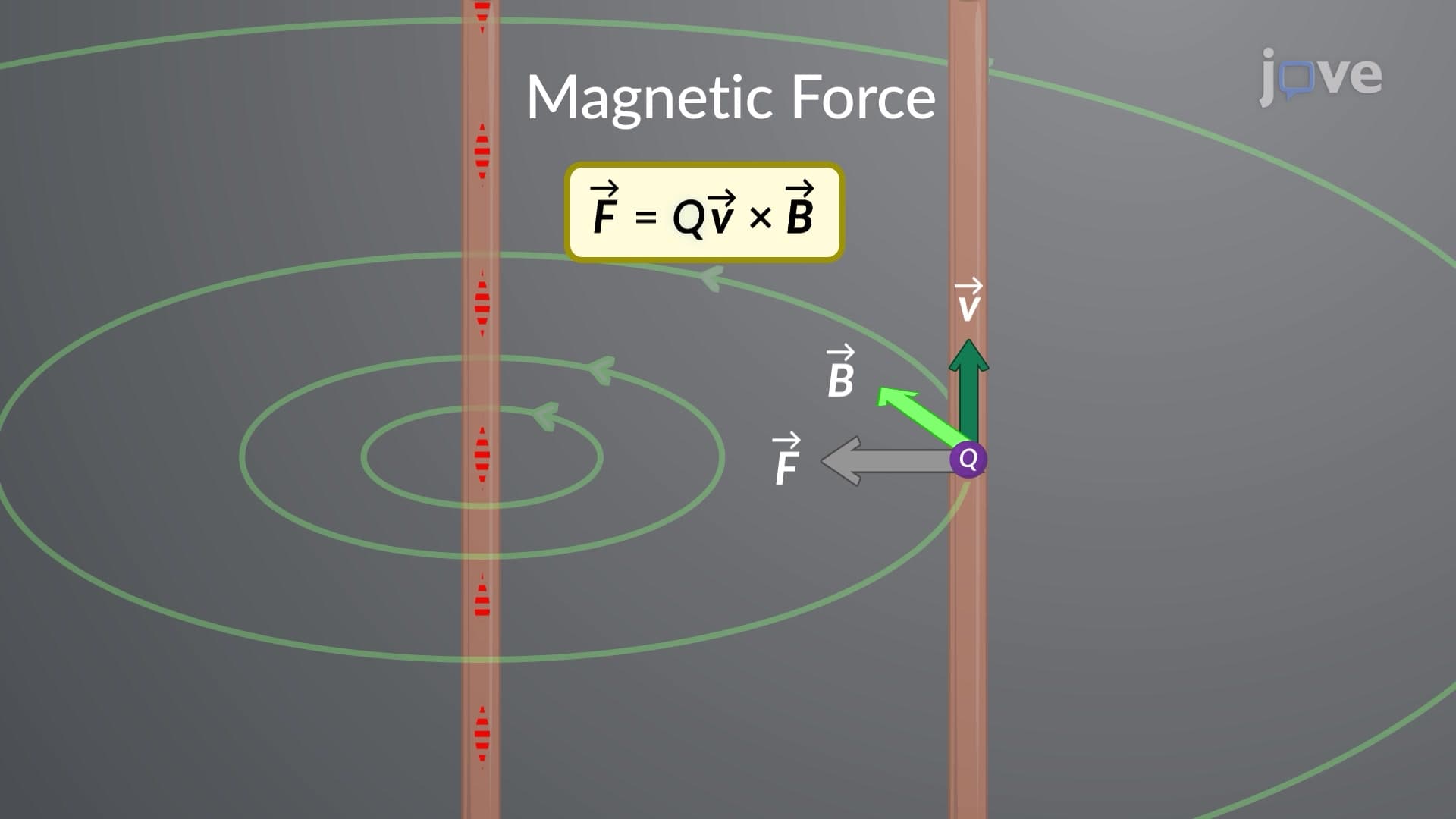
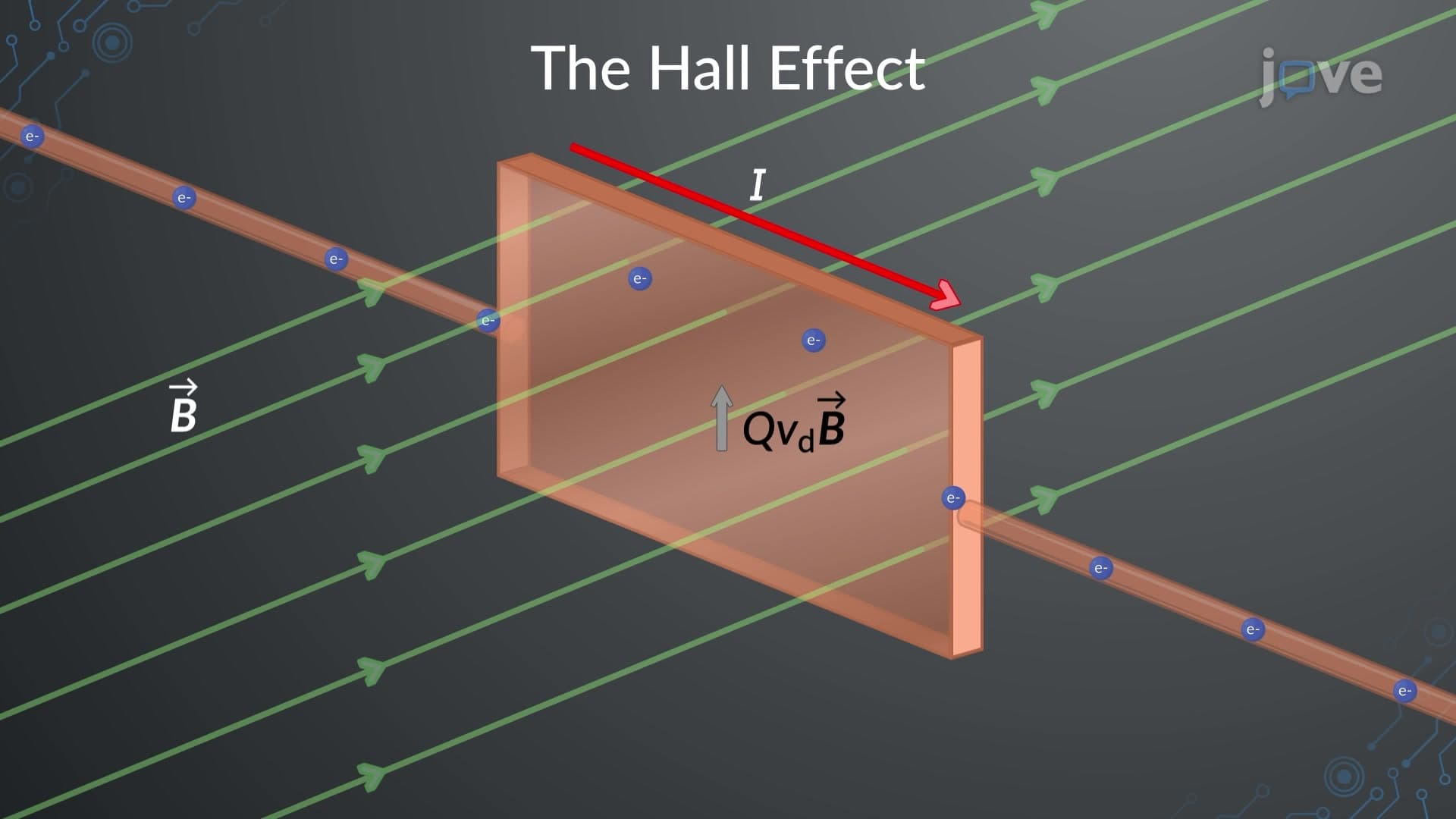
The fundamental principle governing magnetic force on current carrying wires stems from the interaction between moving charges and magnetic fields. When current flows through a conductor, it consists of moving electrons that experience forces in external magnetic fields. This force follows the relationship F = I × L × B × sin(θ), where I represents current magnitude, L is the conductor length, B is magnetic field strength, and θ is the angle between current direction and magnetic field.
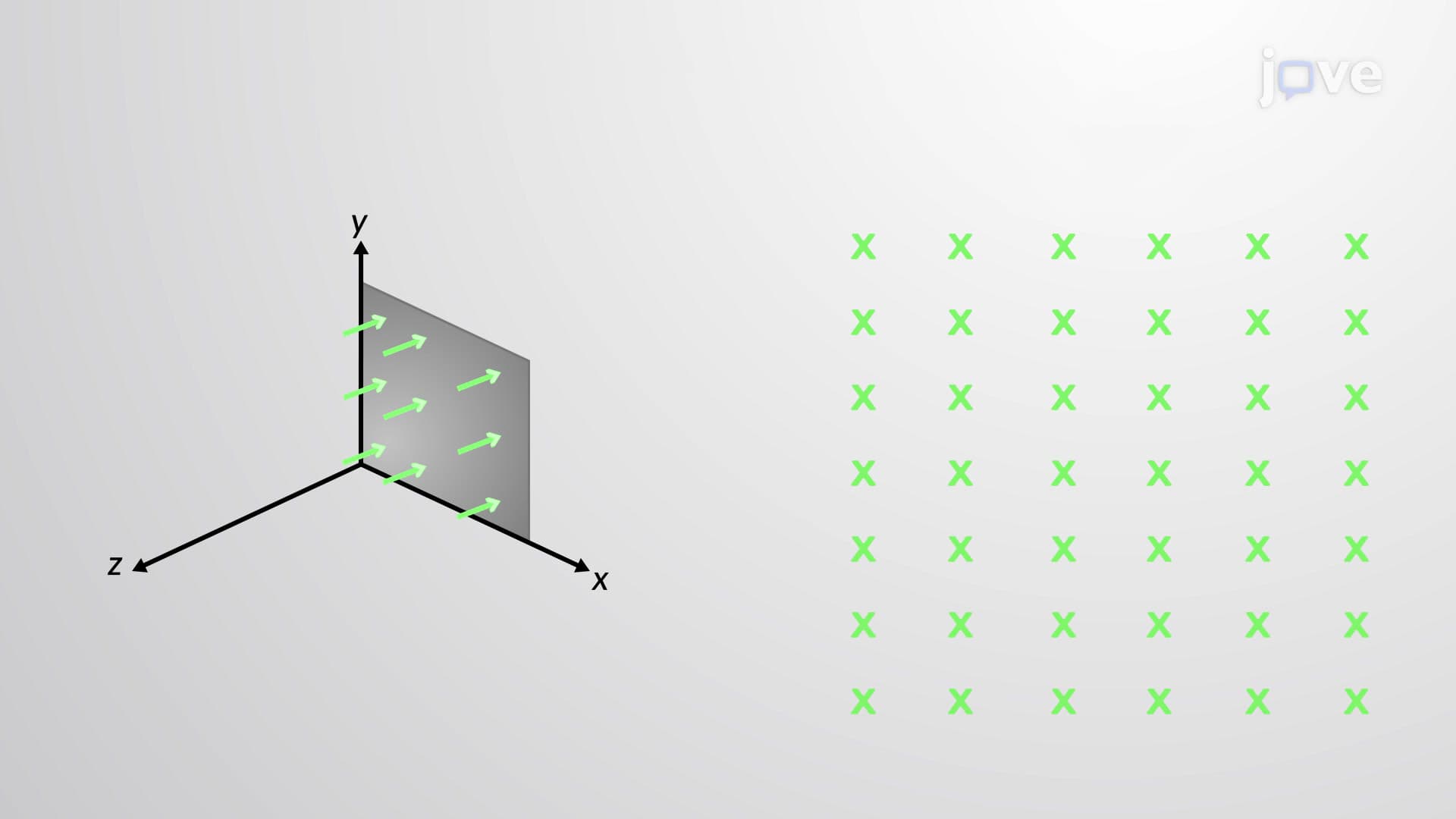
For the straight segments parallel to the x-axis in this problem, the current flows horizontally while the magnetic field points outward from the plane. Using the right-hand rule, point your fingers in the current direction, curl them toward the magnetic field direction, and your thumb indicates the force direction. Since the current and magnetic field are perpendicular (θ = 90°), sin(θ) = 1, maximizing the force magnitude. Each straight segment of length L experiences force F = ILB in the positive y-direction.
The semicircular portion requires calculus-based analysis because the current direction continuously changes along the curve. By dividing the semicircle into infinitesimal elements dl, each element can be treated as a straight segment. At any point, the element makes angle θ with the reference direction, creating force components that vary with position. The infinitesimal force dF = I × dl × B acts radially outward from the semicircle's center. Integration over the entire semicircle from θ = 0 to θ = π yields the total force contribution from the curved section.
This type of problem frequently appears on AP Physics C exams and college-level electromagnetism courses. In practical applications, magnetic forces on current-carrying conductors operate in electric motors (found in Tesla vehicles manufactured in US facilities), MRI machines in American hospitals, and particle accelerators like Fermilab in Illinois. The force calculations help engineers design electromagnetic systems and predict mechanical stresses on conductors. Students preparing for the MCAT physics section should master these vector analysis and integration techniques, as they form the foundation for understanding more complex electromagnetic phenomena in medical imaging technologies.
Frequently Asked Questions
Magnetic force on current carrying conductors results from the interaction between electric current and external magnetic fields, creating mechanical forces perpendicular to both current direction and magnetic field lines. Unlike electrostatic forces that act on stationary charges, magnetic forces only affect moving charges or current-carrying wires. This force is always perpendicular to the current direction, meaning it can change motion direction but never speeds up or slows down the charges themselves.
AP Physics C frequently tests magnetic force calculations using both straight and curved conductors, often requiring integration for complex geometries. Exam problems typically provide conductor shapes, current values, and magnetic field strengths, asking students to determine force magnitude and direction. College physics courses expand these concepts to include torque calculations on current loops and applications in motor design, making this foundational knowledge essential for advanced electromagnetism topics.
The MCAT emphasizes magnetic force concepts because they're fundamental to medical imaging technologies like MRI and CT scanners used throughout US healthcare systems. Pre-med students must understand how electric currents in magnetic fields generate the precise forces needed for medical device operation. These physics principles also appear in cardiac pacemaker function and electromagnetic therapy devices, making them relevant to future medical practice.
Electric motors in Tesla vehicles, subway systems in cities like New York and San Francisco, and industrial equipment across US manufacturing facilities all rely on magnetic forces on current-carrying conductors. MRI machines in American hospitals use precisely controlled magnetic forces to generate detailed body images, while particle accelerators at national laboratories like Brookhaven and Fermilab use these forces to guide charged particle beams for research purposes.
Basic integration skills from AP Calculus or college Calculus I are sufficient for most magnetic force problems involving curved conductors. The key concepts involve setting up integrals for infinitesimal elements and applying trigonometric relationships to find force components. Students comfortable with basic derivatives and integrals can successfully tackle these problems, as the physics principles are more important than complex mathematical manipulations.
Practice applying the right-hand rule consistently to determine force directions, then focus on setting up coordinate systems for complex geometries. Work through problems systematically by identifying straight versus curved segments, calculating forces separately, then combining results vectorially. Create summary sheets with common geometric configurations and their force equations, and practice integration techniques with parametric equations for curved conductors.
Start by parameterizing the curve using angle θ or arc length s, then express the infinitesimal current element dl in terms of your parameter. Identify force direction using the right-hand rule for each infinitesimal element, set up component equations for x and y directions, and integrate over the appropriate limits. Remember that magnetic forces are always perpendicular to current direction, simplifying the geometric relationships in most standard problems.
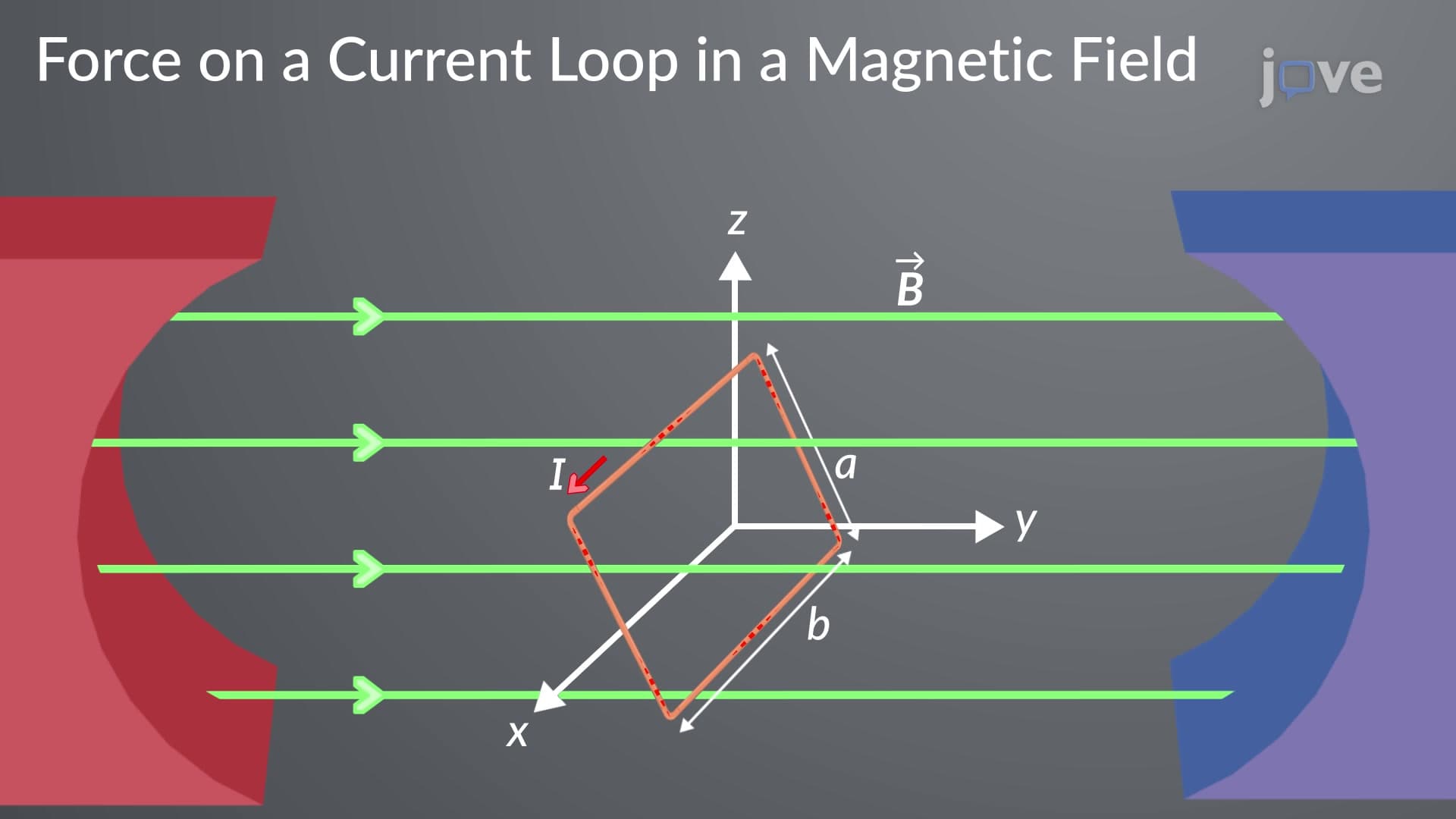
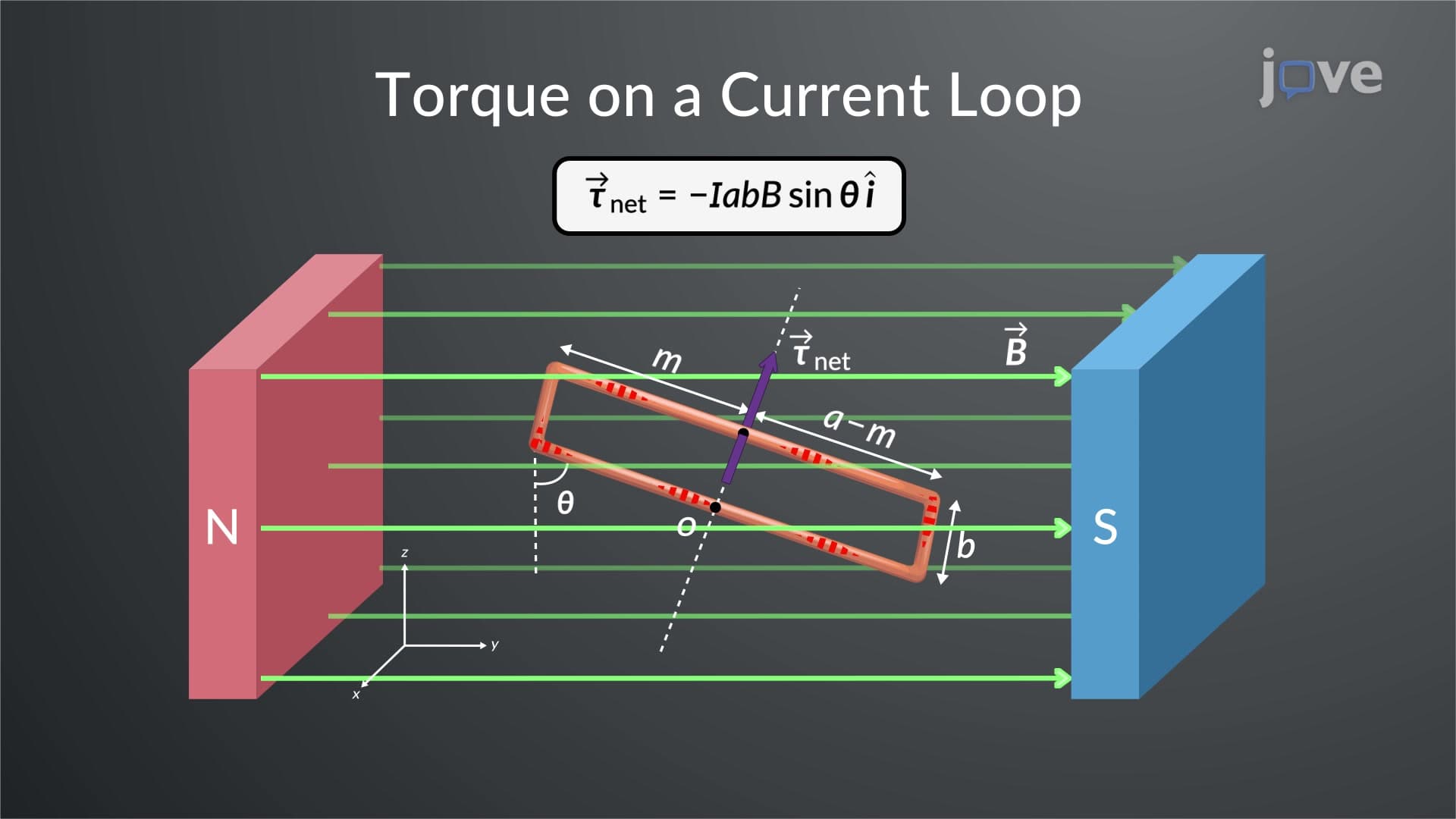
Advanced electromagnetic courses cover magnetic torque on current loops, electromagnetic induction in moving conductors, and motor design principles. Graduate-level physics explores magnetic forces in plasma physics, particle accelerator design, and superconducting magnet systems. These concepts also lead to electromagnetic field theory, Maxwell's equations, and applications in electrical engineering, making this foundational knowledge essential for STEM career paths.
Related Micro-courses
Related Subjects
 Math Fundamentals 11 micro-courses›
 Statistics 17 micro-courses›