Loading…
Loading video…

56,314 views
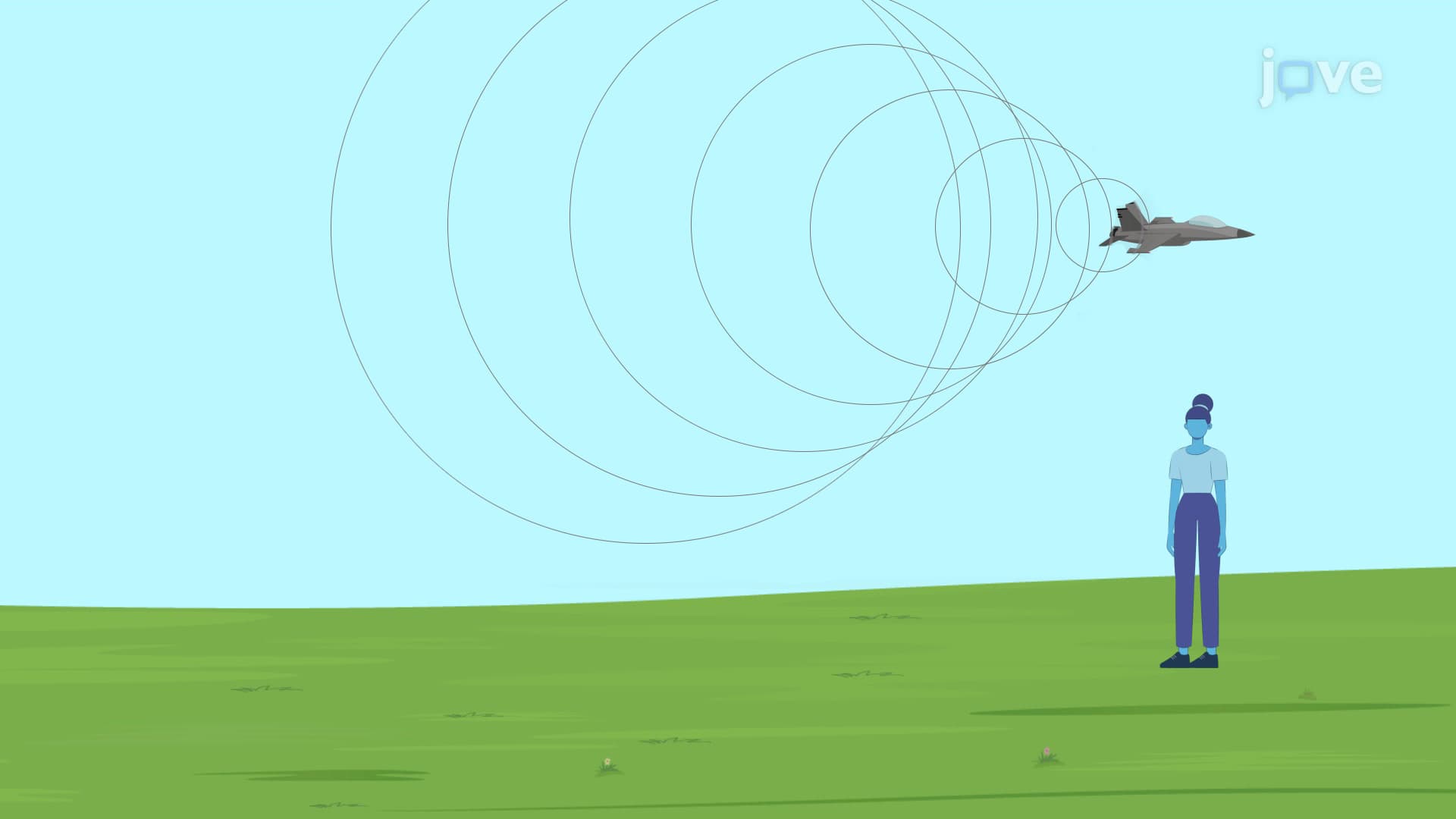
Ever wondered why military jets flying overhead create that thunderous crack that can rattle windows? Shock waves form when aircraft exceed the speed of sound, creating a phenomenon that affects everything from NASA space shuttle launches to supersonic fighter jets over US airfields. Understanding what shock waves are reveals the fascinating physics behind these powerful acoustic events that occur when objects break the sound barrier. Watch the full video on JoVE Coach to master this concept with expert-led visuals and step-by-step explanations.
Shock waves represent one of the most dramatic phenomena in physics, occurring when an object moves through a medium faster than the speed at which disturbances can propagate through that medium. In atmospheric conditions, this means exceeding the speed of sound—approximately 343 meters per second or 767 mph at sea level. When military aircraft like the F-22 Raptor or commercial supersonic jets break this barrier, they create these powerful acoustic phenomena that have fascinated scientists and engineers for decades.
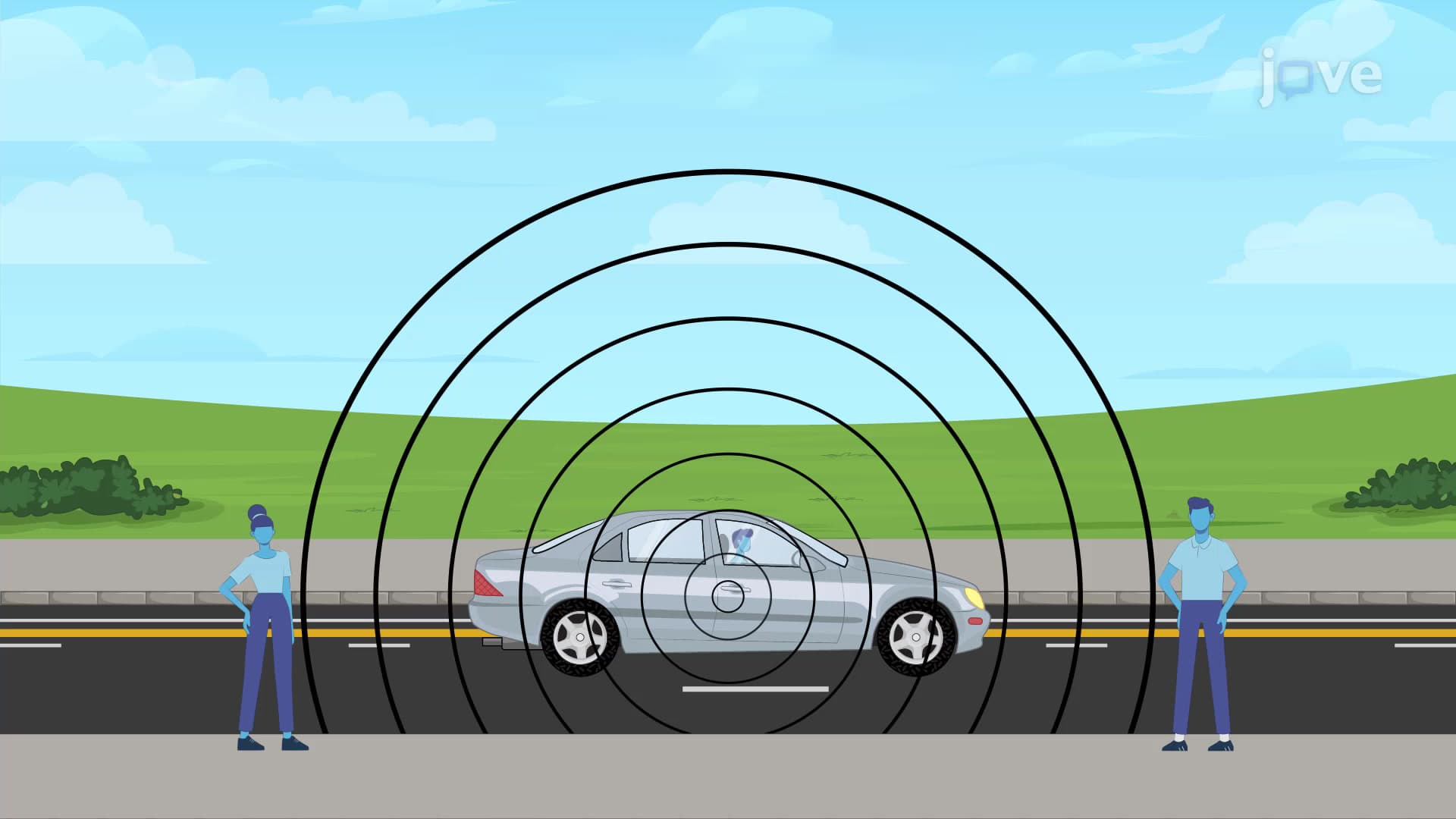
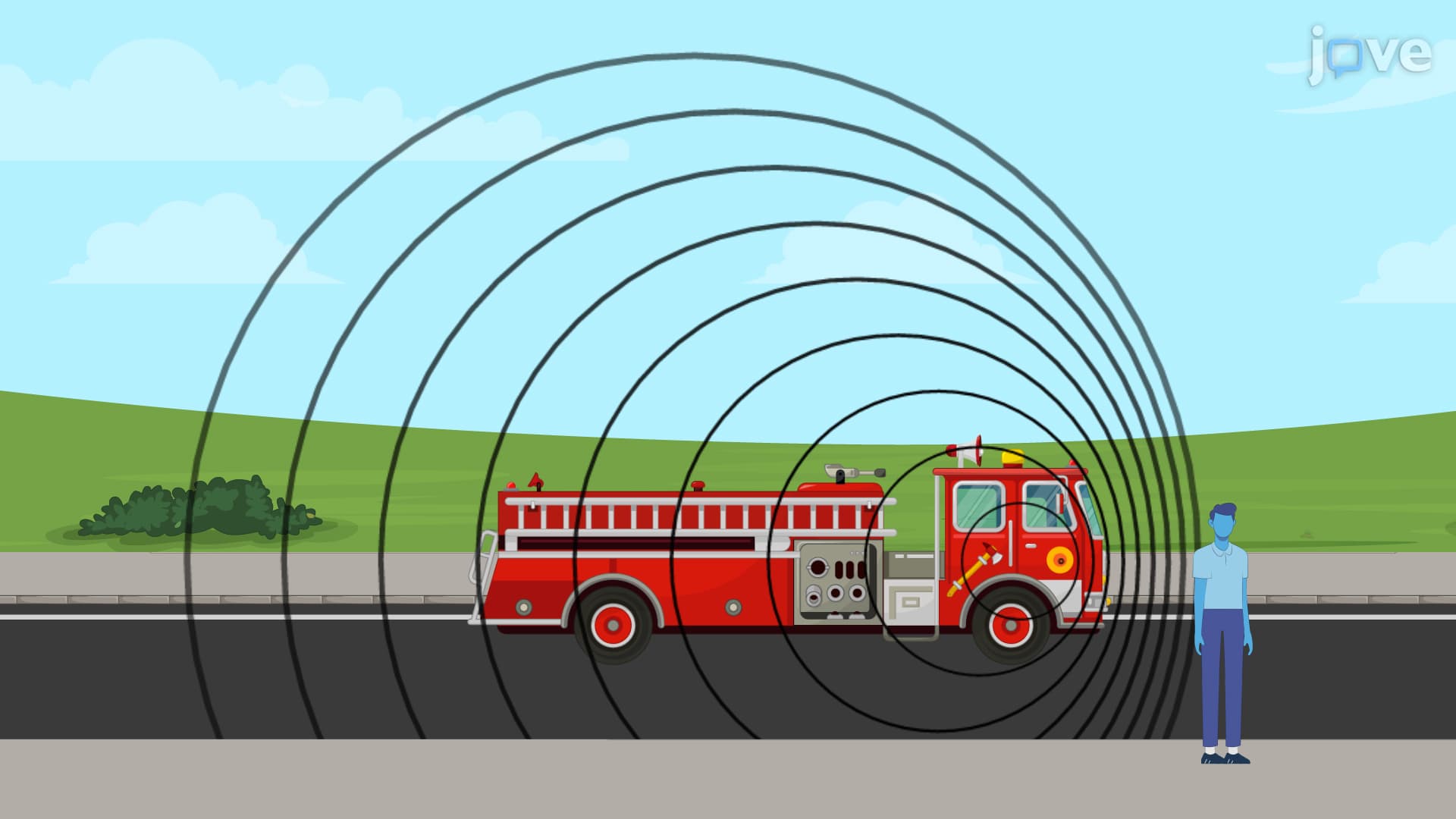
The formation of shock waves directly relates to the concept of Mach number, named after Austrian physicist Ernst Mach. When an aircraft's velocity (vs) exceeds the speed of sound (v), the Mach number (vs/v) becomes greater than 1, indicating supersonic flight. At this point, traditional Doppler effect calculations break down because the source moves faster than the sound waves it produces can propagate ahead of it.
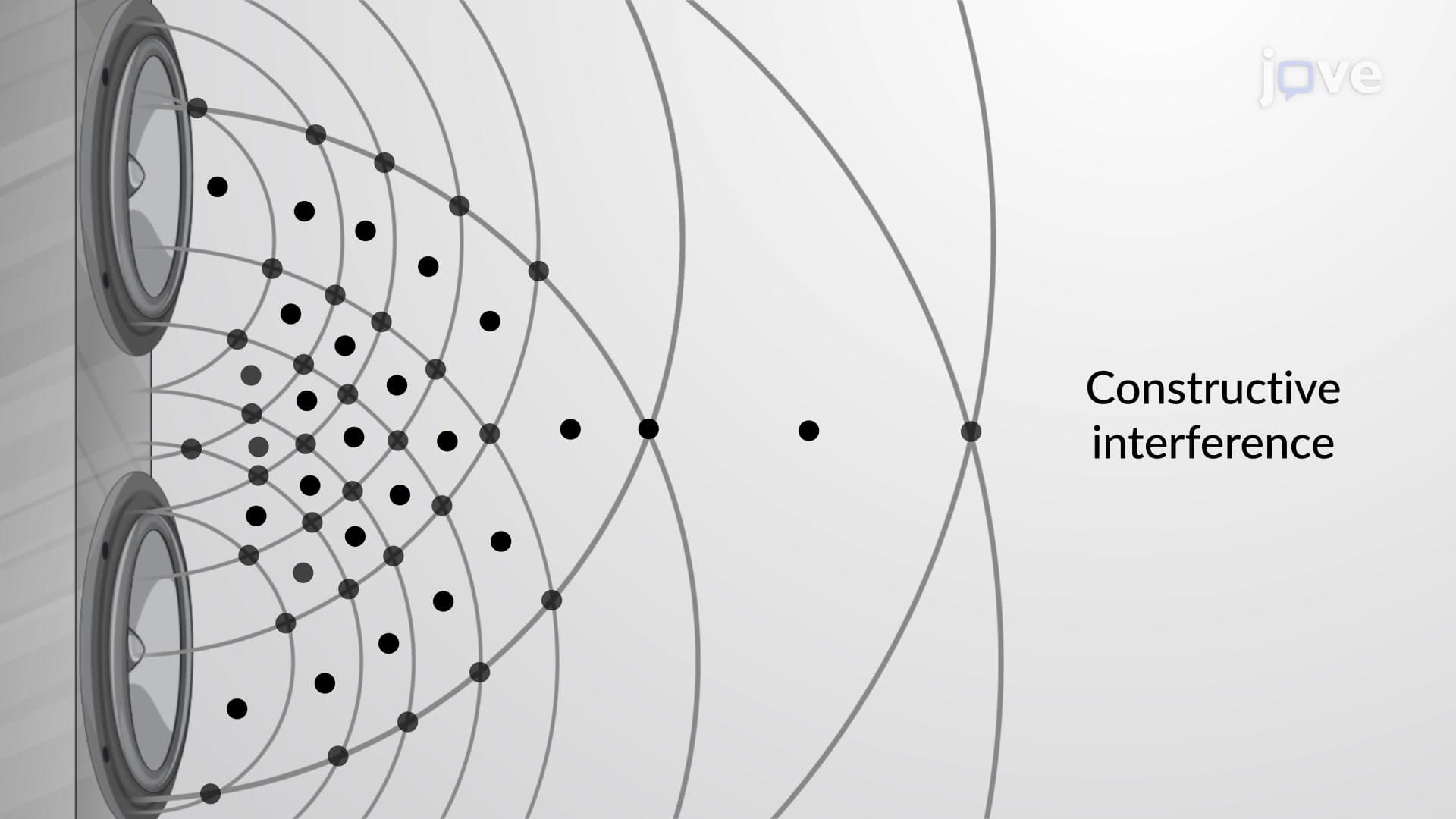
This creates a unique situation where sound waves cannot "get out of the way" of the approaching object. Instead, these compressed waves pile up and interfere constructively along the surface of a three-dimensional cone trailing behind the aircraft. The mathematical relationship governing this cone is elegantly simple: the sine of the cone's half-angle equals the reciprocal of the Mach number (sin θ = 1/M).
Different types of shock waves exist depending on the conditions and objects involved. Normal shock waves occur perpendicular to the flow direction, while oblique shock waves form at angles. In atmospheric flight, the most common type creates the characteristic cone shape visible in vapor cone photographs of supersonic aircraft.
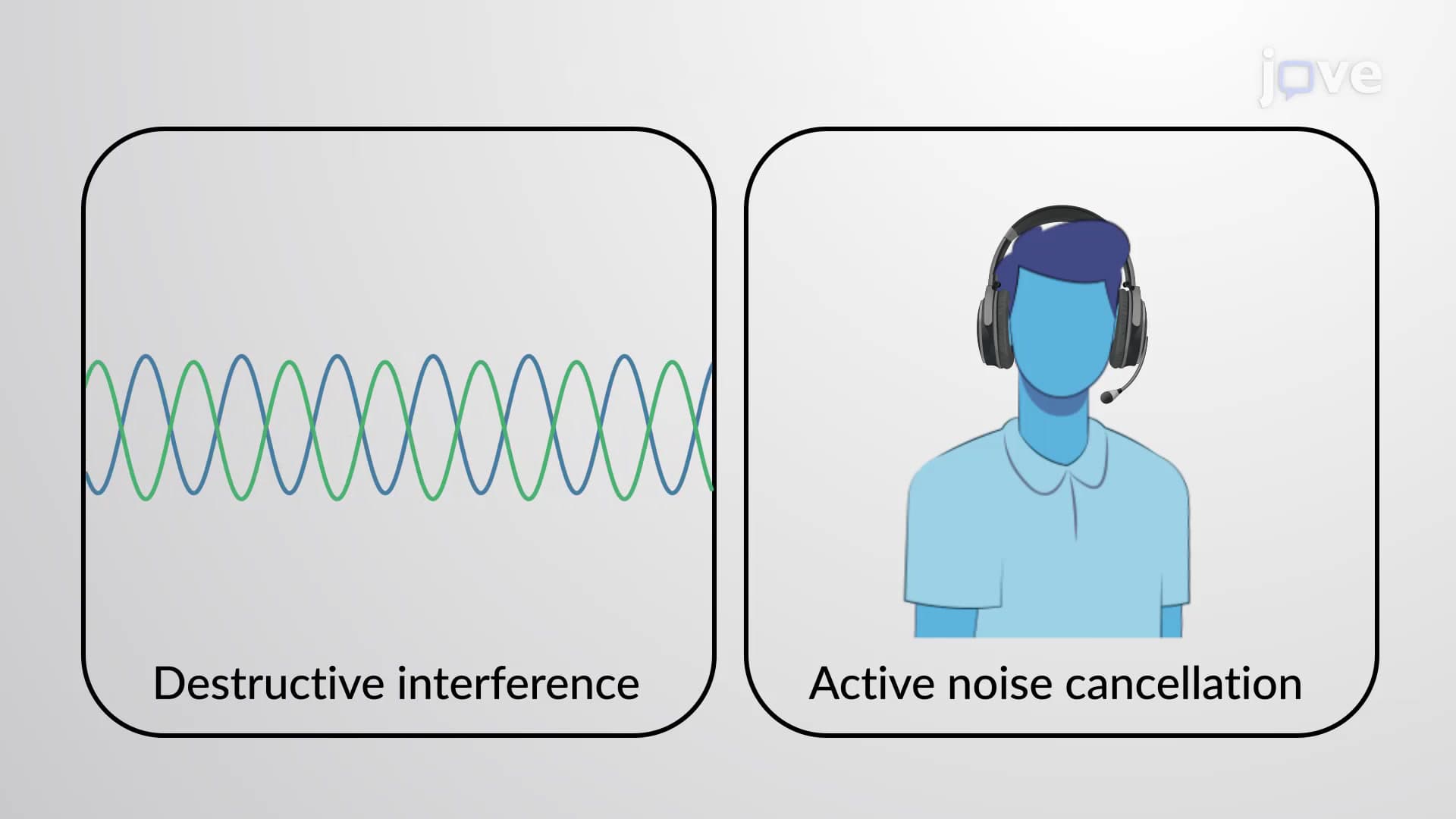
The region inside the shock wave cone experiences destructive interference, creating relative quiet, while the cone's boundary represents a sharp transition zone where compressed air creates the intense pressure wave we perceive as a sonic boom.
Understanding shock waves proves essential for students preparing for AP Physics exams, college-level mechanics courses, and aerospace engineering programs. The concept frequently appears in SAT Subject Test questions involving wave mechanics and Doppler effects. NASA engineers must consider shock wave physics when designing spacecraft reentry vehicles, while military aircraft designers use these principles to minimize sonic boom impact over populated areas.
The Space Shuttle program provided numerous examples of controlled shock wave management, with reentry creating multiple shock waves as the vehicle decelerated through various atmospheric layers. Modern supersonic transport research, including efforts to develop quieter supersonic passenger aircraft, relies heavily on advanced shock wave understanding and mitigation techniques.
Frequently Asked Questions
Shock waves are powerful pressure waves that form when objects move faster than the speed of sound through a medium like air. They create the characteristic "sonic boom" sound when military jets or spacecraft break the sound barrier. The waves compress air molecules into a cone-shaped pattern trailing behind the supersonic object.
AP Physics C exams frequently test shock wave concepts through Mach number calculations, cone angle problems, and wave interference scenarios. Students typically encounter questions asking them to calculate cone angles from given Mach numbers or determine whether sonic booms will occur based on aircraft speeds. The mathematical relationship sin θ = 1/M is a common formula to memorize.
College students explore normal shock waves (perpendicular to flow), oblique shock waves (angled), and bow shock waves (curved formations around blunt objects). Advanced courses cover shock wave interactions, reflection patterns, and applications in hypersonic flight. Engineering students also study shock tubes and explosive shock wave propagation.
Military training flights create sonic booms over bases like Edwards Air Force Base in California, while NASA rocket launches generate powerful shock waves felt miles away. Thunderstorms produce weak shock waves through lightning, and even whip cracks create miniature shock waves. High-speed trains and race cars can approach shock wave conditions under specific circumstances.
Basic shock wave understanding requires only algebra and trigonometry skills typically learned in high school. The primary relationship (sin θ = 1/M) uses simple division and inverse sine functions. More advanced applications involve calculus, but introductory concepts remain accessible to students with solid geometry and basic physics knowledge.
Practice calculating Mach numbers from given speeds, determining cone angles, and identifying supersonic versus subsonic conditions. Create a formula sheet including the speed of sound (343 m/s), practice unit conversions between mph and m/s, and work through sample problems involving aircraft at various speeds. Focus on conceptual understanding alongside mathematical problem-solving.
Explore compressible fluid dynamics, gas dynamics, and hypersonic aerodynamics in advanced physics or engineering courses. Investigate shock wave applications in medical treatments (lithotripsy), industrial processes, and astrophysics phenomena. Consider studying computational fluid dynamics (CFD) to model complex shock wave interactions in professional aerospace applications.
Related Micro-courses


Related Subjects
 Math Fundamentals 11 micro-courses›
 Statistics 17 micro-courses›