Loading video…


 17 Concepts
 56.3K views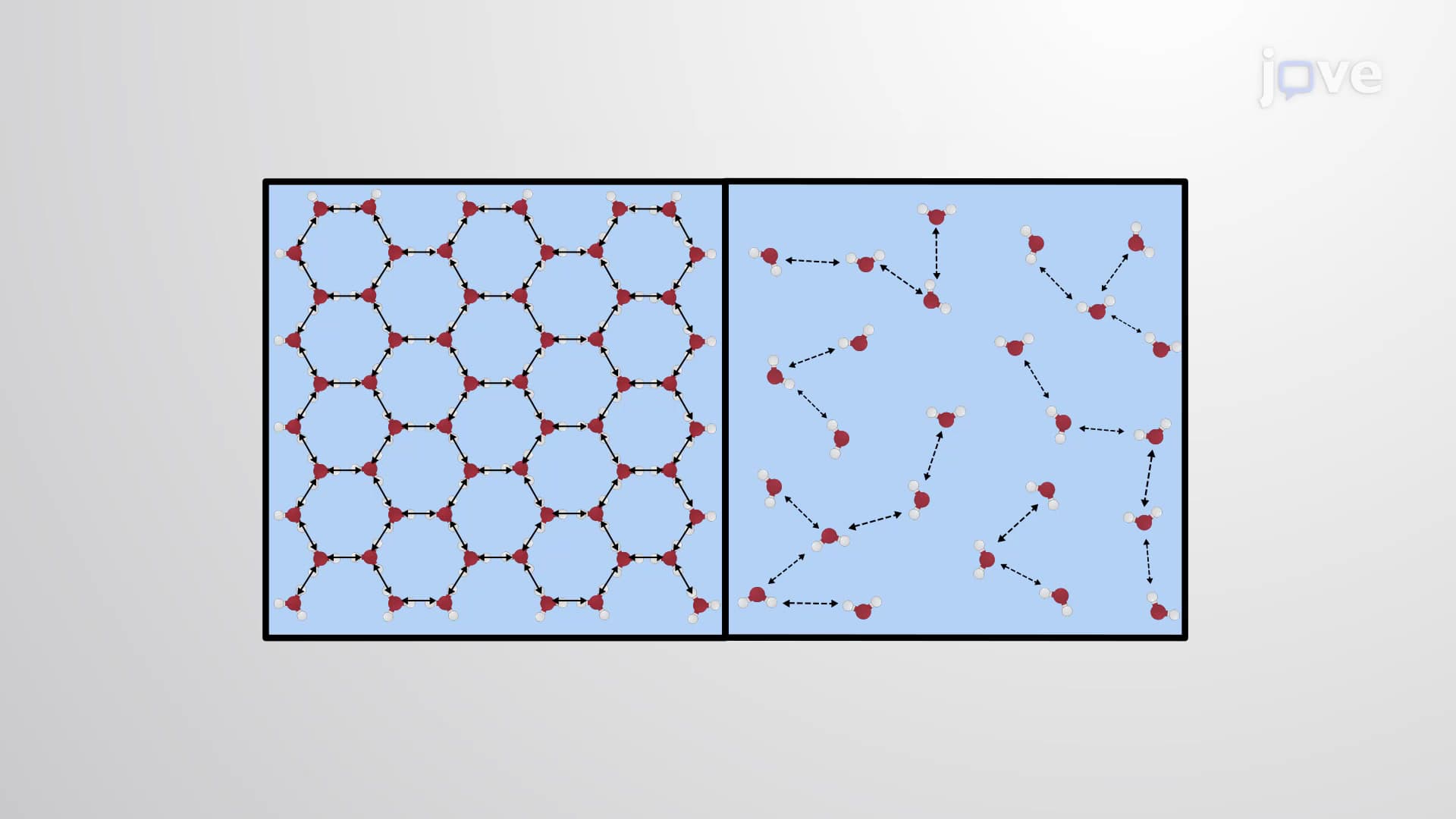

Video Summary: Speed of Sound in Solids and Liquids Principles and Factors
Why does sound travel faster through a steel railroad track than through the air around it? The speed of sound in solids and liquids: principles and factors reveals fascinating physics at work in everyday materials. Unlike gases, solids and liquids resist compression, allowing sound waves to propagate more efficiently through their tightly bound particles. Consider how emergency responders use seismic equipment to detect sounds through concrete during building collapses, this life-saving technology relies on understanding how elastic modulus and density control sound transmission. Watch the full video on JoVE Coach to master this concept with expert-led visuals and step-by-step explanations.
The transmission of sound through solids and liquids follows fundamentally different principles than gas propagation. While gases are highly compressible, solids and liquids resist compression, creating more efficient pathways for acoustic energy transfer. This resistance stems from strong interparticle forces that maintain structural integrity and enable rapid energy transmission between adjacent molecules.
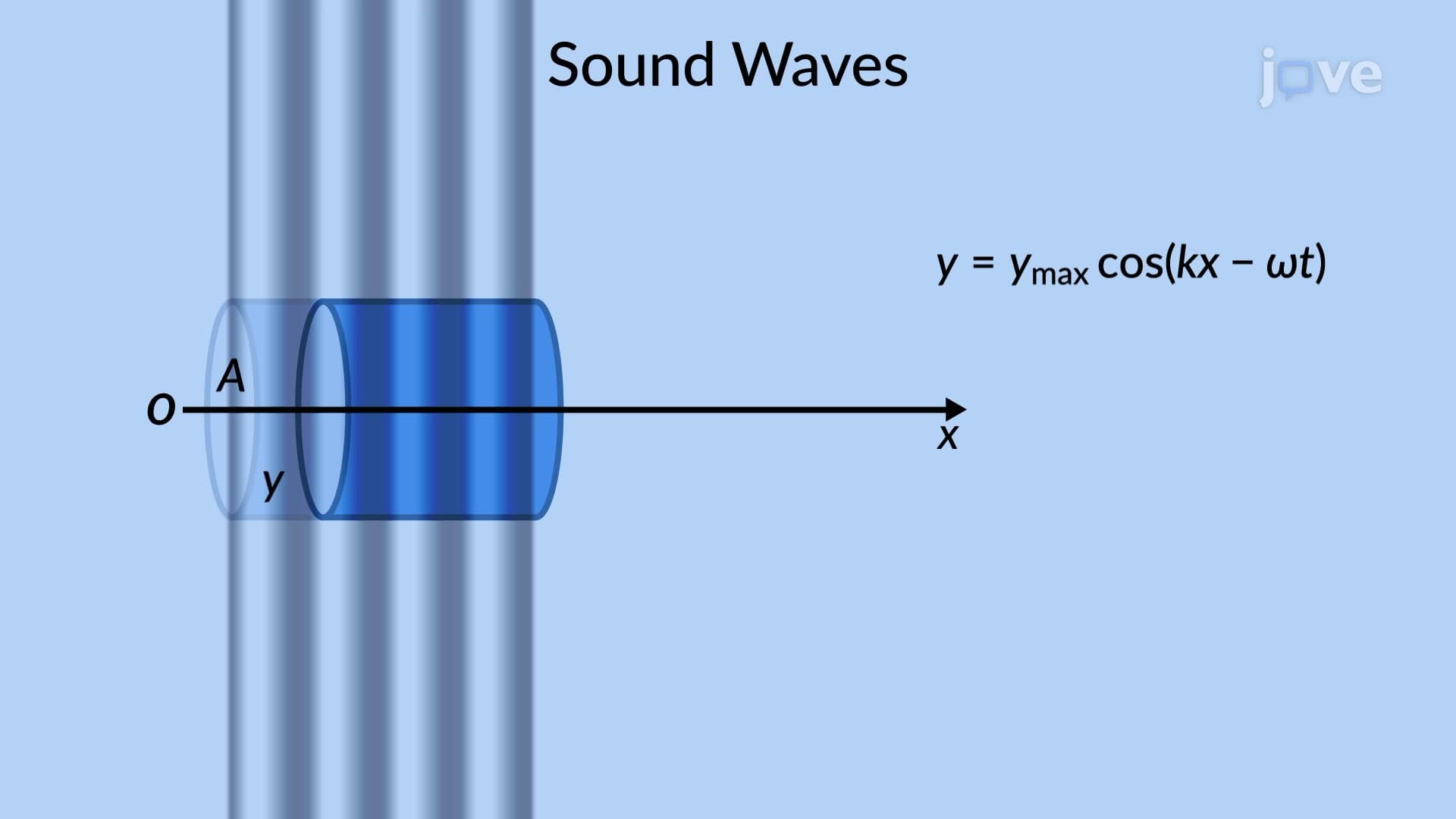
Sound waves function as pressure disturbances that displace particles from equilibrium positions. In solids and liquids, these displaced particles experience strong restoring forces due to electromagnetic interactions between atoms and molecules. The efficiency of this restoration process directly impacts sound velocity. When particles possess greater mass, more energy is required to accelerate them back to equilibrium, resulting in slower sound transmission.
This principle explains why sound travels at approximately 1,500 m/s through water but reaches 5,000+ m/s through steel. The crystalline structure of metals provides exceptionally strong interparticle bonds, while water molecules, though closely packed, experience weaker intermolecular forces.
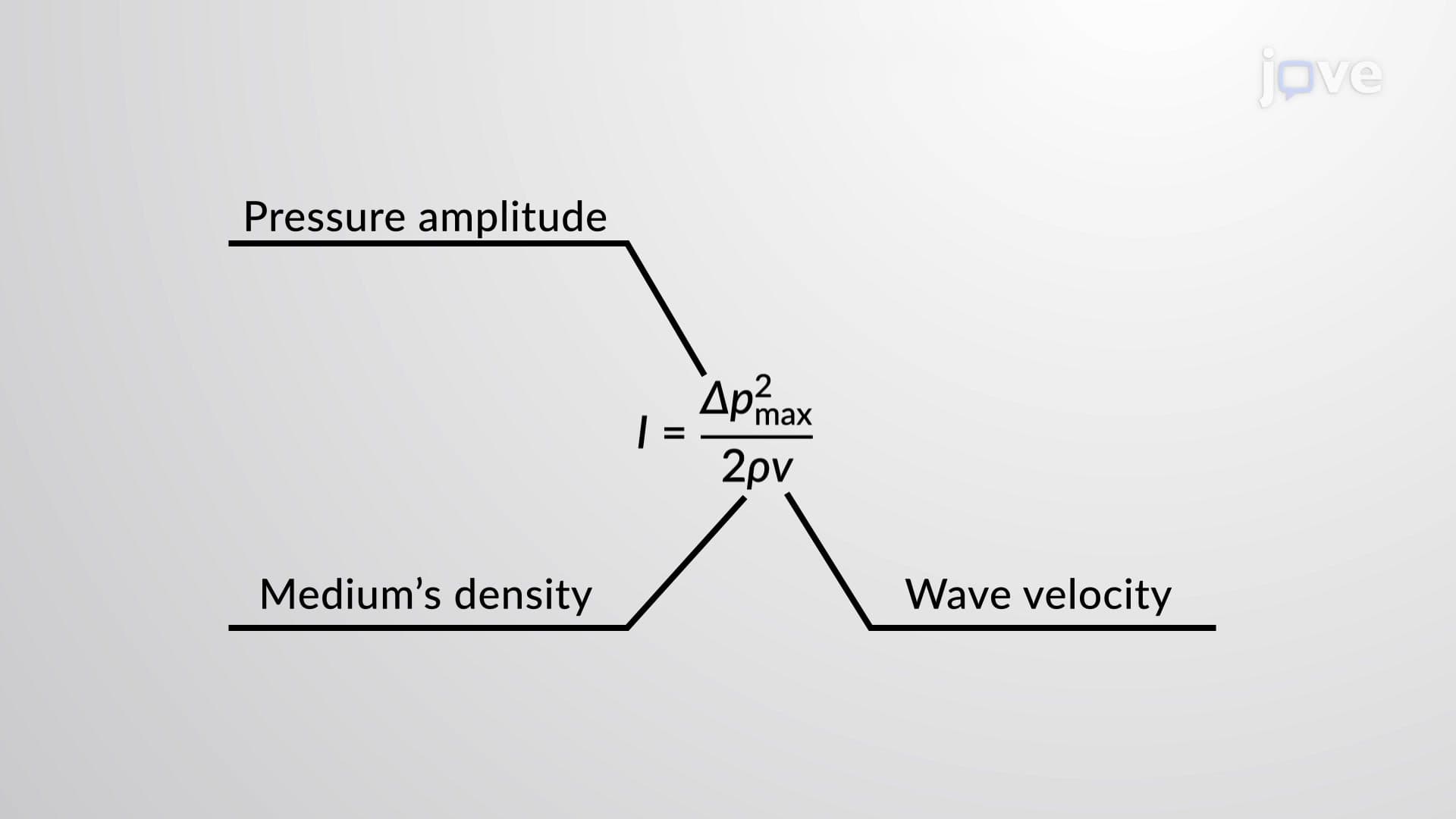
The fundamental equation governing sound speed in condensed matter is:
v = √(E/ρ)
Where v represents sound velocity, E denotes elastic modulus, and ρ indicates material density. This relationship appears frequently on AP Physics exams and college acoustics courses, requiring students to understand both mathematical application and physical interpretation.
Elastic modulus quantifies a material's resistance to deformation under stress. Higher values indicate stronger interparticle forces and faster sound transmission. Density represents mass per unit volume, greater particle mass reduces acceleration rates and decreases sound speed.
Understanding these principles enables breakthrough applications across multiple fields. Ultrasonic medical imaging relies on controlled sound transmission through body tissues, with different organs exhibiting characteristic acoustic properties. The FDA approves ultrasound systems based on precise sound speed calculations through various biological materials.
Seismic engineering utilizes these concepts for earthquake detection and building safety assessment. The US Geological Survey employs seismometers that detect sound waves traveling through Earth's crust, providing early warning systems that save countless lives during natural disasters.
Non-destructive testing in aerospace and automotive industries depends on sound speed variations to identify material flaws. Companies like Boeing use ultrasonic inspection techniques to ensure aircraft structural integrity without damaging components.
Related Micro-courses