Loading video…


 17 Concepts
 56.3K views

Video Summary: What are Sound Waves
Did you know that the thunder you hear after lightning travels at roughly 343 meters per second through air? Sound waves are mechanical vibrations that require a medium to travel, making them fundamentally different from light waves. From the roar of a jet engine at Los Angeles International Airport to the whisper in a library, what are sound waves becomes clear when we understand they're longitudinal pressure waves creating compressions and rarefactions in matter. Watch the full video on JoVE Coach to master this concept with expert-led visuals and step-by-step explanations.
Sound waves represent one of nature's most fascinating examples of energy transmission without matter transport. Unlike electromagnetic waves such as light, sound waves are mechanical disturbances that absolutely require a medium-whether solid, liquid, or gas-to propagate. This fundamental characteristic explains why astronauts in space must use radio communication despite being face-to-face.
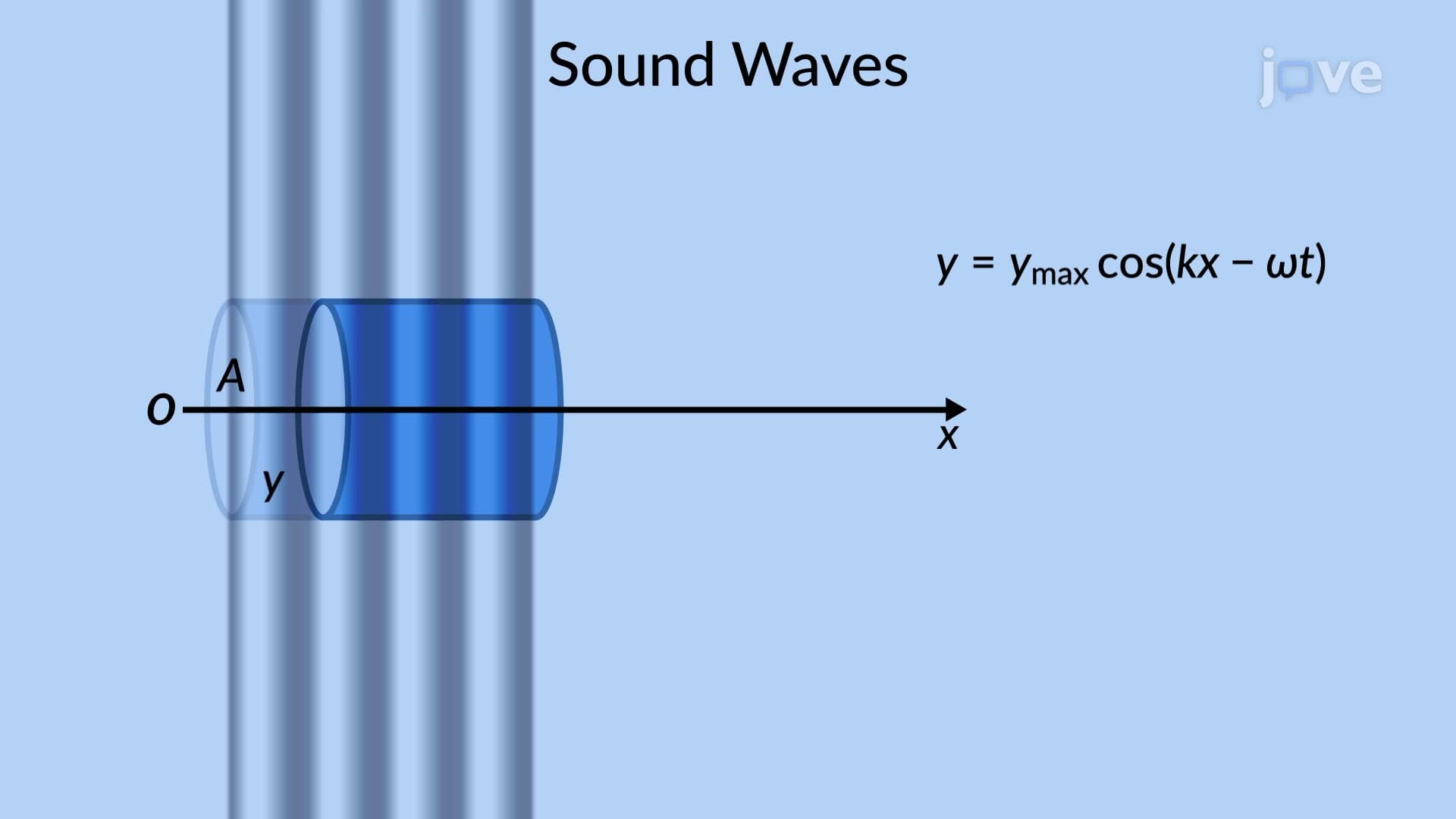
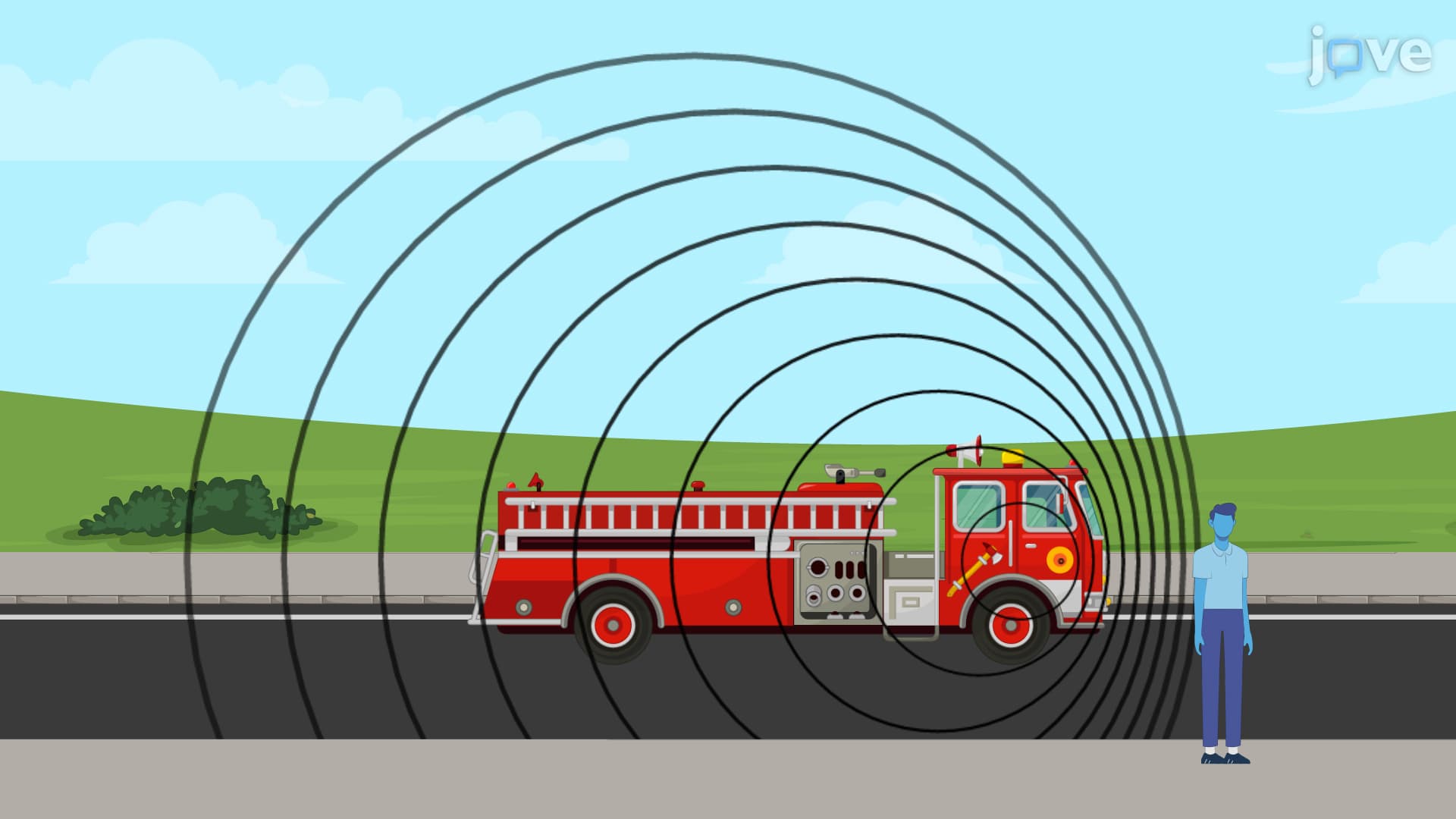
Sound waves are classified as longitudinal waves because particle motion occurs parallel to the wave's direction of travel. When a drum head vibrates at a concert in Nashville's Grand Ole Opry, it creates alternating regions of high pressure (compressions) and low pressure (rarefactions) in the surrounding air. These pressure variations propagate outward at approximately 343 meters per second at room temperature, carrying acoustic energy to listeners throughout the venue.
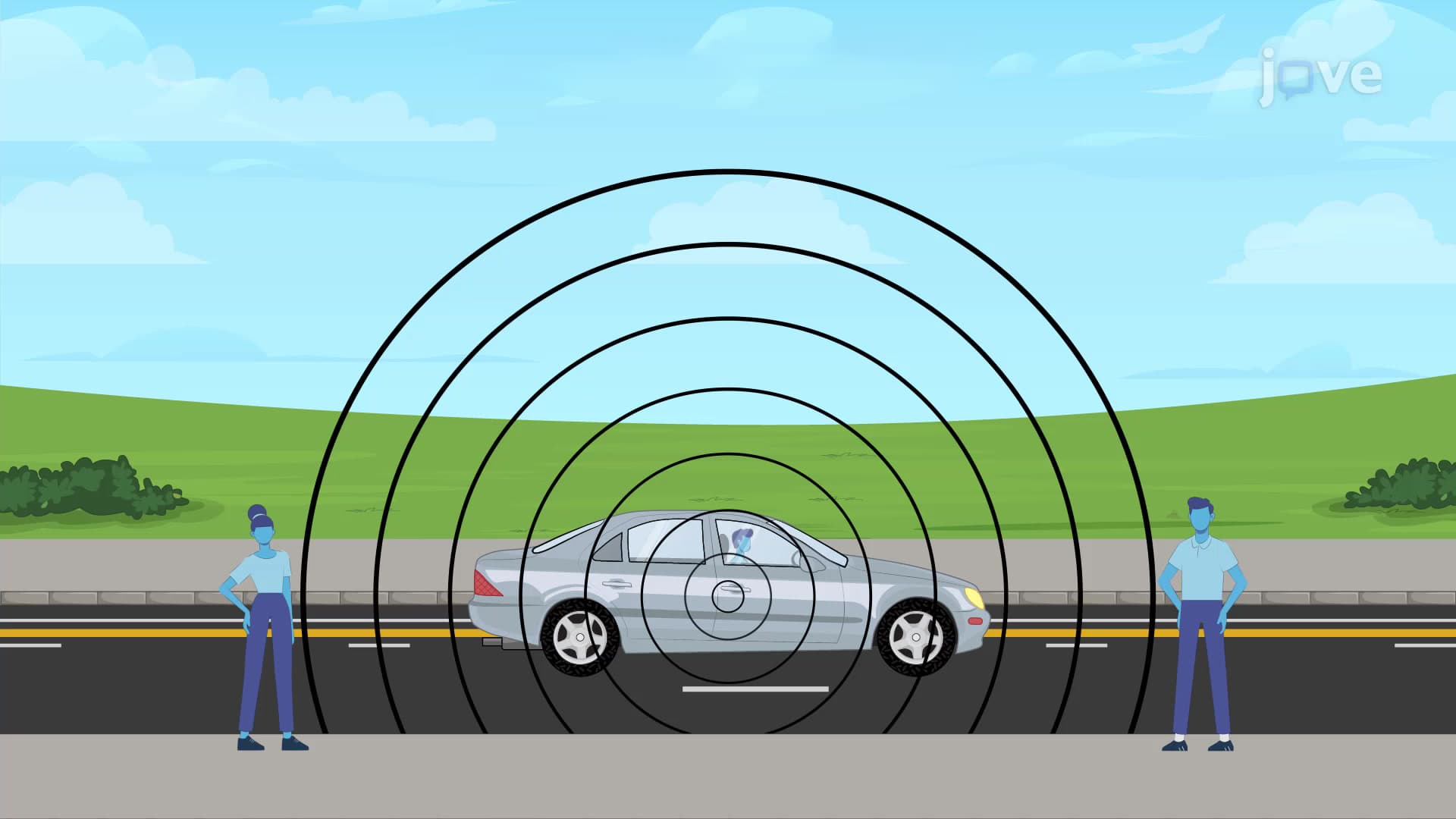
The wave equation for sound can be expressed simply as v = f × λ, where velocity equals frequency times wavelength. This relationship becomes crucial for AP Physics students analyzing Doppler effects or calculating resonance frequencies in closed and open tubes.
Sound waves behave differently across various media. In air, they travel as pressure waves affecting gas molecule density. In solids like the steel rails of New York's subway system, sound can travel much faster-up to 5,000 meters per second-because particles are more tightly bound. This explains why placing your ear to railroad tracks can detect an approaching train long before hearing it through air.
Infrasonic waves (below 20 Hz) and ultrasonic waves (above 20,000 Hz) extend beyond human hearing range but find critical applications in medical imaging, geological surveys, and animal communication studies.
For students preparing for the MCAT or AP Physics exams, understanding sound wave mathematics proves essential. Problems frequently involve calculating wave speeds in different temperatures, analyzing standing wave patterns in musical instruments, or determining acoustic properties of materials used in concert hall design.
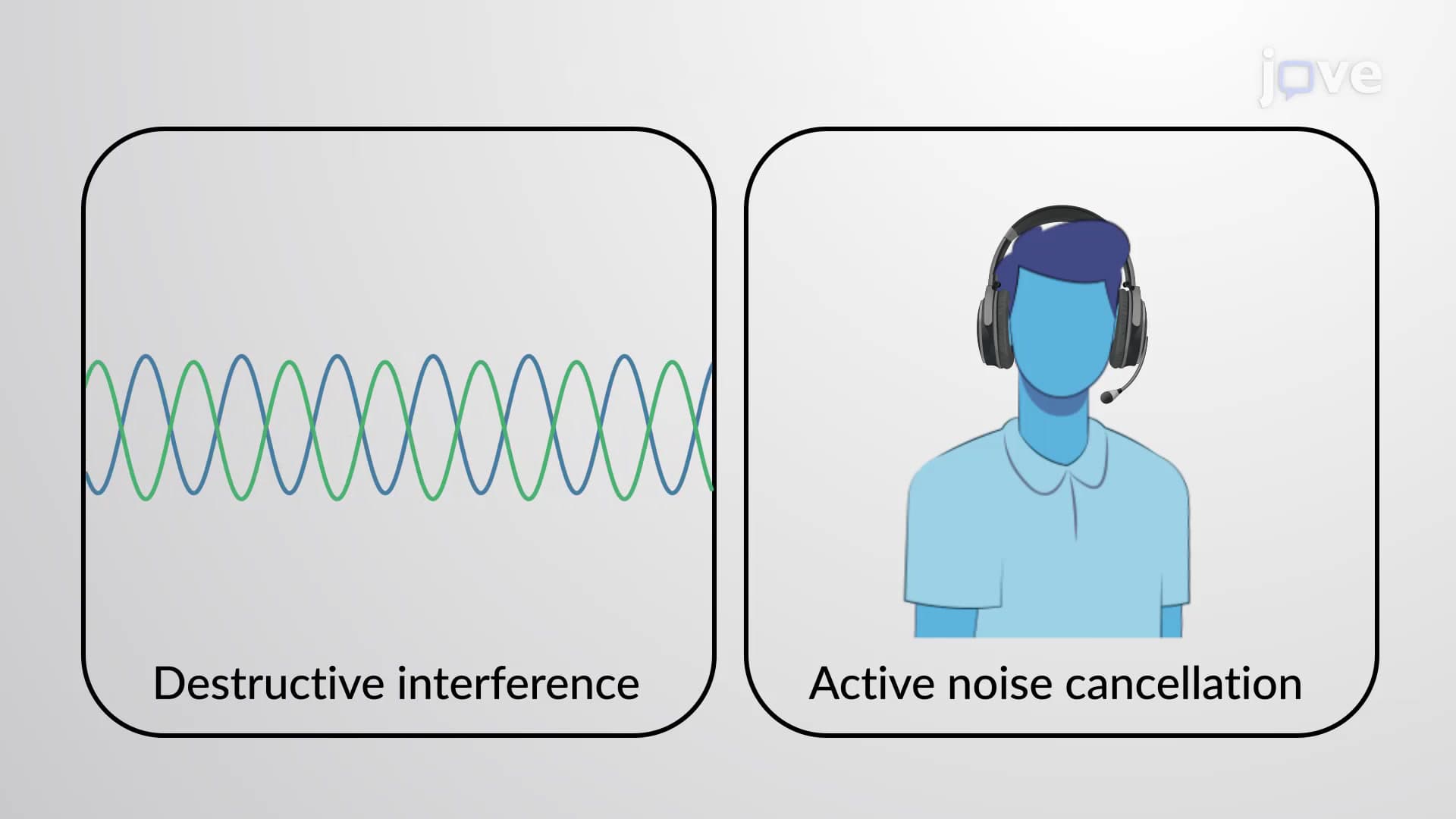
Engineering applications include noise cancellation technology in headphones, ultrasound medical imaging at hospitals like Johns Hopkins, and seismic wave analysis for earthquake prediction by the United States Geological Survey.
Related Micro-courses