Loading subject page…

- Physics
- Temperature and Heat
- Gas Thermometers and the Kelvin Scale
Micro-course: Temperature and Heat
62,510 views
Learn key concepts and earn your certificate.




Gas Thermometers and the Kelvin Scale

00:00
01:22
Video Summary: Gas Thermometers and the Kelvin Scale Explained
Did you know that NASA's Mars rovers use gas-based temperature measurement principles to survive the Red Planet's extreme conditions? Gas thermometers and the Kelvin scale form the foundation of precise temperature measurement in scientific research and space exploration. Unlike the mercury thermometers found in medicine cabinets across American households, gas thermometers operate on the fundamental relationship between gas pressure, volume, and temperature. Watch the full video on JoVE Coach to master this concept with expert-led visuals and step-by-step explanations.
- Understand how gas thermometers and the Kelvin scale provide the most accurate temperature measurements in scientific applications
- Identify the two main types of gas thermometers and explain why constant-volume designs dominate laboratory settings
- Analyze the relationship between gas pressure and temperature at constant volume using Gay-Lussac's Law
- Compare the calibration process for gas thermometers with traditional liquid-based temperature measurement devices
- Evaluate how extrapolation techniques determine absolute zero and establish the Kelvin temperature scale
- Apply conversion formulas between Celsius and Kelvin scales in practical problem-solving scenarios
- Recognize real-world applications of gas thermometry in industrial processes and scientific research
- Explore the connection between kinetic molecular theory and temperature measurement principles
Understanding Gas Thermometers And The Kelvin Scale: Scientific Precision
Gas thermometers represent the gold standard for temperature measurement in scientific applications, operating on fundamental gas laws that govern molecular behavior. Unlike conventional thermometers that rely on thermal expansion of liquids, gas thermometers measure temperature through changes in gas pressure or volume, providing unparalleled accuracy for research and calibration purposes.
Types and Operation of Gas Thermometers
Two primary designs dominate gas thermometry: constant-volume and constant-pressure systems. The constant-volume gas thermometer, preferred in most laboratory settings, maintains fixed gas volume while measuring pressure variations. This design leverages Gay-Lussac's Law, which states that gas pressure increases proportionally with absolute temperature when volume remains constant.
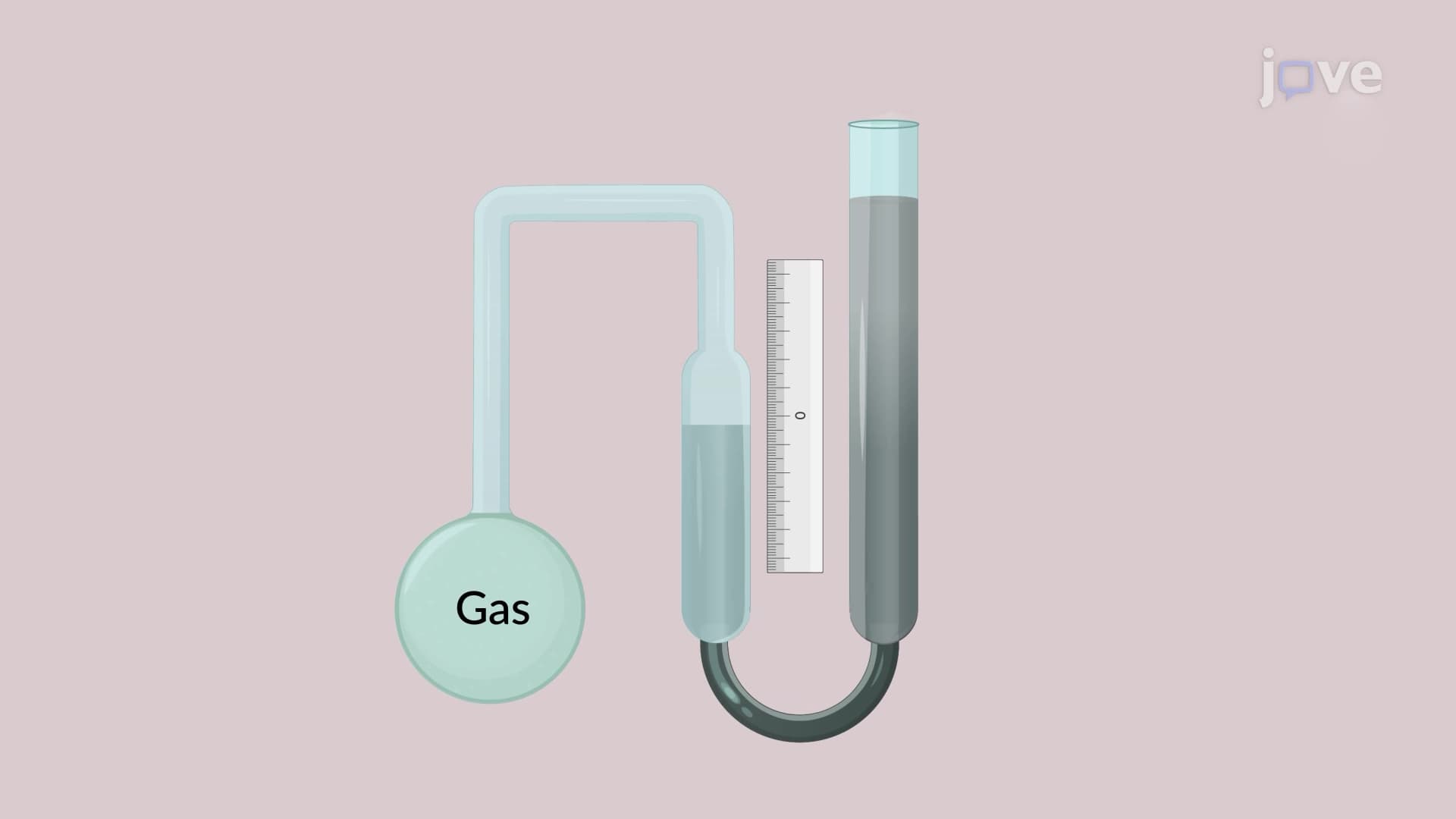
In practical operation, a constant-volume gas thermometer consists of a gas-filled bulb connected to a pressure-measuring device. As temperature changes, molecular kinetic energy varies, causing pressure fluctuations that correlate directly with temperature. Major universities like MIT and Caltech use these instruments in their physics laboratories to demonstrate thermodynamic principles to undergraduate students.
Calibration Process and Absolute Zero Discovery
The calibration process reveals one of thermodynamics' most profound discoveries: absolute zero. Researchers measure gas pressure at two known temperatures-typically water's freezing point (0°C) and boiling point (100°C). Plotting these data points creates a linear relationship that, when extrapolated backward, intersects the temperature axis at approximately -273.15°C.
This intersection point represents absolute zero, where molecular motion theoretically ceases completely. This discovery led to the Kelvin scale's development, named after British physicist Lord Kelvin, establishing the foundation for modern thermodynamics and appearing regularly on AP Physics exams and MCAT questions.
Kelvin Scale Applications and Conversions
The Kelvin scale serves as the International System of Units (SI) standard for temperature measurement. Water freezes at 273.15 K and boils at 373.15 K, maintaining the same 100-degree interval as the Celsius scale but starting from absolute zero. The conversion formula K = °C + 273.15 appears frequently in college chemistry and physics courses across American universities.
Industrial applications include semiconductor manufacturing, where Intel and other US tech companies require precise temperature control measured in Kelvin. Cryogenic research at institutions like the National Institute of Standards and Technology (NIST) relies exclusively on Kelvin measurements for superconductivity studies and quantum physics experiments.
Frequently Asked Questions
Gas thermometers measure temperature by monitoring pressure or volume changes in contained gases, while the Kelvin scale provides absolute temperature measurements starting from absolute zero. Together, they form the most accurate temperature measurement system in science. Gas thermometers use the linear relationship between gas pressure and temperature to establish precise readings, which are then expressed in Kelvin units for scientific consistency.
These concepts frequently appear in thermodynamics sections of AP Physics 2, SAT Subject Tests, and college chemistry midterms. Expect questions about temperature conversions, gas law applications, and absolute zero calculations. The MCAT often includes passages about gas thermometry in physical chemistry contexts, requiring students to analyze pressure-temperature relationships and perform Celsius-to-Kelvin conversions.
Common problems include calculating absolute zero from pressure-temperature data, converting between temperature scales, and applying Gay-Lussac's Law. You might analyze linear graphs showing pressure versus temperature relationships or determine unknown temperatures using proportional reasoning. College courses often include lab exercises where students calibrate simple gas thermometers using ice water and boiling water reference points.
NASA uses gas thermometry principles in spacecraft thermal management systems for Mars missions. Major US pharmaceutical companies employ precision gas thermometers in drug manufacturing where temperature control affects medication stability. Research institutions like Los Alamos National Laboratory use Kelvin-calibrated gas thermometers for nuclear physics experiments requiring extremely accurate temperature measurements.
Basic algebra and graphing skills are sufficient for most applications. You'll work with linear relationships, simple ratios, and unit conversions rather than complex calculus. High school students can master these concepts by focusing on proportional reasoning and understanding that gas pressure increases linearly with absolute temperature. The mathematical foundation builds naturally from freshman chemistry prerequisites.
Create conversion practice problems between Celsius and Kelvin scales, focusing on common reference points like water's phase transitions. Draw and interpret pressure-temperature graphs, practicing extrapolation to find absolute zero. Use flashcards for key formulas and memorize that absolute zero equals -273.15°C. Work through past AP or college exam questions to recognize common problem patterns and solution strategies.
Gas thermometry principles directly support kinetic molecular theory, ideal gas law applications, and thermodynamics fundamentals. This knowledge prepares you for advanced topics like phase diagrams, heat engines, and statistical mechanics. Understanding absolute zero concepts proves essential for quantum physics courses and physical chemistry studies at the undergraduate level.
Related Micro-courses

13 Concepts

19 Concepts

12 Concepts