Loading subject page…


62,510 views
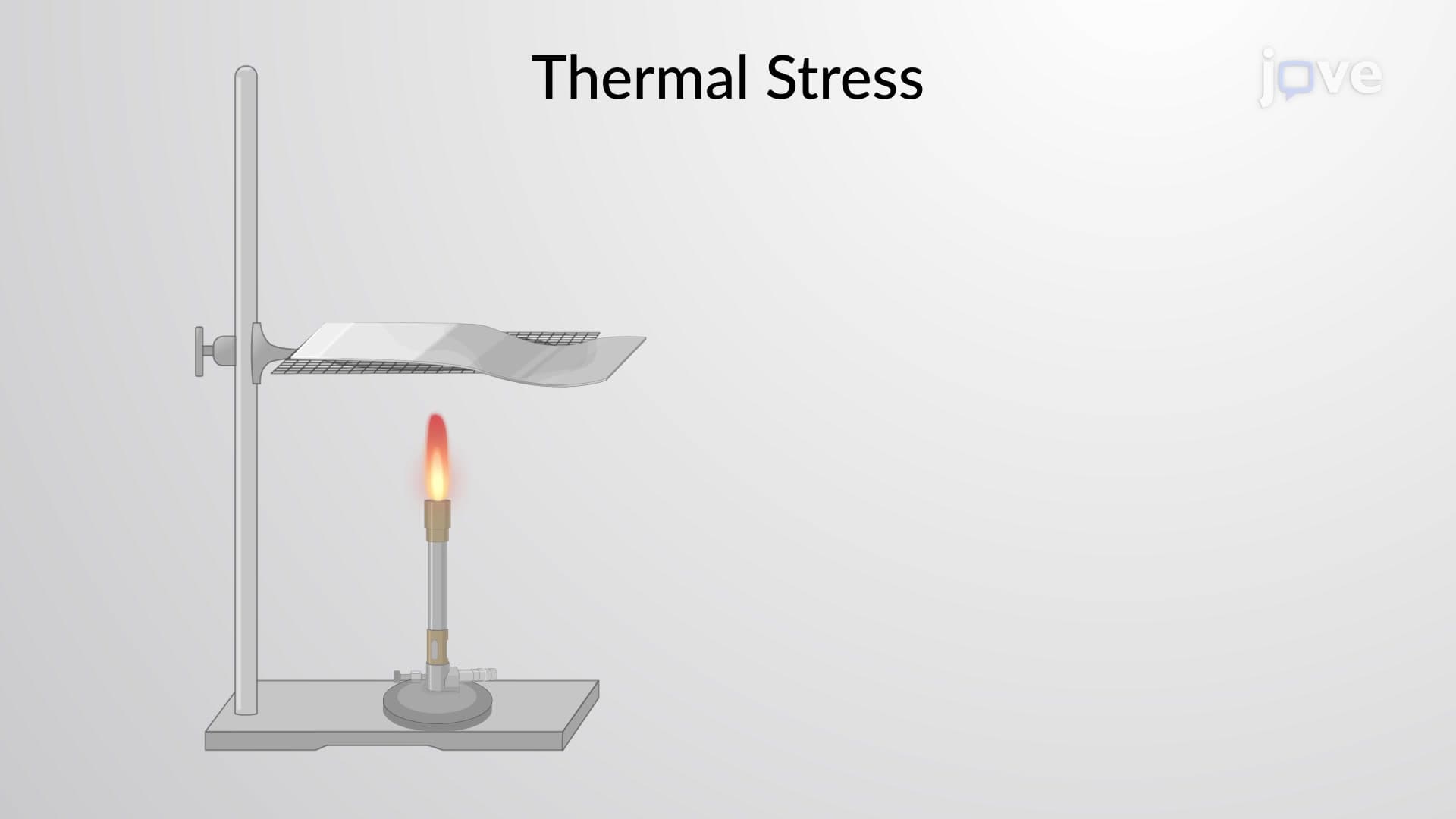

Video Summary: What Is Thermal Stress
Ever wonder why sidewalks have expansion joints or why the Golden Gate Bridge is designed to expand and contract? Thermal stress occurs when materials experience temperature changes that cause expansion or contraction, potentially leading to deformation or structural failure. Engineers account for this phenomenon in everything from railroad tracks across the American Midwest to skyscrapers in Phoenix, Arizona, where extreme temperature variations are common. Understanding what is thermal stress helps explain why bridges, buildings, and infrastructure are designed with specific gaps and flexible joints. Watch the full video on JoVE Coach to master this concept with expert-led visuals and step-by-step explanations.
Thermal stress represents one of the most critical considerations in engineering design, occurring when temperature changes cause materials to expand or contract while being constrained by their surroundings. Unlike mechanical stress applied by external forces, thermal stress develops internally when a material's natural thermal expansion or contraction is restricted. This phenomenon affects everything from the concrete in Interstate highways during summer heat waves to the steel framework of Chicago skyscrapers facing harsh winter temperatures.
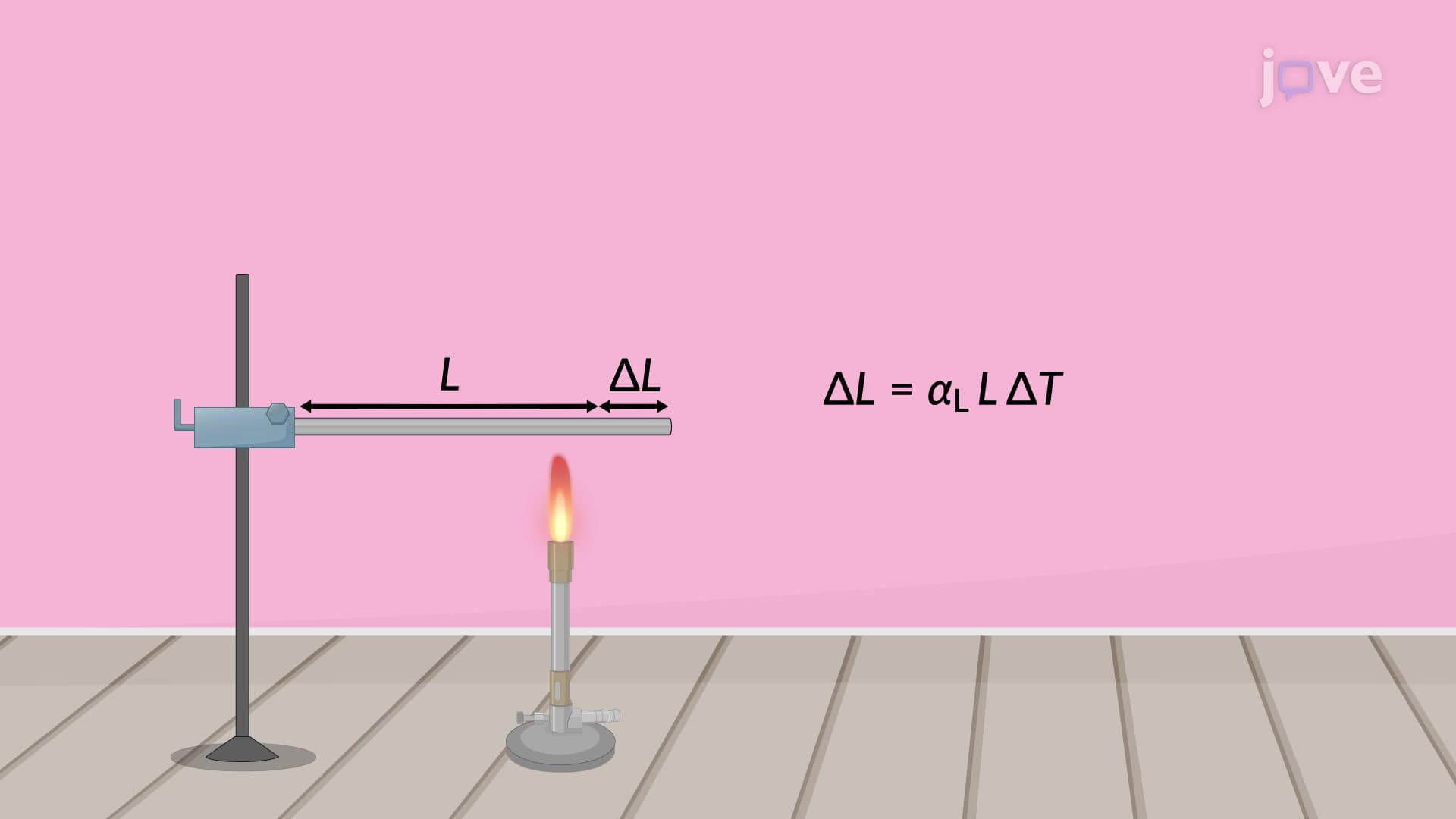
When materials heat up, their atomic structure expands as particles gain kinetic energy and vibrate more vigorously. For an unconstrained object, this expansion occurs freely without generating internal stress. However, when expansion is prevented-such as a steel beam welded between two rigid supports-the material develops internal compressive forces. Conversely, cooling creates tensile thermal stress as the material attempts to contract but cannot. The magnitude depends on three key factors: the temperature change (ΔT), the material's coefficient of thermal expansion (α), and Young's modulus (E). The fundamental relationship is: thermal stress = E × α × ΔT.
US engineers routinely design for thermal stress in infrastructure projects. The Brooklyn Bridge incorporates expansion joints allowing for several inches of movement between summer and winter temperatures. Similarly, the Alaska Pipeline includes zigzag sections and sliding supports to accommodate thermal expansion across temperature ranges exceeding 100°F. In manufacturing, precision instruments and semiconductor fabrication facilities maintain strict temperature control to minimize thermal stress that could affect product quality or cause equipment failure.
Students encounter thermal stress problems in AP Physics courses, college-level materials science classes, and engineering degree programs. MCAT questions may test understanding of thermal expansion in biological systems, while engineering licensing exams (FE/PE) frequently include thermal stress calculations for structural analysis. Problems typically involve calculating stress in constrained beams, determining safe operating temperature ranges for pressure vessels, or designing expansion joints for bridges and buildings. Mastering these concepts proves essential for careers in mechanical, civil, and aerospace engineering, where thermal management directly impacts safety and performance.
Related Micro-courses