Loading subject page…


62,510 views


Video Summary: Mechanisms of Heat Transfer I Explained
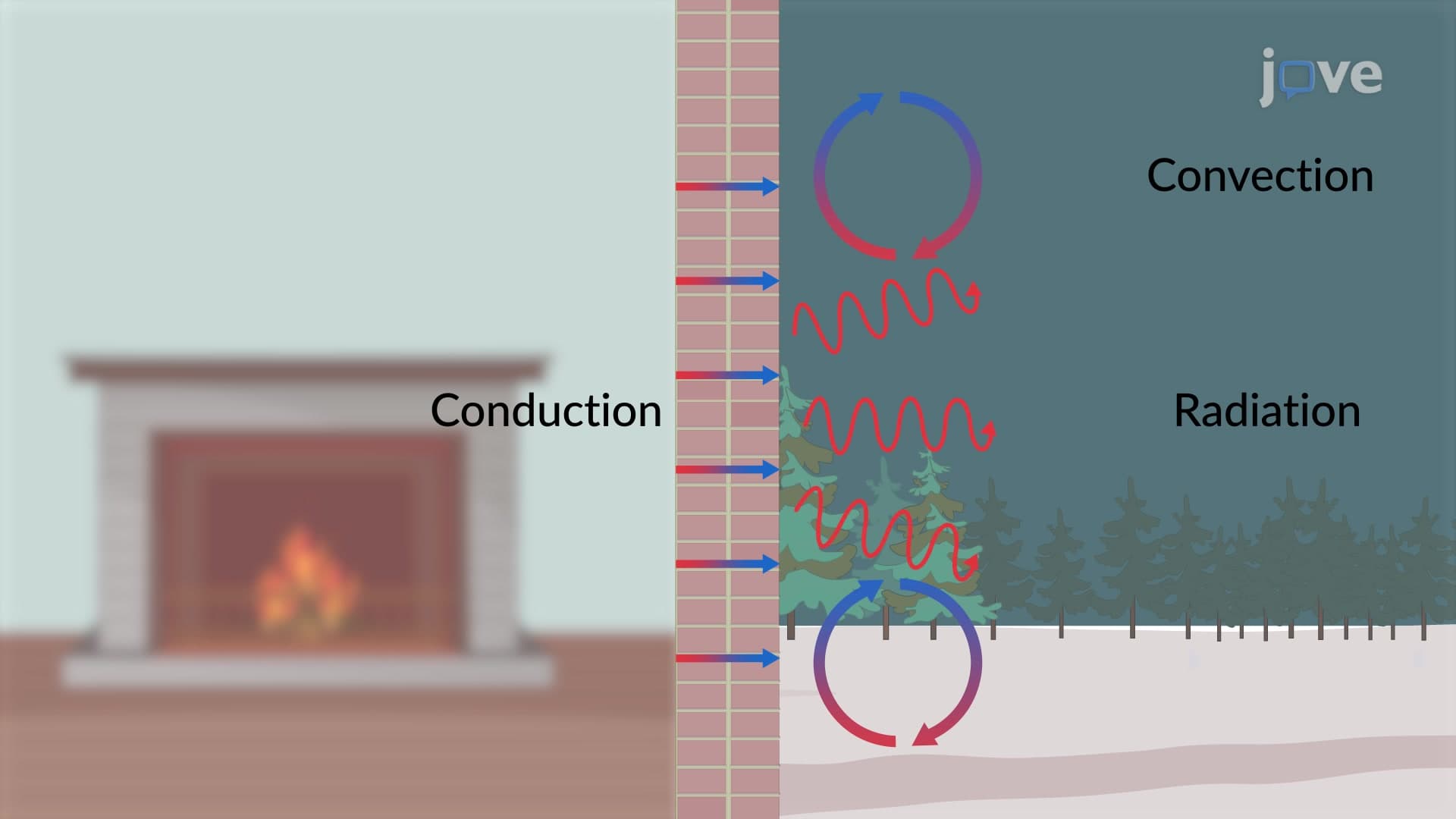
Ever wonder why a metal spoon gets hot when left in a steaming cup of coffee, while the ceramic mug handle stays cool? The mechanisms of heat transfer I explain this everyday phenomenon through three fundamental processes: conduction, convection, and radiation. These thermal energy transfer methods govern everything from cooking bacon on a hot skillet to heating your home during harsh Minnesota winters. Watch the full video on JoVE Coach to master this concept with expert-led visuals and step-by-step explanations.
Heat transfer occurs whenever a temperature difference exists between objects or regions within the same object. The mechanisms of heat transfer I encompass three distinct processes that govern how thermal energy moves through our physical world. These fundamental principles explain phenomena ranging from why your car's engine needs a cooling system to how thermal insulation keeps your house comfortable during Chicago's frigid winters.
Conduction represents the most intuitive heat transfer mechanism, occurring when thermal energy moves through direct molecular contact. When you accidentally grab a hot cast-iron skillet handle, heat conducts rapidly through the metal from the heated cooking surface to your hand. At the molecular level, high-energy molecules in the hot region vibrate more vigorously, colliding with neighboring lower-energy molecules and transferring kinetic energy throughout the material.
The rate of conductive heat transfer follows Fourier's law: q = -kA(dT/dx), where q represents heat transfer rate, k is thermal conductivity, A is surface area, and dT/dx is the temperature gradient. Materials with high thermal conductivity, like copper (k = 401 W/m·K), excel at conducting heat, making them ideal for heat sinks in computer processors. Conversely, materials with low thermal conductivity, such as fiberglass insulation (k = 0.04 W/m·K), resist heat flow and provide effective thermal barriers.
Thermal conductivity varies dramatically across materials, directly impacting their practical applications. Metals generally exhibit high thermal conductivity due to their free electron structure, while ceramics and polymers typically demonstrate low conductivity. This principle explains why aluminum cookware heats evenly for consistent cooking, while silicone oven mitts protect your hands from burns.
Understanding heat transfer mechanisms proves crucial for numerous engineering applications. Building codes in states like Alaska require specific insulation R-values to minimize conductive heat loss through walls and roofs. Electronic engineers design heat sinks with large surface areas and high-conductivity materials to prevent processor overheating. Even medical devices like surgical instruments utilize thermal conductivity principles to maintain sterile conditions while allowing controlled heating.
These concepts frequently appear on standardized exams including AP Physics, SAT Subject Tests, and college thermodynamics courses. Students should focus on identifying heat transfer modes in given scenarios and applying mathematical relationships to solve quantitative problems involving temperature gradients and material properties.
Related Micro-courses