Loading subject page…


62,510 views


Video Summary: Mechanisms of Heat Transfer Ii Explained
Ever wonder why a NASA space suit can protect astronauts from extreme temperatures in the vacuum of space? The answer lies in understanding mechanisms of heat transfer ii, specifically convection and radiation. Convection moves heat through fluid motion-either naturally through density differences or forced by external sources like fans. Radiation transfers energy through electromagnetic waves without requiring any medium, following the Stefan-Boltzmann law where heat transfer depends on surface area and temperature to the fourth power. Watch the full video on JoVE Coach to master this concept with expert-led visuals and step-by-step explanations.
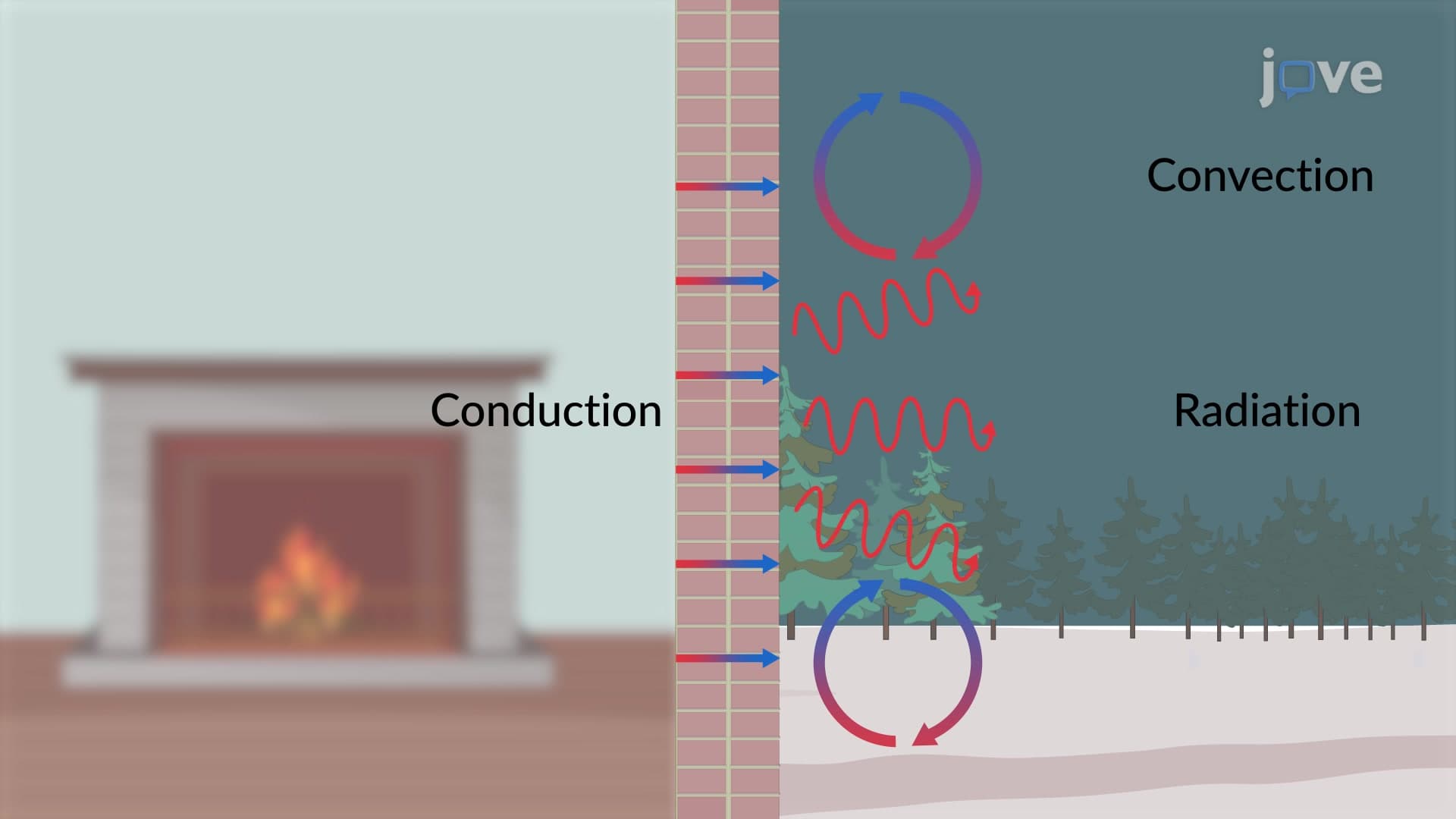
Mechanisms of heat transfer ii encompasses two critical processes that govern energy movement in countless applications-from HVAC systems in buildings to thermal management in electronic devices. Unlike conduction, which requires direct contact between materials, convection and radiation represent more complex heat transfer phenomena that dominate in fluid systems and high-temperature environments.
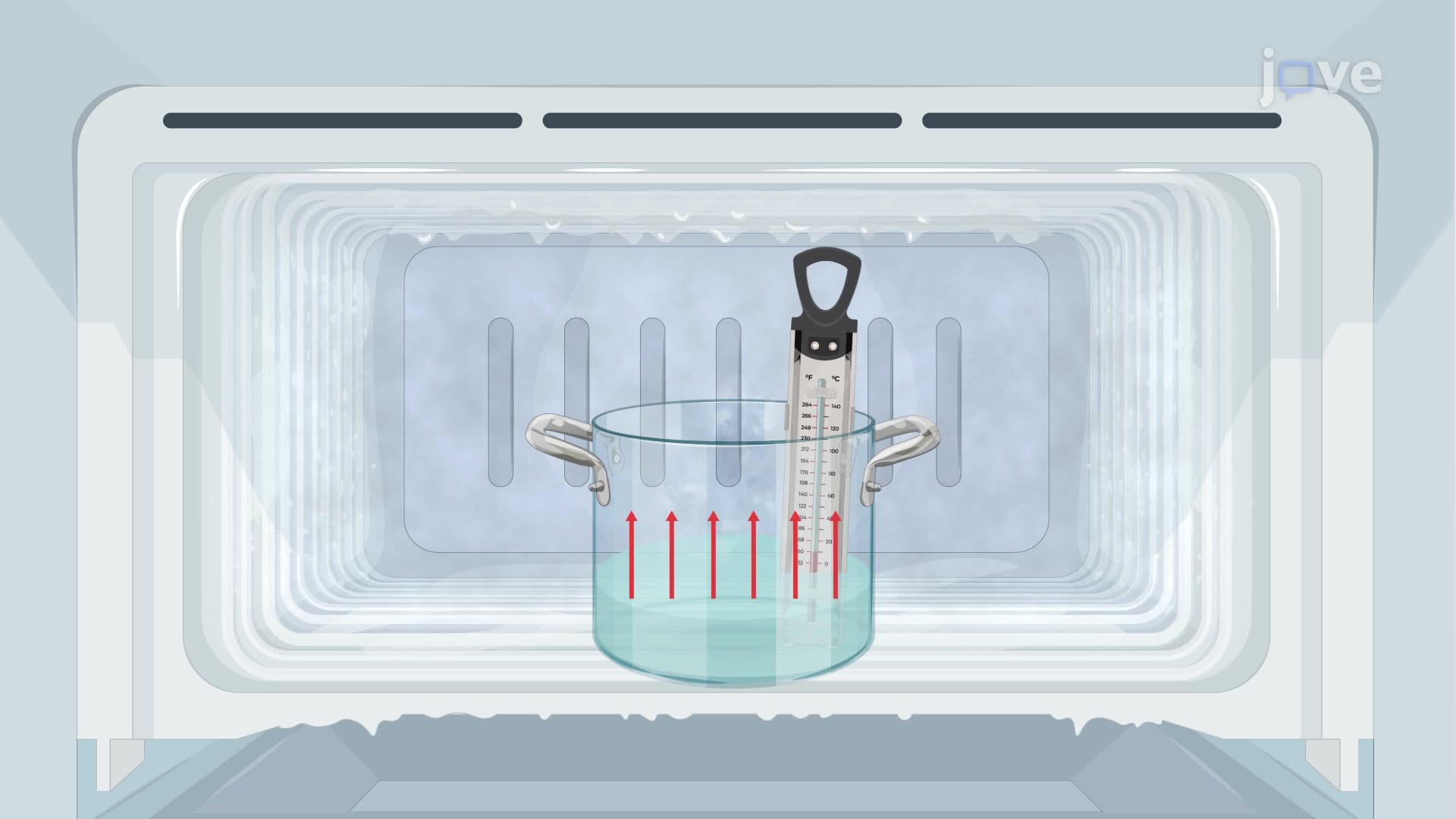
Convection occurs when heat moves through fluids (liquids or gases) via bulk fluid motion. This process is fundamental to understanding weather patterns, ocean currents, and engineering applications like cooling systems in automobiles and computers.
Free convection, also called natural convection, happens when temperature differences create density variations that drive fluid motion. Consider how hot air rises from a campfire-the heated air becomes less dense and moves upward, carrying thermal energy with it. This principle explains why radiators are typically placed near floor level in homes and why thunderstorms develop through atmospheric convection.
Forced convection involves external mechanisms like pumps, fans, or wind to move fluids. Examples include the cooling fan in your laptop, the circulation pump in a car's cooling system, or the forced-air heating system in most US homes. The heat transfer rate in forced convection is generally much higher than free convection because the fluid velocity can be controlled and optimized.
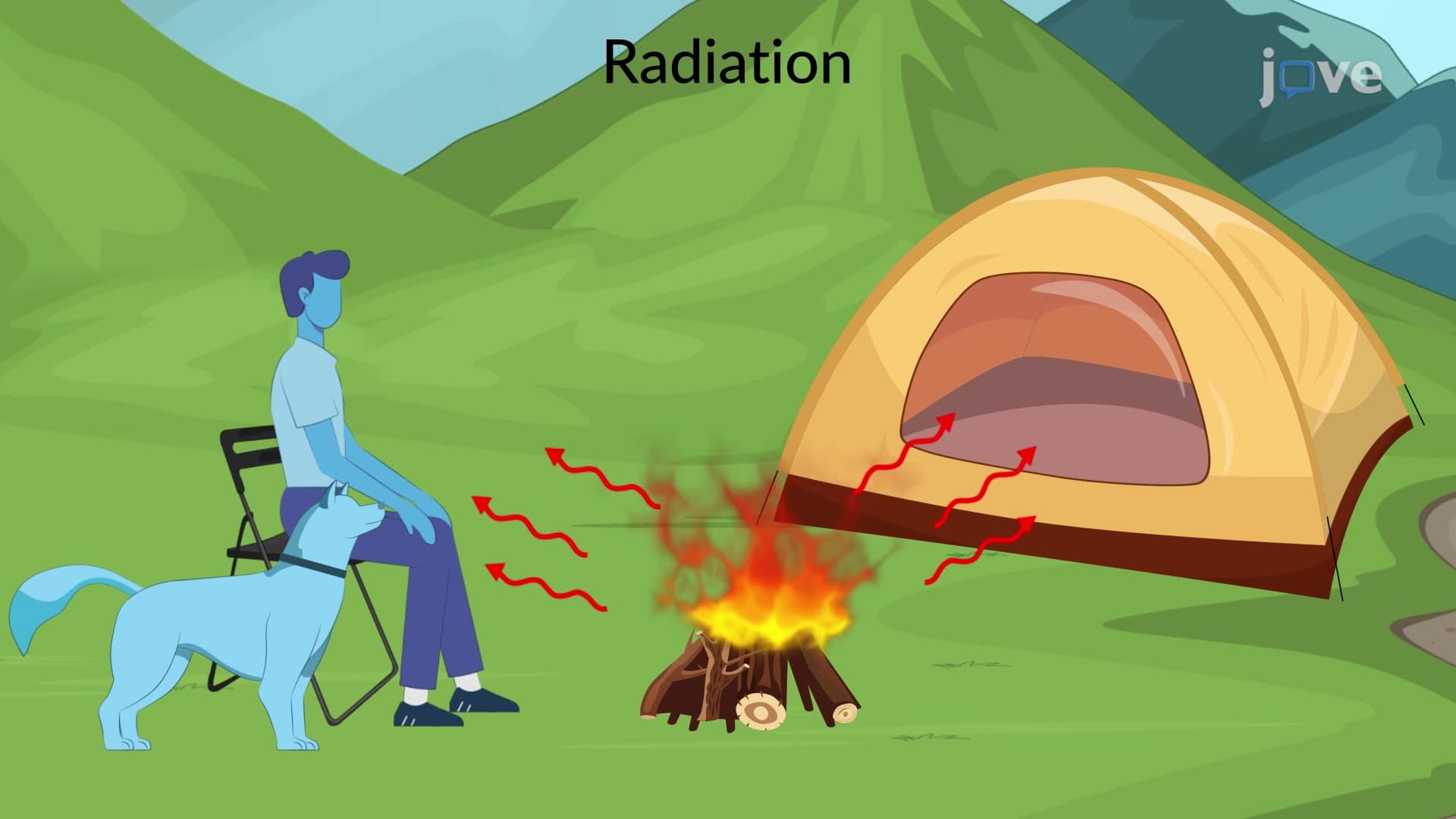
Radiation represents a fundamentally different heat transfer mechanism that requires no medium-energy travels through electromagnetic waves. This is how the Sun's energy reaches Earth through the vacuum of space and why you can feel warmth from a fire even when standing several feet away.
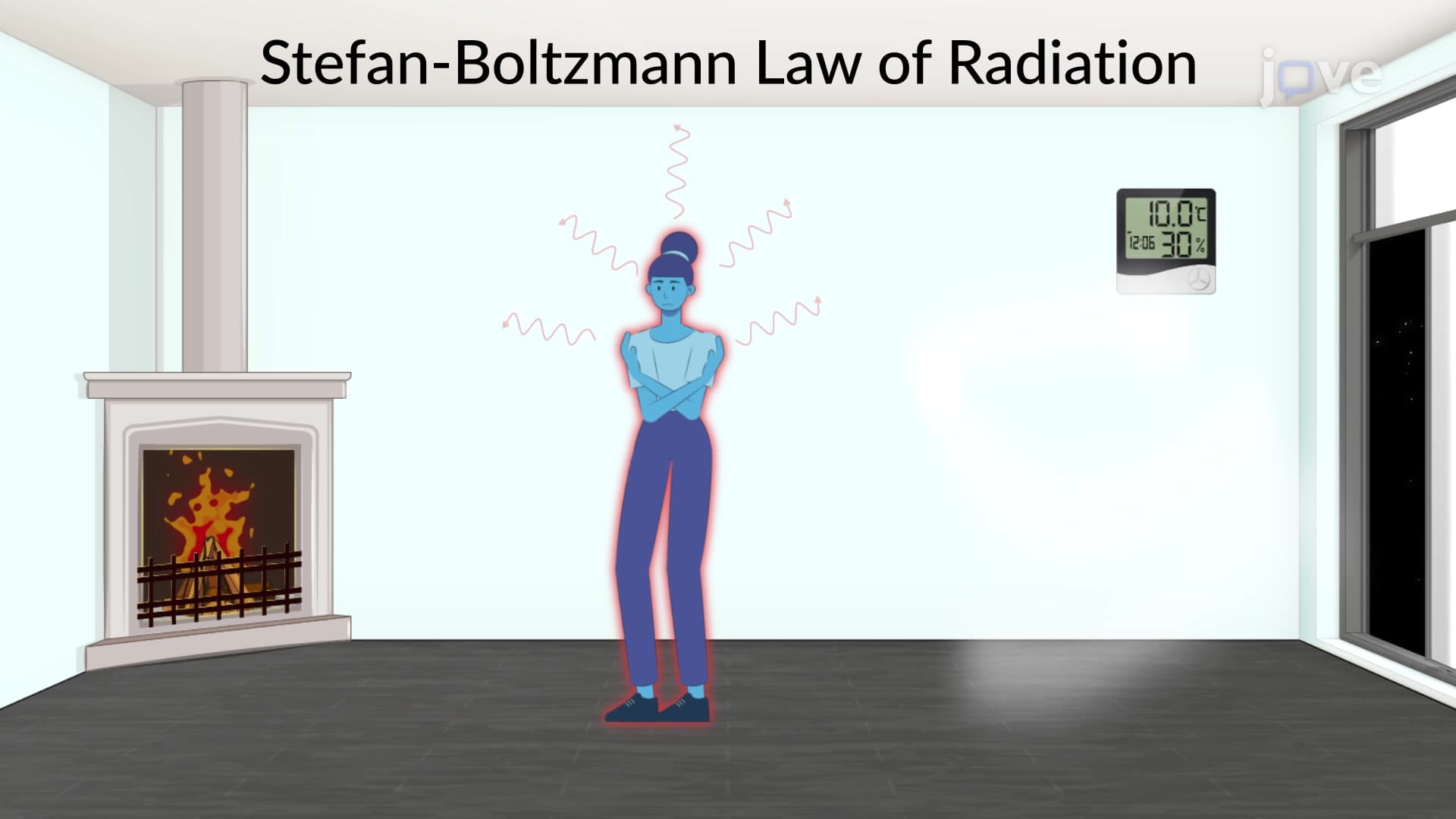
The Stefan-Boltzmann law quantifies radiation heat transfer: Q = ε × σ × A × T^4, where Q is heat transfer rate, ε is emissivity, σ is the Stefan-Boltzmann constant (5.67 × 10^-8 W/m²·K⁴), A is surface area, and T is absolute temperature. The fourth-power temperature dependence means radiation becomes increasingly important at high temperatures-which is why glowing objects appear progressively brighter as they heat up.
These concepts appear frequently on AP Physics exams, particularly in thermal physics sections, and form the foundation for advanced engineering coursework. Pre-med students encounter these principles in MCAT physics sections, while engineering students apply them in heat transfer, thermodynamics, and fluid mechanics courses. Understanding convection is essential for meteorology, environmental science, and mechanical engineering, while radiation heat transfer is crucial in aerospace engineering, nuclear engineering, and renewable energy systems.
Related Micro-courses