Loading subject page…


62,510 views


Video Summary: What Is Zeroth Law of Thermodynamics
Ever wonder why your thermometer actually works? The zeroth law of thermodynamics reveals the fascinating principle that makes temperature measurement possible. When you place a digital thermometer under your tongue at a doctor's office in Chicago, it reaches thermal equilibrium with your body, allowing accurate temperature readings. This fundamental concept, known as What is Zeroth Law of Thermodynamics, states that objects in thermal equilibrium with the same third object are also in thermal equilibrium with each other. Watch the full video on JoVE Coach to master this concept with expert-led visuals and step-by-step explanations.
The zeroth law of thermodynamics serves as the conceptual bedrock for our understanding of temperature and thermal measurement. This principle establishes that thermal equilibrium follows a transitive relationship: if system A is in thermal equilibrium with system C, and system B is also in thermal equilibrium with system C, then systems A and B must be in thermal equilibrium with each other. This seemingly simple concept revolutionized our ability to create standardized temperature scales and reliable measurement devices.
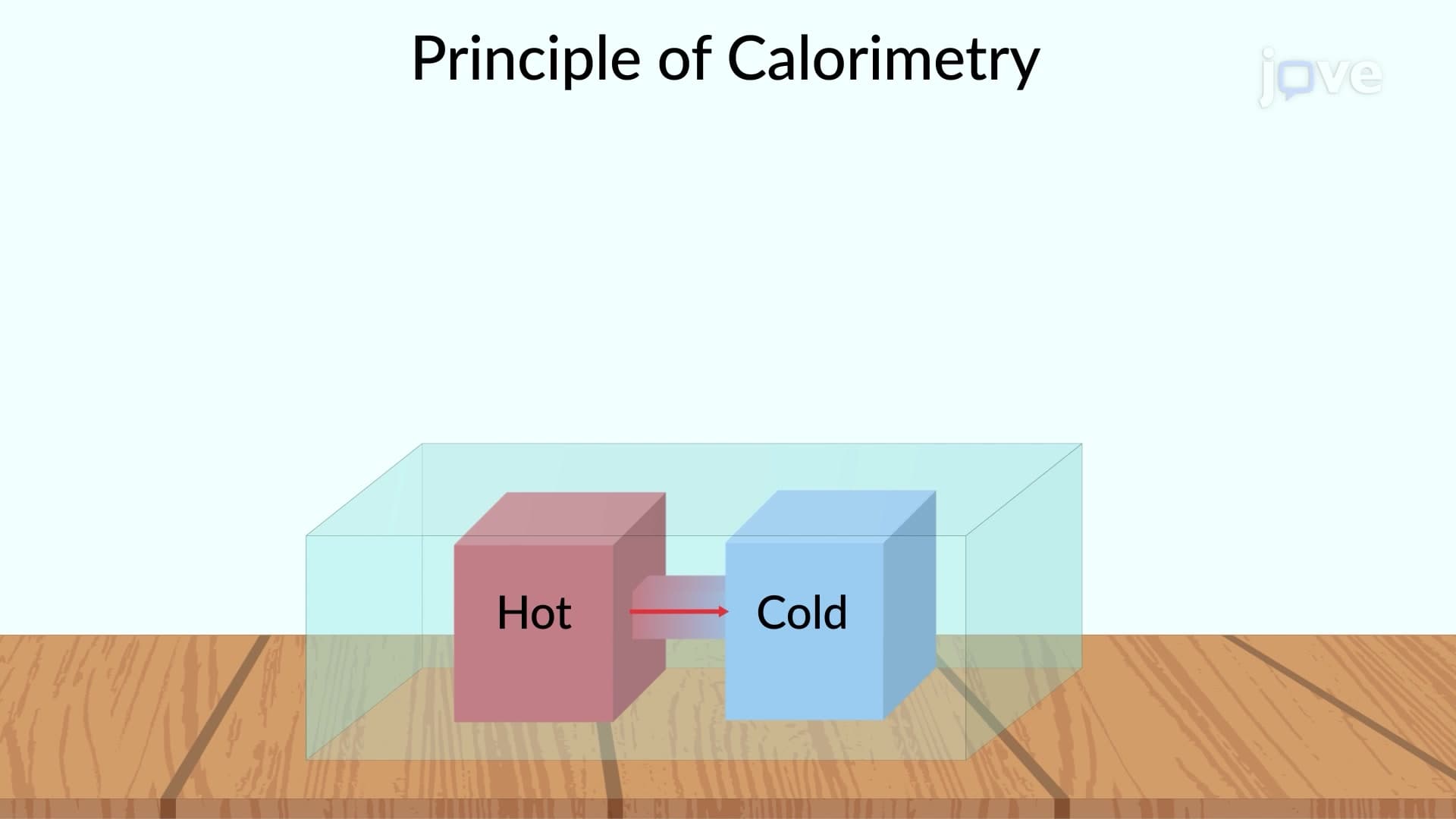
The classic three-beaker experiment perfectly illustrates zeroth law of thermodynamics basics in action. When containers at different initial temperatures (perhaps 80°F, 100°F, and 60°F) are connected through thermally conductive pathways, heat naturally flows from higher to lower temperature regions. The driving force behind this process is the second law of thermodynamics, but the final equilibrium state-where all three systems reach identical temperatures-demonstrates the zeroth law's predictive power.
Understanding zeroth law of thermodynamics proves crucial in numerous US applications. Digital thermometers in American hospitals rely entirely on this principle. When a nurse places an infrared thermometer near a patient's forehead at Johns Hopkins Hospital, the device's sensor reaches thermal equilibrium with the emitted radiation, providing accurate body temperature readings. Similarly, industrial temperature monitoring systems in US manufacturing plants-from Boeing's aircraft production facilities to pharmaceutical companies-depend on zeroth law principles for quality control and safety compliance.
For students preparing for AP Physics exams, the SAT Subject Test in Physics, or college-level thermodynamics courses, mastering the zeroth law of thermodynamics concept provides essential groundwork. This topic frequently appears on MCAT physics sections, particularly in passages discussing calorimetry experiments or biological temperature regulation. Understanding how thermal equilibrium enables temperature measurement helps students tackle complex problems involving heat engines, refrigeration cycles, and biological thermoregulation that appear in advanced coursework at universities like MIT, Stanford, and UC Berkeley.
Related Micro-courses