Loading…
Loading video…

65,900 views

Did you know that atmospheric CO2 levels have risen 47% since pre-industrial times, and scientists use calculating and interpreting the linear correlation to prove its direct link to rising temperatures? Calculating and interpreting the linear correlation coefficient (r) transforms scattered data points into concrete evidence of relationships between variables. For instance, EPA climate data consistently shows r-values above 0.8 when comparing carbon emissions to temperature changes across US metropolitan areas. Watch the full video on JoVE Coach to master this concept with expert-led visuals and step-by-step explanations.
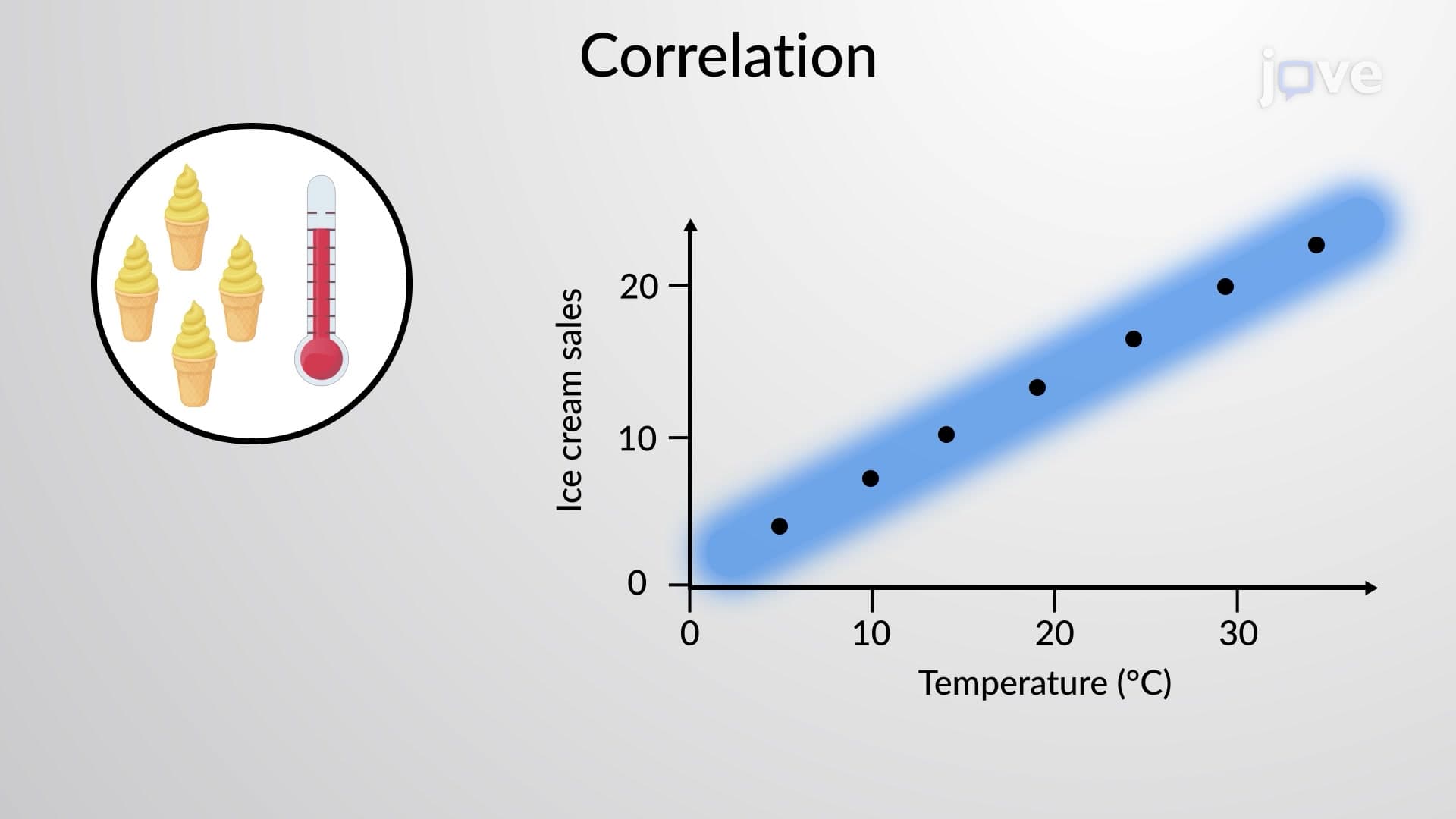
The linear correlation coefficient, denoted as r or Pearson's r, quantifies the strength and direction of linear relationships between two continuous variables. This statistical measure ranges from -1 to +1, where values closer to the extremes indicate stronger linear associations. In AP Statistics and college-level courses, students must master both the computational mechanics and interpretive framework for correlation analysis.
Computing the correlation coefficient requires systematic data organization and formula application. The process begins with calculating three essential components: the sum of x-squared values, sum of y-squared values, and sum of xy products. The correlation formula integrates these components with sample size (n) to produce the final r-value. For instance, when analyzing SAT scores versus college GPA data from US universities, researchers calculate these sums across hundreds of student records to determine predictive relationships.
Statistical significance determination relies on comparing calculated r-values against critical values from standardized tables. At α = 0.05 significance level with n = 7 observations, the critical value equals 0.754, meaning any |r| exceeding this threshold indicates statistically significant linear correlation. This process appears frequently in AP Statistics free-response questions and college statistics examinations, where students must demonstrate both computational accuracy and proper interpretation.
Real-world correlation analysis spans diverse fields within American industries and research institutions. The CDC uses correlation coefficients to analyze relationships between vaccination rates and disease incidence across states. Economic analysts examine correlations between unemployment rates and consumer spending in metropolitan areas. Environmental agencies like the EPA rely on correlation analysis to establish connections between industrial emissions and air quality indices in major cities like Los Angeles, Houston, and New York.
The coefficient of determination (r²) represents the proportion of variance in the dependent variable explained by the linear relationship. An r² value of 0.762 indicates that 76.2% of temperature variation can be attributed to carbon dioxide level changes, while 23.8% remains unexplained by this linear model. This concept frequently appears in MCAT biological sciences sections and undergraduate research methodology courses across US institutions.
Frequently Asked Questions
Calculating and interpreting the linear correlation coefficient measures the strength and direction of linear relationships between two variables, producing values from -1 to +1. This statistical tool is essential for determining whether observed patterns in data represent genuine associations or random variation. It forms the foundation for regression analysis and appears extensively in AP Statistics, college statistics courses, and professional research across fields like medicine, economics, and environmental science.
AP Statistics exams frequently include free-response questions requiring students to calculate r-values from given datasets and interpret results using critical value tables. College midterm and final examinations typically present correlation problems within broader statistical analysis contexts. Students must demonstrate computational accuracy, proper critical value comparison, and meaningful interpretation of results in real-world scenarios like analyzing relationships between study hours and test scores.
MCAT questions focus on interpreting pre-calculated correlation values within biological and medical research contexts, emphasizing practical applications over computational mechanics. Undergraduate statistics courses require manual calculation of correlation coefficients using formulas, critical value table usage, and detailed statistical interpretation. Both formats assess understanding of correlation strength, significance testing, and the crucial distinction between correlation and causation.
The CDC uses correlation analysis to track relationships between vaccination rates and disease prevention across US states and territories. Financial institutions analyze correlations between economic indicators like unemployment rates and consumer spending patterns in major metropolitan areas. Environmental agencies examine correlations between industrial emissions and air quality measurements in cities like Chicago, Phoenix, and Miami to inform policy decisions.
Correlation coefficient calculation requires only basic algebra skills including addition, multiplication, and square root operations that high school students master in Algebra I and II. The computational process follows systematic steps that become routine with practice. Most challenging aspects involve careful data organization and critical value table interpretation rather than complex mathematical operations, making this concept accessible to students in grades 9-12.
Practice with diverse datasets from real-world contexts like sports statistics, economic data, and scientific measurements to build computational confidence and interpretive skills. Create summary sheets containing critical value tables for common significance levels and sample sizes encountered in exam problems. Focus on connecting numerical results to meaningful conclusions about variable relationships, as exam questions often require both accurate calculation and proper interpretation.
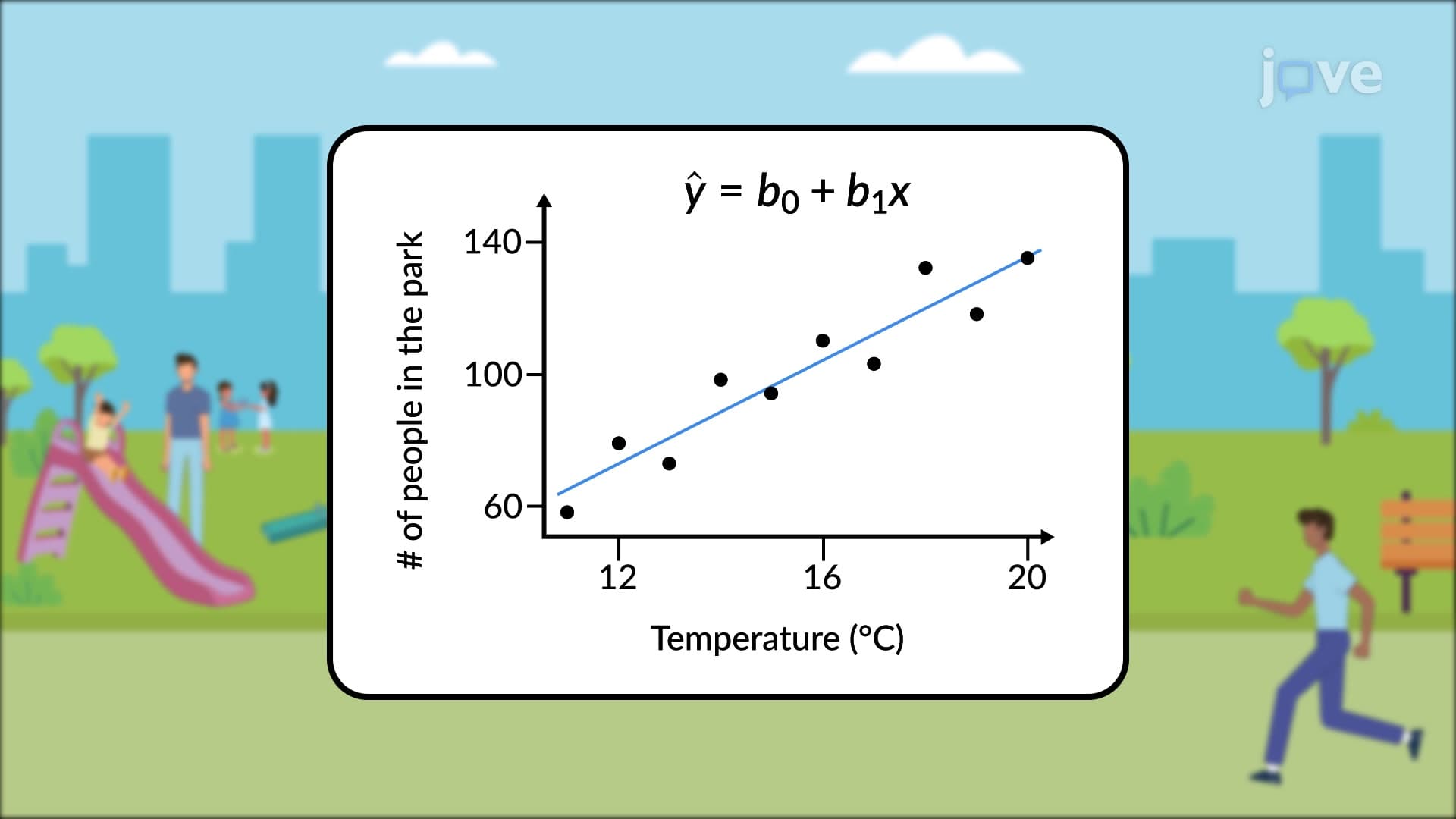
Linear regression analysis represents the natural progression, building on correlation foundations to create predictive models and examine causation versus association. Students should explore multiple regression techniques for analyzing relationships involving several variables simultaneously. Advanced topics include non-linear correlation measures, partial correlation analysis, and regression diagnostics commonly encountered in upper-level statistics courses and research methodology programs.
Related Micro-courses
Related Subjects
 Physics 33 micro-courses›
 Math Fundamentals 11 micro-courses›