Loading…
Loading video…
65,900 views
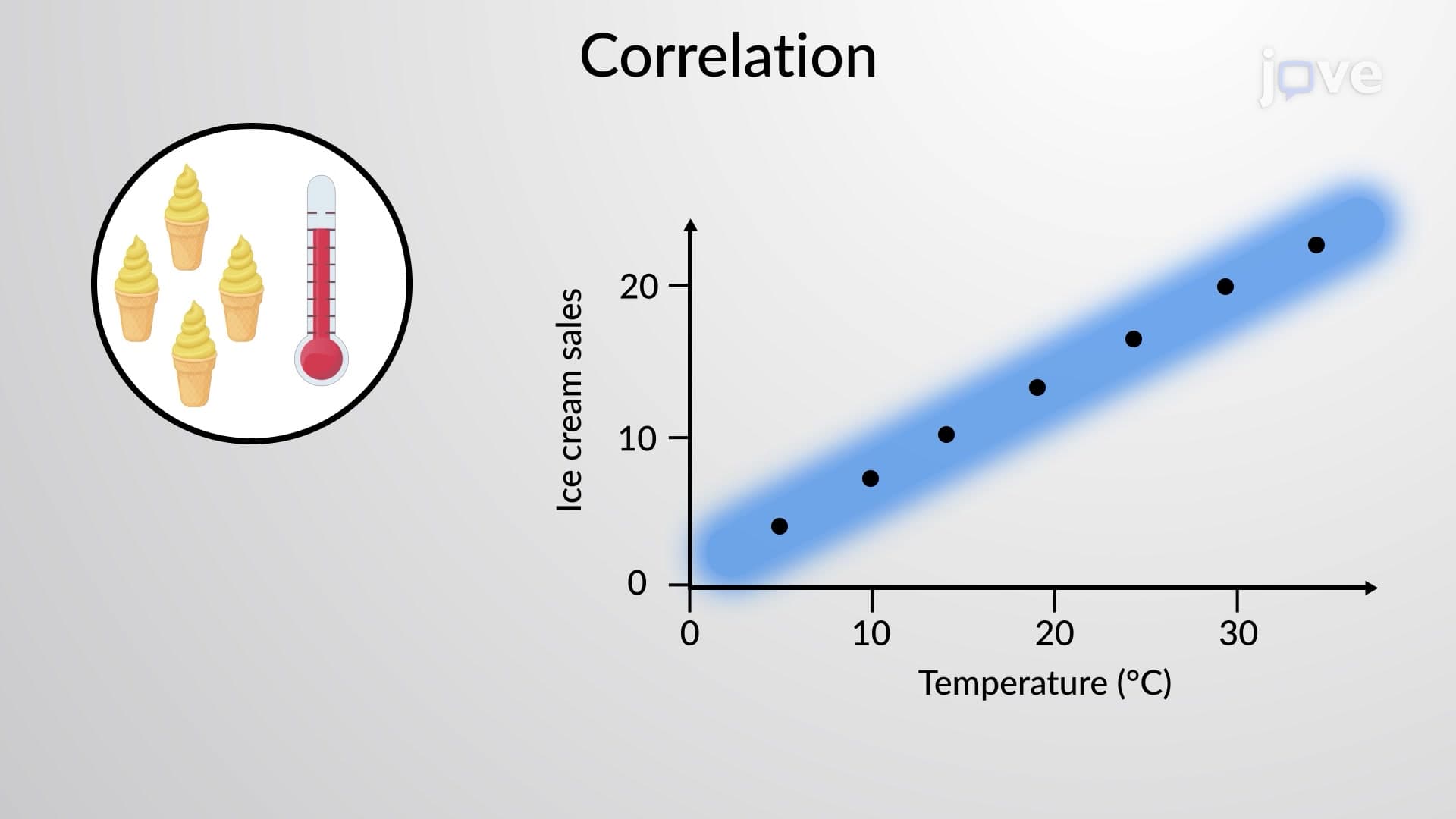
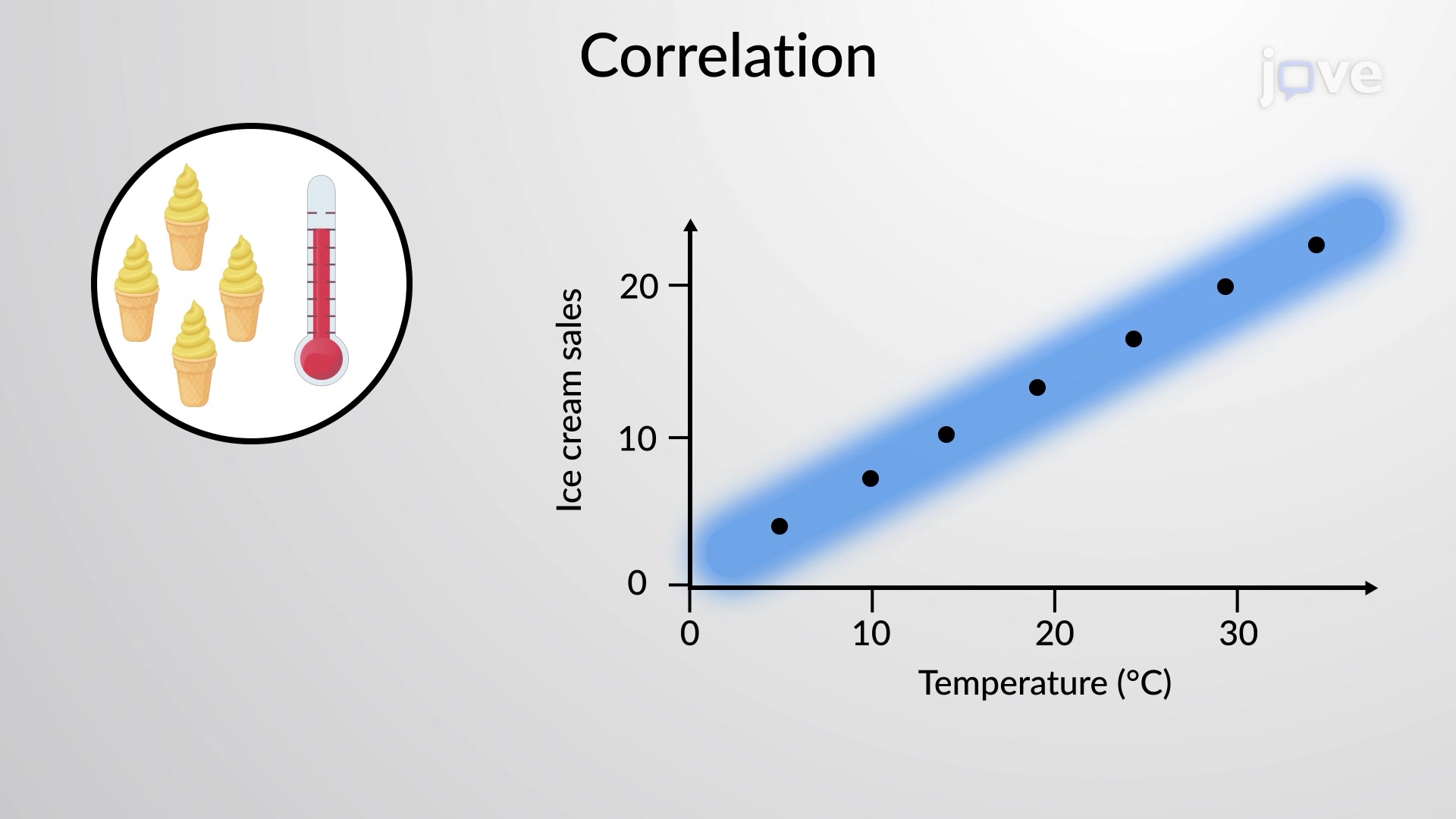
Did you know that ice cream sales in major US cities can predict air conditioning usage with stunning accuracy? Correlation measures how two variables move together, revealing hidden relationships in data all around us. From analyzing SAT scores versus study hours to tracking stock market trends, understanding what is correlation helps us make sense of patterns in everything from sports statistics to medical research. Watch the full video on JoVE Coach to master this concept with expert-led visuals and step-by-step explanations.
Correlation forms the backbone of statistical analysis, measuring how strongly two variables relate to each other. When statisticians examine data, they're often looking for these meaningful connections that help explain patterns in everything from student performance to economic indicators. The correlation definition centers on observing whether changes in one variable correspond with predictable changes in another variable.
Understanding correlation in detail requires recognizing three fundamental types. Positive correlation occurs when both variables increase together—like the relationship between hours studied and GPA scores among college students. As study time increases, grades typically improve as well. Negative correlation shows an inverse relationship, such as the connection between outdoor temperature and heating bills in Chicago homes. As temperatures rise, energy costs for heating decrease. Zero correlation indicates no predictable relationship, like comparing student ID numbers to their chemistry test scores.
Correlation basics extend beyond simple straight-line relationships. Linear correlations create scatter plots with points roughly following a straight path, making them ideal for introductory statistics courses and AP Statistics exam questions. However, many real-world phenomena display non-linear correlations. Consider how vaccination rates initially show little effect on disease transmission, then dramatically reduce infection rates once herd immunity thresholds are reached. This correlation concept appears frequently in epidemiology studies and public health research.
This correlation overview reveals why the concept appears across multiple disciplines. In psychology research at universities like Stanford and UCLA, researchers examine correlations between social media usage and anxiety levels among teenagers. Economics students analyze correlations between unemployment rates and consumer spending patterns. Pre-med students encounter correlation analysis when studying relationships between lifestyle factors and health outcomes, preparing them for medical school coursework and eventually the MCAT exam.
Correlation study guides emphasize that understanding these relationships helps students excel in quantitative courses, from high school algebra through college-level statistics and research methods classes.
Frequently Asked Questions
Correlation measures how two variables change together, showing whether they have a predictable relationship. It's crucial because it helps identify patterns in data, predict outcomes, and make informed decisions in fields from medicine to finance. Understanding correlation is essential for success in AP Statistics, college research methods, and standardized tests like the SAT Math section.
Correlation definition encompasses both the direction (positive or negative) and strength (weak to strong) of relationships between variables. Direction tells us whether variables move in the same direction or opposite directions. Strength indicates how closely the data points cluster around a predictable pattern, ranging from perfect correlation to no correlation at all.
AP Statistics frequently tests correlation through scatter plot interpretation, correlation coefficient calculations, and distinguishing correlation from causation. Students must identify correlation types, calculate correlation coefficients, and explain what correlation values mean in context. Practice with real data sets and graphing calculator techniques is essential for exam success.
Correlation shows that two variables move together, but causation proves one variable directly causes changes in another. College exams often test this distinction through scenarios like ice cream sales and drowning rates (both increase in summer due to temperature, not because ice cream causes drowning). Understanding this difference prevents logical fallacies in research interpretation.
Medical researchers use correlation to study relationships between risk factors and health outcomes, like examining connections between exercise frequency and cardiovascular health. MCAT questions often involve interpreting correlation studies in biological and behavioral sciences sections. Understanding correlation helps evaluate research validity and statistical significance in medical literature.
Absolutely! Correlation concepts start with visual pattern recognition in scatter plots, making them accessible to high school students. The mathematical calculations can be complex, but understanding the basic principles requires only algebra skills. Most introductory statistics courses build correlation knowledge gradually, starting with intuitive examples before introducing formulas.
Focus on real-world examples that connect to your interests, practice interpreting scatter plots regularly, and work with actual data sets from sources like the US Census Bureau. Create flashcards for correlation types and practice explaining concepts in your own words. Form study groups to discuss different correlation examples and quiz each other on identifying correlation versus causation scenarios.
Build on correlation knowledge by exploring regression analysis, which uses correlation to make predictions about one variable based on another. Study correlation coefficients (like Pearson's r) for quantifying relationship strength, then advance to multiple regression and analysis of variance (ANOVA). These concepts frequently appear in upper-level statistics courses and graduate school entrance exams.
Related Micro-courses
Related Subjects
 Physics 33 micro-courses›
 Math Fundamentals 11 micro-courses›