- Statistics
- Correlation and Regression
Micro-courses:17

Correlation and Regression
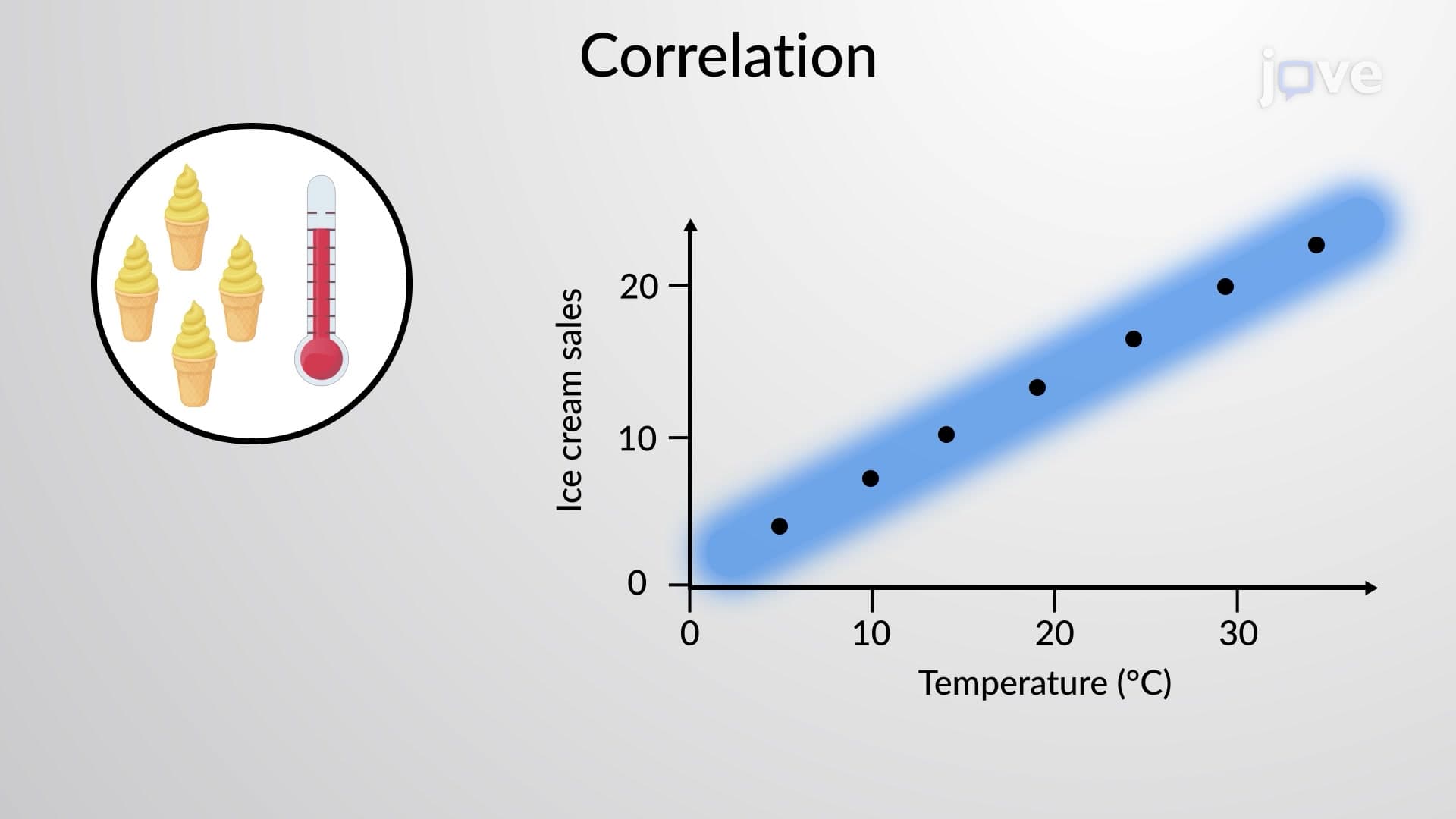
1. Correlation

2. Coefficient of Correlation

3. Calculating and Interpreting the Linear Correlation Coefficient

4. Regression Analysis

5. Outliers and Influential Points

6. Residuals and Least-Squares Property
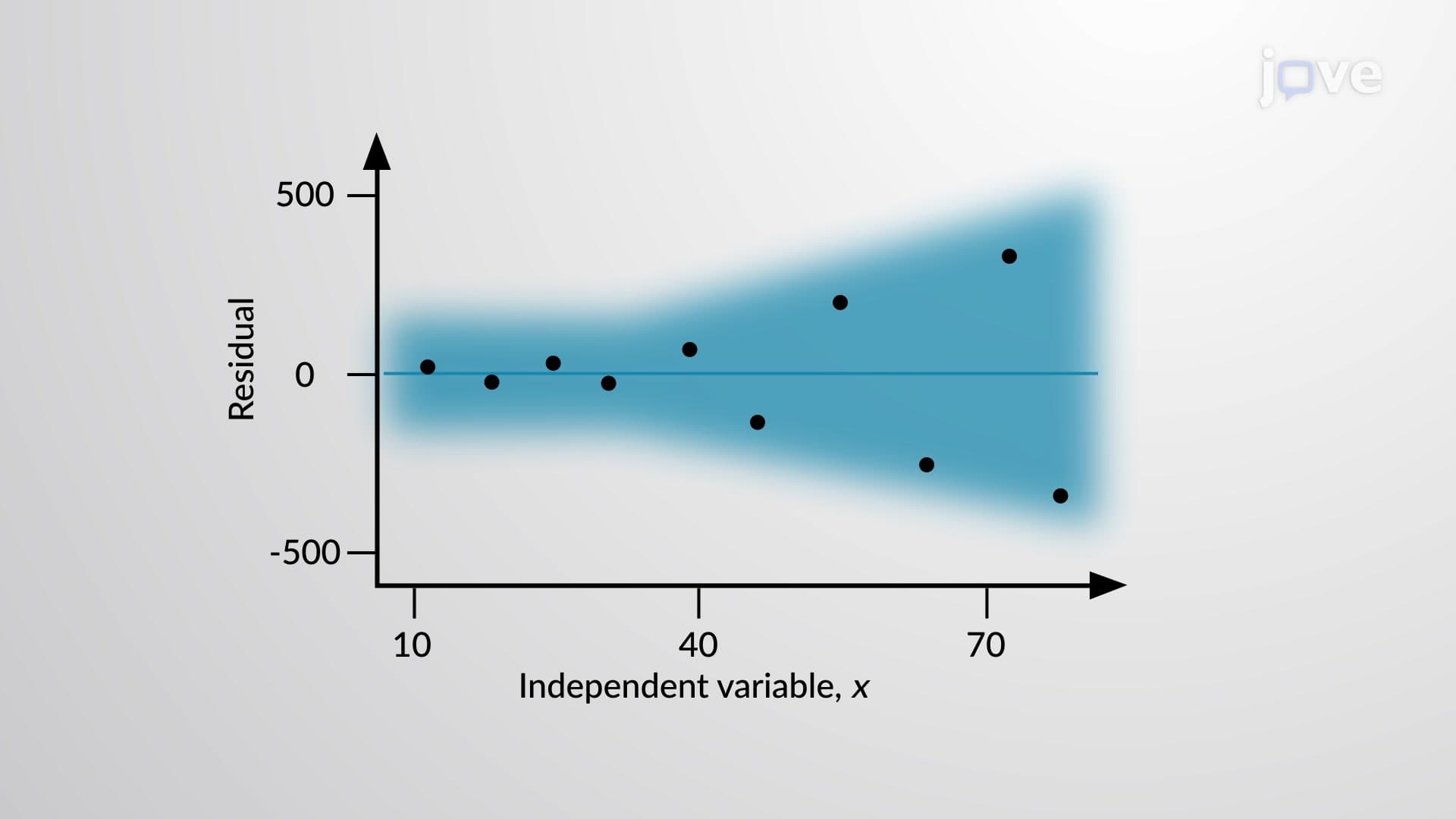
7. Residual Plots
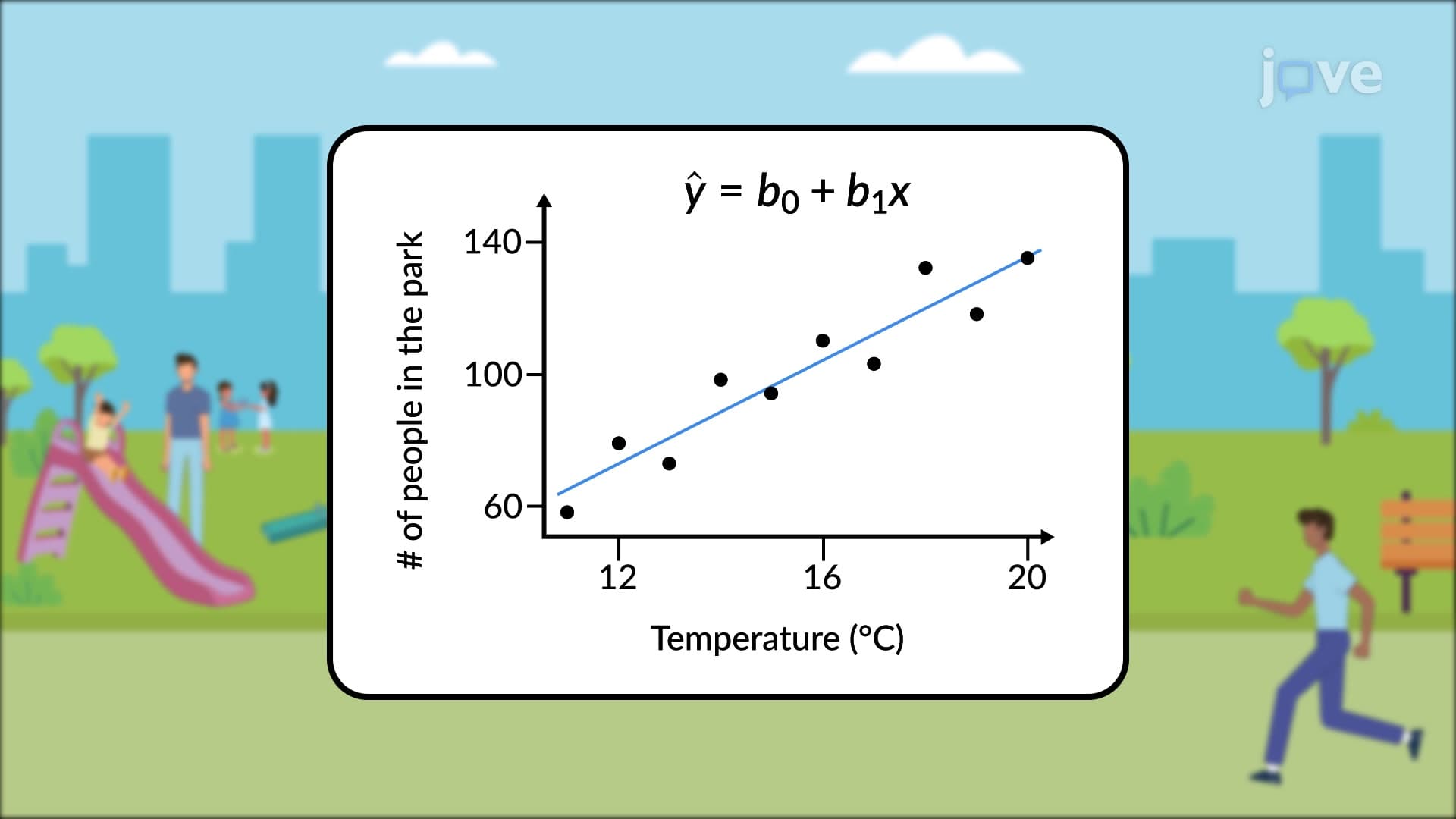
8. Variation

9. Prediction Intervals

10. Multiple Regression
Statistics correlation measures the relationship between variables, while regression analysis statistics helps predict outcomes based on these relationships. This course covers correlation coefficients, Pearson correlation methods, least squares regression, and R-squared interpretation through real-world applications like temperature-ice cream sales relationships and investment-profit predictions. Master these essential statistical concepts with JoVE Coach's comprehensive approach.
- Understand the fundamental concepts of positive, negative, and non-linear correlations in real-world datasets
- Learn to calculate and interpret the linear correlation coefficient (r) using statistical formulas
- Identify outliers and influential points that affect correlation strength and regression accuracy
- Explore regression analysis techniques to develop predictive mathematical models
- Analyze residual plots to evaluate regression model quality and goodness of fit
- Apply the least-squares property to determine the best-fit regression line
- Understand variation types: explained, unexplained, and total deviation in statistical relationships
- Learn prediction intervals and their role in estimating variable ranges with confidence
- Explore multiple regression analysis for complex relationships involving several variables
1. Correlation Fundamentals and Types: Correlation measures how two variables move together, with positive correlation showing variables increasing together (like temperature and ice cream sales), negative correlation showing inverse relationships (like temperature and hot chocolate sales), and non-linear correlations following curved patterns (like exponential COVID case growth). Understanding these patterns helps identify relationships in real-world data from healthcare outcomes to economic indicators.
2. Linear Correlation Coefficient Calculation: The Pearson correlation coefficient (r) quantifies linear relationship strength between -1 and +1, where values closer to these extremes indicate stronger correlations. Calculate r using the formula involving sums of x², y², and xy values. For example, with athlete height-weight data, you'll determine correlation strength and compare against critical values from statistical tables to establish significance at chosen confidence levels.
3. Regression Analysis and Prediction Models: Regression analysis statistics creates mathematical models expressing relationships between independent and dependent variables through best-fit lines. The regression equation y = b₀ + b₁x uses y-intercept (b₀) and slope (b₁) to predict outcomes. For instance, predicting annual temperature from CO₂ levels or estimating profits from investment amounts demonstrates practical regression applications in environmental science and business forecasting.
4. Outliers and Influential Points Impact: Outliers appear as data points significantly distant from regression lines vertically, while influential points lie far horizontally from other data. Both affect correlation strength and regression accuracy. Identify outliers using residual analysis—differences between observed and predicted values. Points beyond two residual standard deviations typically qualify as outliers, requiring careful consideration about data inclusion or exclusion in final analyses.
5. Least Squares Regression and Residual Analysis: The least-squares property ensures regression lines minimize the sum of squared residuals—vertical distances between actual data points and predicted values. Residual plots help evaluate model appropriateness by showing patterns that indicate good fits (random scatter) versus poor fits (curved patterns or increasing spread). This principle underlies most statistical software regression calculations.
6. Variation Analysis and R-squared Interpretation: Total variation splits into explained variation (attributable to the regression relationship) and unexplained variation (residuals from other factors or chance). R-squared values represent the proportion of total variation explained by the regression model, with higher values indicating better predictive power. For example, R² = 0.762 means the model explains 76.2% of outcome variation, while 23.8% remains unexplained.
7. Multiple Regression Applications: Multiple regression extends simple regression to analyze relationships between one dependent variable and multiple independent variables simultaneously. For example, athlete water consumption depends on both temperature and practice duration. Software typically handles complex calculations, producing multiple coefficient of determination (R²) values. Adjusted R² accounts for additional variables to prevent inflation from simply adding more predictors to models.
Frequently Asked Questions
Correlation measures statistical relationships between variables but doesn't prove causation. Strong correlation between ice cream sales and drowning incidents doesn't mean ice cream causes drowning—both increase during hot weather. Always consider lurking variables and use controlled experiments to establish causal relationships.
Values near 0 indicate weak correlation, while values approaching ±1 show strong correlation. For AP exams, remember: |r| > 0.7 suggests strong correlation, 0.3 < |r| < 0.7 indicates moderate correlation, and |r| < 0.3 shows weak correlation. Always compare calculated r-values against critical values for statistical significance.
Focus on interpreting scatter plots, understanding R-squared values, and recognizing when linear regression is appropriate. MCAT questions often involve biological data like enzyme kinetics or population studies. Practice identifying outliers and understanding how they affect correlation strength in experimental data.
Residual plots reveal whether linear regression models appropriately fit data patterns. In medical research, incorrect model assumptions can lead to wrong treatment conclusions. Random residual scatter indicates good model fit, while patterns suggest non-linear relationships requiring different analytical approaches.
Many students struggle with interpreting R-squared values and understanding prediction intervals versus confidence intervals. Remember R-squared shows explained variation percentage, while prediction intervals estimate ranges for individual predictions. Practice with real datasets helps build intuition for these concepts.
Start by identifying dependent and independent variables clearly. Use statistical software for calculations while focusing on interpretation skills. Understand that adding variables typically increases R-squared, making adjusted R-squared more reliable for model comparison. Practice explaining results in context rather than just calculating numbers.
Always identify outliers using the two-standard-deviation rule for residuals, but consider context before removal. In SAT score analysis, a student scoring 1600 with minimal study time might represent genuine exceptional ability rather than data error. Verify outliers aren't measurement mistakes before excluding them from analysis.
This microcourse includes 10 concept videos that walk you through the building blocks of Statistics. Each video is short, about 1 minute, so you can cover a full topic during a coffee break or between classes. The full sequence starts with Correlation and ends with Multiple Regression.
The playlist moves from big-picture ideas to the precise vocabulary used in Statistics. Early videos introduce Correlation, Coefficient of Correlation, and Calculating and Interpreting the Linear Correlation Coefficient. The middle of the series focuses on Outliers and Influential Points, Residuals and Least-Squares Property, and Residual Plots. The final stretch covers Variation, Prediction Intervals, and Multiple Regression.
The natural next step is Statistics in Practice. From there, you can move to Nonparametric Statistics, Biostatistics, and Survival Analysis. Once you finish those, the full Statistics curriculum of 17 microcourses on JoVE Coach opens up, taking you from foundational concepts to advanced systems.
Related Subjects
 Physics 33 micro-courses›
 Math Fundamentals 11 micro-courses›