- Statistics
- Summarizing and Visualizing Data
Micro-courses:17

Summarizing and Visualizing Data
1. Review and Preview

2. What is a Frequency Distribution
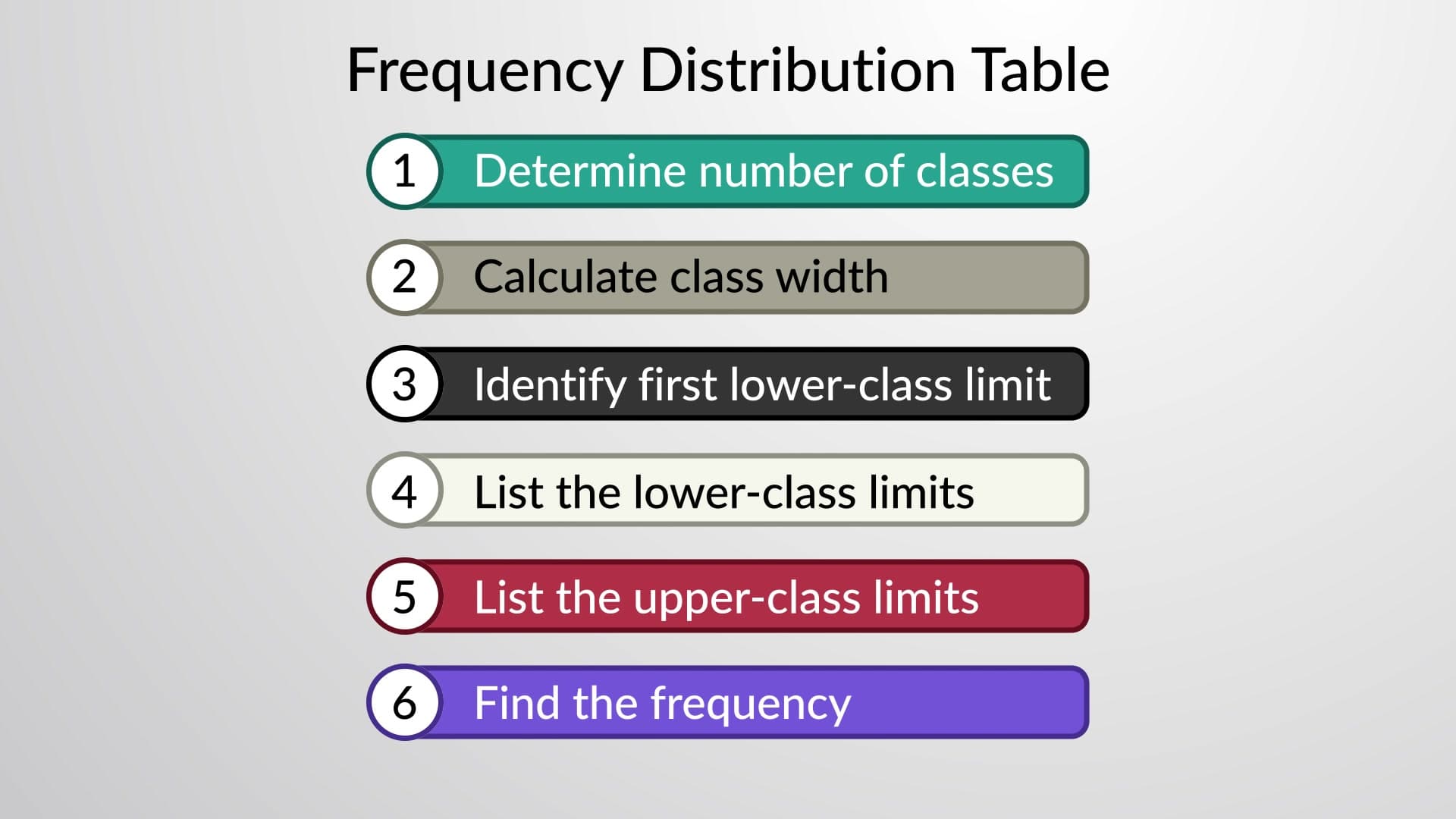
3. Construction of Frequency Distribution
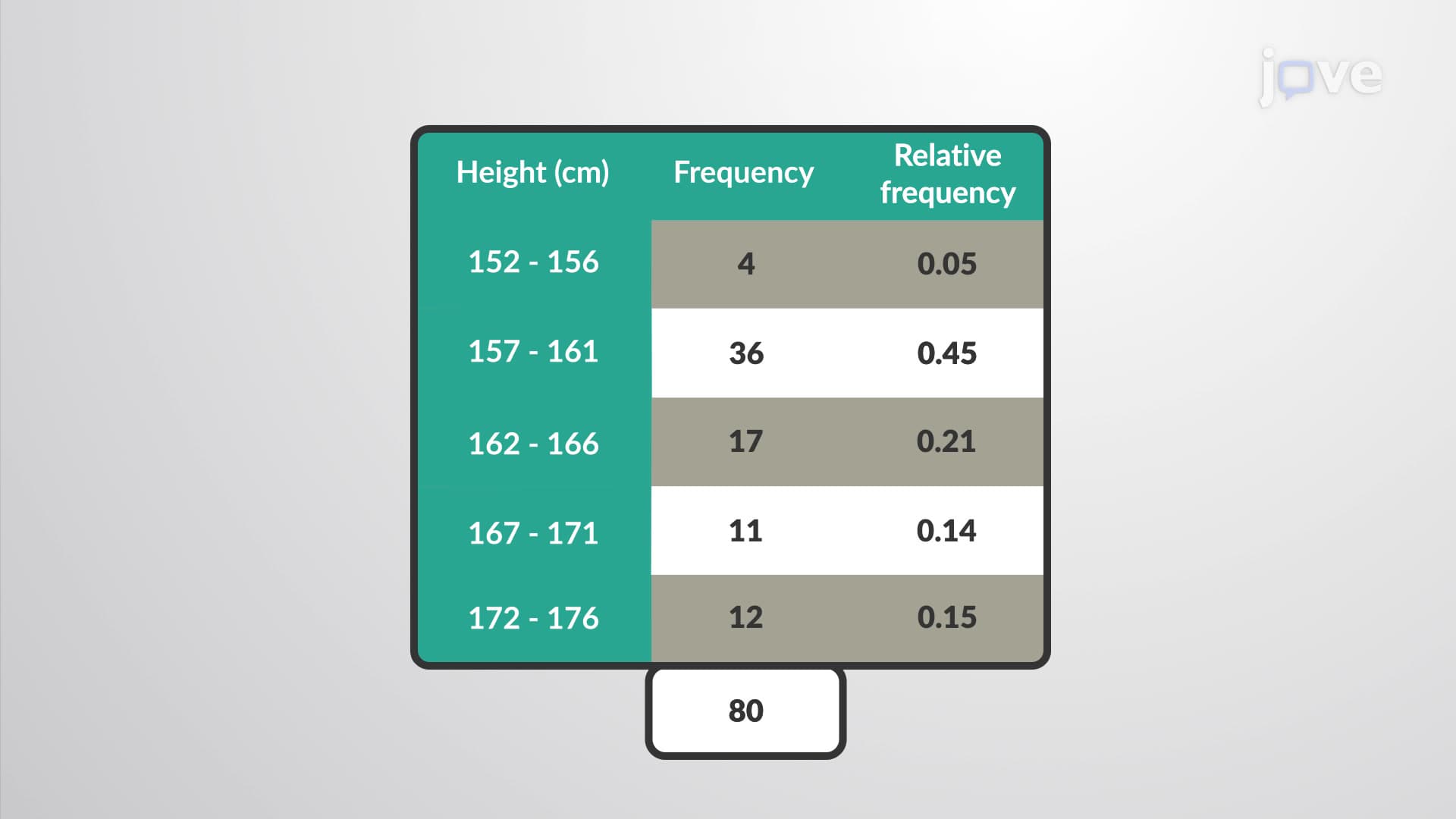
4. Relative Frequency Distribution
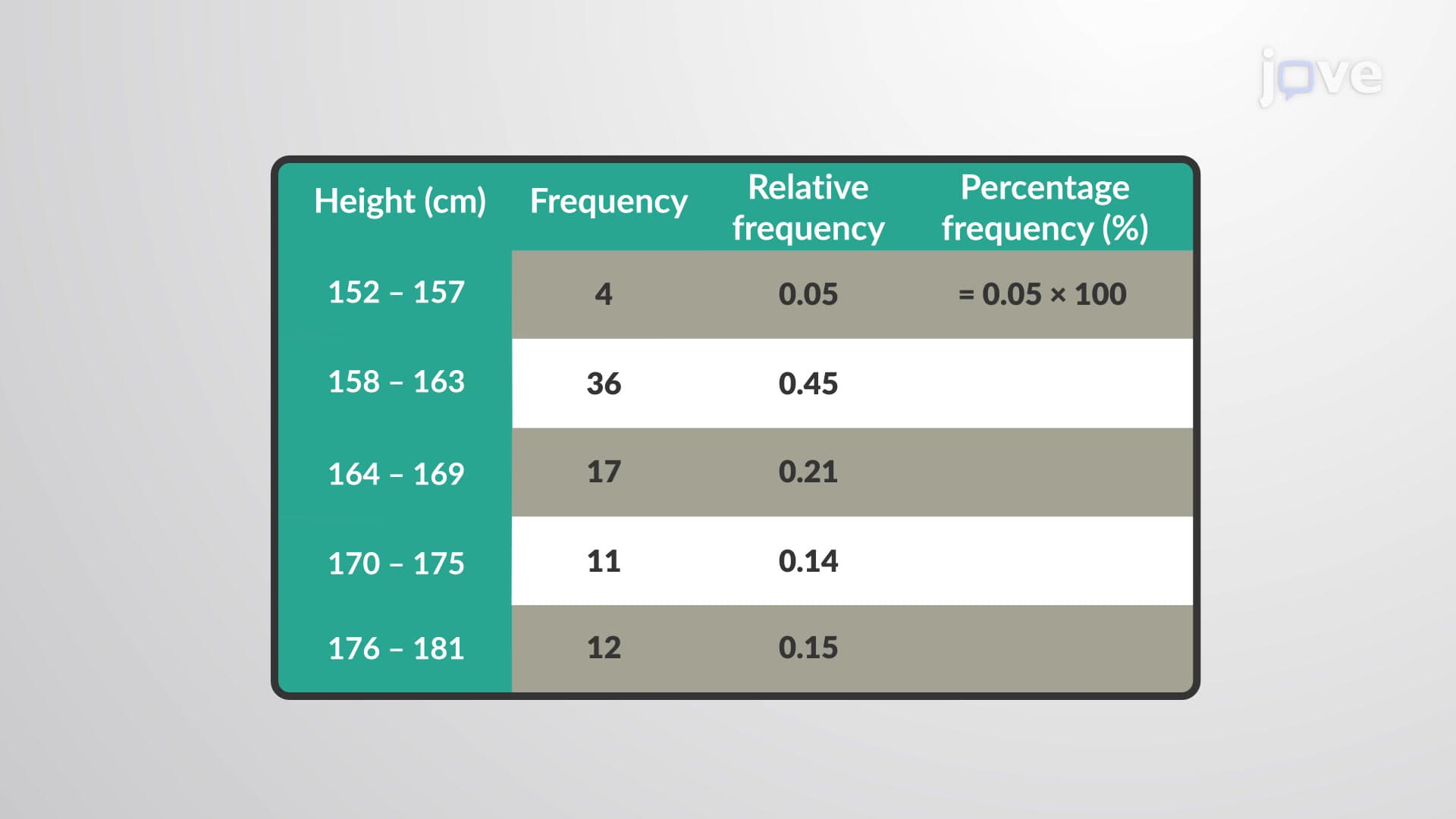
5. Percentage Frequency Distribution
6. Cumulative Frequency Distribution
7. Ogive Graph
8. Histogram
9. Relative Frequency Histogram
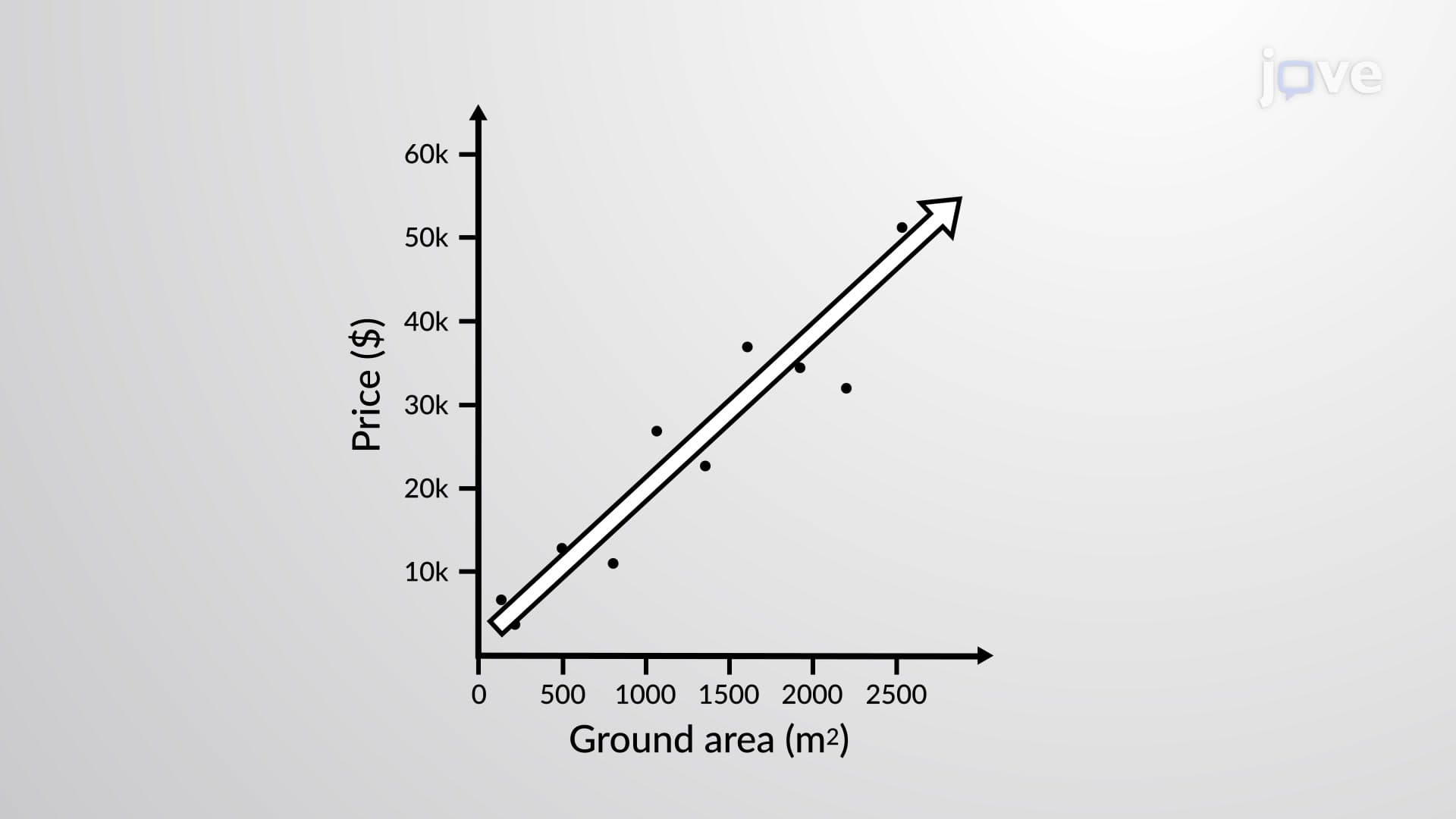
10. Scatter Plot
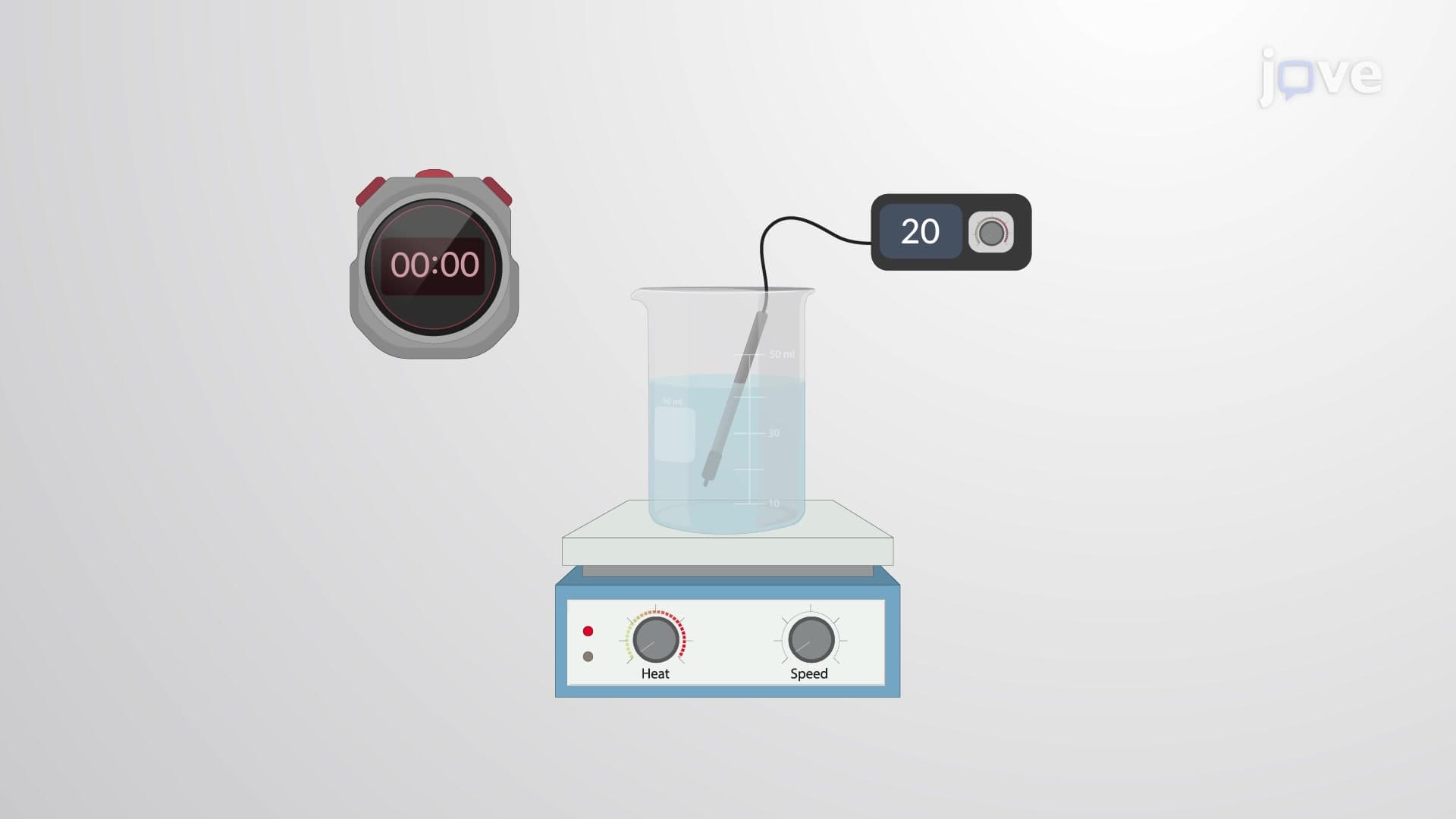
11. Time-Series Graph
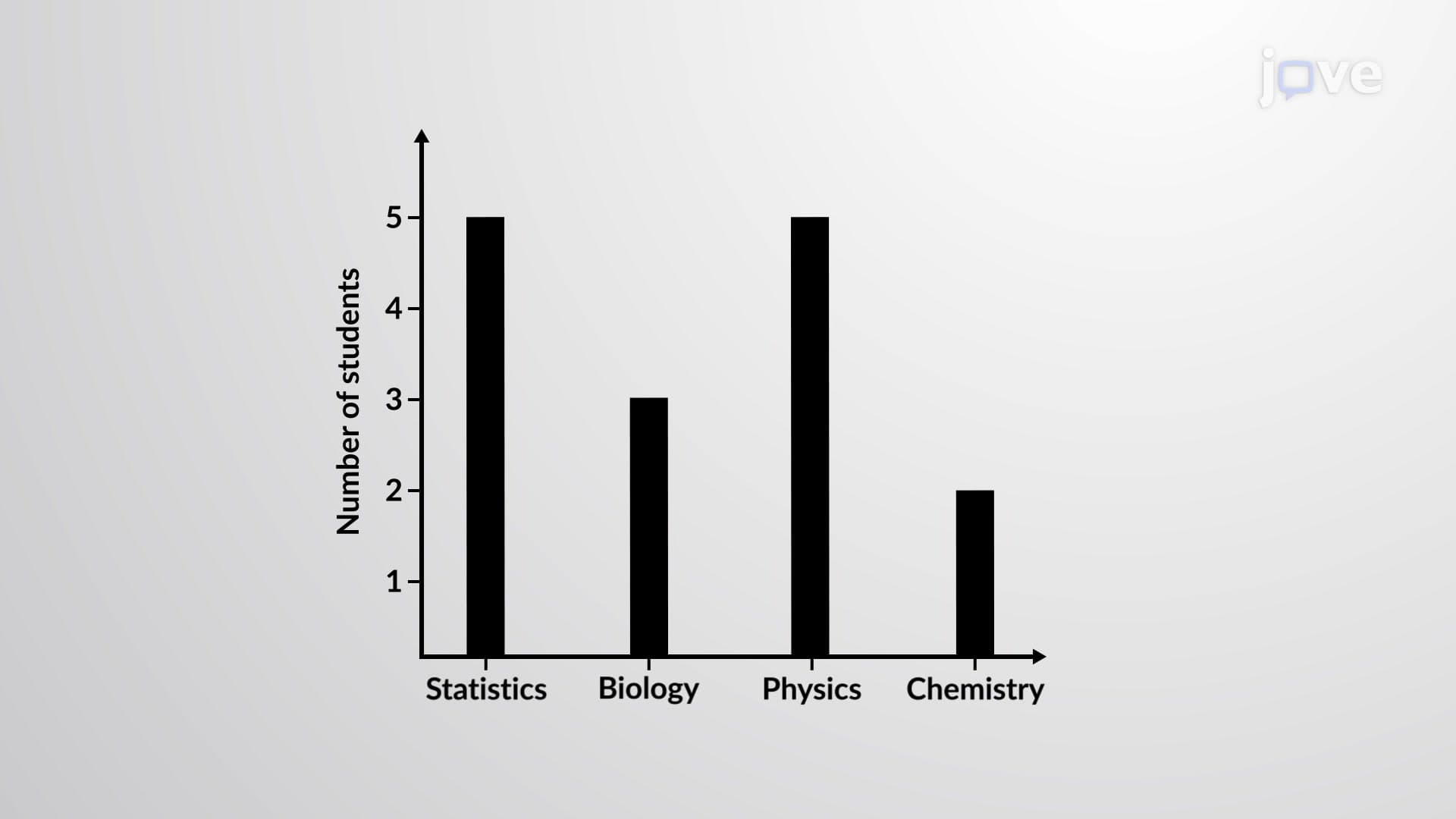
12. Bar Graph
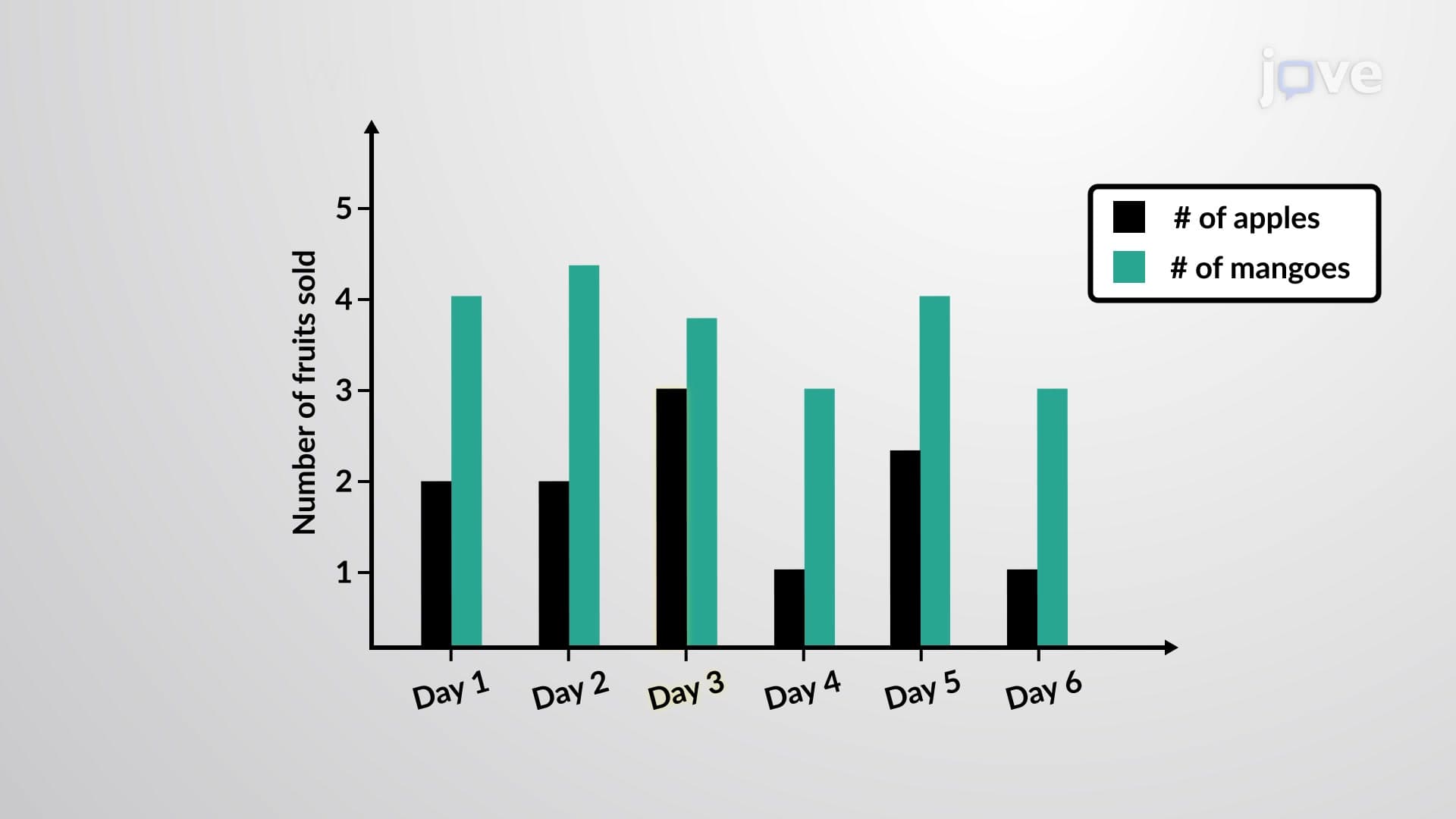
13. Multiple Bar Graph
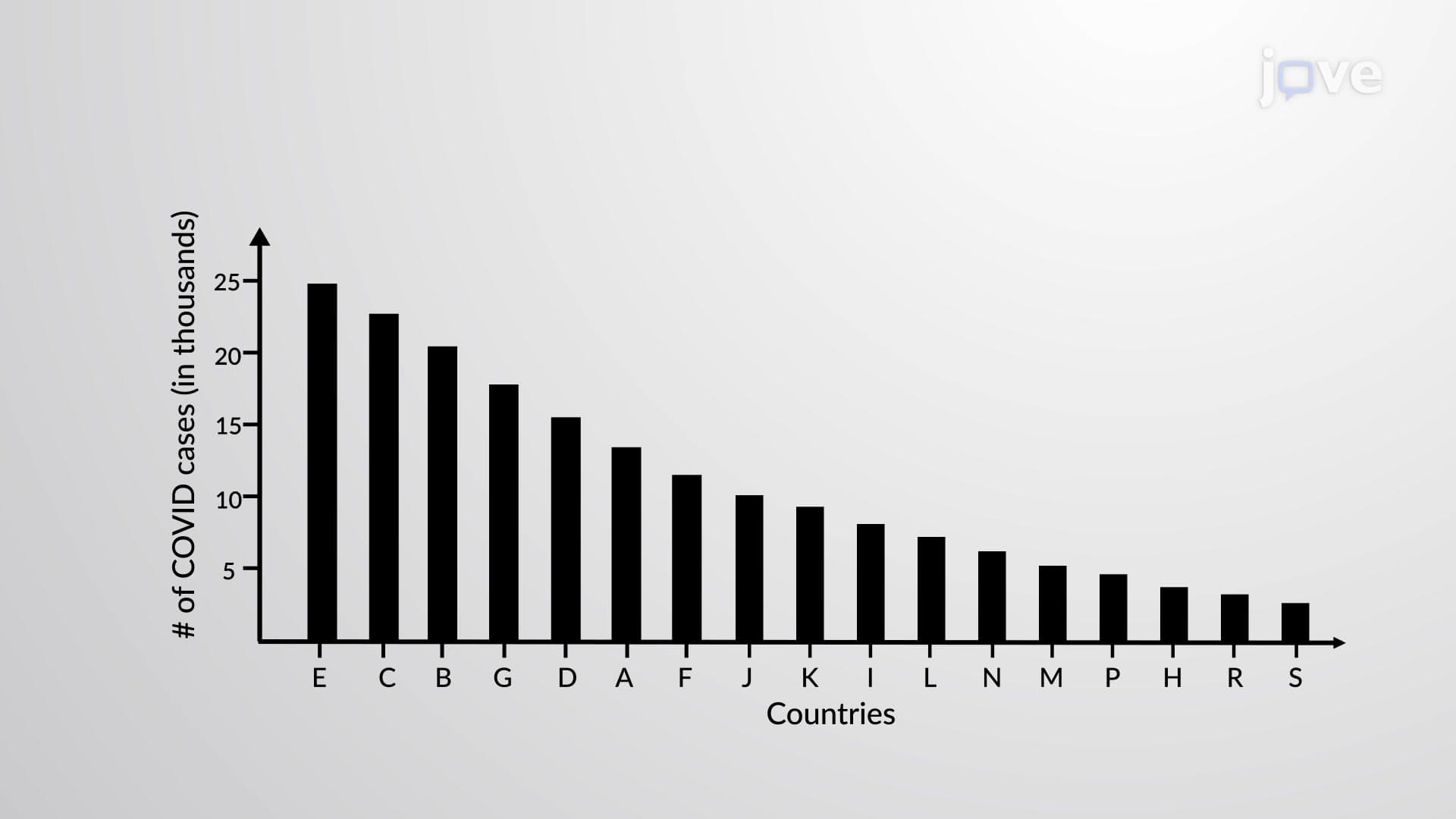
14. Pareto Chart
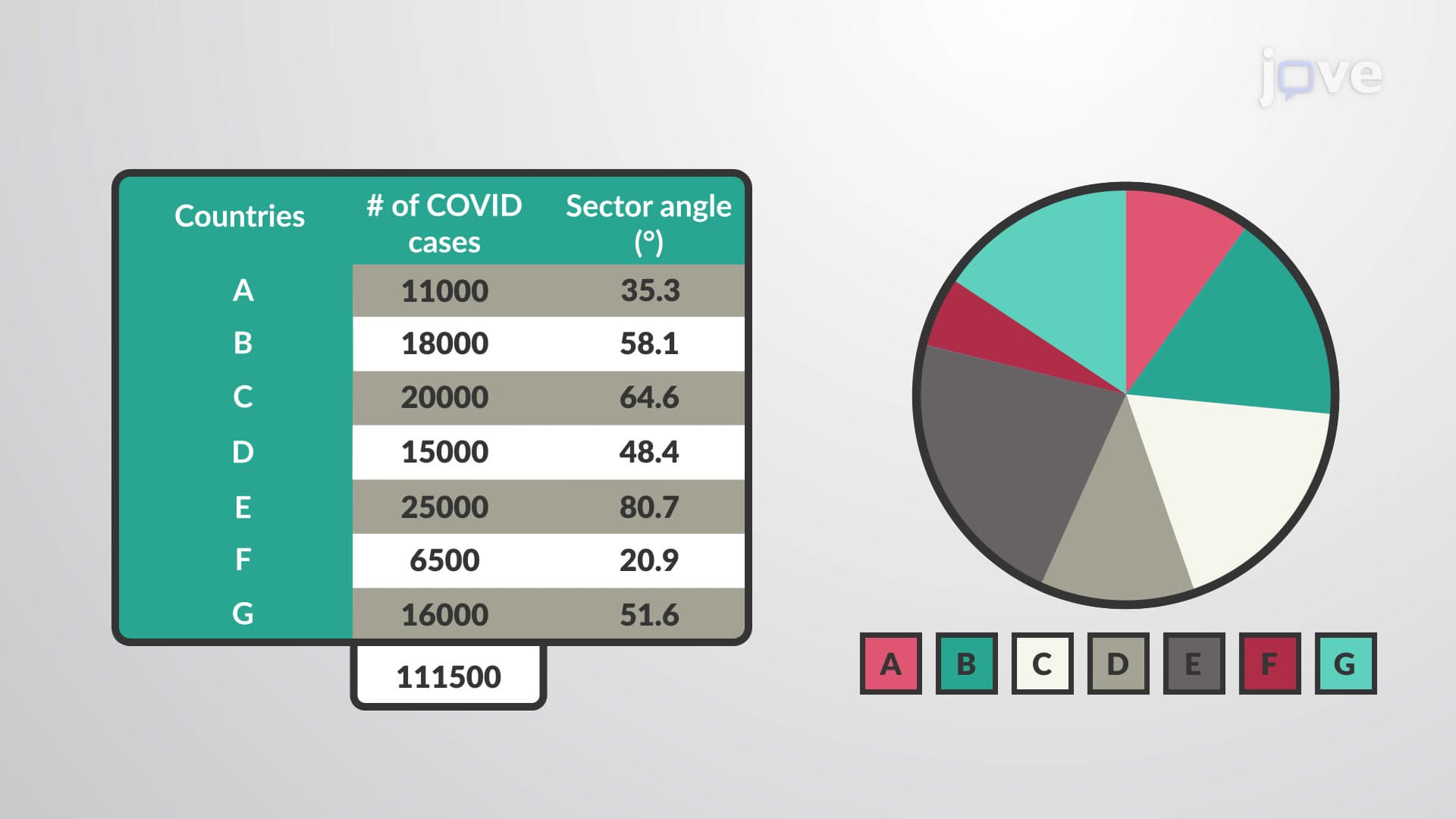
15. Pie Chart
Summarizing data effectively is fundamental to statistical analysis and decision-making across fields like healthcare, business, and research. This comprehensive course covers essential methods for summarizing and visualizing data, from frequency distributions and histograms to scatter plots and pie charts. Students will master the tools statisticians use to transform raw data into meaningful insights through JoVE Coach's interactive learning approach, preparing them for success in statistics courses and standardized exams.
- Understand how to construct and interpret frequency distributions, including relative, percentage, and cumulative frequencies
- Learn to create and analyze histograms, bar charts, and other data visualization graphs for quantitative data
- Identify appropriate chart types for different data scenarios, from qualitative categories to time-series analysis
- Explore scatter plots to visualize relationships between two quantitative variables and assess correlation patterns
- Analyze specialized charts like Pareto diagrams and ogive graphs for specific data presentation needs
- Apply pie charts and multiple bar graphs to effectively display categorical and comparative data sets
- Understand class boundaries, class widths, and proper data grouping techniques for accurate statistical representation
- Master the selection criteria for choosing optimal visualization methods based on data type and research objectives
1. Frequency Distribution Construction and Analysis Understanding how to organize raw data into meaningful categories forms the foundation of statistical analysis. Students learn the six-step process for creating frequency tables, including selecting appropriate class numbers (5-20 classes), calculating class width through range division, and establishing class boundaries. Using examples like marathon participant ages or student height measurements, learners master techniques for handling continuous data. The process involves determining lower and upper class limits, using tally marks for data counting, and ensuring proper class intervals without gaps or overlaps.
2. Relative and Percentage Frequency Distributions Beyond simple frequency counts, statisticians need proportional representations of data. Relative frequency distributions express each class frequency as a fraction of the total sample size, providing insight into data distribution patterns. For instance, analyzing hockey player heights reveals that 0.05 (or 5%) of players fall within the 152-157 cm range. Converting relative frequencies to percentages creates percentage frequency distributions, where all percentages sum to 100%. These methods enable meaningful comparisons across different sample sizes and facilitate standardized data interpretation in fields like market research and quality control.
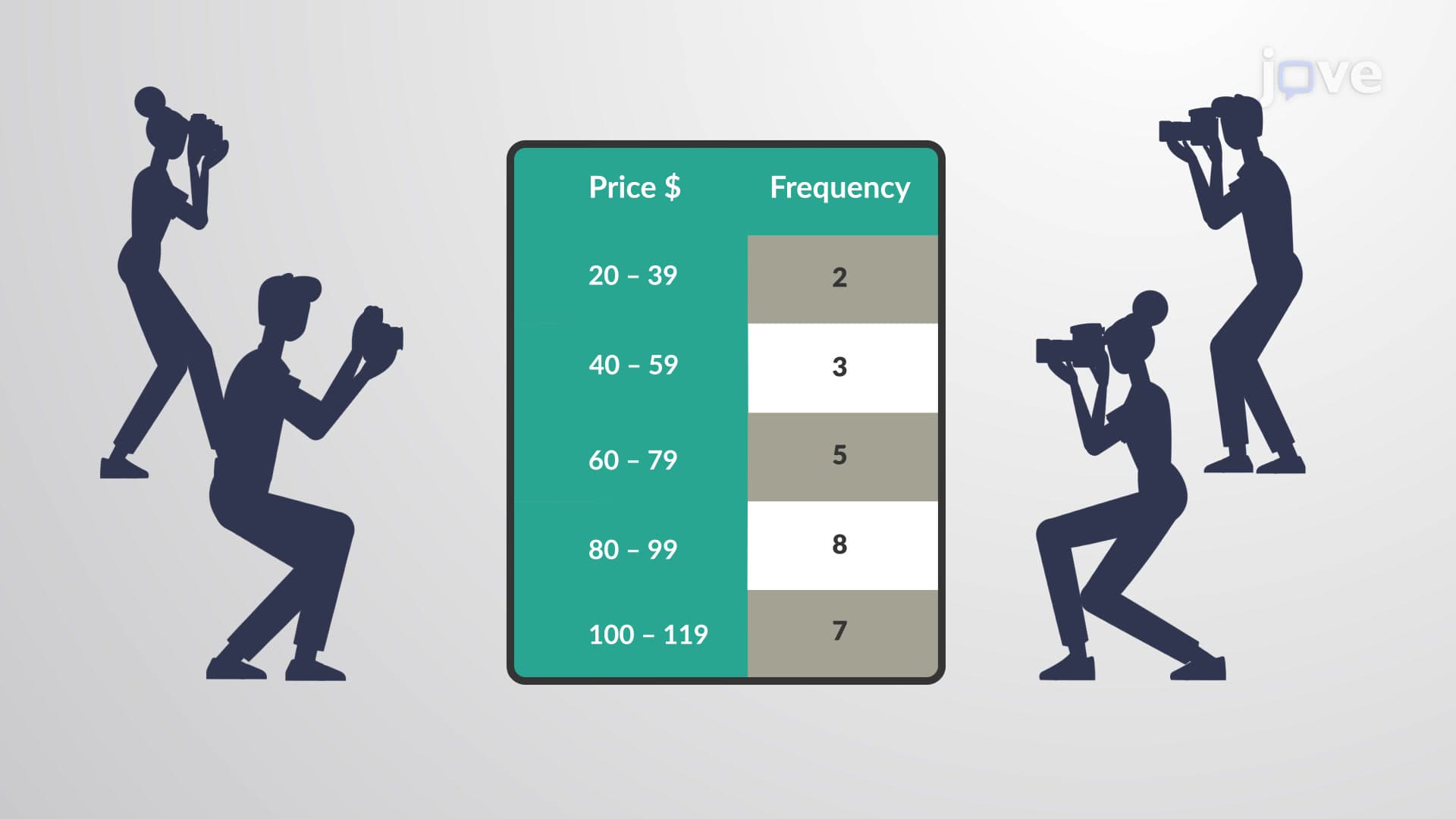
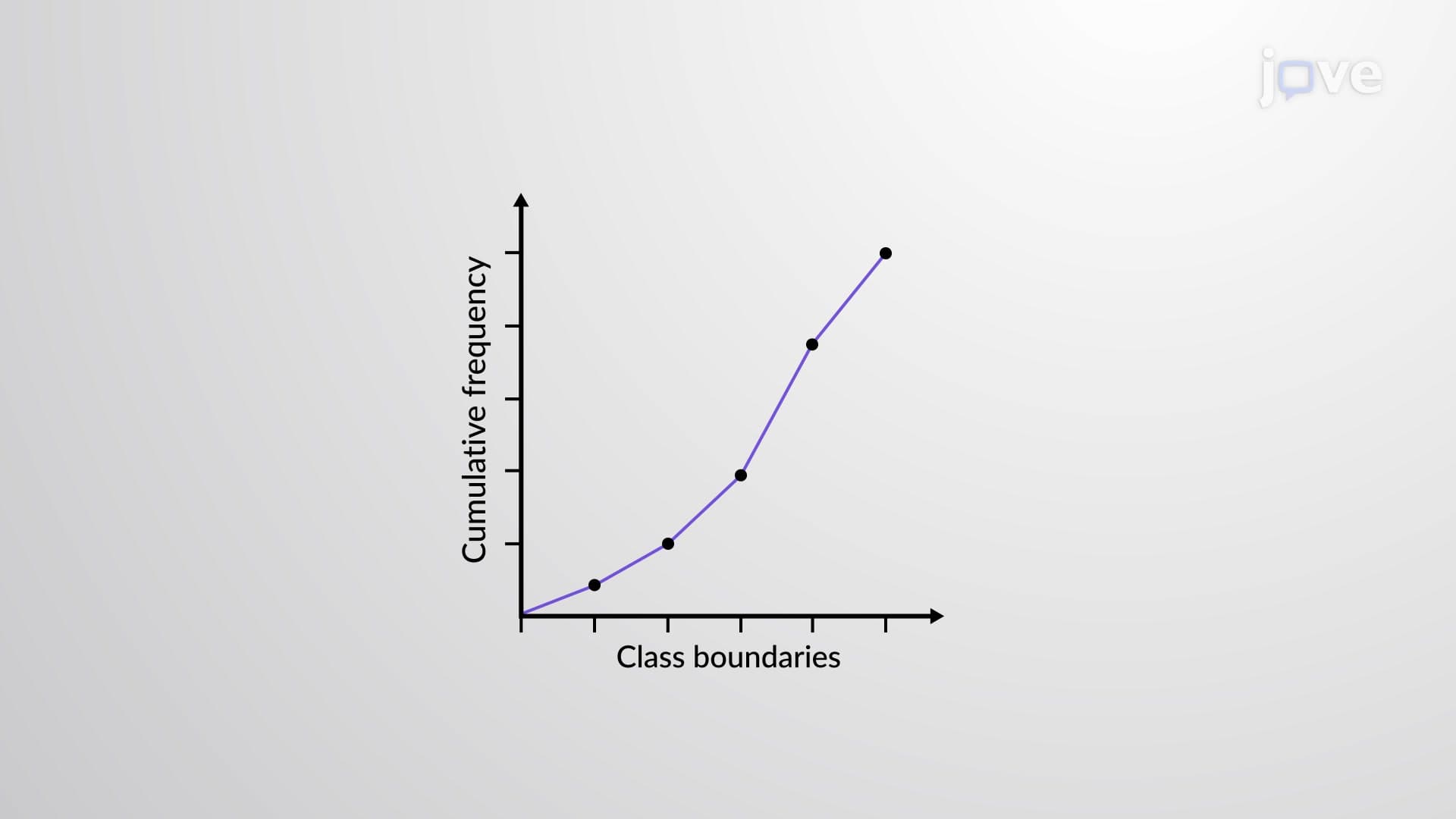
3. Cumulative Frequency and Ogive Graphs Cumulative frequency analysis answers questions about data below certain thresholds, such as "How many customers bought cameras costing less than $80?" Each cumulative frequency represents the sum of current and all preceding class frequencies. Ogive graphs provide visual representation of cumulative data, plotting class boundaries on the x-axis against cumulative frequencies on the y-axis. Connected points create smooth curves showing data accumulation patterns. These tools prove invaluable for percentile calculations, quality control monitoring, and understanding data distribution characteristics in manufacturing and service industries.
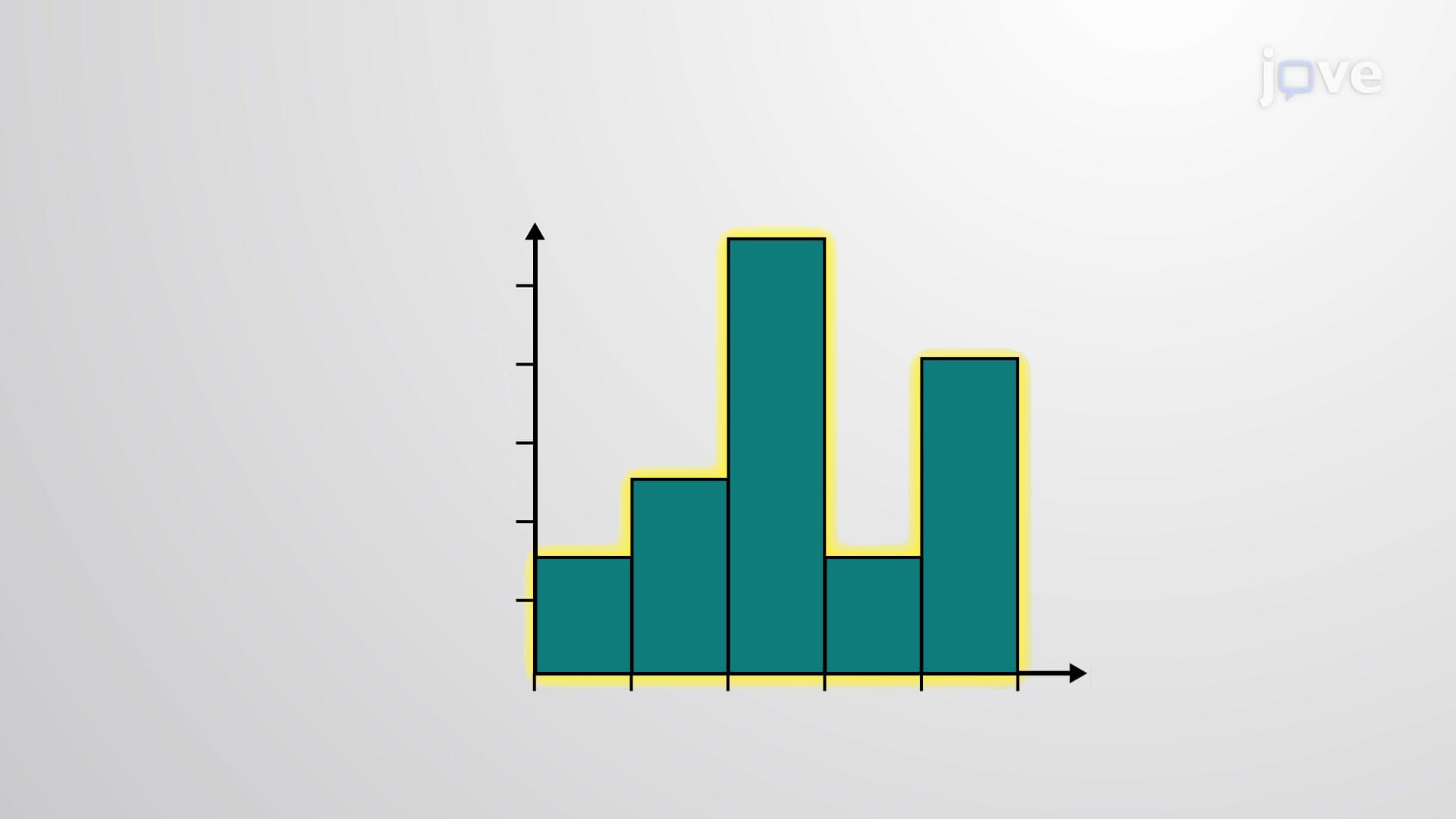
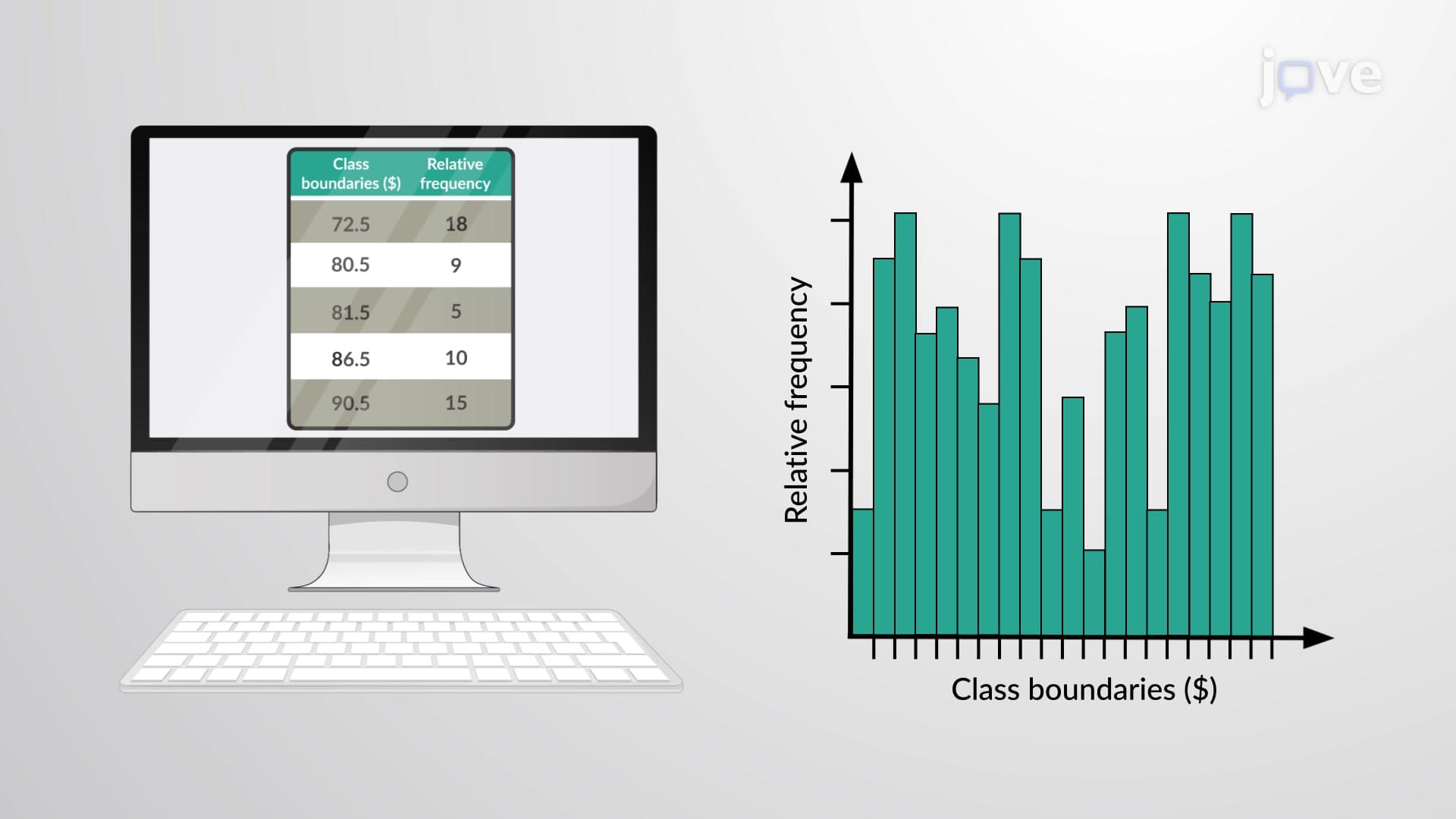
4. Histogram Construction and Interpretation Histograms transform frequency tables into powerful visual tools using bars of equal width without gaps between them. Class boundaries eliminate gaps between adjacent intervals, creating continuous horizontal scales. For example, book price ranges from $5-10 and $11-16 use boundaries of 4.5-10.5 and 10.5-16.5 to ensure continuity. Relative frequency histograms display proportions rather than raw counts, enabling comparison across different sample sizes. These visualizations help identify data distribution shapes, central tendencies, and variability patterns essential for statistical inference and decision-making in business and research contexts.
5. Scatter Plots and Correlation Analysis Bivariate data relationships require specialized visualization techniques to reveal patterns between variables. Scatter plots display independent variables (like house ground area) on the x-axis and dependent variables (like house prices) on the y-axis. Each data point represents one observation, and the overall pattern indicates correlation strength and direction. Positive correlation shows increasing trends, negative correlation reveals decreasing patterns, and no correlation displays random scatter. Best-fit lines help visualize relationships, with equal points above and below indicating good fit. These tools are crucial for regression analysis and predictive modeling in economics and social sciences.
6. Time-Series Graphs and Temporal Data Analysis Data collected over time requires specialized visualization to reveal trends, patterns, and seasonal variations. Time-series graphs plot time intervals on the x-axis against measured values on the y-axis, connecting points with continuous lines. Examples include water temperature changes during heating, stock price fluctuations, or patient vital sign monitoring. These graphs reveal important temporal patterns like growth trends, cyclical behaviors, and sudden changes. Healthcare professionals use time-series analysis for patient monitoring, while business analysts track sales performance and market trends using these powerful visualization tools.
7. Bar Graphs and Multiple Bar Comparisons Qualitative data visualization requires different approaches than quantitative data analysis. Bar graphs display categorical data using bars of equal width, with bar height representing frequency or count. Categories appear on the horizontal axis while frequencies occupy the vertical axis. Multiple bar graphs enable comparison between different groups, such as male and female student enrollment across various academic programs. These visualizations can include gaps between bars and multiple colors for different data sets. Applications span from survey research and market analysis to academic performance tracking and demographic studies.
8. Specialized Charts: Pareto and Pie Charts Certain data scenarios benefit from specialized visualization approaches. Pareto charts arrange bars in descending order to identify the most significant categories, following the 80/20 principle where few categories often account for most occurrences. This proves valuable for quality control, identifying major problem sources, or prioritizing improvement efforts. Pie charts represent qualitative data as circular sectors, with each slice proportional to category frequency. Sector angles are calculated by multiplying relative frequency by 360 degrees. These charts work best with 5-7 categories and help visualize part-to-whole relationships in budget allocation, market share analysis, and demographic distribution studies.
Frequently Asked Questions
Histograms display quantitative data using connected bars without gaps, showing continuous data distributions like test scores or measurements. Bar graphs show qualitative data with separated bars representing distinct categories like favorite colors or course enrollment. Use histograms for numerical data where order matters, and bar graphs for categorical data where order doesn't matter.
Choose between 5-20 classes depending on your data size and complexity. For smaller datasets (under 100 values), use 5-10 classes. Larger datasets can accommodate 15-20 classes. Too few classes lose detail, while too many create confusion. Consider your audience and the story you want the data to tell when making this decision.
AP Statistics commonly tests histogram interpretation, identifying distribution shapes, comparing multiple graphs, and drawing conclusions from scatter plots. You'll need to calculate relative frequencies, interpret cumulative frequency graphs, and explain correlation patterns. Practice identifying outliers, describing center and spread, and connecting graphical displays to statistical concepts like normality and skewness.
Yes, the MCAT's Chemical and Physical Foundations and Psychological, Social, and Biological Foundations sections frequently include data interpretation questions. You'll encounter scatter plots showing experimental results, bar graphs comparing treatment groups, and line graphs displaying time-series data. Strong visualization skills help you quickly extract key information and identify trends in research studies presented in passages.
Scatter plot patterns reveal correlation strength through point clustering around imaginary lines. Strong positive correlation shows points tightly clustered along an upward slope, while strong negative correlation displays tight clustering along a downward slope. Weak correlations show scattered points with unclear patterns. No correlation appears as random point distribution with no discernible pattern or trend.
Students often struggle with determining appropriate class boundaries and widths, especially ensuring no gaps or overlaps between classes. The key is calculating class width by dividing the range by the desired number of classes, then rounding up. Remember that class boundaries fall halfway between the upper limit of one class and the lower limit of the next class.
Practice with real datasets from sources like the U.S. Census Bureau or CDC. Create your own graphs from data you collect, then compare different visualization methods for the same dataset. Focus on interpretation skills by explaining what each graph reveals about the data. Use online tools like Excel or Google Sheets to build technical skills while reinforcing conceptual understanding.
Data visualization skills are essential in virtually every field today. Healthcare professionals use charts to track patient progress and population health trends. Business analysts create dashboards showing sales performance and market research results. Scientists publish research findings using graphs that communicate complex relationships clearly. Social media analytics, sports statistics, and even personal finance management all rely on effective data visualization techniques you'll learn in this course.
This microcourse includes 15 concept videos that walk you through the building blocks of Statistics. Each video is short, about 1 minute, so you can cover a full topic during a coffee break or between classes. The full sequence starts with Review and Preview and ends with Pie Chart.
The playlist moves from big-picture ideas to the precise vocabulary used in Statistics. Early videos introduce Review and Preview, What is a Frequency Distribution, and Construction of Frequency Distribution. The middle of the series focuses on Percentage Frequency Distribution, Cumulative Frequency Distribution, and Ogive Graph. The final stretch covers Histogram, Relative Frequency Histogram, Scatter Plot, Time-Series Graph, Bar Graph, Multiple Bar Graph, and Pie Chart.
The natural next step is Measure of Central Tendency. From there, you can move to Measures of Variation, Measures of Relative Standing, and Probability Distributions. Once you finish those, the full Statistics curriculum of 17 microcourses on JoVE Coach opens up, taking you from foundational concepts to advanced systems.
Related Subjects
 Physics 33 micro-courses›
 Math Fundamentals 11 micro-courses›