Loading…
Loading video…
220,300 views
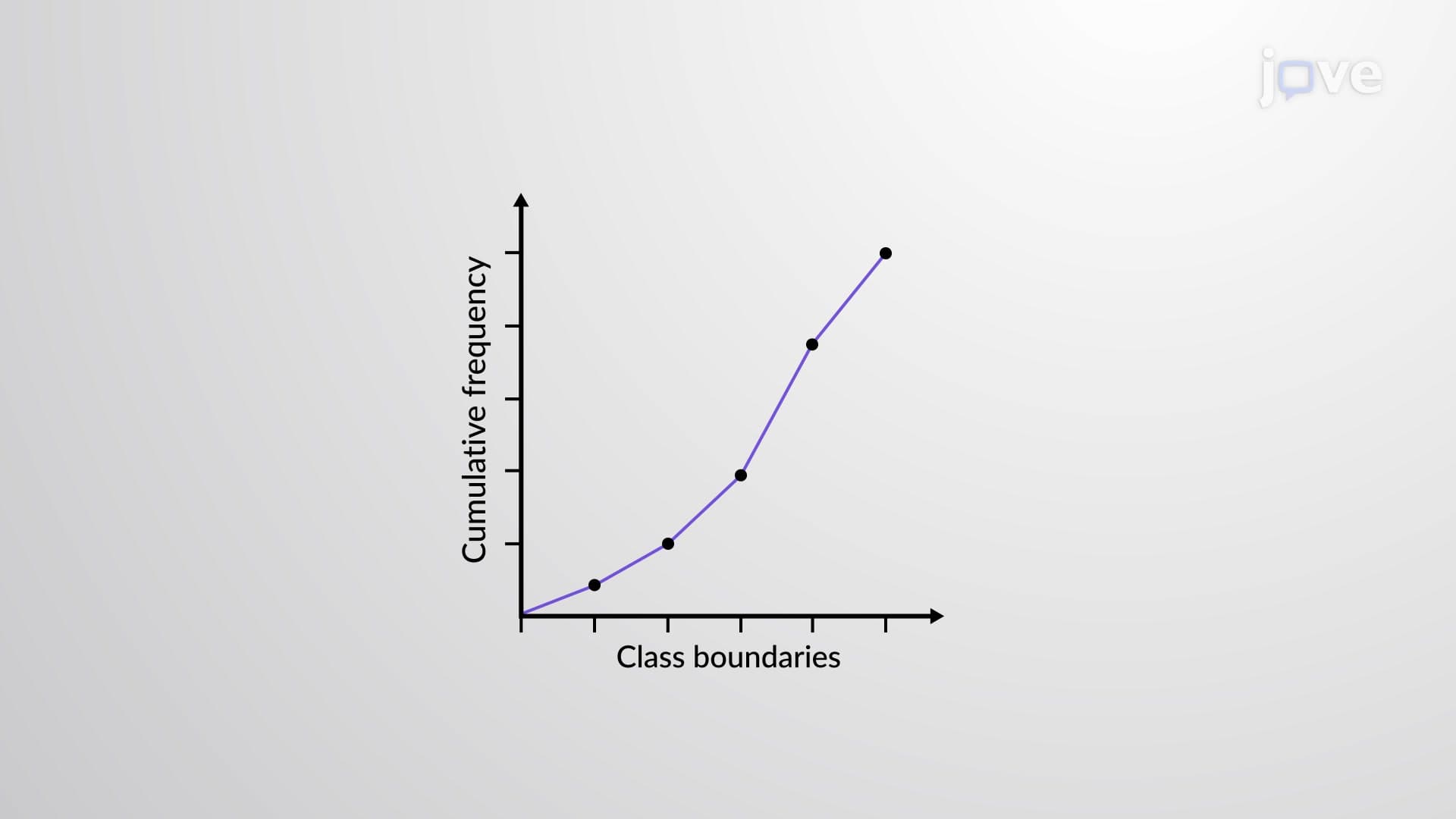
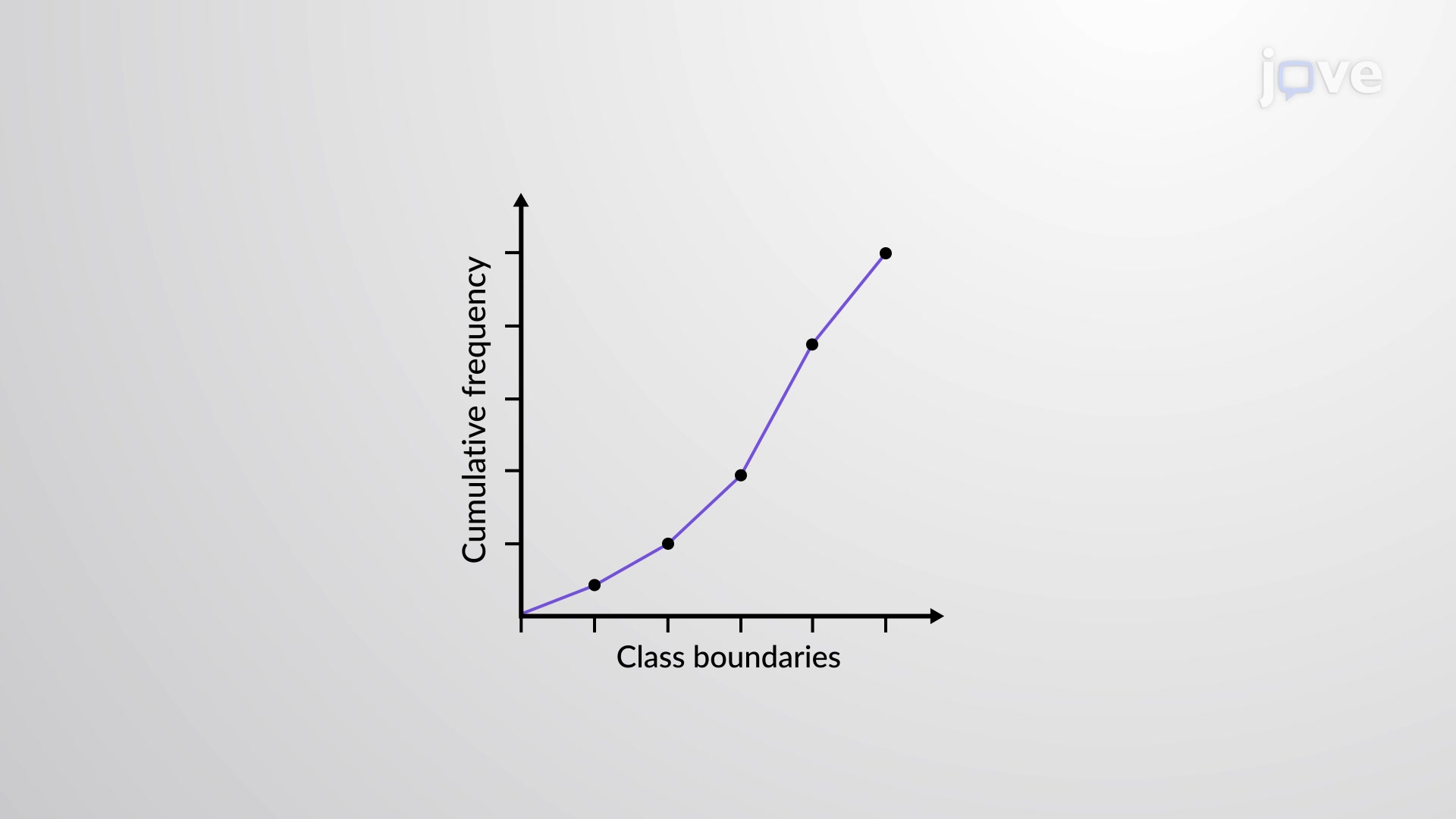
Ever wondered how Netflix tracks viewing patterns across millions of users, or how the CDC monitors disease progression rates? An ogive graph provides the perfect visual tool for understanding cumulative data trends. This statistical visualization displays cumulative frequencies along continuous class boundaries, making it invaluable for analyzing data like SAT score distributions across US high schools. For instance, an ogive graph can instantly show how many students scored below 1200 on the SAT nationwide. Watch the full video on JoVE Coach to master this concept with expert-led visuals and step-by-step explanations.
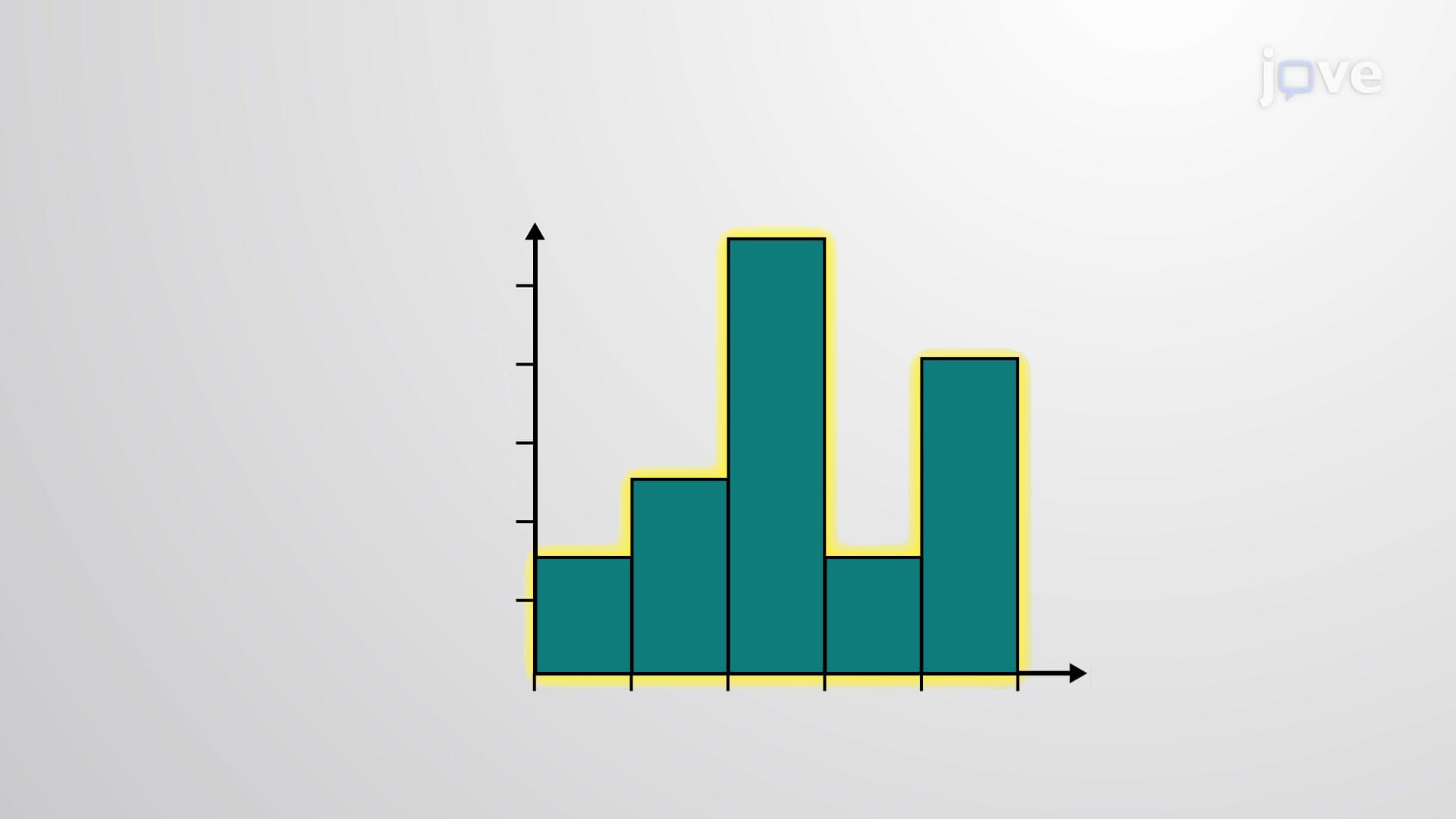
An ogive graph (pronounced "OH-jive") serves as a powerful statistical visualization tool that displays cumulative frequency data across continuous class intervals. Unlike traditional histograms that show individual class frequencies, ogive graphs reveal how data accumulates progressively, making them essential for understanding percentile rankings, quartile distributions, and threshold analyses commonly encountered in AP Statistics and college-level data science courses.
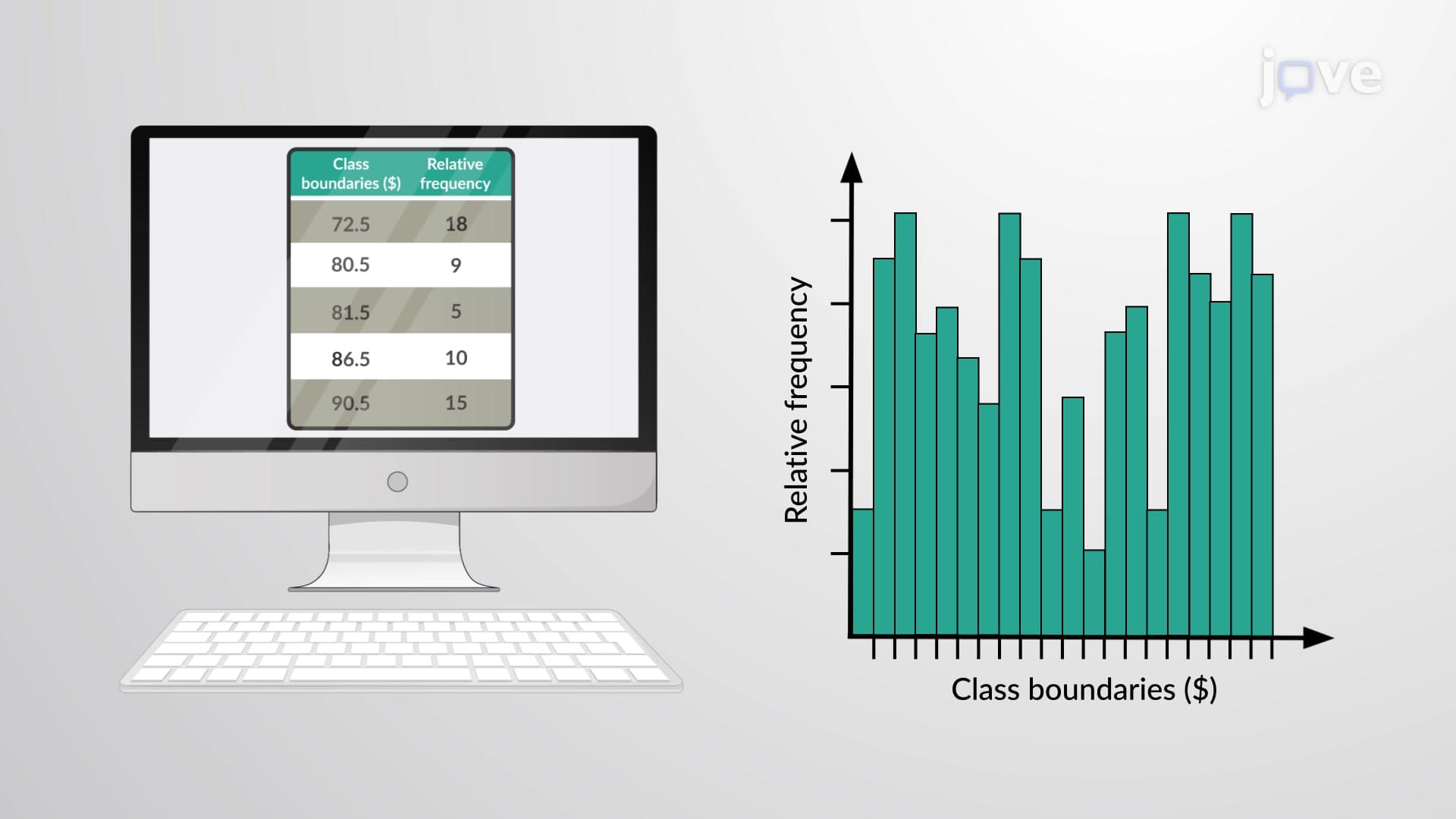
The ogive graph structure follows specific conventions that ensure accurate data interpretation. The X-axis represents class boundaries (not class midpoints), which eliminate gaps between adjacent classes and provide continuous data representation. The Y-axis displays cumulative frequencies, starting from zero and increasing to the total sample size. Each plotted point represents the total count of observations below that particular class boundary, connected by straight line segments to form the characteristic S-shaped curve.
Consider analyzing ACT scores from a sample of 1,000 US high school graduates. If 150 students scored below 20, 380 scored below 24, and 720 scored below 28, these cumulative totals become the Y-coordinates plotted against their respective score boundaries on the X-axis.
Ogive graphs prove invaluable across multiple disciplines and standardized testing scenarios. In educational assessment, College Board uses ogive-style representations to show SAT score distributions, helping students understand their percentile rankings. Healthcare researchers employ ogive graphs to track disease progression rates, while economists analyze income distribution patterns across different demographic groups.
For college admissions counselors, ogive graphs help visualize how many applicants fall below specific GPA or test score thresholds, enabling data-driven decision-making. Similarly, quality control managers in manufacturing use ogive graphs to monitor defect rates and ensure products meet specified standards.
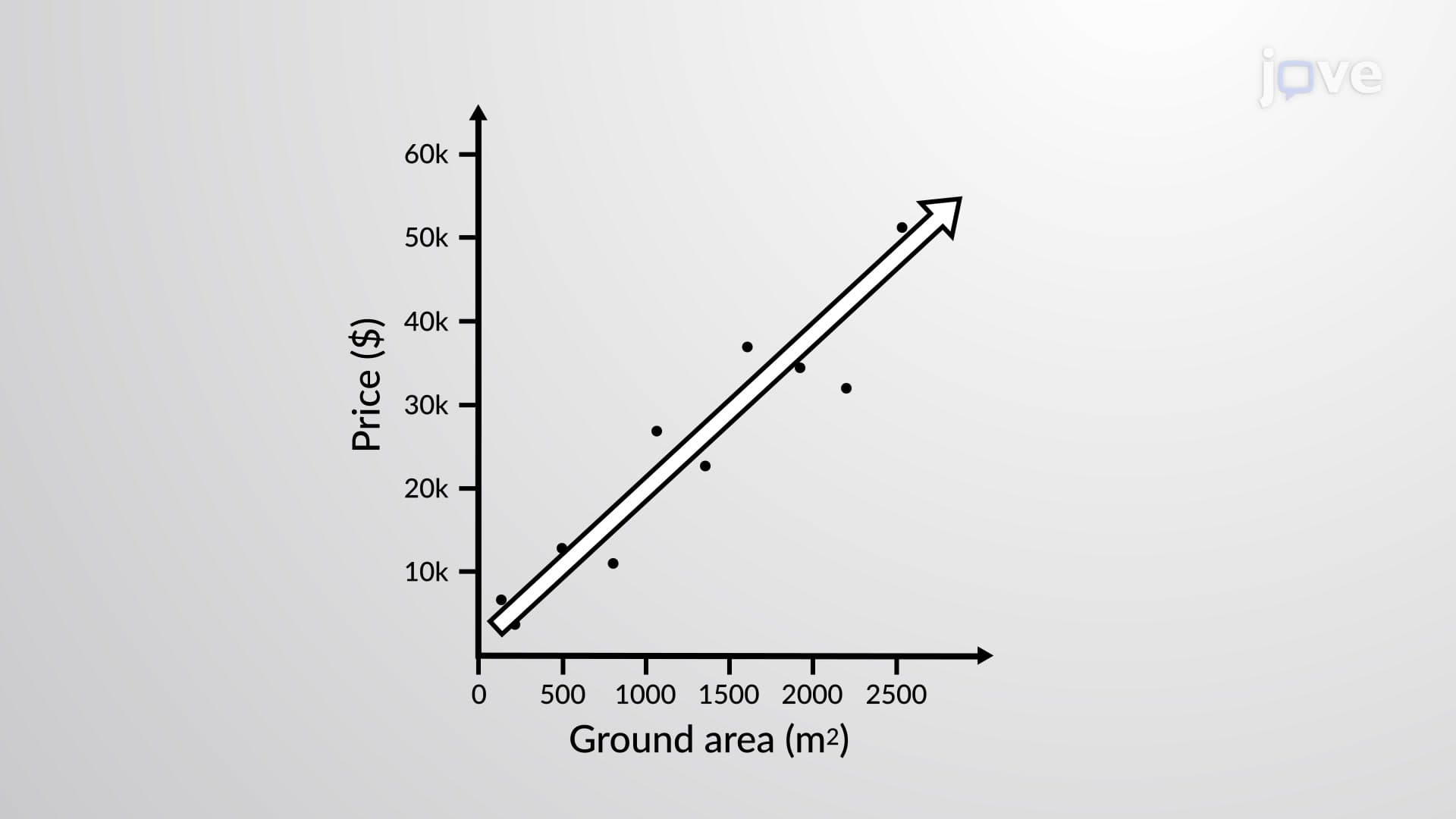
The slope of an ogive graph reveals crucial information about data distribution. Steep slopes indicate high frequency density within specific ranges, while gentler slopes suggest more evenly distributed data. The classic S-curve shape typically emerges from normally distributed data, with slower accumulation at the extremes and rapid increases near the mean values.
Students preparing for AP Statistics exams should recognize that ogive graphs enable quick percentile calculations and quartile identification without complex computations, making them powerful tools for both exam success and real-world statistical analysis.
Frequently Asked Questions
An ogive graph displays cumulative frequencies using connected line segments, showing how data accumulates progressively across class boundaries. Unlike histograms that show individual class frequencies as separate bars, ogive graphs reveal running totals, making them ideal for percentile analysis and threshold questions commonly found in AP Statistics and college statistics courses.
Ogive graphs frequently appear in AP Statistics free-response questions requiring percentile calculations or cumulative probability interpretations. Mastering ogive graph reading enables quick identification of quartiles, median values, and specific percentile rankings without complex calculations. Practice interpreting real data sets like SAT scores or income distributions to build confidence for exam day.
College midterms typically test ogive graph construction, cumulative frequency calculations, and percentile interpretations. Common question formats include determining how many observations fall below specific values, identifying quartile positions, and comparing distributions between different groups. Students often encounter problems involving standardized test scores, survey data, or experimental results.
Market researchers use ogive graphs to analyze consumer spending patterns, showing what percentage of customers spend below certain amounts. Healthcare organizations track patient recovery times, while educational institutions monitor graduation rates across different programs. The Federal Reserve employs ogive-style visualizations for income distribution analysis across US demographic groups.
No advanced mathematics required beyond basic arithmetic and coordinate graphing skills taught in Algebra I. The primary challenges involve organizing data into frequency tables and understanding cumulative addition concepts. Most high school students successfully master ogive graphs with practice using familiar data sets like test scores or survey results.
Practice with real US data sets like Census information, standardized test score distributions, or college admission statistics. Create your own ogive graphs using familiar scenarios, then verify interpretations by checking percentile calculations. Focus on connecting visual patterns to numerical relationships, and always practice reading cumulative frequencies from both axes.
Ogive graphs provide foundational understanding for normal distribution curves, percentile calculations, and hypothesis testing concepts encountered in advanced statistics courses. They directly connect to box plots, z-score interpretations, and confidence interval construction, making them essential building blocks for statistics majors and pre-med students preparing for MCAT statistical reasoning sections.
Excel, Google Sheets, and graphing calculators like the TI-84 easily generate ogive graphs from frequency tables. Most statistics software packages include ogive graph templates, though understanding manual construction remains important for exams. Many online statistics calculators also provide ogive graph generation tools for homework verification and practice exercises.
Related Micro-courses

Related Subjects
 Physics 33 micro-courses›
 Math Fundamentals 11 micro-courses›