Loading…
Loading video…

220,300 views

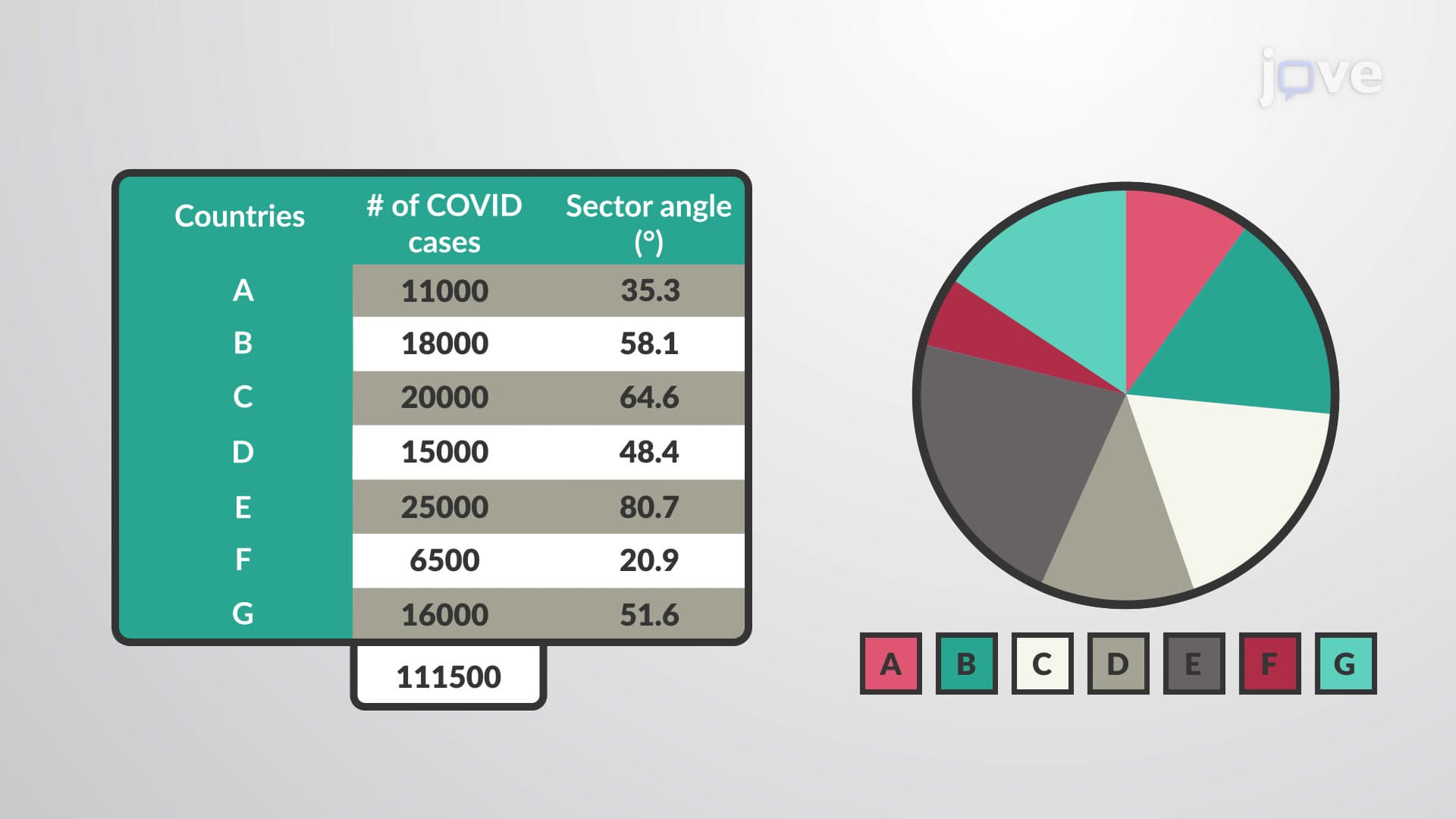
Did you know that the CDC analyzes thousands of frequency distribution tables to track disease outbreaks across American communities? A frequency distribution definition centers on organizing data into categories to reveal hidden patterns and trends. For instance, when analyzing SAT scores across different income levels in US high schools, educators use frequency tables to identify achievement gaps and allocate resources effectively. Understanding a frequency distribution definition transforms raw numbers into meaningful insights for statistics students and researchers alike. Watch the full video on JoVE Coach to master this concept with expert-led visuals and step-by-step explanations.
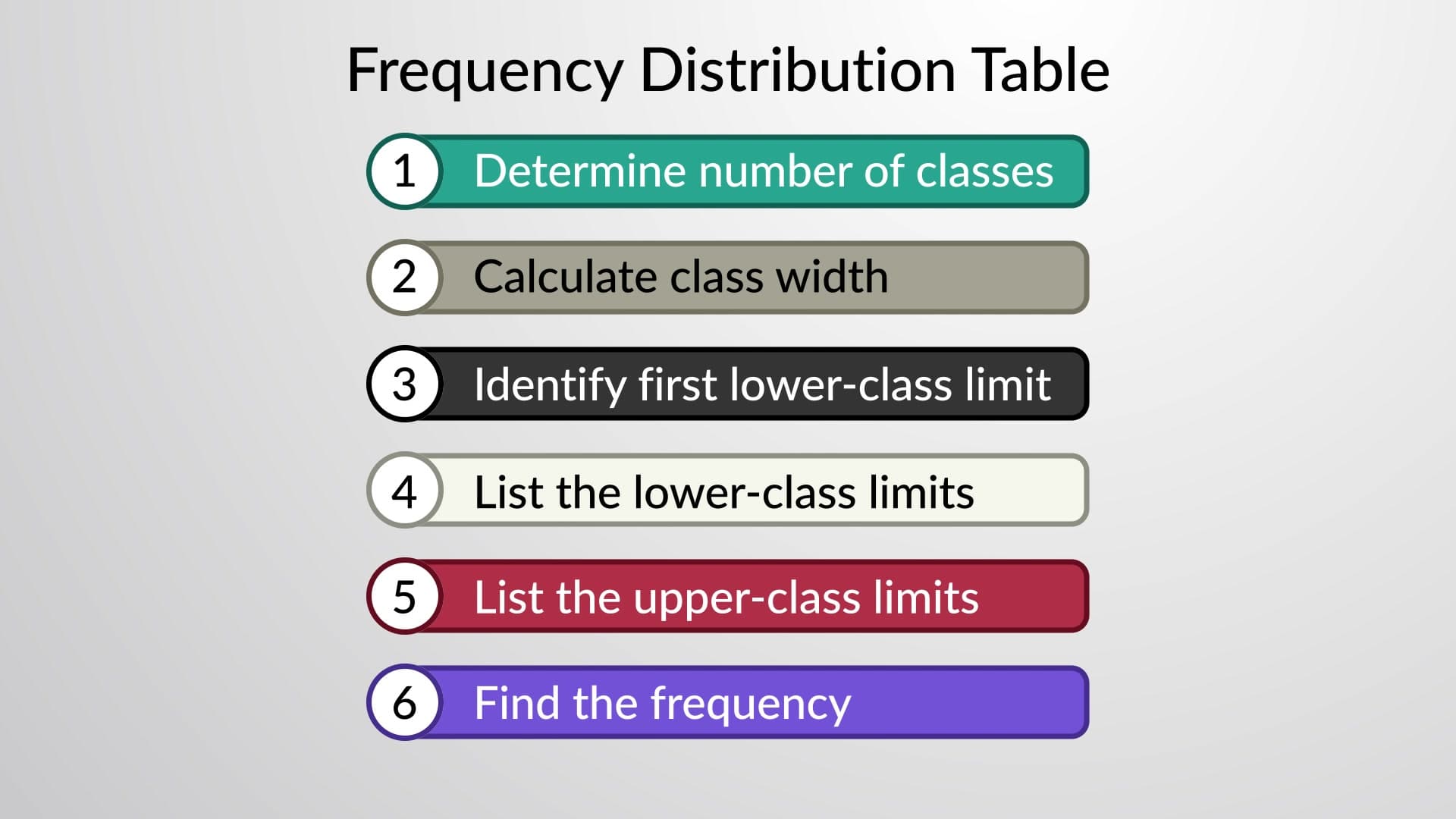
A frequency distribution definition describes a systematic method of organizing raw data into meaningful categories or classes, where each category shows how often specific values appear in the dataset. This fundamental statistical concept transforms chaotic data into organized tables that reveal patterns, trends, and outliers that would otherwise remain hidden in long lists of numbers.
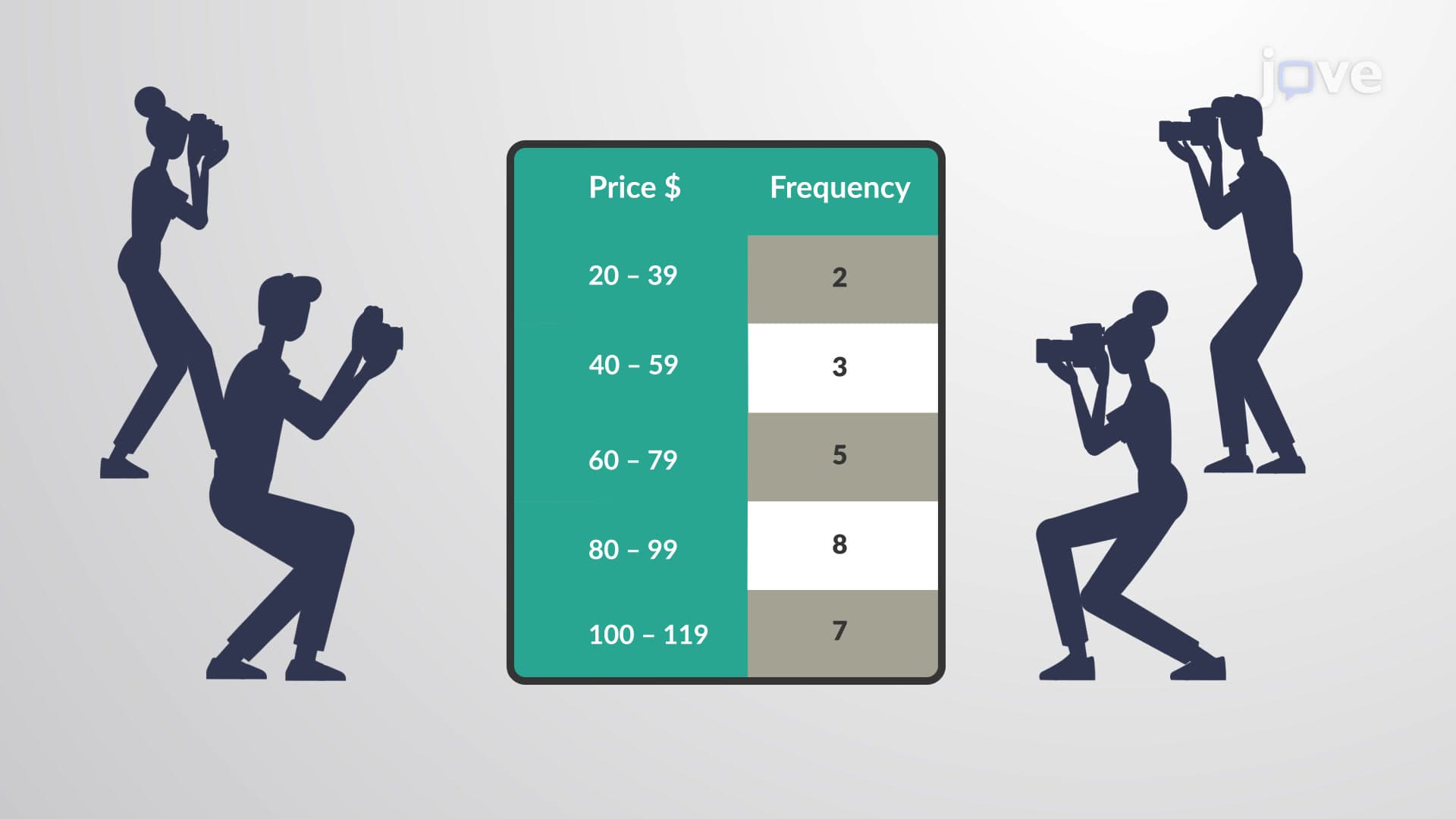
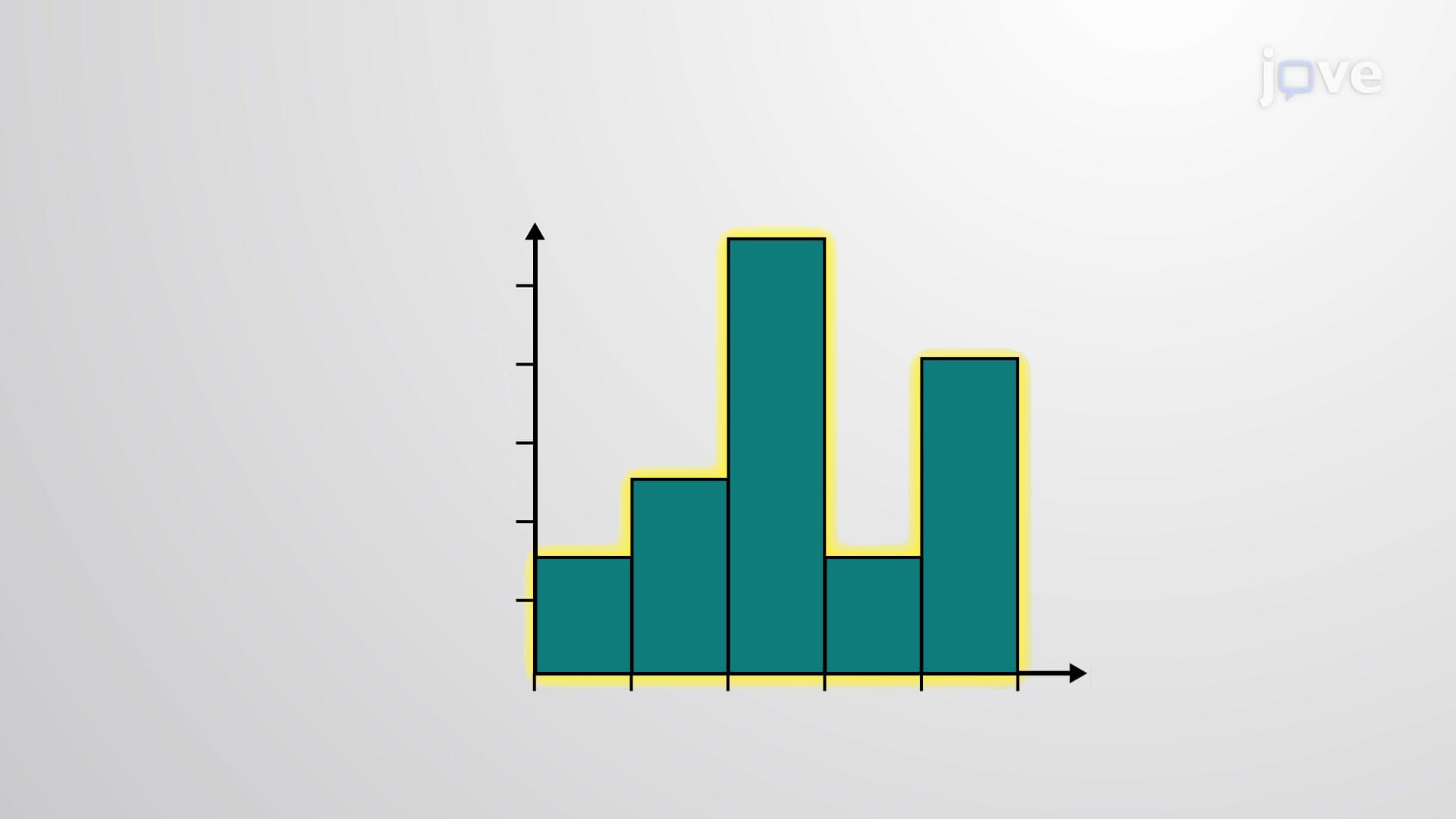
Every frequency distribution contains three essential elements: classes (or intervals), class boundaries, and frequencies. Classes represent the categories into which data points are grouped, such as age ranges 18-25, 26-35, and 36-45. Class boundaries define the precise limits of each category, ensuring no gaps or overlaps exist. Frequencies indicate how many data points fall within each class, providing the numerical foundation for statistical analysis.
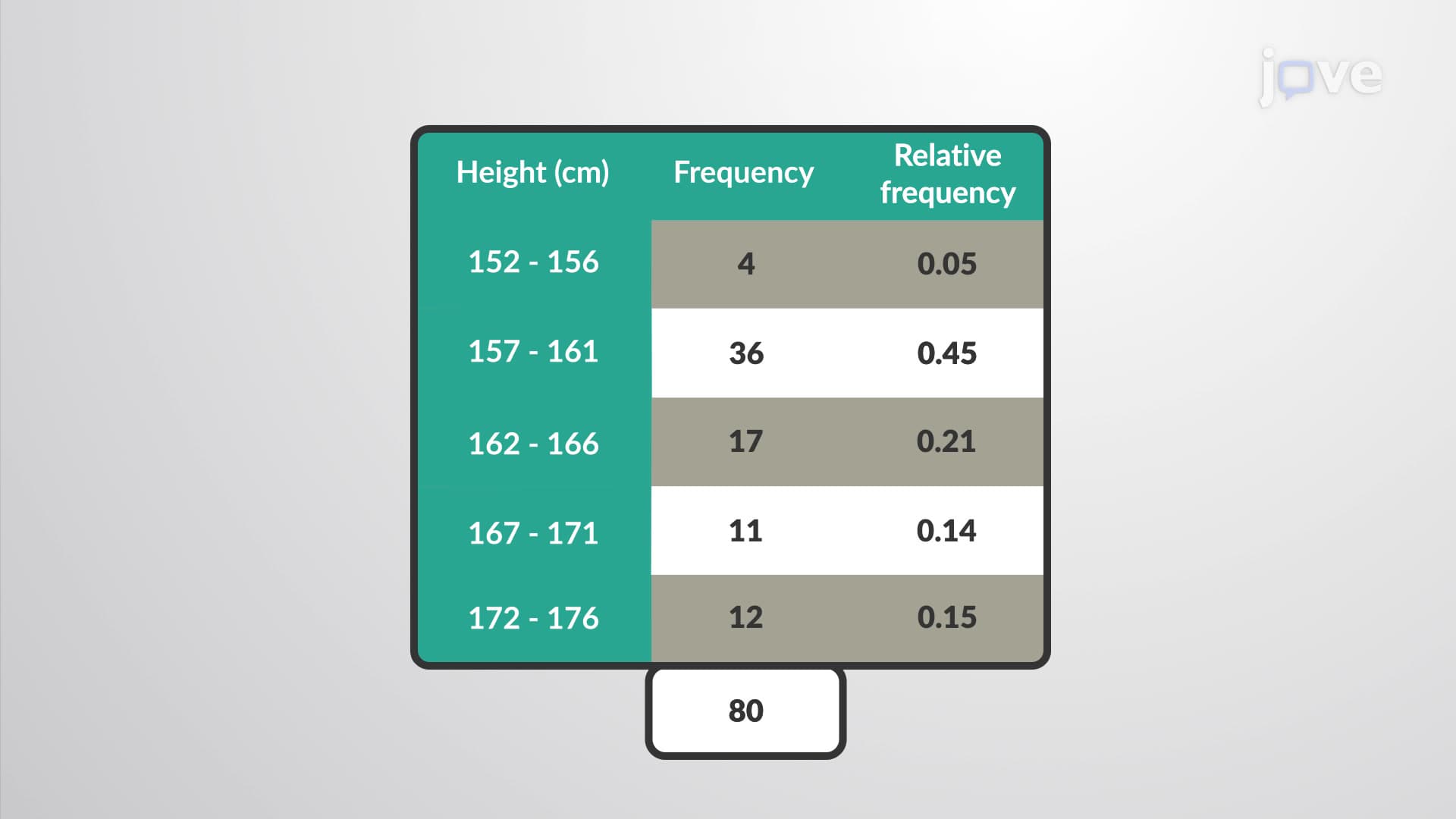
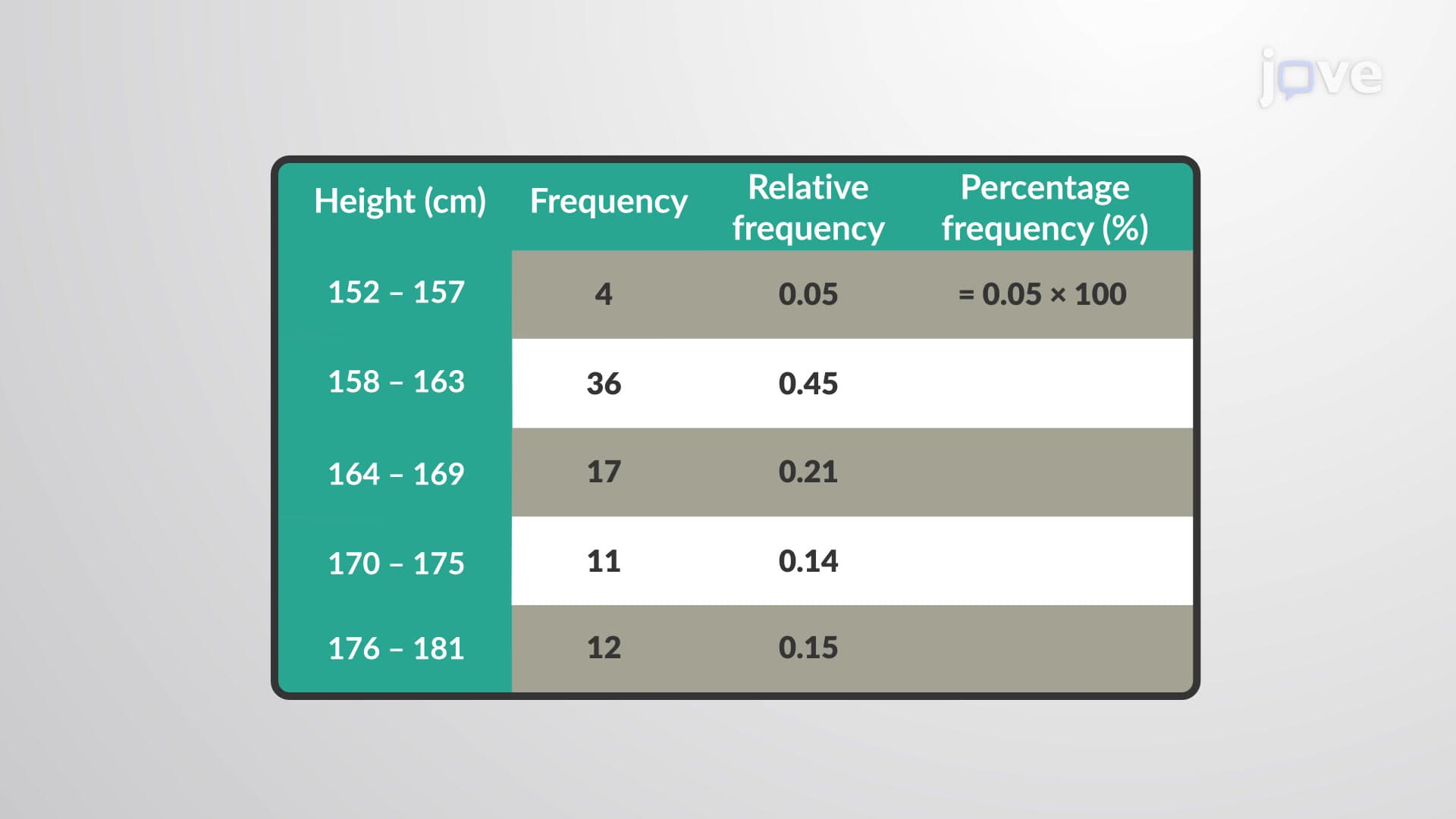
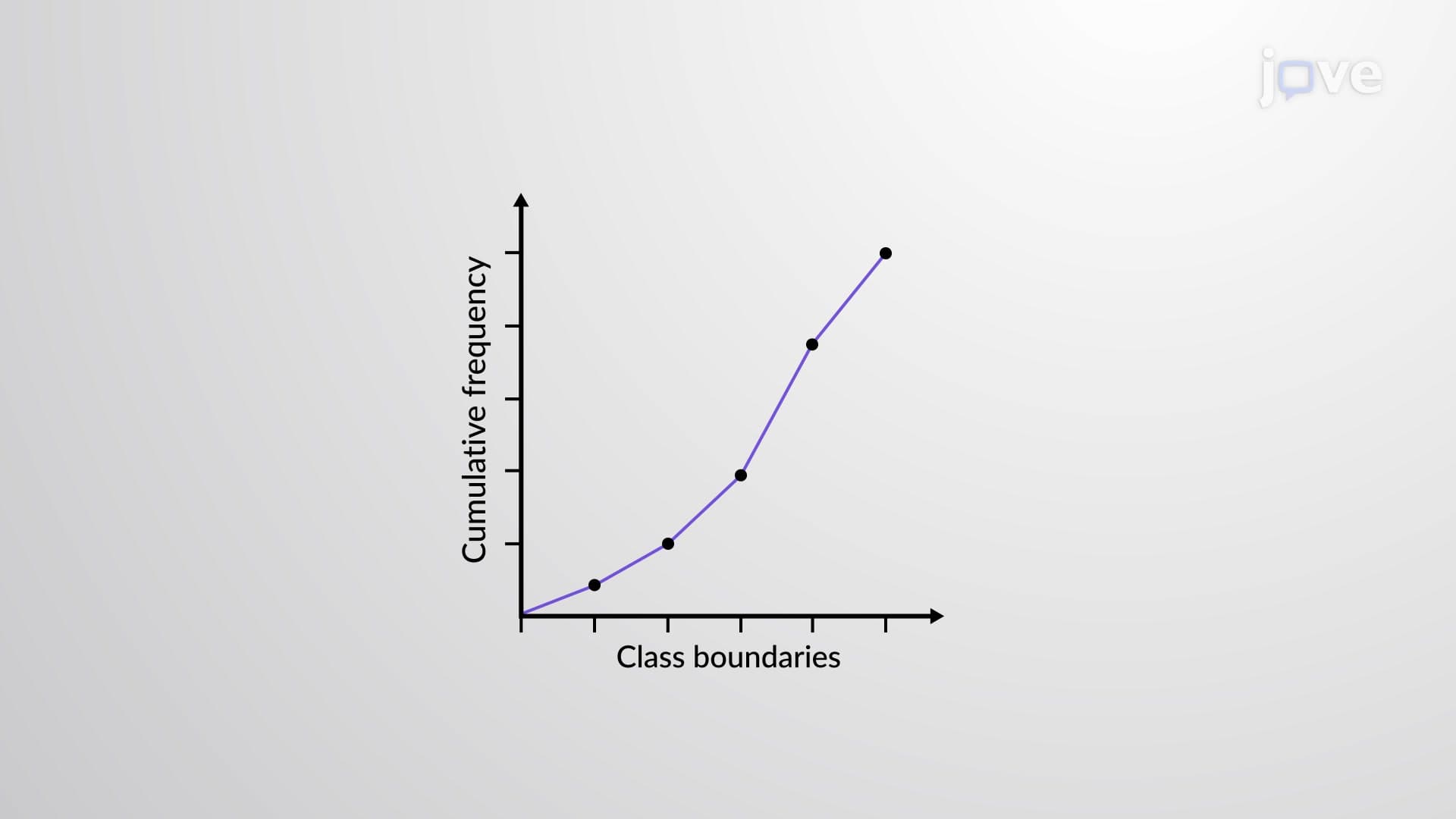
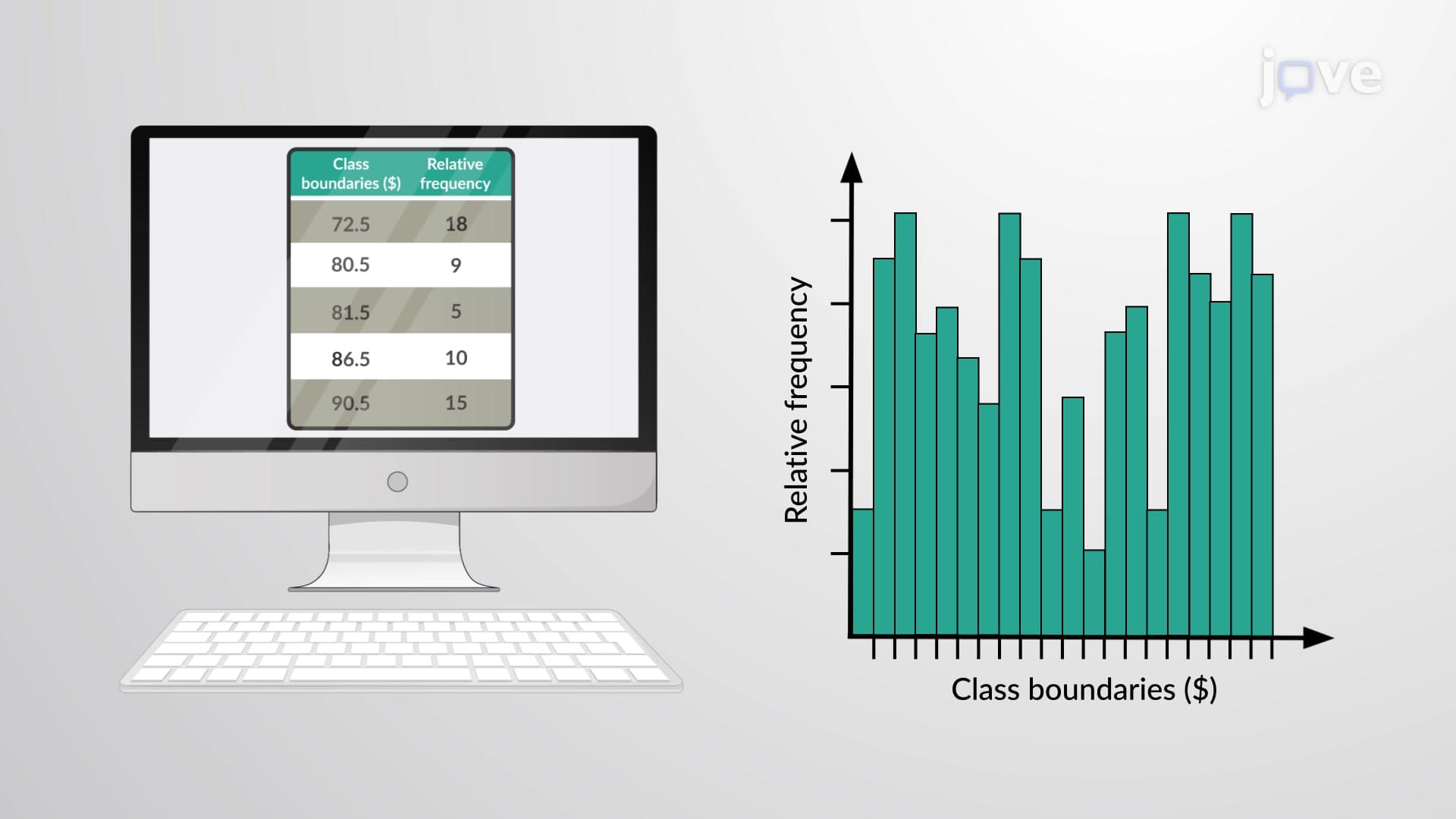
Students encounter several frequency distribution types throughout their academic journey. Absolute frequency distributions show raw counts, while relative frequency distributions express proportions or percentages. Cumulative frequency distributions track running totals, proving invaluable for percentile calculations on standardized tests like the SAT and ACT. These concepts frequently appear in AP Statistics coursework, where students analyze everything from college admission rates to environmental data from EPA studies.
Healthcare professionals use frequency distributions to track patient vital signs across different demographic groups. The Bureau of Labor Statistics employs these tools to analyze unemployment rates by education level and geographic region. In academic settings, frequency distributions help college admissions officers understand grade distributions and standardized test score patterns. Students preparing for the MCAT encounter frequency distribution questions in research methodology sections, while nursing students use these concepts in evidence-based practice courses for the NCLEX examination.
Understanding frequency distributions provides the foundation for advanced statistical concepts including probability distributions, hypothesis testing, and confidence intervals—all crucial for success in college statistics courses and professional certification exams.
Frequently Asked Questions
A frequency distribution definition describes a table or chart that shows how often different values appear in a dataset by organizing them into categories. It transforms messy data into organized groups, making patterns easy to spot. Think of it like sorting your music library by genre and counting how many songs you have in each category.
Understanding a frequency distribution definition is crucial for AP Statistics success because these tables appear in data analysis questions worth significant points. Students must interpret frequency tables, calculate relative frequencies, and create histograms from distribution data. Mastering this concept early builds confidence for more complex probability and inference topics.
Most introductory statistics courses, research methods in psychology and sociology, business analytics, and pre-med statistics courses require frequency distribution knowledge. Nursing students encounter these concepts in evidence-based practice courses, while education majors use them in assessment and evaluation classes. Even economics and political science courses incorporate frequency analysis.
Hospitals track patient wait times, infection rates, and medication dosages using frequency distributions to identify trends and improve care quality. The CDC uses frequency tables to monitor disease outbreaks across different age groups and geographic regions. Clinical researchers analyze treatment outcomes and side effect frequencies to evaluate drug effectiveness and safety profiles.
Frequency distributions require only basic arithmetic skills like counting, addition, and simple division for percentages. No advanced algebra or calculus knowledge is needed. The concept builds on familiar activities like tallying survey results or organizing data into groups, making it accessible to students at all math levels.
Practice creating frequency tables from real datasets like sports statistics or weather data to build hands-on experience. Use online graphing tools to visualize your distributions as histograms. Focus on interpreting existing tables before creating your own, and always check that frequencies sum to the total sample size.
Frequency distributions often reveal the shape of data patterns, with many real-world datasets forming bell-shaped curves approximating normal distributions. Understanding frequency patterns helps predict probabilities and calculate z-scores. This connection becomes essential in advanced statistics courses covering confidence intervals and hypothesis testing.
Market research analysts use frequency distributions to understand consumer preferences and demographic patterns. Quality control engineers track defect rates and manufacturing variations. Social scientists analyze survey responses and population characteristics. Even sports analysts use frequency distributions to evaluate player performance and team statistics.
Related Micro-courses

Related Subjects
 Physics 33 micro-courses›
 Math Fundamentals 11 micro-courses›