Loading…
Loading video…
220,300 views
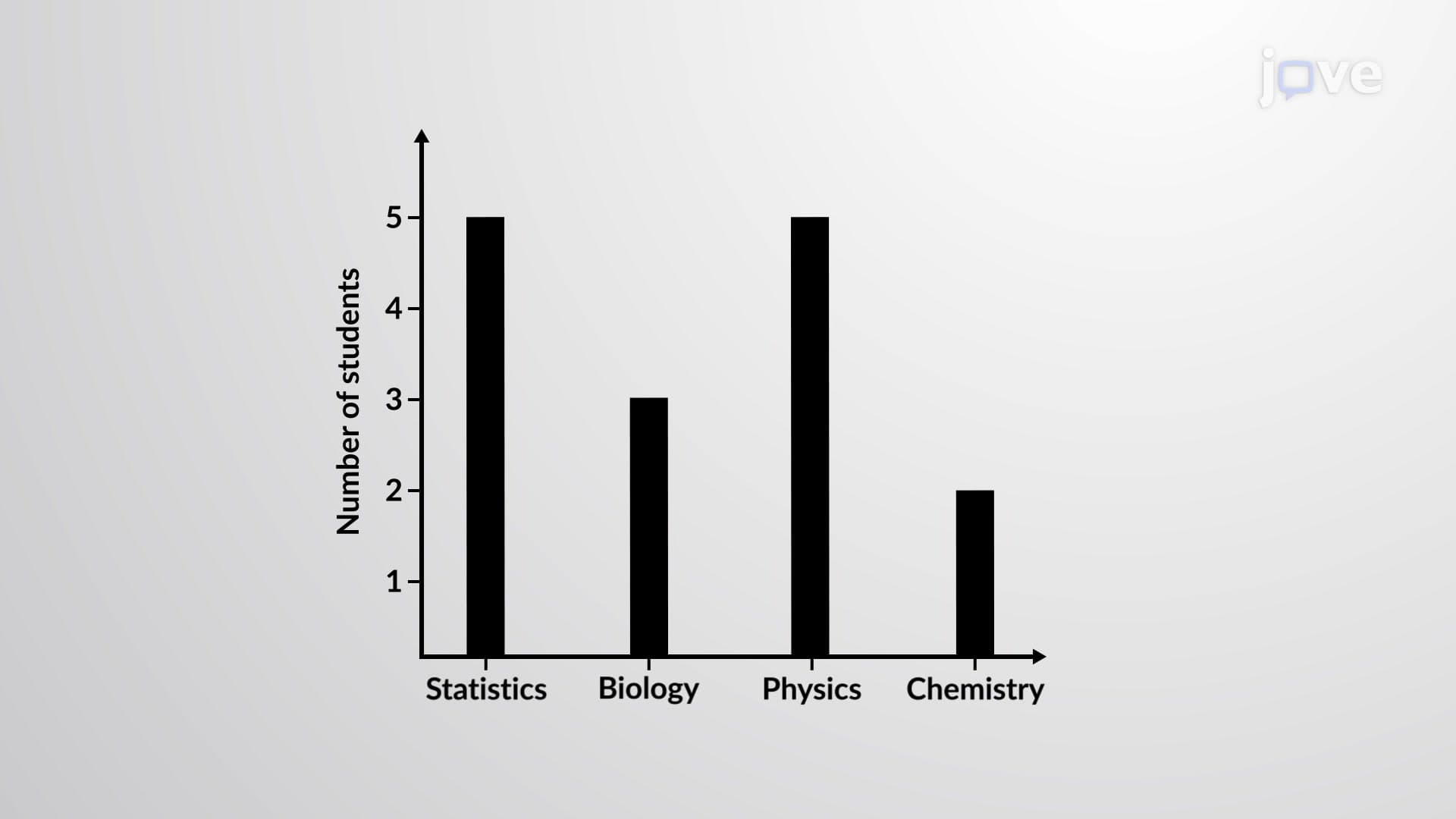
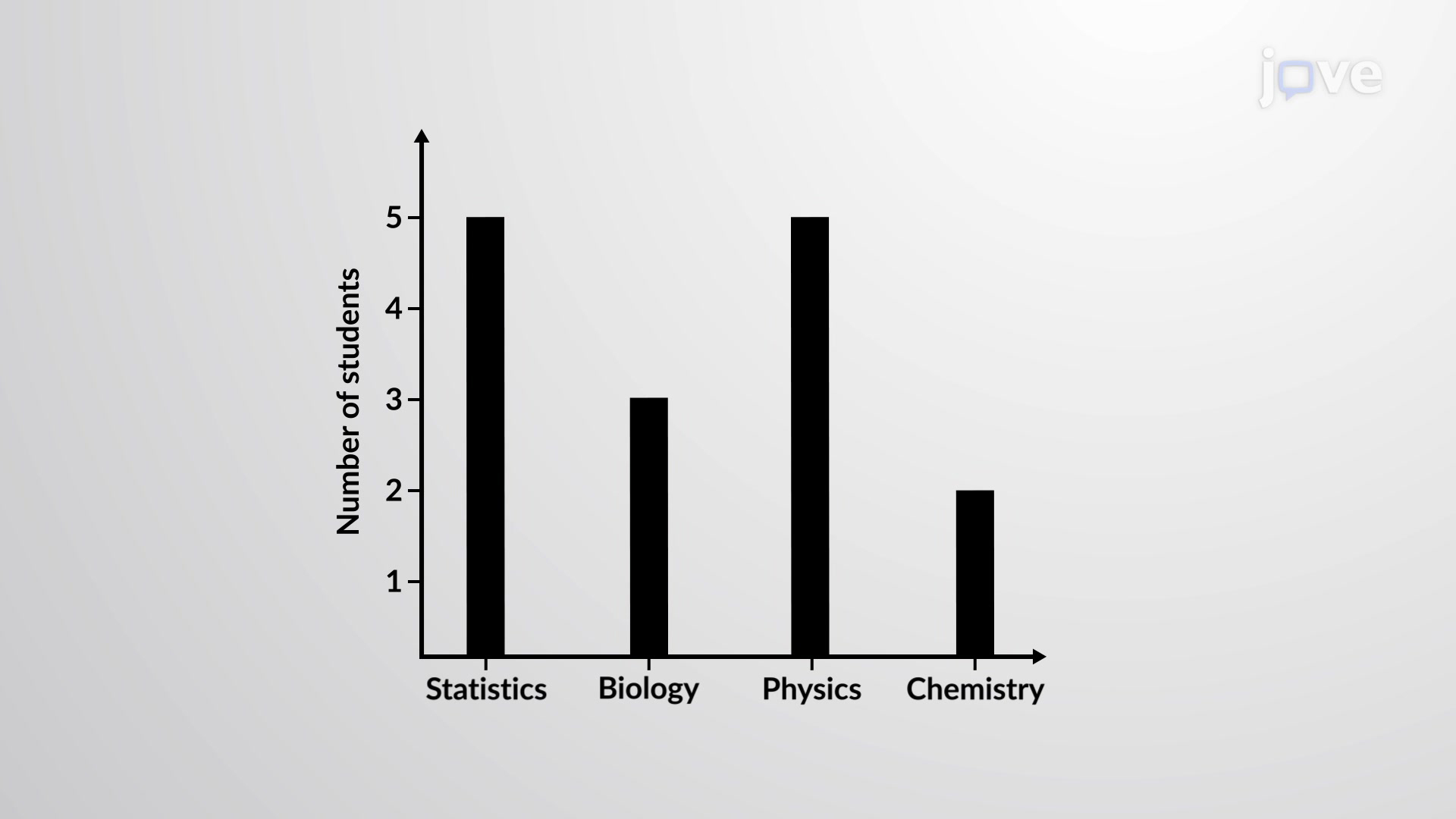
Did you know that the 2020 US Census data showing population distribution across states was primarily visualized using bar graphs? A bar graph is a visual representation tool that displays qualitative data through rectangular bars, where the height of each bar corresponds to the frequency or value of different categories. For example, a high school might use a bar graph to show the number of students enrolled in different AP courses like Statistics, Biology, Physics, and Chemistry. Watch the full video on JoVE Coach to master this concept with expert-led visuals and step-by-step explanations.
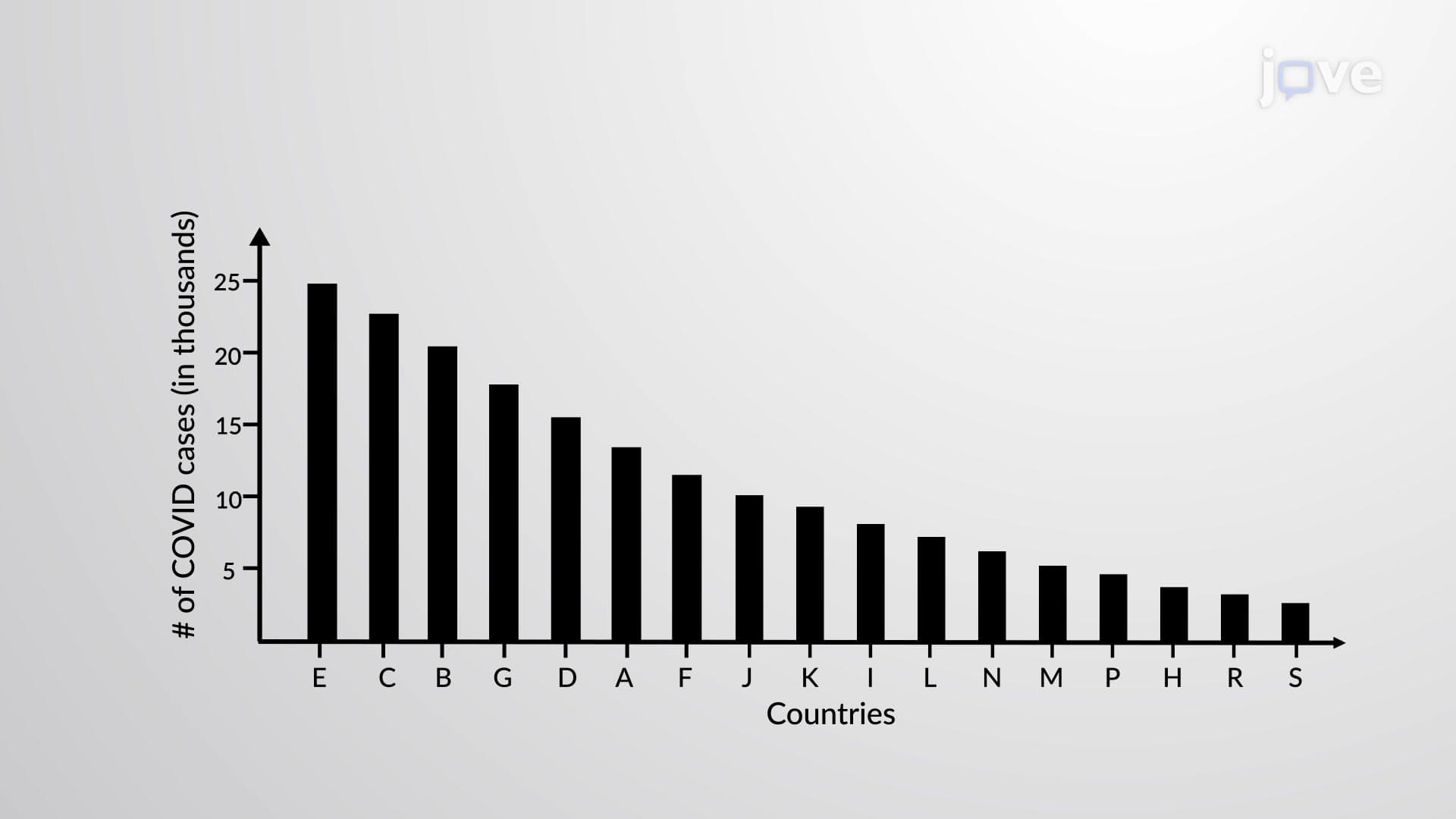
A bar graph is a fundamental statistical visualization tool that transforms categorical data into an easily interpretable visual format. Unlike numerical data that flows continuously, categorical data represents distinct groups or categories such as college majors, car brands, or survey responses. The bar graph's power lies in its ability to make these categories comparable through visual representation.
The structure consists of two perpendicular axes: the horizontal axis (x-axis) displays the categories being measured, while the vertical axis (y-axis) shows the frequency, count, or value associated with each category. Each category is represented by a rectangular bar whose height directly corresponds to its measured value, creating an immediate visual hierarchy that reveals patterns and relationships.
Constructing an effective bar graph requires attention to several critical elements. First, bars must maintain equal width to ensure visual consistency and prevent misinterpretation. The spacing between bars can vary - they may touch each other or have gaps, but this spacing should remain consistent throughout the graph. The baseline typically starts at zero to provide accurate proportional representation.
Consider a practical example: Stanford University's admissions office might create a bar graph showing applications by intended major. Computer Science might show 2,400 applications, Engineering 1,800, Business 1,500, and Liberal Arts 1,200. Each bar's height would proportionally represent these numbers, instantly revealing which programs attract the most interest.
Bar graphs appear extensively in standardized testing, particularly on the SAT Math section and AP Statistics exam. Students encounter them in data analysis questions where they must interpret trends, compare categories, or calculate percentages from visual data. College-level statistics courses use bar graphs as foundational tools before progressing to more complex visualizations.
In professional contexts, bar graphs serve crucial roles across industries. Marketing departments use them to display consumer preferences, medical researchers present patient demographics, and educational institutions track enrollment trends. The CDC frequently employs bar graphs in public health reports, such as vaccination rates by state or disease prevalence across age groups.
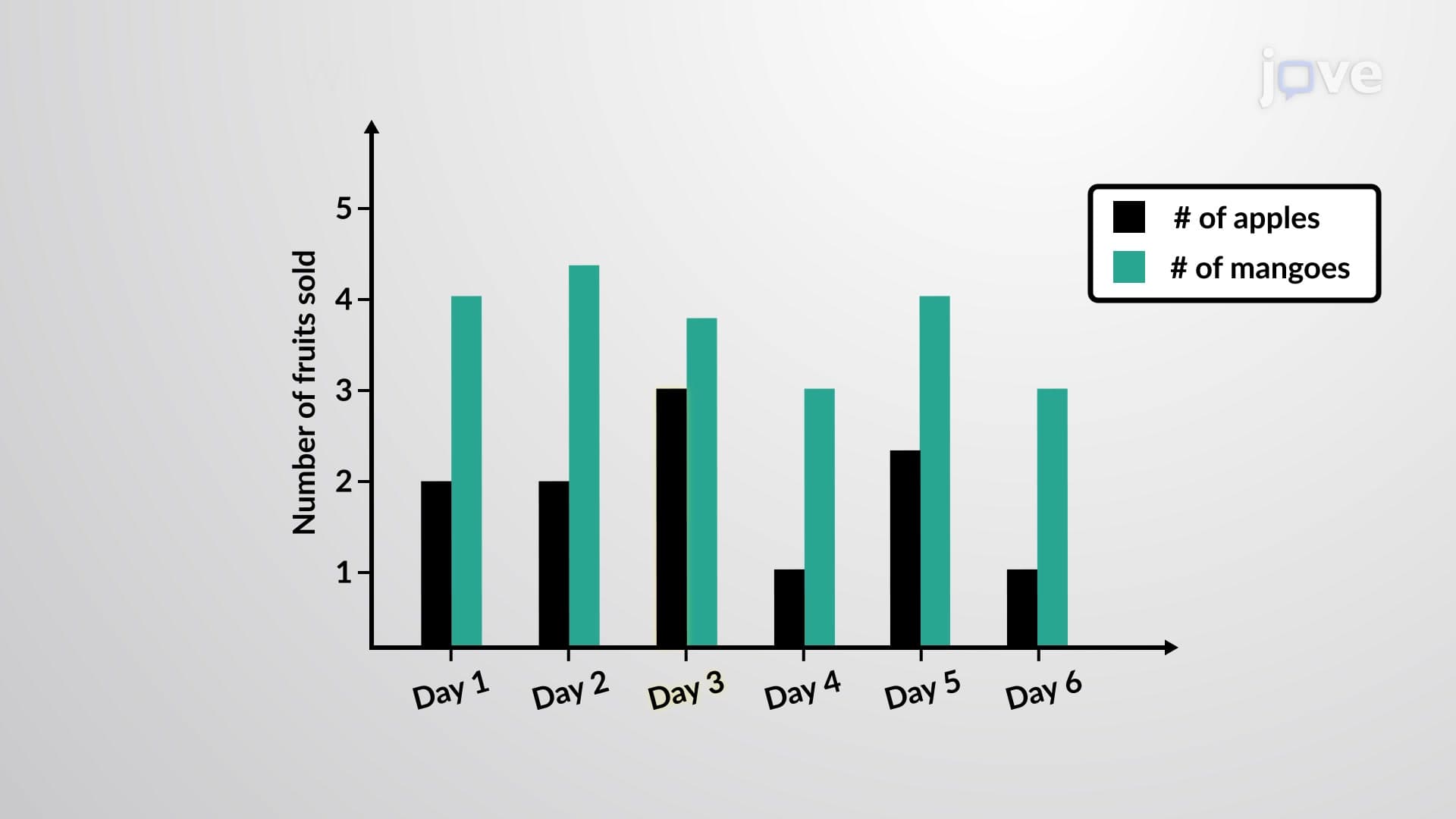
Beyond basic bar graphs, several variations serve specialized purposes. Grouped bar graphs compare multiple data series simultaneously - for example, showing both male and female enrollment across different academic departments. Stacked bar graphs display component parts of a whole, useful for budget breakdowns or demographic compositions. Horizontal bar graphs work better when category names are lengthy, preventing text overlap issues.
Effective bar graph design follows key principles: clear, descriptive titles; properly labeled axes with appropriate units; consistent color schemes; and appropriate scaling that neither compresses nor exaggerates differences. These elements ensure accurate data communication and support evidence-based decision-making across academic and professional settings.
Frequently Asked Questions
A bar graph is a visual representation that uses rectangular bars to display categorical data, where bar height indicates frequency or value. Unlike line graphs that show trends over time or pie charts that display parts of a whole, bar graphs excel at comparing distinct categories like student enrollment across different subjects or sales figures by product type.
In statistics, a bar graph is defined as a chart that presents categorical data with rectangular bars whose lengths or heights are proportional to the values they represent. The bars can be plotted vertically or horizontally, and each bar corresponds to a discrete category, making it ideal for displaying frequency distributions of qualitative variables.
The SAT Math section frequently includes bar graph interpretation questions requiring students to calculate percentages, identify trends, or compare data sets. AP Statistics exams test deeper analysis skills like identifying appropriate graph types for given data, critiquing graph construction, and drawing statistical inferences from bar graph displays.
Introductory statistics courses, business statistics, psychology research methods, and data science fundamentals heavily incorporate bar graph analysis. Students learn to construct, interpret, and critique bar graphs while developing statistical literacy skills essential for upper-level coursework and professional applications.
Medical professionals use bar graphs to display patient demographics, treatment outcomes by category, disease prevalence across populations, and clinical trial results. For example, hospital administrators might use bar graphs to show emergency department visits by diagnosis category, helping identify resource allocation needs and treatment patterns.
Basic arithmetic and fraction skills are sufficient for most bar graph applications. The concept focuses more on logical thinking and data interpretation rather than complex calculations. High school algebra provides ample mathematical background for advanced bar graph analysis and construction techniques.
Practice with real data sets from sources like the US Census Bureau, focus on identifying key information quickly, and develop systematic approaches to reading axes labels and scales. Time yourself on practice problems, create your own bar graphs from given data, and learn to spot common trick questions involving scale manipulation or incomplete information.
Progress to histogram construction for numerical data, learn about grouped and stacked bar variations, explore dot plots and stem-and-leaf displays, then advance to scatter plots for correlation analysis. Understanding when to use each graph type for different data situations builds stronger statistical communication skills.
Related Micro-courses

Related Subjects
 Physics 33 micro-courses›
 Math Fundamentals 11 micro-courses›