- Statistics
- Survival Analysis
Micro-courses:17

Survival Analysis

1. Introduction To Survival Analysis

2. Life Tables
3. Survival Curves

4. Actuarial Approach
5. Kaplan-Meier Approach
6. Assumptions of Survival Analysis

7. Comparing the Survival Analysis of Two or More Groups
8. The Mantel-Cox Log-Rank Test
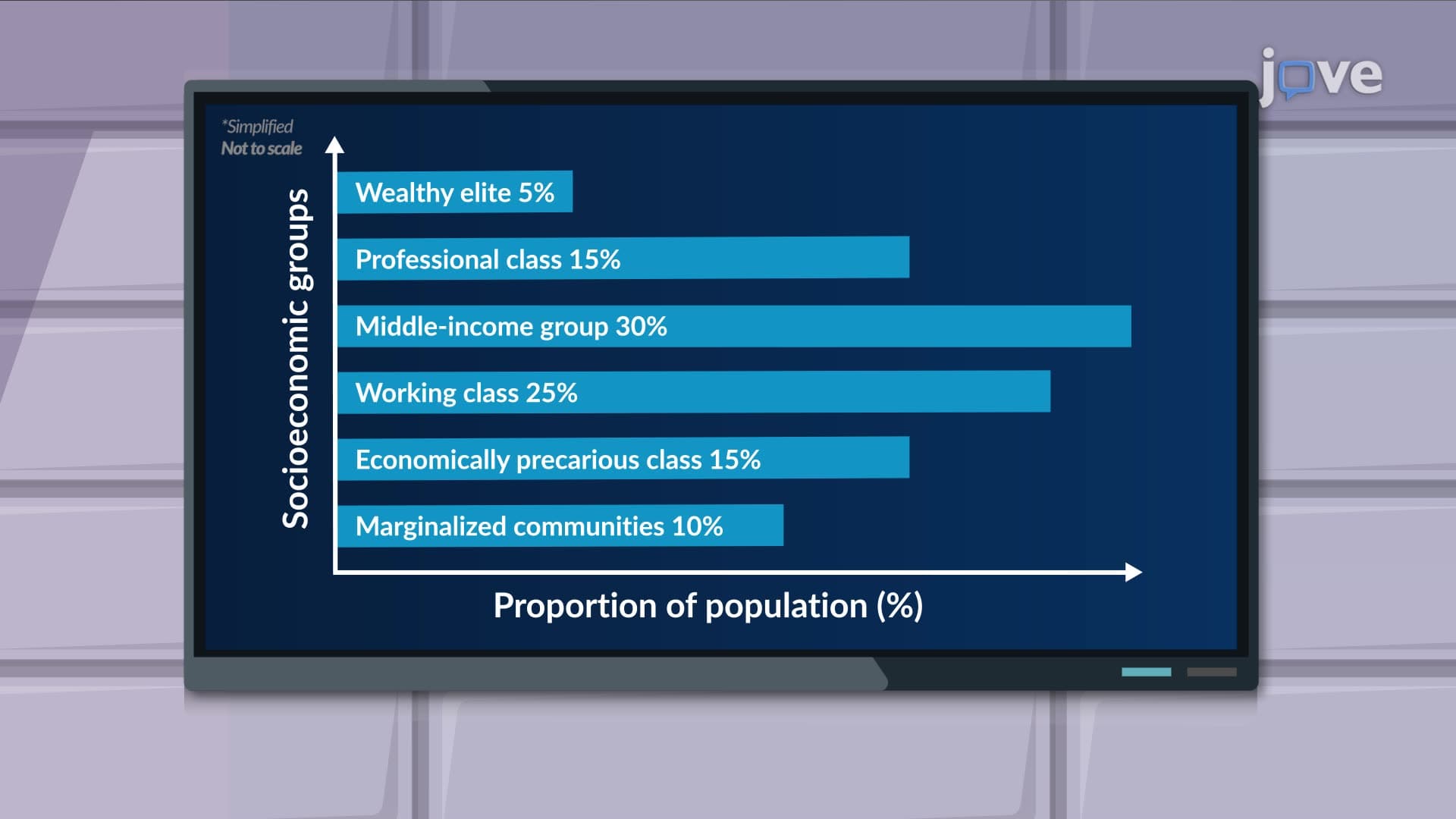
9. Applications of Life Tables

10. Cancer Survival Analysis
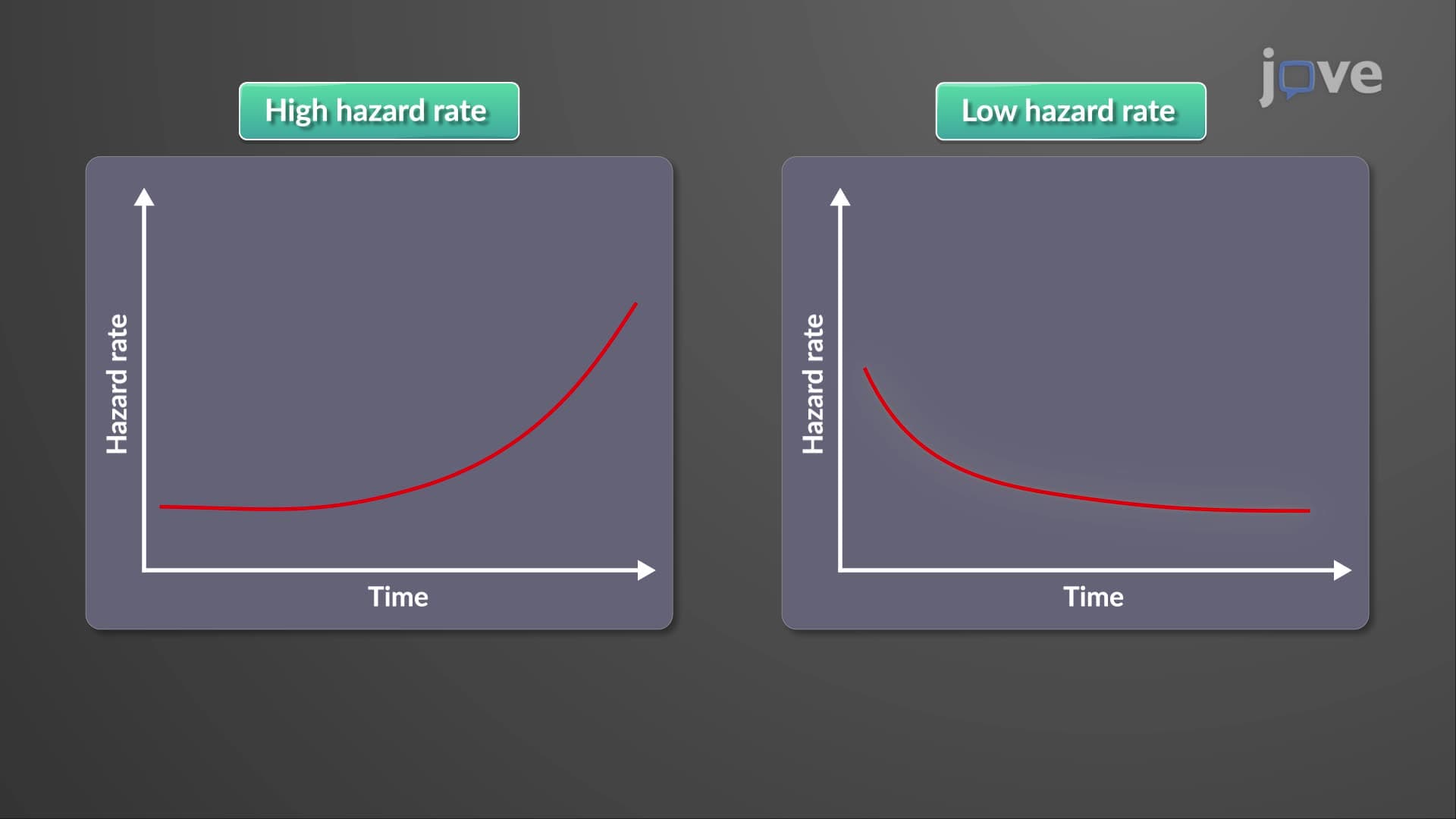
11. Hazard Rate
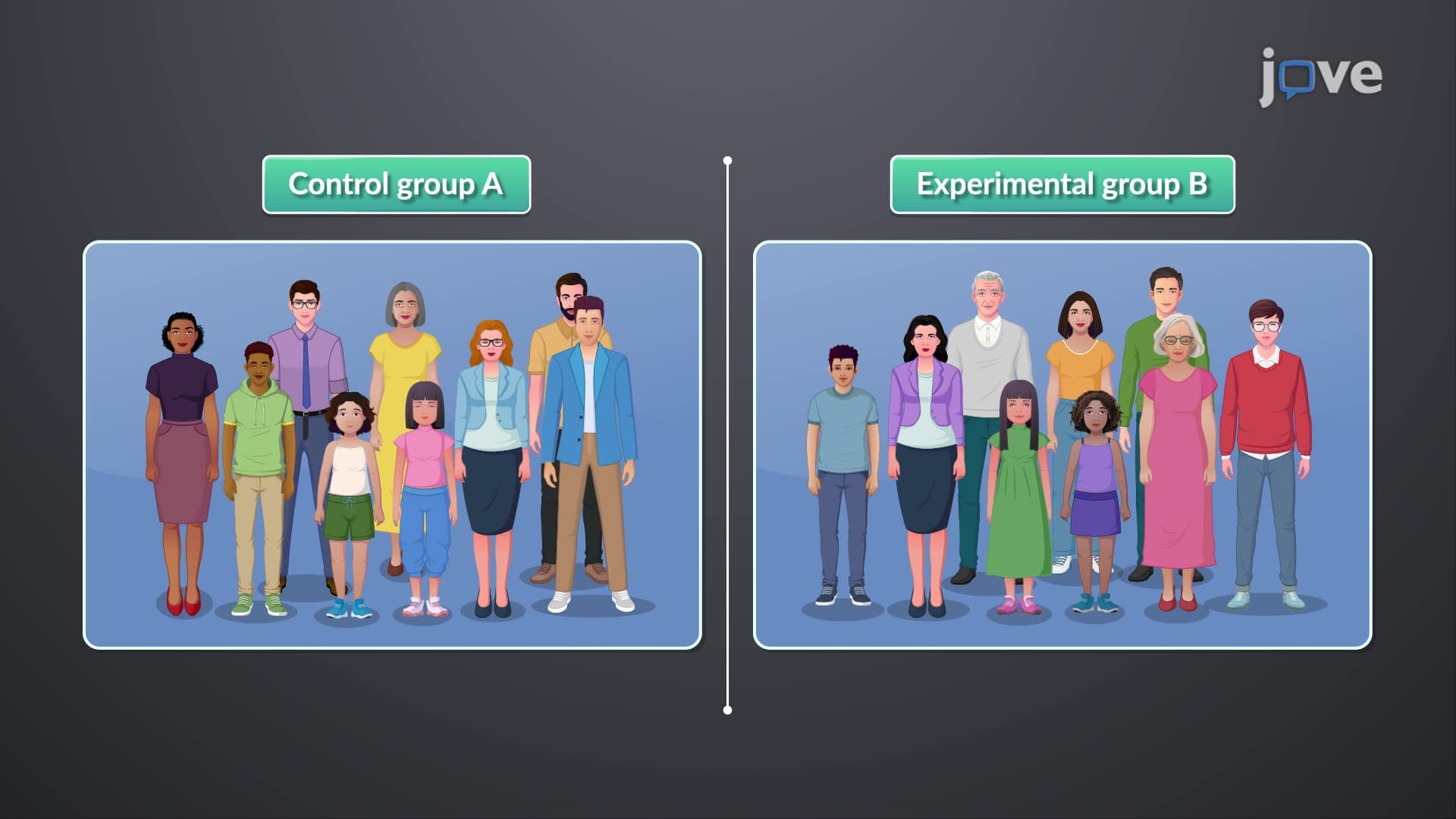
12. Hazard Ratio

13. Truncation in Survival Analysis
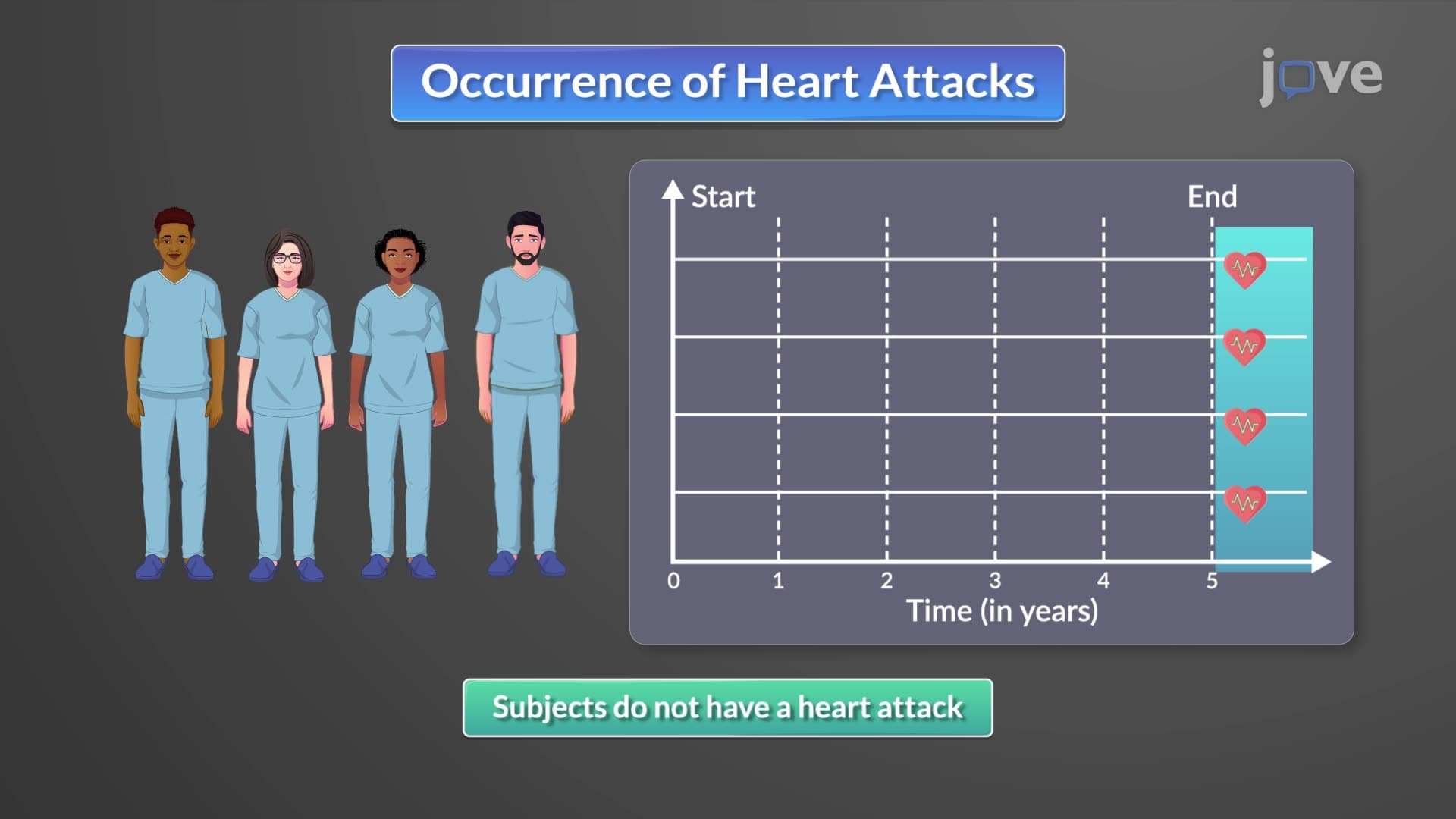
14. Censoring Survival Data
15. Survival Tree
16. Parametric Survival Analysis: Weibull and Exponential Methods
Survival analysis is a statistical method that examines the time until specific events occur, such as patient death, disease recurrence, or treatment failure. This powerful analytical framework handles incomplete data through censoring and provides crucial insights for medical research, insurance risk assessment, and public health policy in the United States. Master these essential time-to-event analysis techniques with JoVE Coach.
- Understand the fundamental principles of survival analysis and time-to-event data interpretation
- Learn to construct and interpret Kaplan-Meier survival curves for medical studies
- Identify different types of censoring in survival data and their impact on analysis
- Explore life tables and their applications in demographics and actuarial science
- Analyze hazard rates and hazard ratios to compare treatment effectiveness
- Apply the log-rank test to compare survival distributions between groups
- Understand parametric survival models including Weibull and exponential distributions
- Learn Cox proportional hazards regression for multivariable survival analysis
1. Fundamentals of Survival Analysis and Time-to-Event Data Survival analysis measures time from a starting point to an event of interest, such as death or disease recurrence. Unlike traditional statistical methods, survival analysis handles incomplete observations through censoring mechanisms. Key applications include cancer research studying remission-to-relapse times, pediatric dental studies tracking cavity development, and cardiovascular surgery outcomes. The method requires careful event definition, proper time measurement, and understanding of study populations to generate meaningful clinical insights for US healthcare systems.
2. Life Tables and Mortality Analysis Life tables systematically organize survival data across time intervals, displaying participant numbers, deaths, withdrawals, and conditional probabilities. Used extensively by US insurance companies and the CDC, these tables calculate survival rates while accounting for participants lost to follow-up. The effective exposure calculation assumes withdrawals occur mid-interval, reducing the denominator by half. Applications range from setting life insurance premiums to evaluating public health interventions and tracking population mortality trends across different US demographic groups.
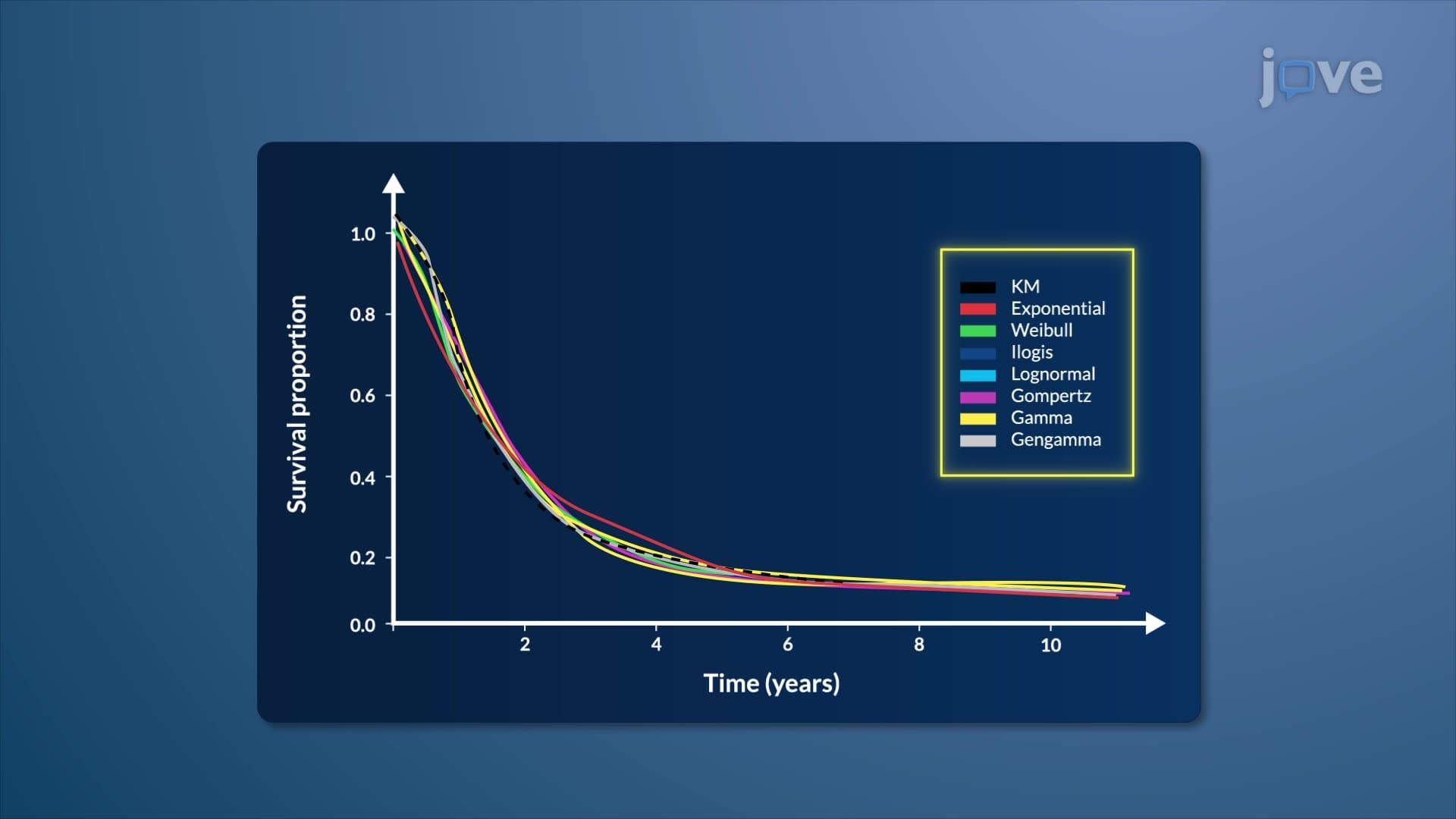
3. Kaplan-Meier Survival Curves and Estimation Methods The Kaplan-Meier estimator creates step-function survival curves showing the probability of surviving beyond specific time points. This non-parametric method effectively handles censored data common in clinical trials, where patients may complete studies without experiencing events. The estimator assumes censored patients have similar survival prospects as observed patients and that event timing is accurately recorded. Widely used in FDA drug approval processes, these curves provide intuitive visual comparisons of treatment effectiveness in US clinical research.
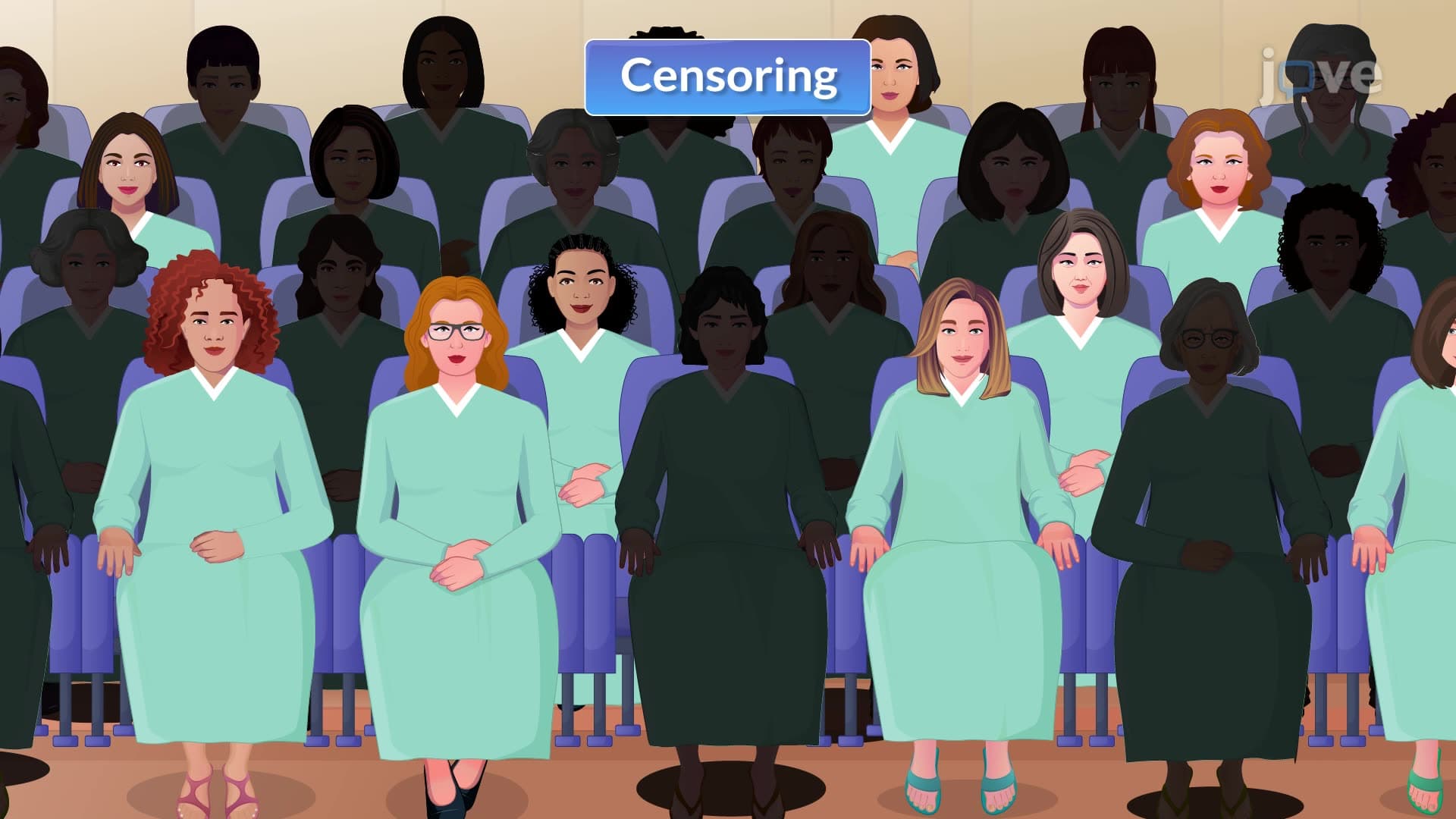
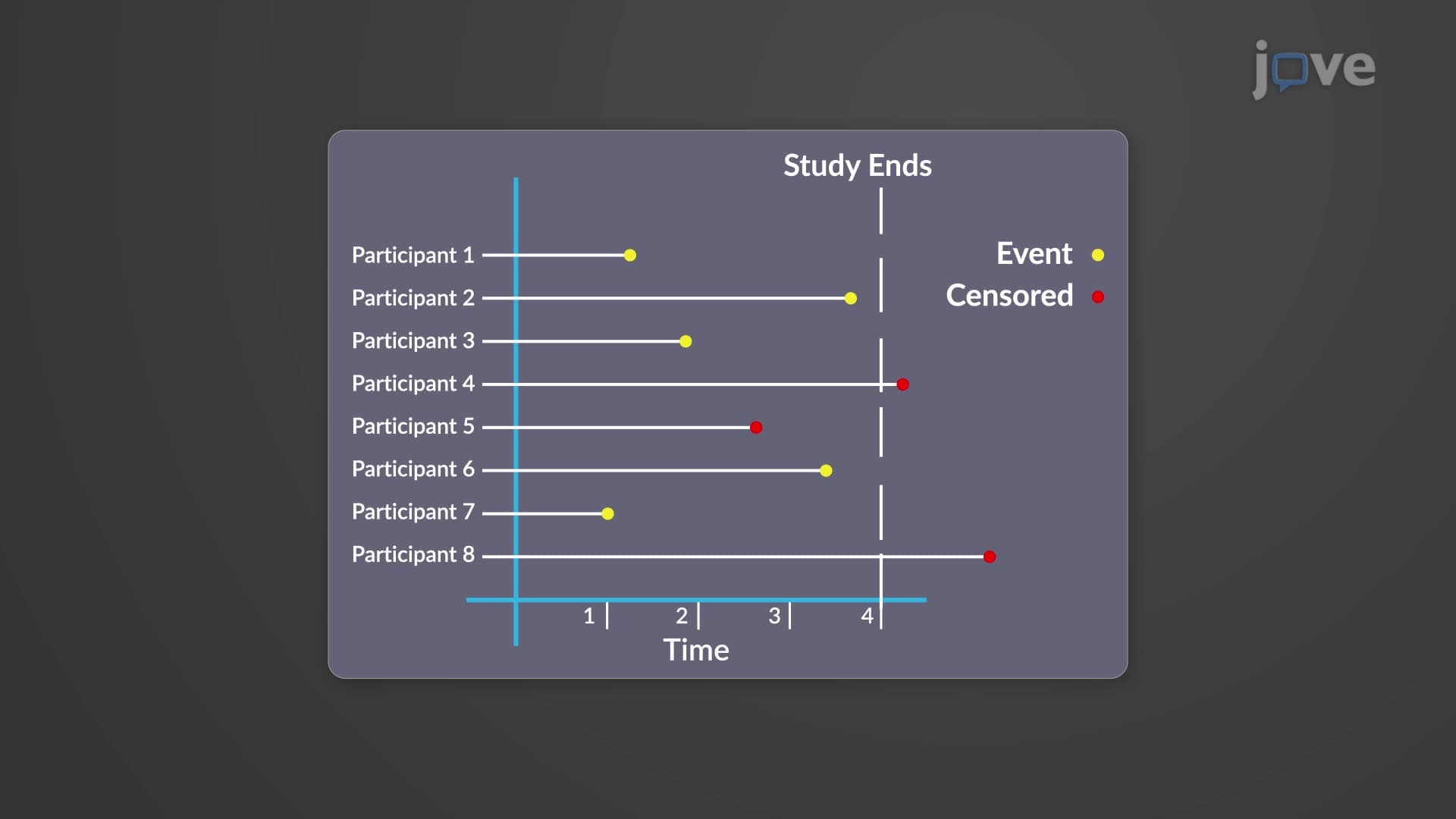
4. Censoring and Truncation in Survival Data Censoring occurs when complete survival information is unavailable, with right-censoring being most common when studies end before events occur. Left-censoring happens when event onset precedes observation, while interval censoring occurs during follow-up gaps. Truncation differs by completely excluding subjects from datasets. Understanding these concepts is crucial for US medical researchers analyzing clinical trial data, where patient dropout and study completion timing significantly impact results interpretation and regulatory submissions.
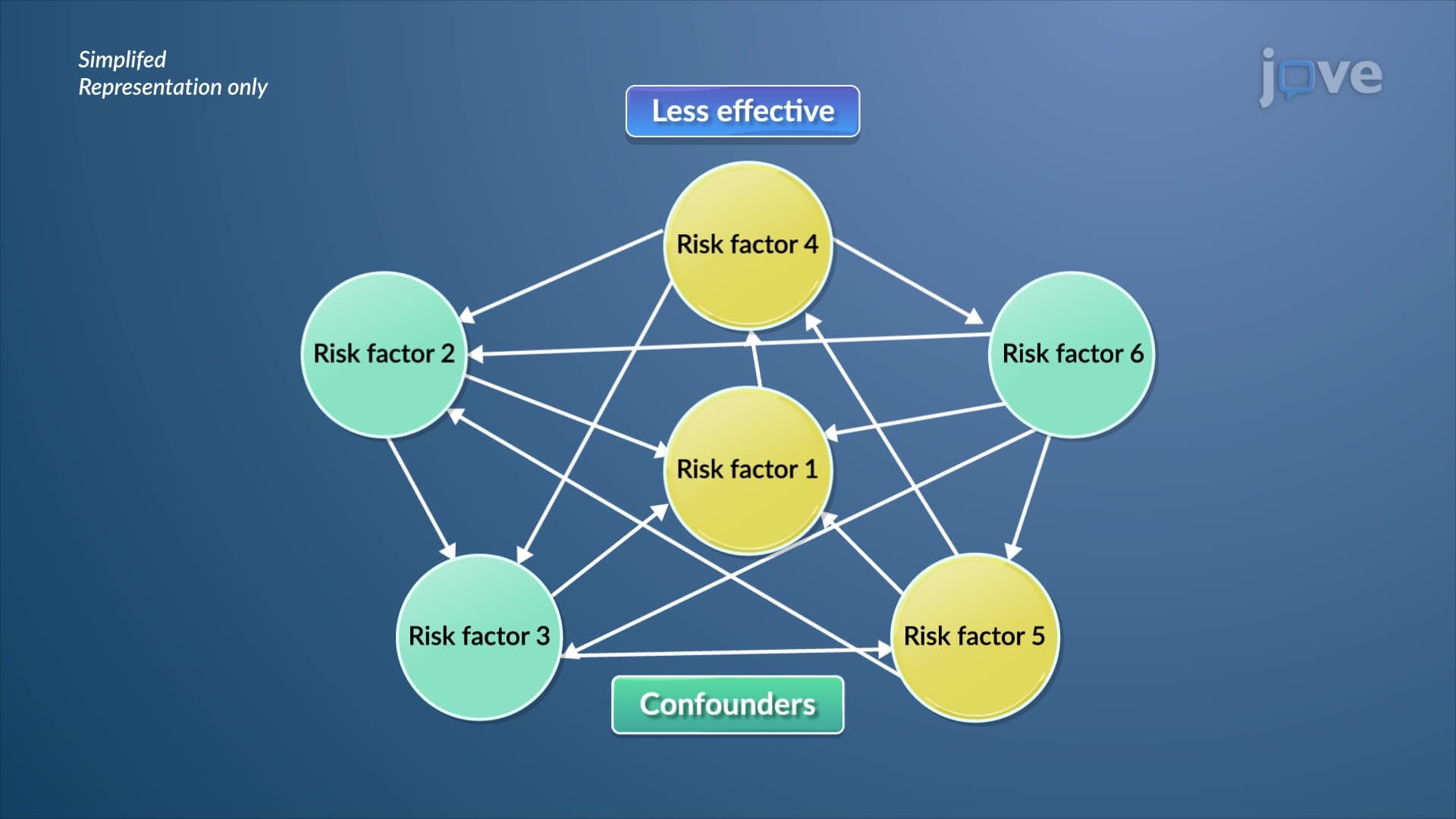
5. Hazard Rates, Hazard Ratios, and Risk Assessment Hazard rates measure instantaneous event risk at specific times, while hazard ratios compare risks between groups. A hazard ratio below 1 indicates reduced risk in the experimental group, above 1 suggests increased risk, and equal to 1 implies no difference. These metrics are fundamental in US pharmaceutical research for demonstrating drug efficacy and safety. The Cox proportional hazards model extends this concept by adjusting for multiple risk factors, providing more sophisticated analyses required by FDA regulatory standards.
6. Log-Rank Test and Group Comparisons The Mantel-Cox log-rank test compares survival distributions between two or more groups without assuming specific distribution shapes. This non-parametric test calculates differences between observed and expected events across groups, making it ideal for analyzing censored clinical trial data. Commonly used in US cancer research to evaluate new therapies, the test relies on proportional hazards assumptions. Violations of these assumptions, particularly in studies with small sample sizes or high censoring rates, can compromise result reliability and clinical decision-making.
7. Parametric Survival Models: Weibull and Exponential Methods Parametric survival models assume specific distributions for survival times, with Weibull and exponential models being most common. The Weibull distribution's shape parameter determines hazard function behavior: values greater than 1 indicate increasing risk over time, less than 1 suggest decreasing risk, and equal to 1 represents constant hazard (exponential model). These models are valuable in US manufacturing for reliability analysis and in epidemiology for modeling disease progression when biological mechanisms suggest specific hazard patterns over time.
Frequently Asked Questions
Survival analysis specifically handles time-to-event data and accounts for censoring, where some subjects don't experience the event during the study period. Unlike standard regression analysis, survival analysis can use partial information from censored observations, making it essential for clinical trials where not all patients will experience outcomes like death or disease recurrence during the study timeframe.
The MCAT may include survival analysis in its Chemical and Physical Foundations and Psychological, Social, and Biological Foundations sections, focusing on interpreting Kaplan-Meier curves, understanding hazard ratios, and recognizing appropriate applications. NCLEX-RN exams may test understanding of survival statistics in evidence-based practice questions, while USMLE Step 1 includes biostatistics questions on study design and data interpretation involving survival outcomes.
Survival analysis is widely used in cancer research to evaluate treatment effectiveness, in cardiology to assess surgical outcomes, in pharmaceutical development for FDA drug approvals, and in epidemiology to study disease progression. The CDC uses survival analysis for population health monitoring, while insurance companies apply these methods for actuarial calculations and risk assessment in life and health insurance products.
Use Kaplan-Meier curves for descriptive analysis and simple group comparisons when you want to visualize survival patterns over time. Choose Cox regression when you need to adjust for multiple covariates simultaneously or assess the impact of several risk factors on survival. Cox regression provides hazard ratios while controlling for confounding variables, making it more suitable for complex clinical research questions requiring multivariable analysis.
Censoring provides partial information about survival time (we know the patient survived at least until a certain point), while missing data provides no usable information. Right-censoring occurs when patients are alive at study end or lost to follow-up. This partial information is valuable and can be incorporated into survival analysis, unlike completely missing data which must be excluded from analysis entirely.
Survival analysis requires understanding probability concepts and comfort with interpreting graphs and statistical output, making it moderately challenging. The conceptual framework is intuitive (following patients over time until events occur), but the mathematical details of handling censoring and calculating survival probabilities require careful study. Focus on understanding when to apply different methods rather than memorizing complex formulas for introductory courses.
Practice interpreting Kaplan-Meier curves by identifying survival probabilities at specific time points and comparing survival between groups. Understand hazard ratio interpretation (values above/below 1 and their clinical meaning) and recognize when different survival analysis methods are appropriate. Focus on real clinical scenarios from US healthcare settings, as exam questions often present survival analysis in context of cancer treatment, surgical outcomes, or drug efficacy studies.
Survival analysis builds on fundamental probability and statistics concepts, connecting closely to study design (cohort studies, clinical trials), hypothesis testing (comparing groups), and regression analysis (Cox regression). It relates to epidemiological measures like incidence rates and relative risks, and provides foundation for understanding evidence-based medicine principles essential in clinical practice and public health policy development.
This microcourse includes 16 concept videos that walk you through the building blocks of Statistics. Each video is short, about 1 minute, so you can cover a full topic during a coffee break or between classes. The full sequence starts with Introduction To Survival Analysis and ends with Parametric Survival Analysis: Weibull and Exponential Methods.
The playlist moves from big-picture ideas to the precise vocabulary used in Statistics. Early videos introduce Introduction To Survival Analysis, Life Tables, and Survival Curves. The middle of the series focuses on Kaplan-Meier Approach, Assumptions of Survival Analysis, and Comparing the Survival Analysis of Two or More Groups. The final stretch covers The Mantel-Cox Log-Rank Test, Applications of Life Tables, Cancer Survival Analysis, Hazard Rate, Hazard Ratio, Truncation in Survival Analysis, and Parametric Survival Analysis: Weibull and Exponential Methods.
The natural next step is Statistical Softwares. From there, you can move to Control Charts. Once you finish those, the full Statistics curriculum of 17 microcourses on JoVE Coach opens up, taking you from foundational concepts to advanced systems.
Related Subjects
 Physics 33 micro-courses›
 Math Fundamentals 11 micro-courses›