- Statistics
- Analysis of Variance
Micro-courses:17

Analysis of Variance

1. What is an ANOVA?
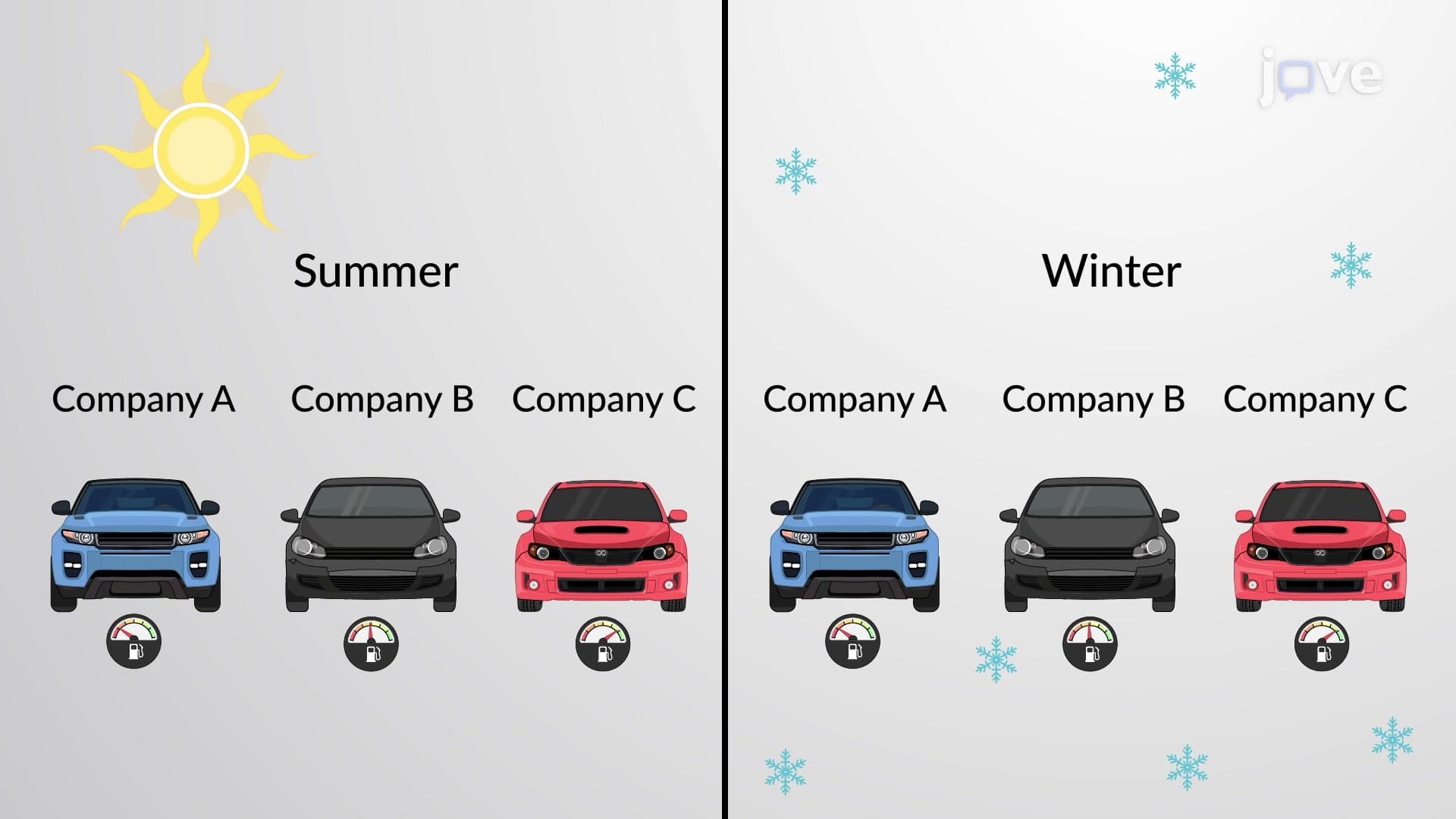
2. One-Way ANOVA
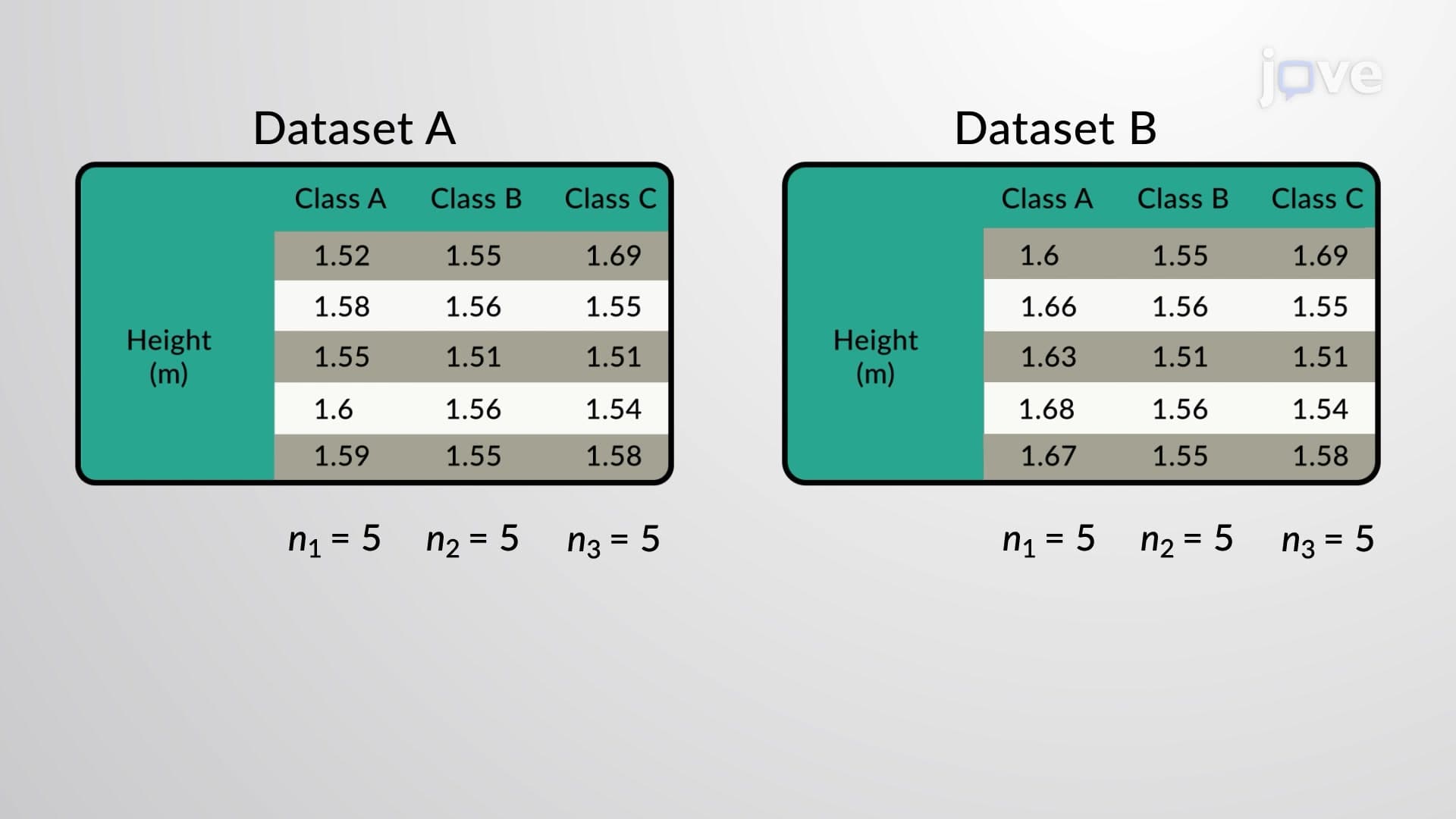
3. One-Way ANOVA: Equal Sample Sizes
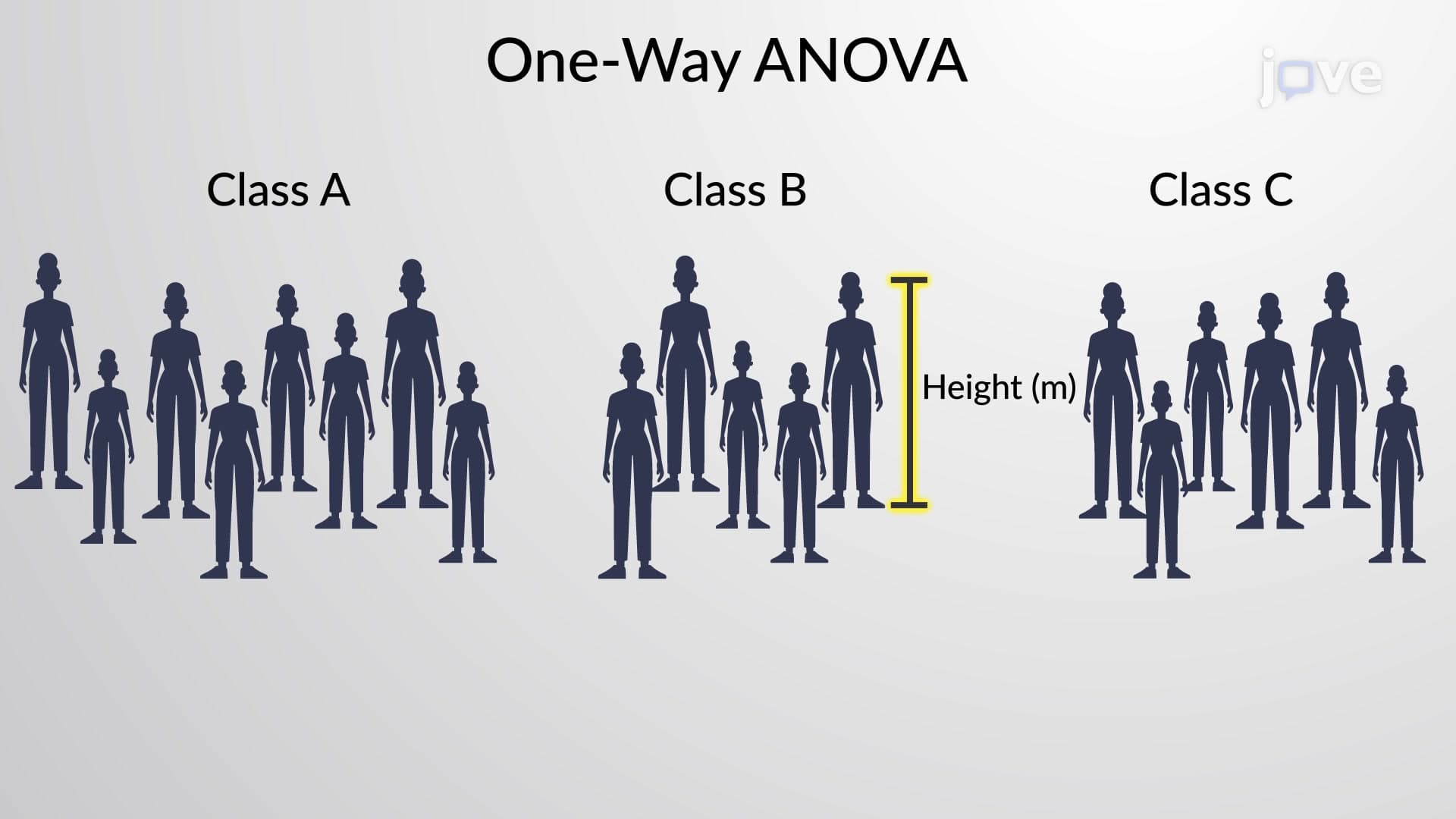
4. One-Way ANOVA: Unequal Sample Sizes
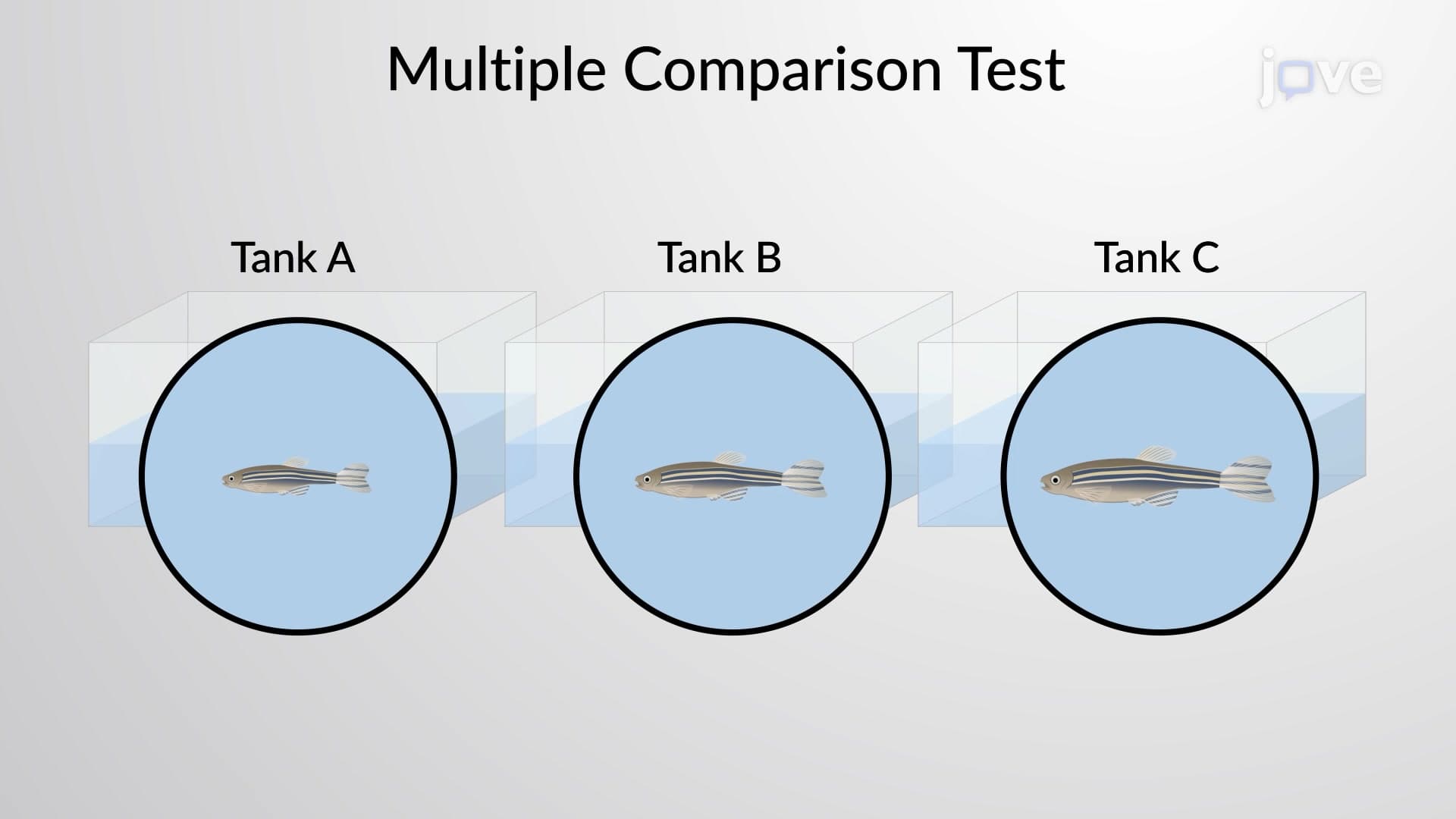
5. Multiple Comparison Tests

6. Bonferroni Test
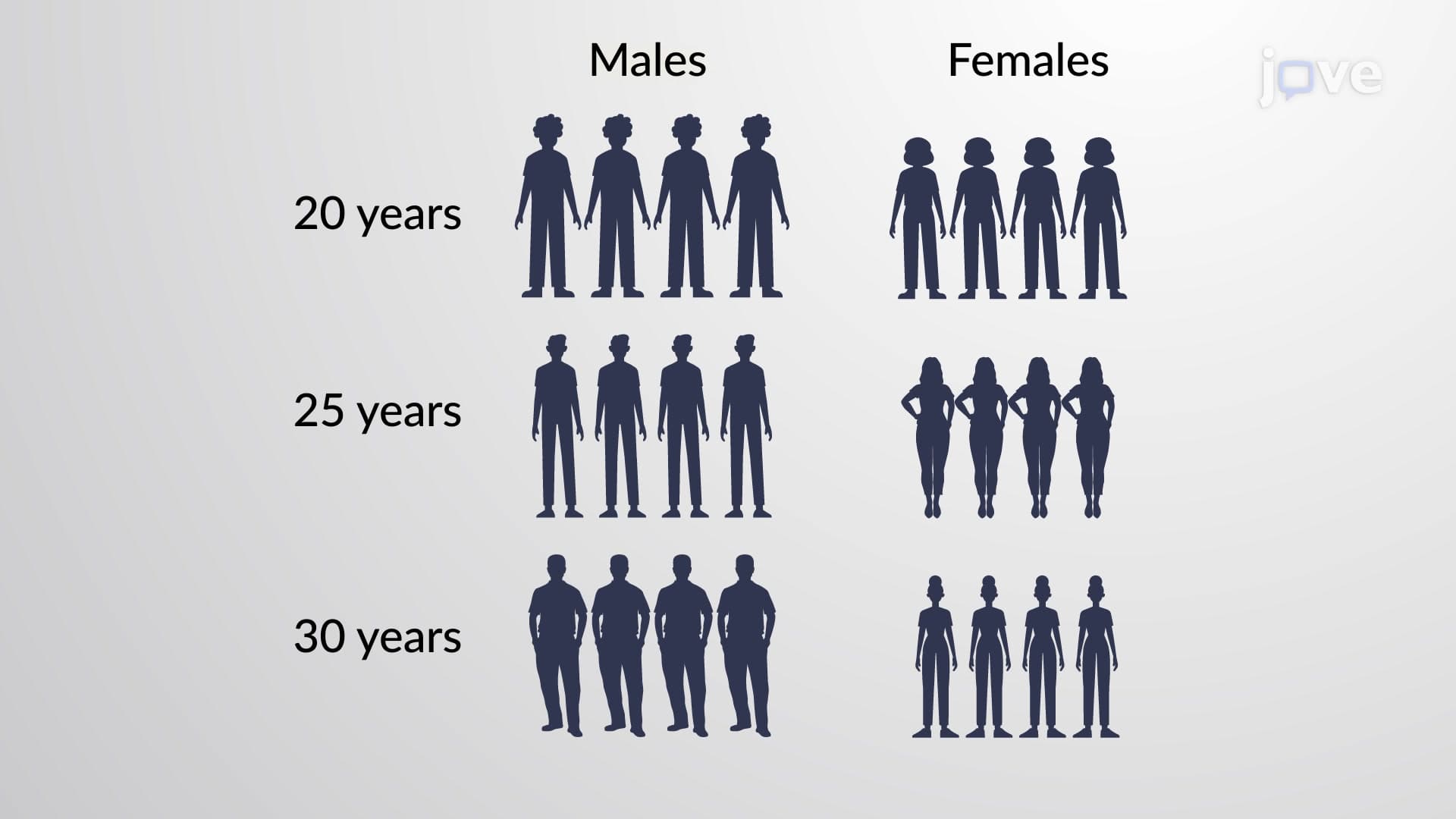
7. Two-Way ANOVA
Analysis of variance (ANOVA) is a fundamental statistical method used to compare means across three or more groups simultaneously. This comprehensive course covers essential ANOVA concepts through JoVE Coach, including one-way and two-way tests, assumptions, F statistics, and post-hoc analyses like the Bonferroni test for applications in research and data analysis.
- Understand the core principles and assumptions underlying analysis of variance testing
- Learn when to apply one-way versus two-way ANOVA statistical tests appropriately
- Identify the three critical assumptions required for valid ANOVA analysis
- Explore F statistic calculation and interpretation for hypothesis testing
- Analyze between-group and within-group variance components in datasets
- Apply multiple comparison tests to pinpoint specific group differences
- Understand Bonferroni correction methods for controlling Type I error rates
- Analyze interaction effects in factorial ANOVA designs
1. ANOVA Fundamentals and Assumptions Analysis of variance serves as a powerful statistical tool for comparing means when dealing with three or more groups, such as comparing SAT scores across different high schools or analyzing treatment effectiveness across multiple medical interventions. The test relies on three critical assumptions: samples must come from normally distributed populations, observations must be independent and randomly selected, and groups must have equal variances (homoscedasticity). Understanding these assumptions ensures valid results and proper interpretation of findings in educational research, clinical trials, and business analytics.
2. One-Way ANOVA Statistical Test One-way analysis of variance examines differences between group means when samples are categorized by a single factor, like comparing average GPA across different college majors or analyzing reaction times across various age groups. The test calculates an F statistic by comparing between-group variance to within-group variance. When F values are significantly different from 1, it indicates substantial differences between group means, leading to rejection of the null hypothesis that all means are equal. This method is essential for educational assessment and psychological research.
3. F Statistic Calculation and Interpretation The F statistic represents the ratio of variance between groups to variance within groups, serving as the cornerstone of ANOVA analysis. Values close to 1 suggest group means are similar, while values far from 1 indicate significant differences. For example, when comparing standardized test scores across different teaching methods, a high F value would suggest that teaching approach significantly affects student performance. Understanding F statistic interpretation helps researchers and analysts make informed decisions about group differences in academic, medical, and business contexts.
4. Two-Way Analysis of Variance Two-way ANOVA examines the effects of two independent factors simultaneously, such as analyzing how both gender and grade level affect math achievement scores, or studying how both medication type and dosage affect patient recovery rates. This advanced technique can detect interaction effects, where the combination of factors produces effects different from their individual contributions. Two-way ANOVA is crucial for complex research designs in psychology, education, and medical studies where multiple variables influence outcomes.
5. Multiple Comparison and Post-Hoc Tests When ANOVA reveals significant differences, multiple comparison tests identify which specific groups differ from others. The Bonferroni test adjusts significance levels to control Type I error when making multiple comparisons, such as determining which of five different study methods produces significantly different exam scores. These post-hoc analyses prevent inflated error rates that occur with numerous pairwise comparisons, ensuring reliable conclusions in educational research, clinical trials, and quality control studies across various American industries and institutions.
Frequently Asked Questions
While t-tests compare only two group means, analysis of variance handles three or more groups simultaneously. Using multiple t-tests instead of ANOVA increases Type I error risk and doesn't account for overall family-wise error rate, making ANOVA the preferred method for multi-group comparisons.
AP Statistics frequently tests ANOVA concepts through multiple-choice questions about assumptions, interpretation of F statistics, and identifying appropriate test conditions. Free-response questions often require students to analyze output, check assumptions, and draw conclusions from ANOVA results in real-world contexts.
The MCAT focuses on understanding when to use ANOVA versus other statistical tests, interpreting F statistics in research contexts, and recognizing appropriate experimental designs. Questions typically appear in the Psychological, Social, and Biological Foundations section within research methodology passages.
NCLEX-RN may test basic understanding of when ANOVA is used in nursing research, such as comparing treatment effectiveness across multiple patient groups. Focus on recognizing appropriate applications and understanding how statistical significance relates to clinical decision-making in healthcare settings.
Violating ANOVA assumptions can lead to inaccurate conclusions and invalid statistical inferences. Normality, independence, and equal variances ensure the F statistic follows its expected distribution, making p-values meaningful and conclusions reliable in research and practical applications.
Students often struggle with the concept of partitioning total variance into between-group and within-group components, understanding why we use variance ratios instead of direct mean comparisons, and remembering when post-hoc tests are necessary after finding significant F statistics.
Practice identifying scenarios where ANOVA is appropriate, memorize the three key assumptions, understand F statistic interpretation, and work through examples involving both equal and unequal sample sizes. Focus on connecting mathematical concepts to real-world applications in healthcare, education, and business research.
Companies use ANOVA to compare customer satisfaction across different service locations, analyze sales performance among various marketing strategies, evaluate employee productivity across different training programs, or assess product quality variations between manufacturing facilities, helping inform data-driven business decisions.
This microcourse includes 7 concept videos that walk you through the building blocks of Statistics. Each video is short, about 1 minute, so you can cover a full topic during a coffee break or between classes. The full sequence starts with What is an ANOVA? and ends with Two-Way ANOVA.
The playlist moves from big-picture ideas to the precise vocabulary used in Statistics. Early videos introduce What is an ANOVA?, One-Way ANOVA, and One-Way ANOVA: Equal Sample Sizes. The middle of the series focuses on Multiple Comparison Tests, Bonferroni Test, and Two-Way ANOVA. The final stretch covers Two-Way ANOVA.
The natural next step is Correlation and Regression. From there, you can move to Statistics in Practice, Nonparametric Statistics, and Biostatistics. Once you finish those, the full Statistics curriculum of 17 microcourses on JoVE Coach opens up, taking you from foundational concepts to advanced systems.
Related Subjects
 Physics 33 micro-courses›
 Math Fundamentals 11 micro-courses›