- Statistics
- Hypothesis Testing
Micro-courses:17

Hypothesis Testing

1. What is a Hypothesis?
2. Null and Alternative Hypotheses
3. Critical Region, Critical Values and Significance Level
4. P-value

5. Types of Hypothesis Testing
6. Decision Making: P-value Method
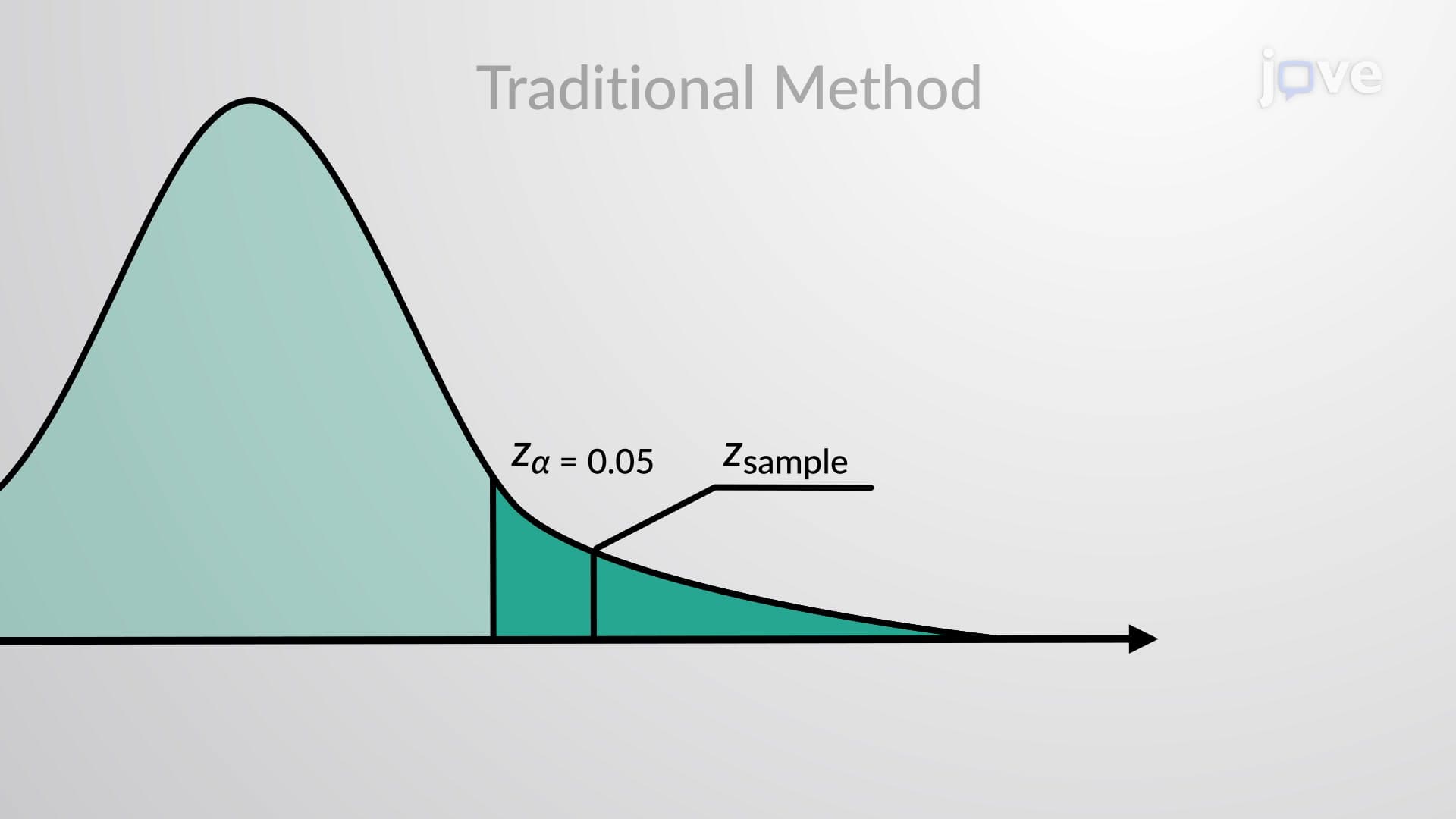
7. Decision Making: Traditional Method

8. Hypothesis: Accept or Fail to Reject?
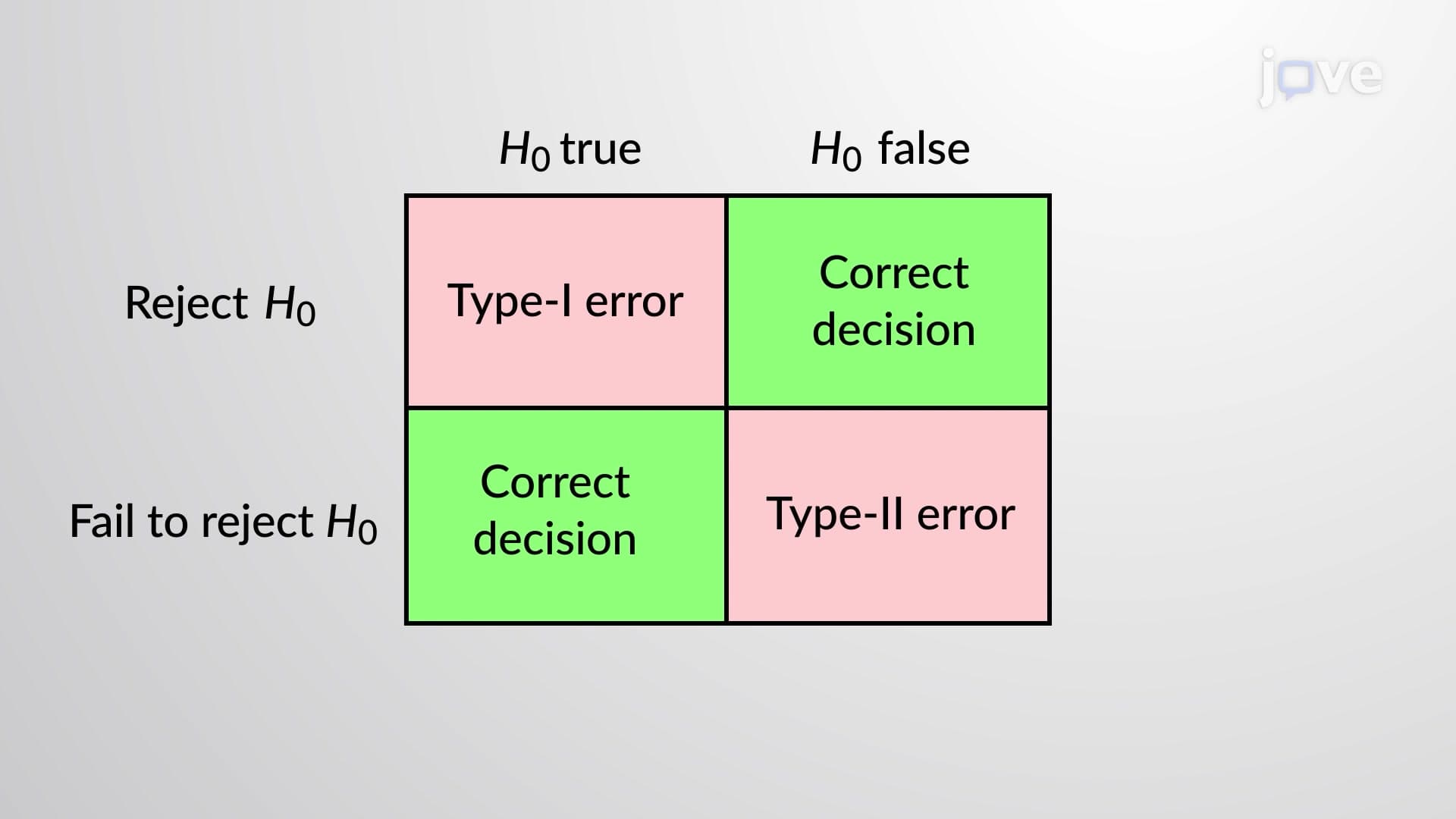
9. Errors In Hypothesis Tests

10. Testing a Claim about Population Proportion

11. Testing a Claim about Mean: Known Population SD

12. Testing a Claim about Mean: Unknown Population SD
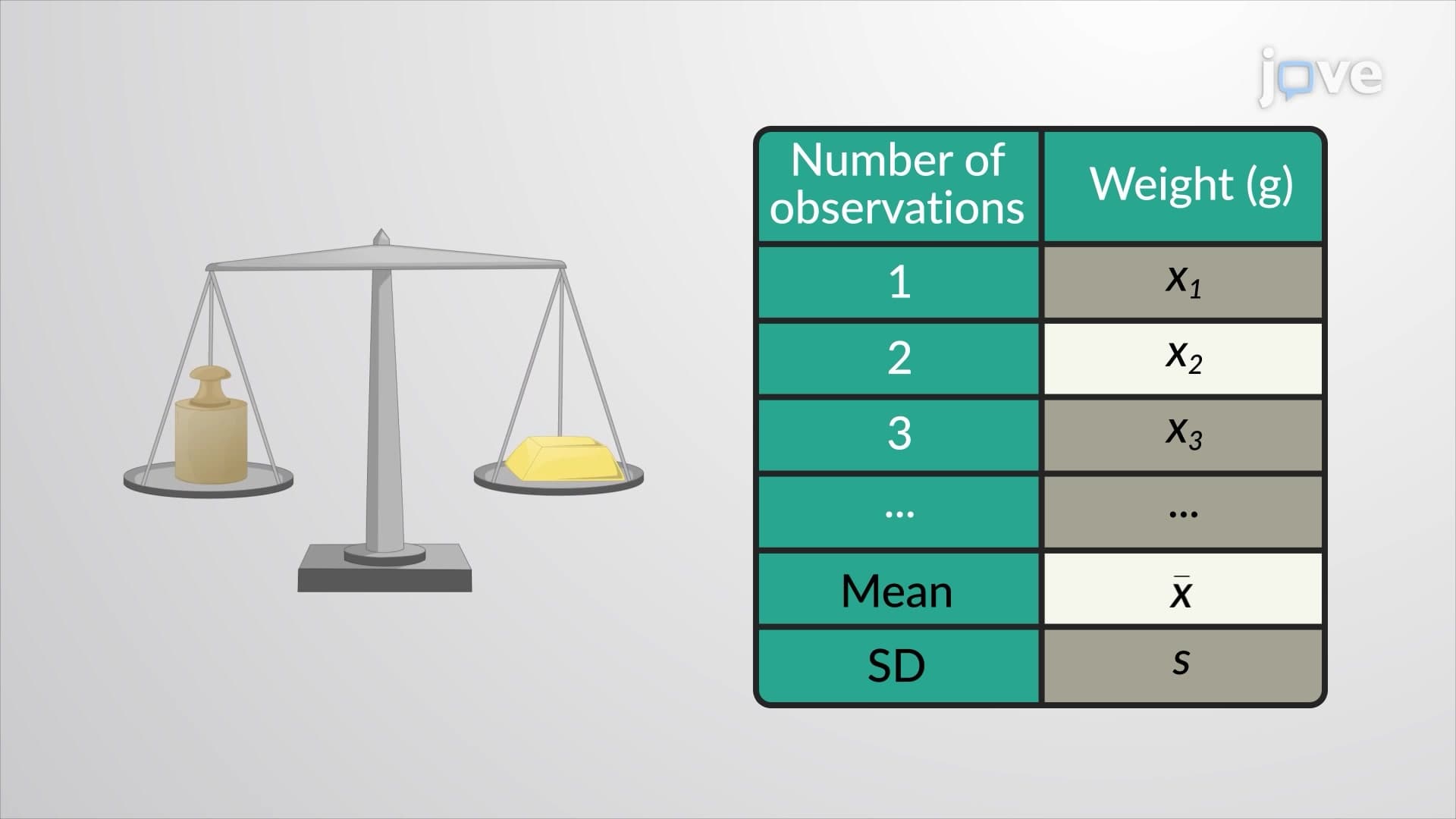
13. Testing a Claim about Standard Deviation
Hypothesis testing is a fundamental statistical method used to make evidence-based decisions about population characteristics. Through JoVE Coach's comprehensive micro-course, students learn to formulate null and alternative hypotheses, calculate test statistics, interpret p-values, and apply various testing methods including z-tests and t-tests across diverse scientific and business applications.
- Understand the fundamental concepts of null and alternative hypotheses in statistical analysis
- Learn to identify appropriate hypothesis testing methods for different population parameters
- Explore critical regions, significance levels, and their role in decision-making processes
- Analyze p-values and their interpretation in statistical hypothesis tests
- Apply the traditional critical value method versus the modern p-value approach
- Identify Type I and Type II errors and their implications in research conclusions
- Understand testing procedures for population proportions, means, and standard deviations
- Learn when to use z-tests versus t-tests based on known or unknown population parameters
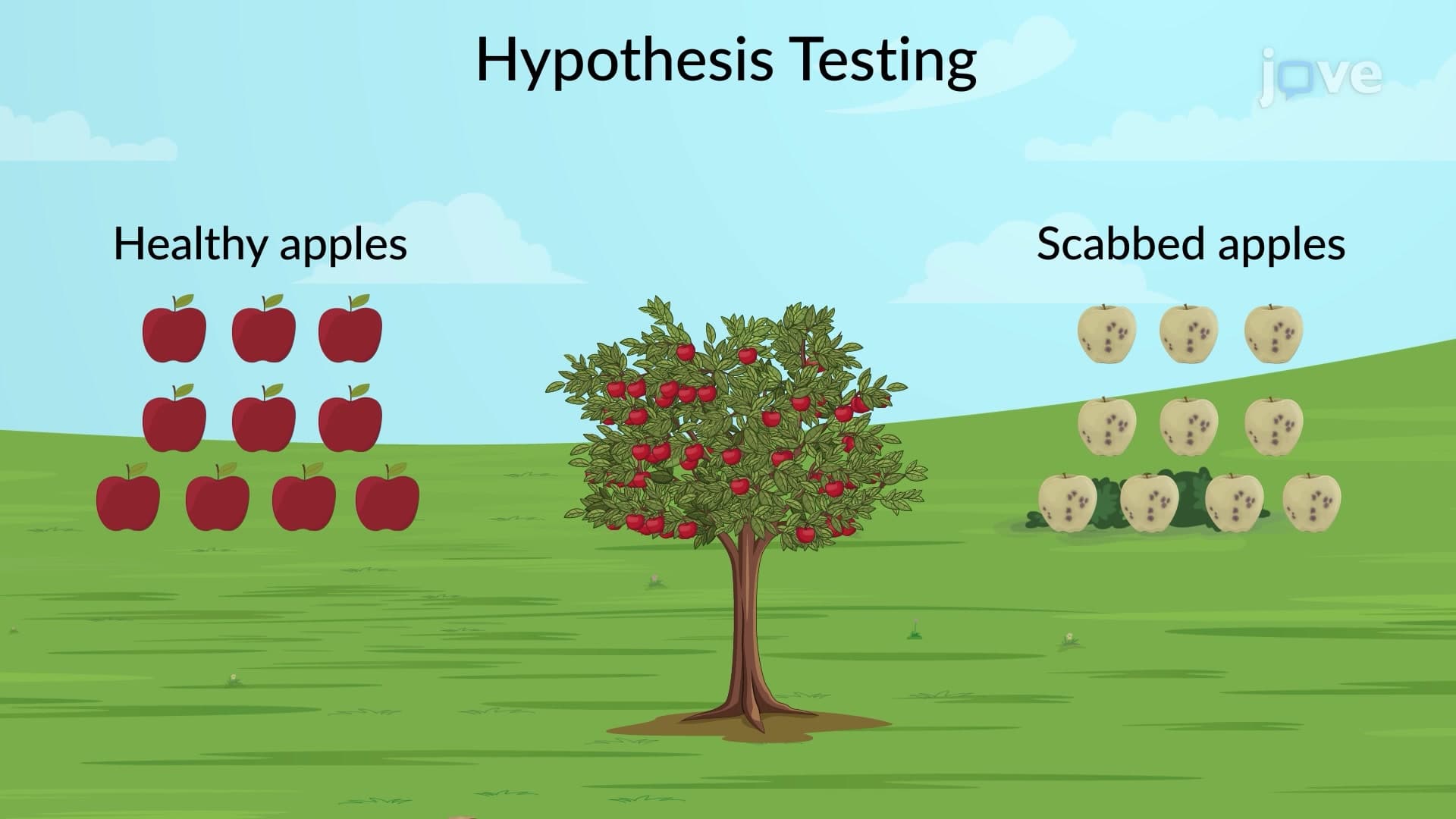
1. Hypothesis Formulation and Types Understanding how to construct testable statements about population characteristics forms the foundation of statistical inference. A hypothesis differs from predictions or assumptions by making general claims about patterns rather than specific cause-and-effect relationships. Students learn to distinguish between research hypotheses (what researchers believe) and statistical hypotheses (null and alternative statements). For example, when testing whether a new SAT prep course improves scores, the null hypothesis states no difference exists, while the alternative suggests improvement occurs. This concept applies across disciplines, from medical research testing drug effectiveness to business studies examining consumer preferences.
2. Null and Alternative Hypotheses Every hypothesis test requires two competing statements: the null hypothesis (H₀) representing no effect or no difference, and the alternative hypothesis (H₁) representing the research claim. The null hypothesis always contains equality (=, ≤, ≥), while alternatives use inequality symbols (<, >, ≠). In quality control testing at a pharmaceutical company, H₀ might state that medication potency equals 100mg, while H₁ suggests it differs from 100mg. The alternative hypothesis determines test direction: right-tailed tests examine increases, left-tailed tests check decreases, and two-tailed tests detect any difference. This framework ensures objective testing by assuming no effect until evidence proves otherwise.
3. Test Statistics and Critical Regions Converting sample data into standardized test statistics enables comparison across different studies and parameters. The test statistic (z, t, or χ²) measures how many standard errors the sample result falls from the hypothesized population value. Critical regions represent areas under probability curves where test statistics lead to null hypothesis rejection. For instance, when testing whether average student loan debt exceeds $30,000 using a significance level of 0.05, the critical region occupies the right tail containing the most extreme 5% of possible z-values. Critical values serve as boundaries separating rejection and non-rejection regions, providing clear decision rules for researchers.
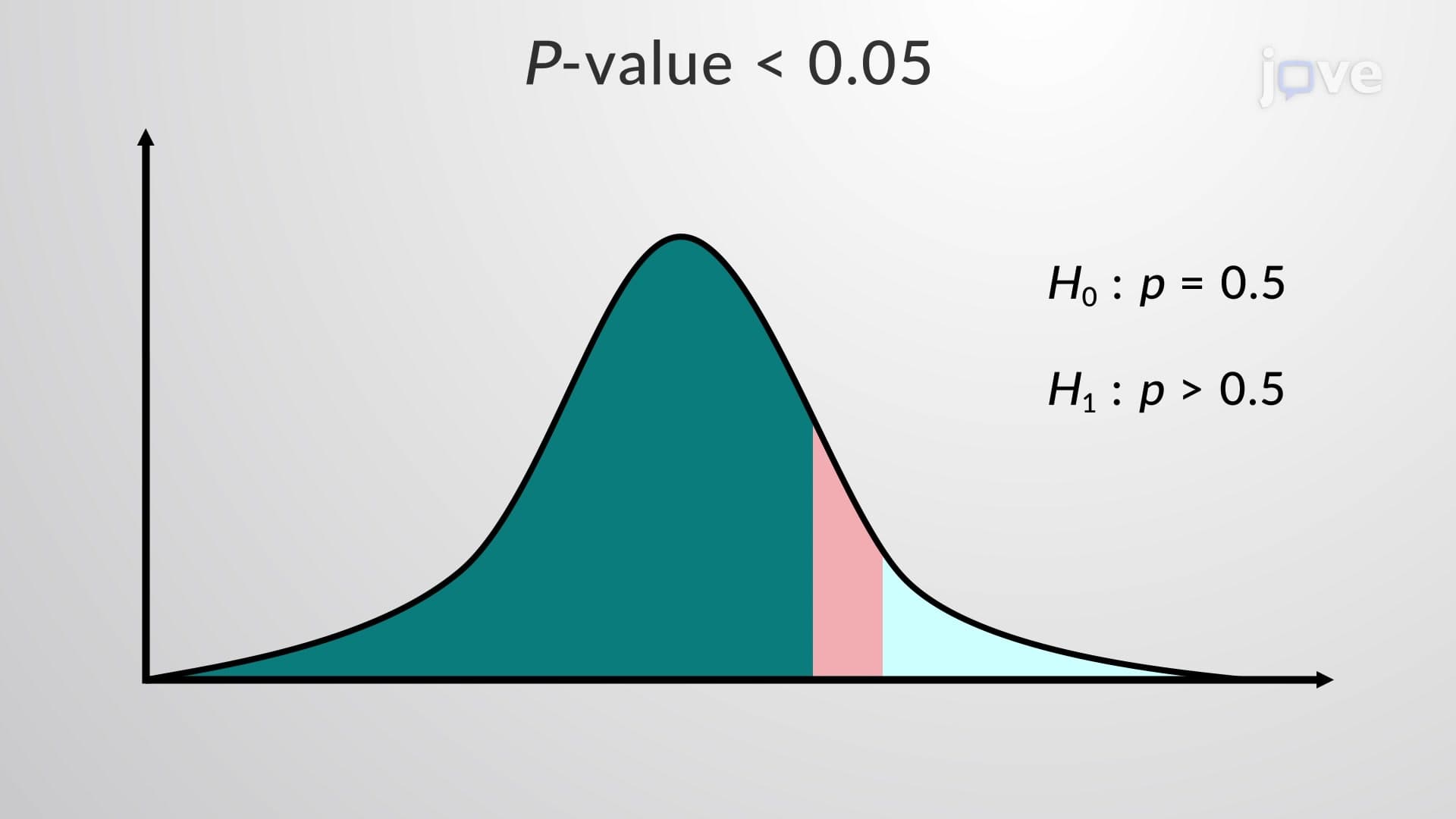
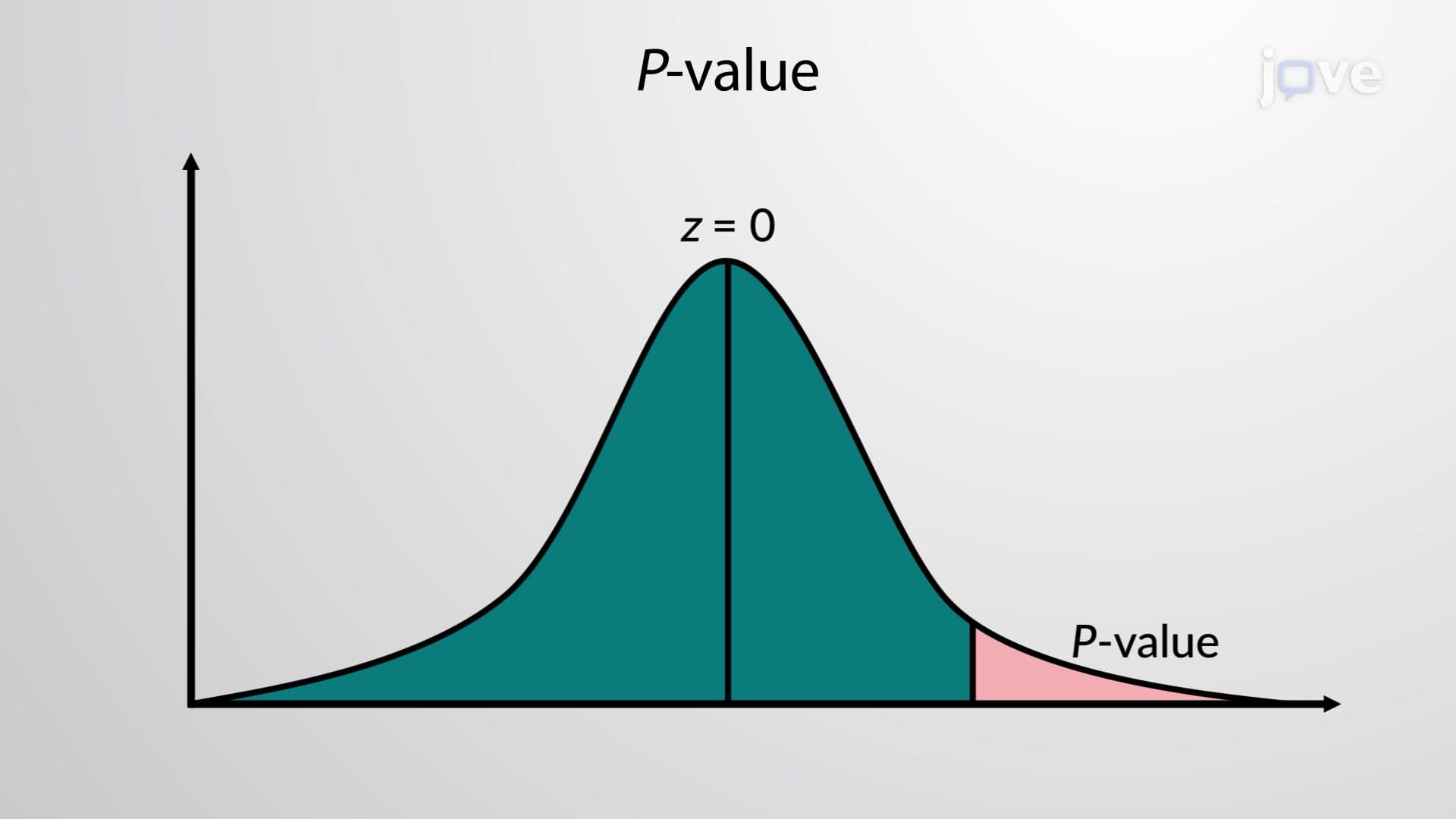
4. P-values and Statistical Significance The p-value quantifies evidence against the null hypothesis by calculating the probability of observing results at least as extreme as those obtained, assuming H₀ is true. Smaller p-values indicate stronger evidence against the null hypothesis. When comparing p-values to predetermined significance levels (commonly α = 0.05), researchers make objective decisions: p ≤ α leads to rejection, while p > α results in failure to reject H₀. In clinical trials testing new treatments, a p-value of 0.02 suggests only 2% probability that observed improvements occurred by chance alone. This method provides more nuanced interpretation than simple reject/don't reject decisions, allowing researchers to assess evidence strength on a continuous scale.
5. Types of Hypothesis Tests The direction of the research question determines whether to conduct one-tailed or two-tailed tests. Right-tailed tests examine claims about increases (H₁: parameter > value), such as testing whether a training program improves employee productivity above current levels. Left-tailed tests investigate decreases (H₁: parameter < value), like determining if a new manufacturing process reduces defect rates below existing standards. Two-tailed tests detect any difference (H₁: parameter ≠ value), appropriate when researchers suspect change but don't predict direction, such as studying whether class size affects test scores without knowing if larger or smaller classes perform better. Test choice affects critical regions and p-value calculations.
6. Decision-Making Methods Two primary approaches exist for hypothesis testing decisions: the traditional critical value method and the modern p-value method. The traditional approach compares calculated test statistics to critical values, rejecting H₀ when statistics fall in critical regions. The p-value method compares calculated p-values to significance levels, offering more flexibility and detailed information about evidence strength. In educational research testing whether online learning improves standardized test scores, both methods reach identical conclusions but provide different insights. The p-value method has gained popularity because it reports exact probability levels rather than simple reject/don't reject decisions, enabling readers to judge evidence strength independently.
7. Statistical Errors in Hypothesis Testing Hypothesis testing involves two potential errors with different consequences. Type I error occurs when researchers reject true null hypotheses, similar to false positive medical test results. The probability of Type I error equals the significance level (α), typically set at 0.05. Type II error happens when researchers fail to reject false null hypotheses, resembling false negative test results. Type II error probability (β) depends on effect size, sample size, and significance level. In pharmaceutical testing, Type I errors might approve ineffective drugs, while Type II errors could reject beneficial treatments. Understanding these errors helps researchers choose appropriate significance levels and sample sizes, balancing risks of incorrect decisions in their specific contexts.
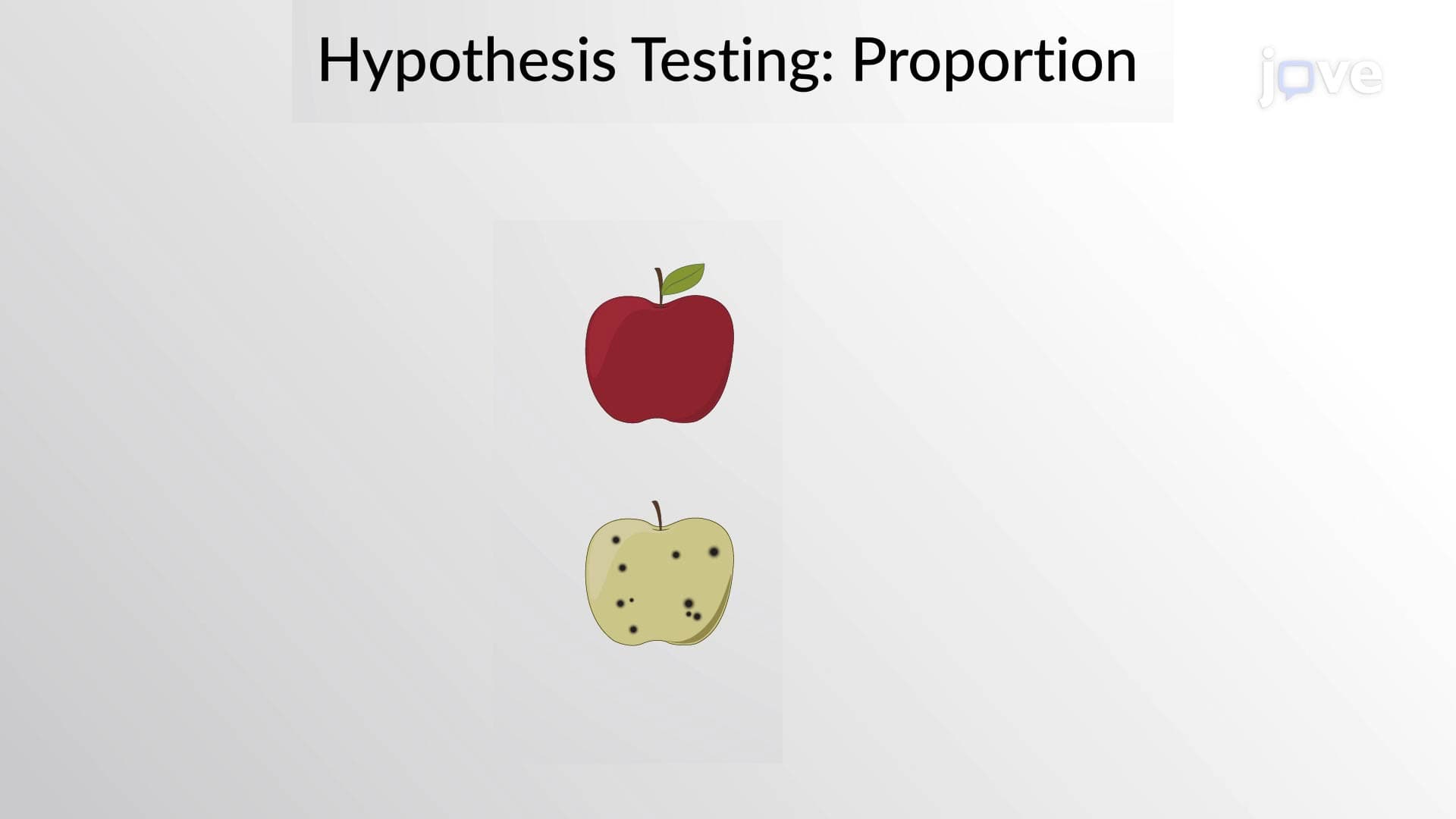
8. Testing Population Proportions When research questions involve categorical data and population proportions, specific testing procedures apply. These tests use the normal approximation to binomial distribution when sample sizes meet certain conditions (np ≥ 5 and n(1-p) ≥ 5). For example, testing whether more than 60% of college students work part-time jobs involves calculating a z-statistic using sample proportion, hypothesized proportion, and standard error. The test statistic follows: z = (p̂ - p₀) / √[p₀(1-p₀)/n]. Applications include market research studying brand preferences, political polling examining candidate support, and quality control testing defect rates. Results help organizations make data-driven decisions about marketing strategies, policy changes, or process improvements.
9. Testing Population Means Mean testing procedures vary depending on whether population standard deviation is known or unknown. When σ is known (often from historical data), z-tests apply using the standard normal distribution. Unknown σ situations require t-tests using sample standard deviation and t-distribution. For instance, testing whether a new teaching method increases average math scores involves different approaches: z-test if previous score variability is established, t-test if variability is unknown. The t-distribution accounts for additional uncertainty from estimating σ, producing wider confidence intervals and more conservative results. Sample size affects t-distribution shape, approaching normal distribution as n increases. These tests appear frequently in educational research, medical studies, and business analytics.
10. Testing Population Standard Deviations Testing claims about population variability uses chi-square (χ²) tests, important in quality control and process improvement contexts. Manufacturing companies often need consistent product specifications, making variability testing crucial. For example, testing whether a new production method reduces weight variation in packaged goods involves χ² statistics calculated as: χ² = (n-1)s²/σ₀². The χ² distribution is asymmetric and depends on degrees of freedom (n-1). These tests help determine if process improvements actually reduce variability or if observed changes result from sampling variation. Applications include pharmaceutical manufacturing ensuring consistent drug concentrations, automotive testing examining part tolerances, and service industries monitoring response time consistency.
Frequently Asked Questions
Failing to reject the null hypothesis means insufficient evidence exists to support the alternative claim, not that the null hypothesis is definitively true. Accepting would imply certainty that no effect exists, but statistical tests only measure evidence strength. For example, if a study finds no significant difference between two teaching methods, we conclude insufficient evidence exists to claim one method is superior, not that the methods are identical. Other factors like small sample size, measurement error, or inadequate study design might explain non-significant results.
The research question and prior knowledge determine test direction. Use one-tailed tests when predicting specific direction (increase or decrease) based on theory or previous research. For instance, testing if a new drug lowers blood pressure uses a left-tailed test because you predict decrease. Use two-tailed tests when detecting any difference without predicting direction, such as comparing two unfamiliar treatments. Two-tailed tests are more conservative, requiring stronger evidence for significance, but provide protection against unexpected results in either direction.
The AP Statistics exam emphasizes hypothesis testing mechanics, interpretation, and conditions. Students must identify appropriate tests (z vs. t), check assumptions (randomness, normality, independence), calculate test statistics and p-values, and interpret results in context. Common exam topics include testing proportions, means with known/unknown standard deviations, and two-sample comparisons. The exam tests both computational skills and conceptual understanding, requiring students to explain Type I/II errors, significance levels, and practical significance versus statistical significance.
The MCAT's Chemical and Physical Foundations section includes statistical reasoning, particularly in experimental design and data interpretation passages. Students need to understand p-values, significance levels, and hypothesis testing logic to evaluate research validity. For example, passages might describe drug efficacy studies requiring interpretation of statistical results, identification of appropriate control groups, or assessment of Type I/II error risks. Understanding hypothesis testing helps evaluate whether research conclusions are justified by the data presented.
P-values provide objective measures of evidence strength, accounting for sampling variability that makes raw data interpretation unreliable. For instance, if one group averages 85% on a test versus another group's 80%, the 5-point difference might result from random variation rather than real effects. P-values calculate the probability of observing such differences by chance alone, enabling researchers to distinguish meaningful patterns from random fluctuations. This statistical framework prevents researchers from overinterpreting small, meaningless differences or missing genuine but subtle effects.
Students often struggle with the counterintuitive logic of assuming the null hypothesis is true to test alternatives, the distinction between statistical and practical significance, and the abstract nature of probability concepts. The multiple steps (stating hypotheses, checking conditions, calculating statistics, interpreting results) can overwhelm beginners. Additionally, students frequently confuse p-values with effect sizes or probability that hypotheses are true. Success requires practice with diverse examples, understanding the logic behind procedures, and connecting statistical concepts to real-world applications rather than memorizing formulas.
Begin with conceptual understanding before tackling calculations. Practice identifying research questions that require different test types, then work through complete examples from setup to interpretation. Create flowcharts showing decision processes for test selection based on data types and sample sizes. Use real datasets from fields of interest to maintain engagement. Focus on interpreting results in context rather than just computing numbers. Form study groups to explain concepts to others, as teaching reinforces learning. Connect hypothesis testing to current events and research to understand practical applications.
Hypothesis testing appears across numerous professions including healthcare (clinical trials, epidemiological studies), business (market research, quality control, A/B testing), education (program evaluation, standardized testing), psychology (experimental research, treatment effectiveness), environmental science (pollution monitoring, conservation studies), and sports analytics (performance analysis, strategy evaluation). Government agencies use hypothesis testing for policy evaluation, while pharmaceutical companies rely on it for drug approval processes. Understanding these applications helps students appreciate the relevance of statistical concepts beyond academic settings.
This microcourse includes 13 concept videos that walk you through the building blocks of Statistics. Each video is short, about 1 minute, so you can cover a full topic during a coffee break or between classes. The full sequence starts with What is a Hypothesis? and ends with Testing a Claim about Standard Deviation.
The playlist moves from big-picture ideas to the precise vocabulary used in Statistics. Early videos introduce What is a Hypothesis?, Null and Alternative Hypotheses, and Critical Region, Critical Values and Significance Level. The middle of the series focuses on Types of Hypothesis Testing, Decision Making: P-value Method, and Decision Making: Traditional Method. The final stretch covers Hypothesis: Accept or Fail to Reject?, Errors In Hypothesis Tests, Testing a Claim about Population Proportion, Testing a Claim about Mean: Known Population SD, Testing a Claim about Mean: Unknown Population SD, and Testing a Claim about Standard Deviation.
The natural next step is Analysis of Variance. From there, you can move to Correlation and Regression, Statistics in Practice, and Nonparametric Statistics. Once you finish those, the full Statistics curriculum of 17 microcourses on JoVE Coach opens up, taking you from foundational concepts to advanced systems.
Related Subjects
 Physics 33 micro-courses›
 Math Fundamentals 11 micro-courses›